Field Trip

by Jack Vernon
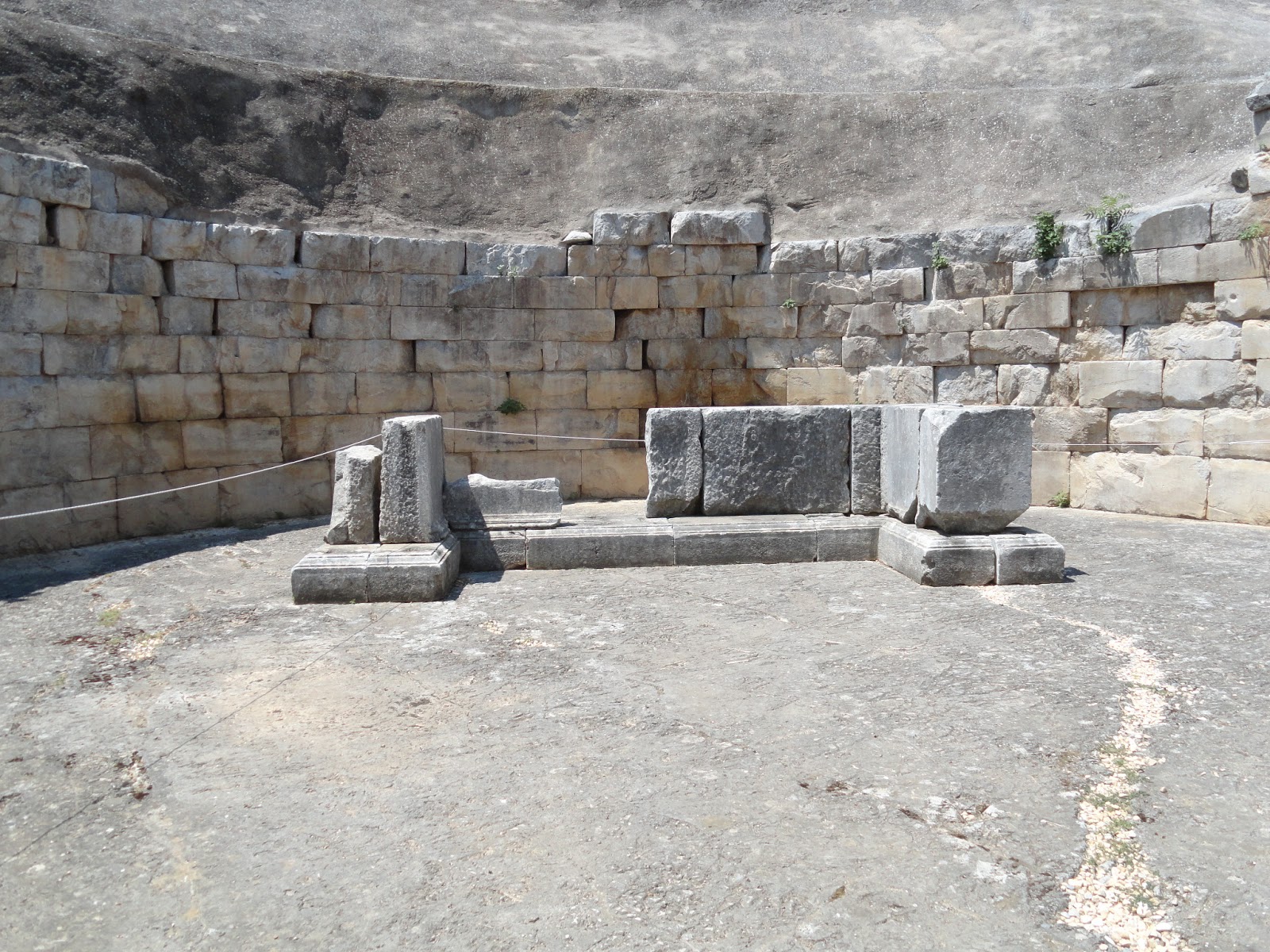
Yesterday after we had finished our lunch we went on a great field trip to three sites in Boeotia. We first went to Orchomenos to see the tomb of King Minyas. The tomb is a Tholostomb although the top has collapsed so it is open to the sky. It is very similar to the tomb of Atreus at Mycenae since the tomb contains of small side chamber. The side chamber had a very interesting ceiling with intricate designs. We were given a short talk about the history of the tomb by fellow EBAPer Kyle. He told us that after the Romans conquered Greece, the tomb was used for Emperor Worship and that even Hesiod was worshipped here. After viewing the tomb we went to see the theatre which was next to it and then we walked around a small church that is made with reused stone from the older Greek structures.
The Tholos Tomb with a Roman altar
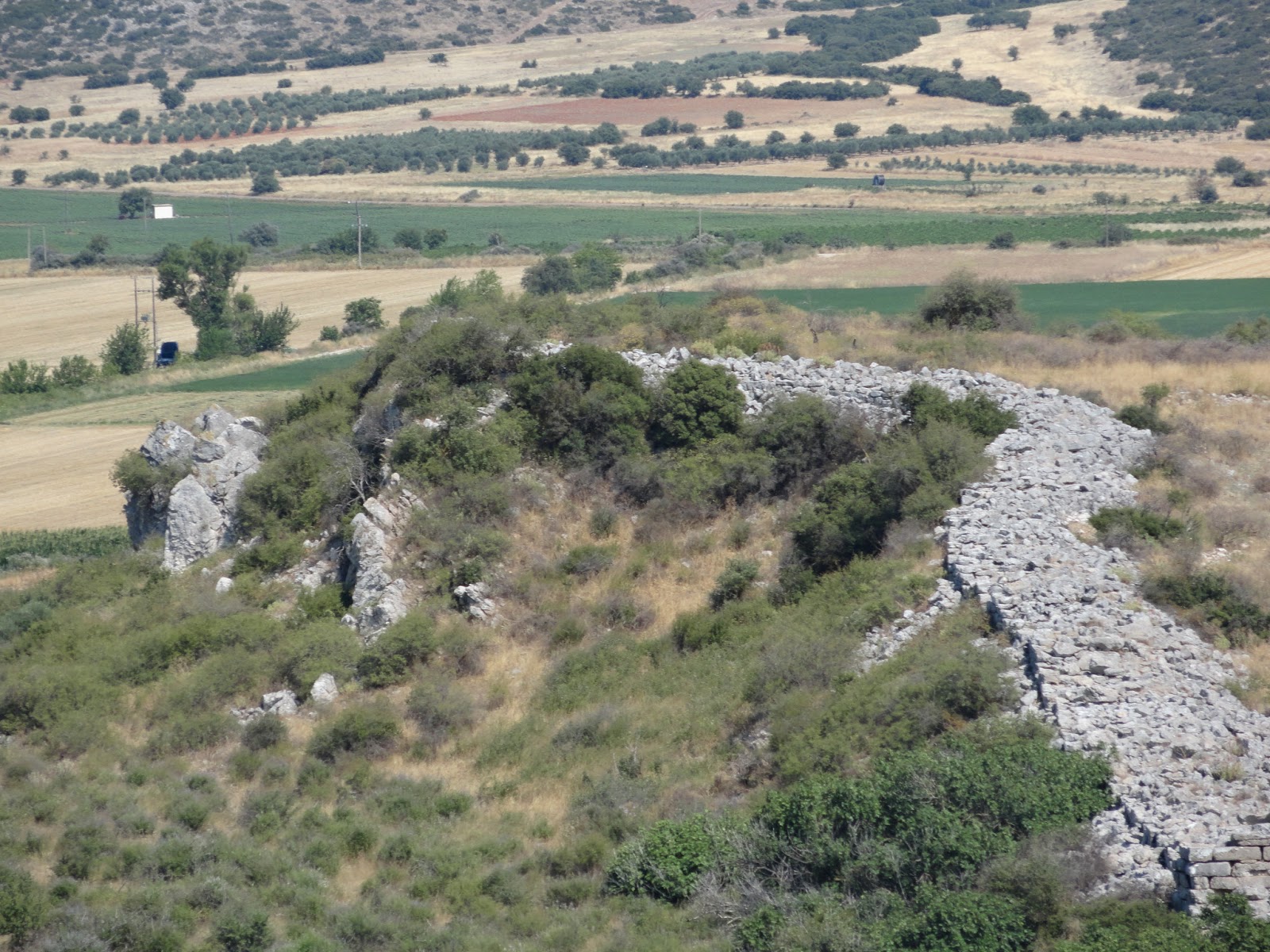
The wall at Gla
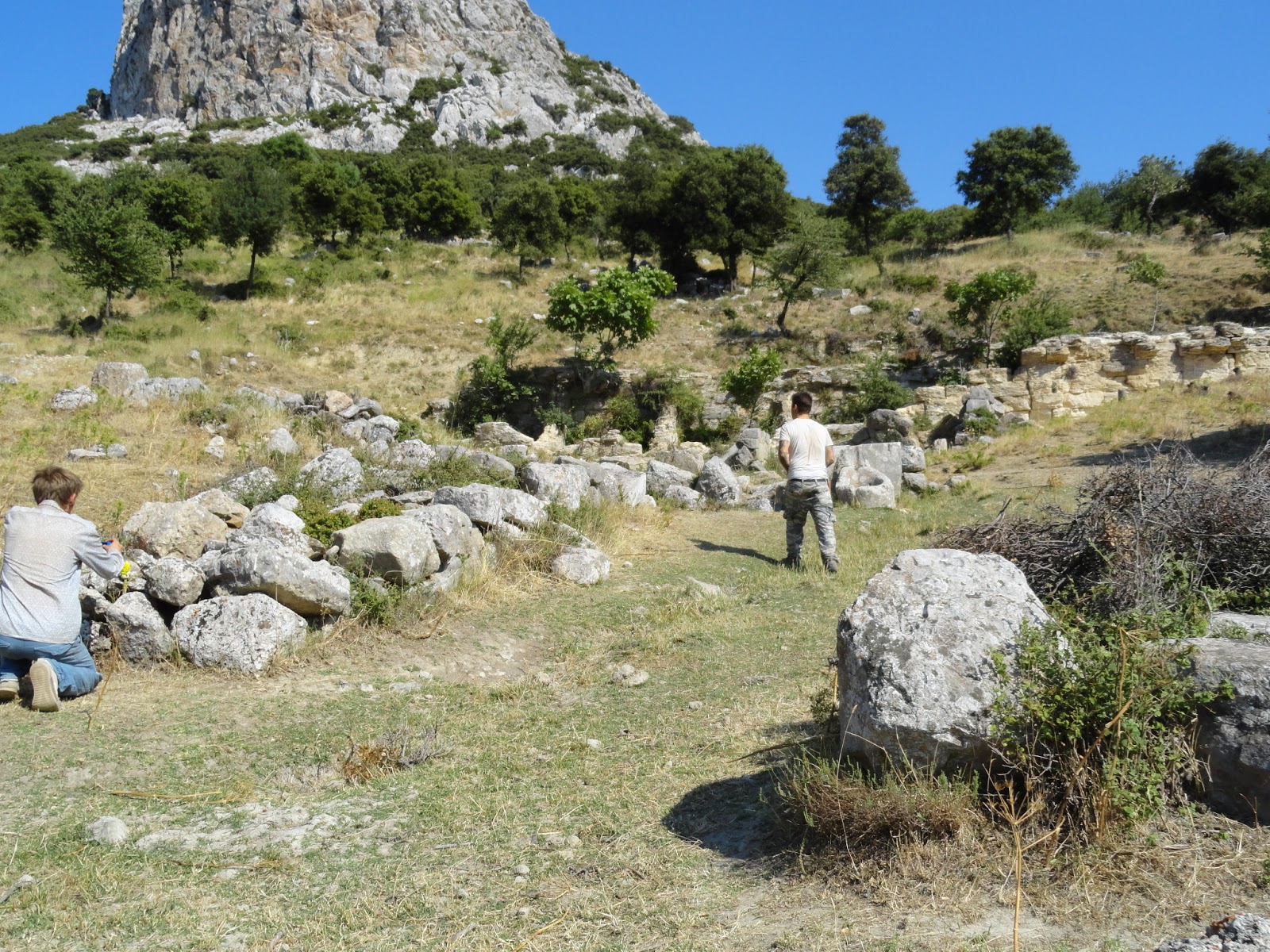
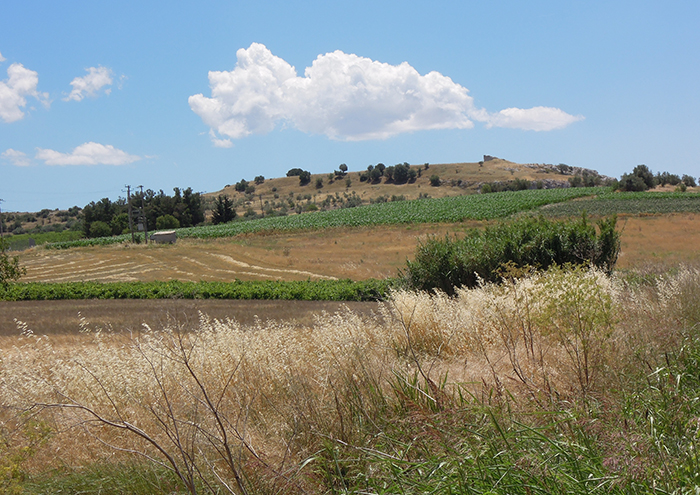
We ended our time in Orchomenos with an ice cream break to cool us all down. We then headed to the Mycenaean site of Gla. Gla was constructed when Lake Kopais was drained to provide protection for the farms in the Kopais Plain. The fortifactions are extremely large with the perimeter wall being 3000m in length. Another EBAPer, Max, told us information about the site. It is constructed on what had been an island on Lake Kopais and that it is possible to fit the both the sites of Mycenae and Tiryns within its walls and have space to spare. He also told us that the lake had reappeared in Classical times so the site was isolated on the island by the lake and it was only accessible by boat for most of the year.
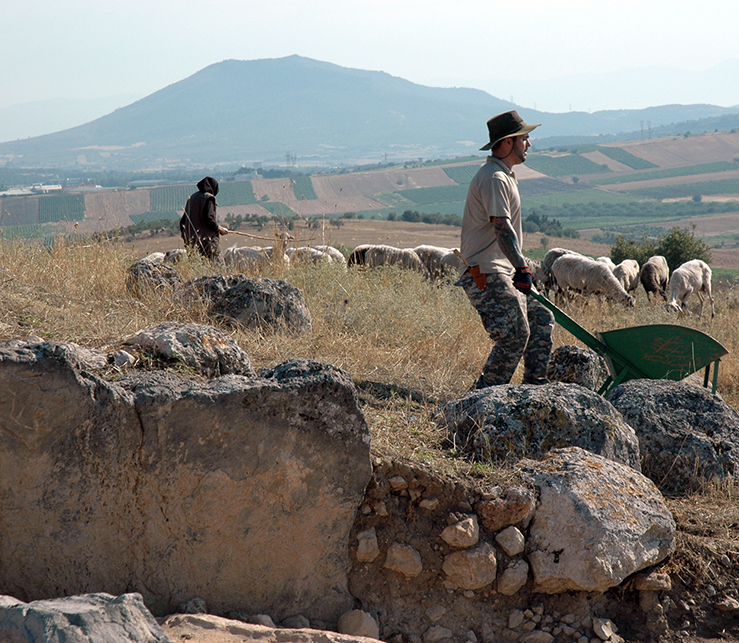
The final location that we travelled to yesterday was the Sanctuary of Apollo Ptoon. Brian gave us a brief history of the sanctuary. It was an oracular sanctuary and because of that there were many tripod dedications. Other dedications that were discovered at the site included many Kouroi as well as some bronze swords with archaic inscriptions on them. He also explained to us that the excavations were never completed or fully published in part because the architect with the excavators lost all of their data. We then walked up the hill past the different levels of the sanctuary and we came to the remains of the temple which are hard to see since there is very little remaining. Beside the temple was a small spring that provided fresh water.
Sanctuary of Apollo Ptoon
We returned to Dilesi around 6:30 and many of us decided to have naps before dinner as the trip was very tiring after a long day of digging.

ABC’s of EBAP

by Roleen Sevillena
A: archaeologist smile. The sunburnt line found on one’s lower back after days of digging in the sun with a shirt that’s not long enough to cover a digger’s back while bending down. Friendliness of the smile depends on the person’s bending angle and size of shirt. Consult Neil for further inquiries on having an archaeologist smile.


B: Black Ram. The cheap rum found at the Bulgarian market. Lasts no longer than 2 days in the hands of EBAPers. Also the inspiration for Brandon’s nicknames: Black Ramage and Ol’ Black Joe (must hear Brandon and Joe talk in the same room for more clarity on the latter nickname).


C: cleaning pottery. A Monday to Friday routine that starts at 5pm after siesta time. Starts with bagging previously washed pottery and piling them on top of the unprocessed bags of sherds in the garden. Can often feel overwhelming, especially with the no-alcohol rule and when small votive cup sherds are involved… But with good EBAP company and power house cleaning all can be done with ouzo hour time to spare.


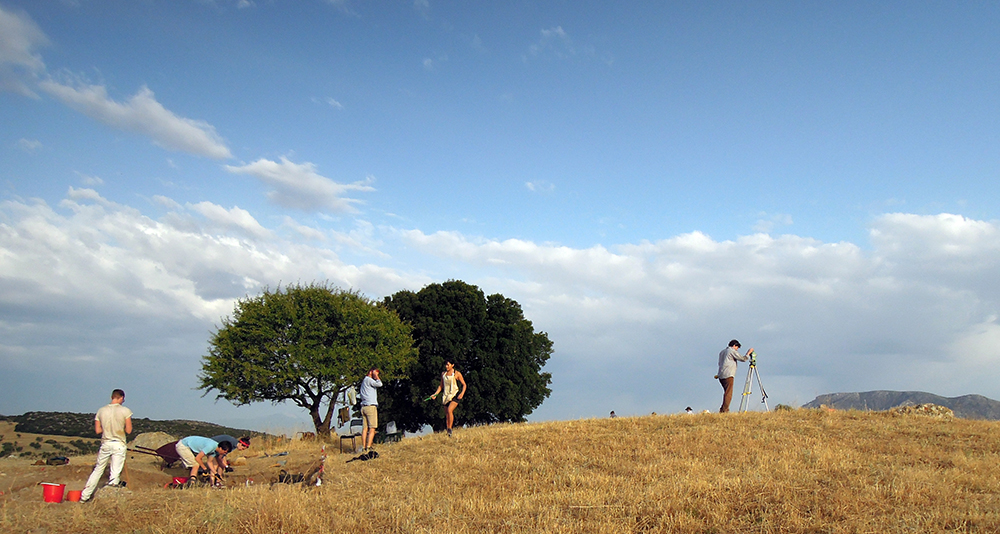
D: dumpy(saurus) level. The rugged wooden surveying station used to find ‘Giulianna points’. Her points refer to elevations of features used in her trench drawings. 99% of the time manned by Kyle. Those on site should not be alarmed when he yells numbers, as he does not mean to in an aggressive manner. The antiquity of this object has created an eruption of jokes and has brought about the creation of a mythical figure, Don P.


E: extreme cars. Aka the bumper cars found at the Dilesi carnival. A great way to release any inhibited stress and/or anger. When EBAPers grab hold of the wheels a good time is always guaranteed. No mercy given.


F: frappesand caffeine in general. Often made and drank in the morning for the 6am departure time. The hip thing among EBAPers has been to drink morning coffees in Mason jars from My Market. During work sessions at Café Contigo, frappes are a good way to cool down and to get a splurge of caffeine in nap-deprived EBAPers (unless they decide to go the free chips route and order a beer instead).


G: Greek yogurt. Common breakfast essential for EBAPers. Found in almost every refrigerator. Often eaten with honey and/or fruit. Also used to make a face mask during the girl’s spa days. Dries up nicely and leaves skin smooth with a nice glow.


H: hill slope toilet. After the much contested IKEA storage closet toilet idea fell through the only ‘washroom’ area available to EBAPers is the northern hill slope. Nice directive path and toilet paper present. Privacy minimally guaranteed. Must clean up after one’s self or Bryan will hunt you down.


I: ice cream. A refreshing treat to beat the heat. Hot spot in Dilesi: Byzantino. Where EBAPers are known to enter in crowds and order anything from pistachio, mastika and sour cherry and chocolate ice cream. Also became the common dessert to celebrate EBAP birthdays.


J: Joe’s sun shades. Can also be referred to as life-saving apparatuses out in the field. Made with metal rods, thick green mesh and rope. Not only mobile and easy to move, but also resistant to breaking in windy conditions. Reduces the likelihood of EBAPers getting heat stroke from the blazing hot sun.


K: Kyria Mamoni. Our most gracious host in Dilesi, allowing the craziness of EBAP reside in her apartments. Thankful for her hospitality and kindness from being greeted from her balcony. R.I.P. Mrs. Mamoni.


L: lunchtime. Arguably one of the best parts of the work day. When Stavroula is in charge of the menu anything is possible. From various legume soups, pastitsio, seasoned veggies, to hard-boiled eggs and tuna… lunch at Stavroula’s is always a meal to look forward to. And one cannot forget about the refreshing salads, fresh bread and ice cold water served at every outdoor lunch.


M: mosquitoes. The sneaky blood suckers of Greece. They manage to bite without you noticing them. Can leave scars on your skin even a year after being bitten. Consult Lauren for mosquito precautions and to learn about every possible method of trying not to get mosquito bites.


N: nighttime beach excursions. After a relatively late (by North American standards) and satisfying supper, beach time becomes a favourable pre-hit-the-bed option. Whether it’s taking a nice stroll, night swimming, or going as a big group to hang out with a few drinks in hand, the advantages of living by the sea are reaped by all.


O: ouzo hour. The time before 8pm dinners where EBAPers convene and drink. Snacks also present. Eg. Crusti Crocs, Fonzies, pumpkin seeds, Bulgarian pretzel sticks and Brenden’s famous popcorn. All drinks acceptable but ouzo always seems to be present, however must be prepared accordingly: first ouzo, then water, and then ice to top it off.


P: pep. Short for pepperoni found at the Bulgarian market. Also a nickname for the EBAP man known to eating excessive amounts of this sausage, Joe.


Q: questionable theories. Also known to EBAPers as ‘purple ideas’. Such ideas often voiced by Giulianna, which usually pertain to the existence of Italian pizzarias in Ancient Eleon.


R: rainy days. The 2 days of rain in week 2 of EBAP, where such unusual weather conditions threw everyone’s schedule out of whack. Having the start time moved to 8:30 instead of 6:30 EBAPers knew it would be an unordinary work day. The days consisted of visiting the Schimatari museum, exploring the walls on site, hanging out and playing Anti-Monopoly in the Arma café, learning about archaeological illustration in the apotheke (storehouse), and with some EBAPers opening new trenches in the rain.


S: sitting tree. The largest bush-tree found on site where all tools and supplies are tarped and chained up at the end of the day. Also where EBAPers take refuge for shade during breaktime on the tarps.


T: trench tours. An essential practice during the work week which gives trenches the chance to show their fellow EBAPers cool finds, features and overall progress. Mostly given by trench supervisors but not unusual to have students give such tours, especially if being graded by Brenden.


U: unwanted discoveries. Such discoveries range from undiagnostic pottery sherds smaller than one’s thumbnail, surface finds around the site, and good looking/deceiving rocks. Discoveries of the sort differ from ones that are highly frowned upon to keep… such as excess amounts of tile, mud brick and Byzantine finds.


V: vulnerable strays. Often cats and dogs around Greece. Fates of such animals vary but are usually grim unless they quickly learn survival skills or catch the attention of EBAPers which are much more sympathetic to strays than most Greeks. A favourite dog of this year being Biscuit.


W: water. Pronounced wah-ter (or wah-dur, depending on what kind of American you’re talking to). The quintessential thirst quencher in the hot Greek sun. Arguably the runner up next to beer. Mostly found in 1.5 or 2L plastic bottles on site and in most of Greece due to the lack of metal-less drinking water. Eg. Dirfy’s. The water brand often served at Bobby’s taverna. Named after Mount Dirfy, which can be seen across the water. Also known as the Dirf.


X: xenia. In the simplest terms means hospitality. Which doesn’t even come close to describing the way EBAPers have been treated in Boeotia. EBAP probably wouldn’t be the same without the hospitality of Mrs. Mamoni, tavernas around Dilesi and Stravroula in Arma.


Y: yoga. A good way to stretch out after all the movement and toil from digging in the field. Only one yoga session has occurred on site this season, but nonetheless memorable. To see pictures of Ancient Eleon yoga contact Morgan.


Z: zambili. Black rubber containers used on site to haul dirt, weeds and anything else needed to be brought to a wheelbarrow or western dirt pile. Come in various sizes and weights. Lighter zambilis often fought for by trenches since the 4 handled ones feel as though a bucket of tiles have initially been put into them.
The "Work Vacation"

by Tony Vári-Lippert

The past four weeks have been very eventful. Each weekend has been wonderful and unique, the highlights are plenty, like visiting the museums, going to the opera, taking a ferry over to Euboea, climbing the Mycenae acropolis, or simply relaxing in the clearest, bluest sea water after a long walk under the blazing sun. There are not enough weekends to do everything. Although, seeing all these ancient remnants of magnificent cities at the sites and museums is not as stimulating as digging them up yourself. It is a fantastic thing to experience the satisfaction of finding something, slowly and carefully uncovering it, and finally being able to pull it out of the ground. The problem is the most fantastic artifacts are not so easily found as in a museum. And once found, does not usually come with the helpful plaque explaining what it is. So it is exciting to overhear the “purple ideas” as to what each significant find could be. Of course, not every object is a mystery, most, we are taught how to identify by type and timeframe. From what we have uncovered so far I am very impressed, Eleon was certainly no hamlet. I will have to remember to return 50 years from now, after many more seasons of study and excavation to see and learn, along with the tourists, the history we do not know yet.

This weekend is special for many EBAPers. Tomorrow is Canada Day but we will be celebrating today as tomorrow is a work day. What does it matter? Even if we did it tomorrow we still wouldn’t be partying the same time as everyone else back home.

What to do when you find an artifact

by Ally Walsh

Pottery: Pottery sherds are the most common find at ancient Eleon, and there is a lot of it. Pottery is a great way of dating a site, so it should be handled with as much care now as it would have all those years ago when it was being made. The first thing to do when pottery is present in a trench is to try to not break it with your pick. Whether you don’t see it at all or you see it at the last moment when your pick is about to hit the ground, that sherd with one ancient break can turn into many more little pieces. Sometimes, if youre lucky, a sherd many be buried next to its other pieces, so it can be a good idea to search around the immediate area. After you remove it from the ground, put it in a bucket that has been tagged with the appropriate locus and lot number. After you leave the site, brush the sherds with water and a toothbrush to get the dirt off. They will later be sorted into fine, medium, and coarse wear.

Terra cotta: Terra cotta finds need to be handled with more care than a pottery sherd. When you see one in the ground, brush around it and carefully remove. Then search the immediate area to see if any other pieces are present. Once it is out of the ground, cover it and keep out of sunlight and water because any remaining paint will be destroyed. Wrap it in Tyvek and place in a container. Do not put in a plastic bag because the heat will cause it to sweat. The wonderful ladies on the conservation team will then conserve the artifact from being destroyed after being removed from its micro environment. The dirt will be carefully scrapped off and any breaks will be mended with an adhesive.

Roof tiles: Roof tiles are generally not kept, but the trench supervisor will make note of its appearance by either weighing or counting them according to locus. Some coarse wear can often be confused as roof tiles, so it is useful to double check if you are unsure.

Bone: If a significant amount of bone is present in an area, it is put in the separate bag from pottery according to it’s locus and lot number. It will then be washed in a similar fashion as pottery and then identified. Bone is a useful find because it gives insight into which animals were once present at the site.

Pits

by Jack Vernon
We’re two thirds of the way through the dig now and only have two weeks left. After the first couple of weeks the weather turned and we have had hot, sunny weather since. This makes it incredibly hot at the dig site. Luckily the sun shades have been built and they protect us to some extent from the sun and its heat. Because of the high heat we have changed the starting time to 6:00 am instead of the previous 6:30.
Last week was my first time in the Northwest where there are many features in the trenches. There are also lots of pits though. These pits are created by previous settlers on the site as well as animal holes. It is quite easy to find the pits as the soil is often looser and darker than the surrounding soil. No one likes these pits as it means that we don’t know when all of the pottery in them dates to and part of the level could be contaminated pottery from a later period. This week I found one such pit and I was told to see how far down it went. I dug down as far as I could but the pit kept going and it wasn’t big enough for me to go into it to keep digging down. Hopefully it doesn’t go much further. In the rest of the trench it is common to come into lots of little pits caused by animal burrows which don’t go down very far, but it is still common to find later pottery than you expect in these holes. The biggest pit on site is in the neighbouring trench to the one I was digging in this week and takes up most of the trench. Luckily these pits are really only seen in the Northwest and the rest of the trenches are free of the disappointment of finding them.
Today marks three weeks of excavation at ancient Eleon in the village of Arma.  Our group has been working very hard, sometimes in extreme weather (rain or high heat). We are currently on short break this weekend for well-deserved rest. Some have gone to Nauplion to explore the archaeological remains of the Argolid (Mycenae, Tiryns, Epidauros), others to Skyros, Delphi or Athens. Some have remained at Dilesi to enjoy the peaceful surroundings and garden so well-cared for by our landlady of the last seven summers, Mrs. Mamoni. We are forever grateful for her hospitality, kindness and generosity.