The Grecian Summer of Mr. Jones

by Mr. Duncan Jones
Recently I’ve been trying to consider the history of archaeology itself as I excavate. At some point I realized that I’ve always separated archaeology and history in the sense that archaeology is a method by which history is elucidated but that archaeology is not necessarily a part of history. Human curiosity certainly must be older than recorded history because otherwise there would be no impetus to examine, detail, and preserve all that’s allowed such an extensive account of so many cultures and peoples. Human curiosity has compounded and led our species to dramatic lengths and, accordingly, dramatic achievements, archaeological discoveries not being the least of them. Many careers have been made and passions have been ignited in the field of archaeology, and it’s this component of archaeology I’ve always overlooked—that while archaeology has fed from the past, it has also evolved into the future, and that archaeology as we perform it has developed its methods and crucial historical context as a result of the years archaeology that have come before.
 One particular component of many sites that’s always struck me (along with the sites themselves, of course) is the photographs of the excavation, which typically feature archaeologists from bygone centuries with burly mustaches perched below stoic glares, leathery tans, and crisply tucked shirts. From inside the air-conditioned museum, I’ve always felt bad for the poor men and women using their archaic methods in the sweltering Mediterranean summer, but at some point along the line I realized that I must have been tricked because even though we have hot-doggers driving backhoes and flying drones around the site, and a machine that shoots lasers around willy-nilly, the majority of us are just grunts using the same shovels under the same sun… what happened? We’ve had centuries to figure something better out—this is 2015, doing manual labor is passé… Who will do something?
Fortunately, I’m here as archaeology’s savior and though I can’t completely rid us of manual labor, I can make it considerably easier. It turns out that the only difference between me and the grunts of the past is that one of us gets to be immortalized on the wall of a museum and the other can’t grow a mustache. In fact, if the pictures of our excavation were changed to black and white there would be no discernible difference, and so I’m starting with our tools due to their prevalence in both excavation and in pictures so that our work can be expedited and so that our pictures will have some more character in order to compensate for the naked upper lips and lack of stern looks. I’d like to present just some of my innovations that will no doubt shake archaeology; all I ask is that you remember my name (and maybe write it on some checks and send them my way).
Firstly, I’d like to say that the dustpan is a crucial and underrated tool. It’s always served me exceptionally well, and when combined with more tools its potential is unlimited. Observe:
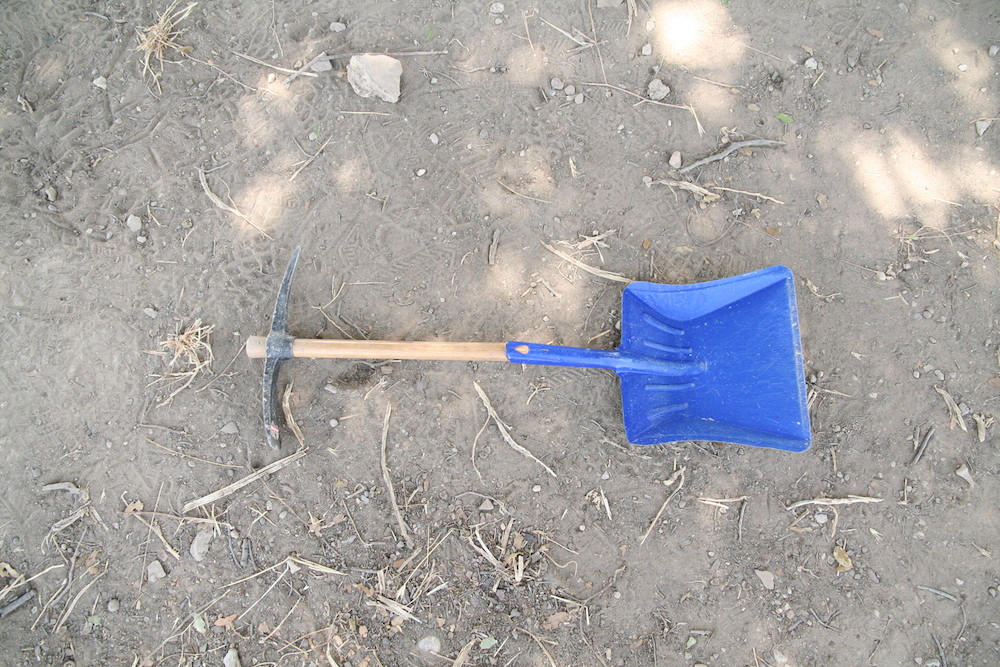
This is the pick-pan, once fully mastered one can spin the tool so that picking and panning alternate and the loose dirt will be removed by the time the pick falls again. With enough thought towards trajectory, you can hit the wheelbarrow from anywhere and not even break picking momentum!
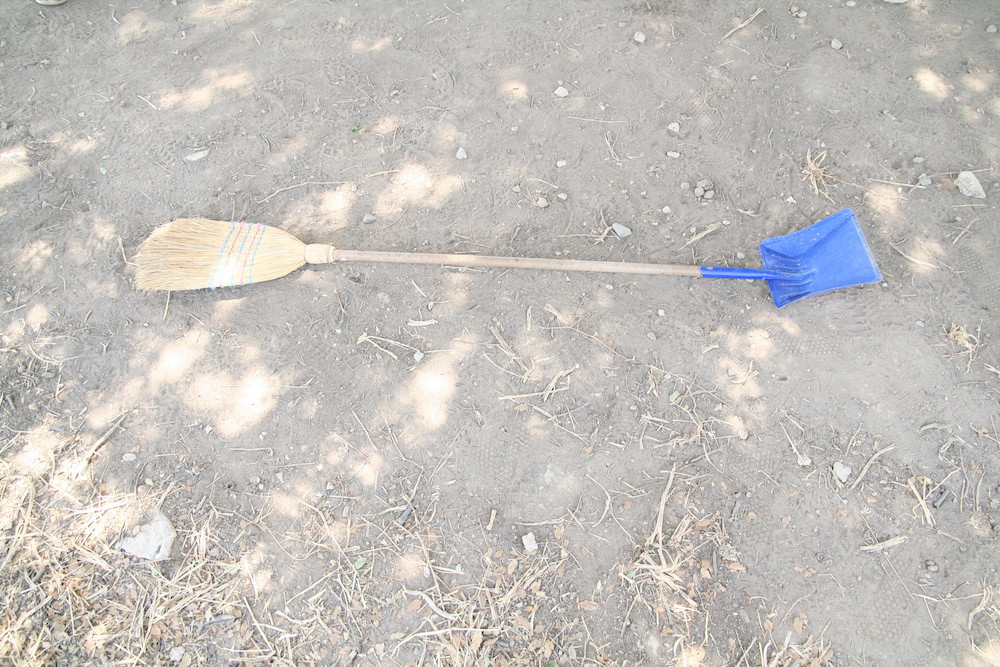
Here’s another dustpan combination that should be self-explanatory. It’s an ideal tool for a sweeping duo and it increases your pick-up range and drop-off range considerably. It can also be used to present things to the trench supervisor with minimal motion.
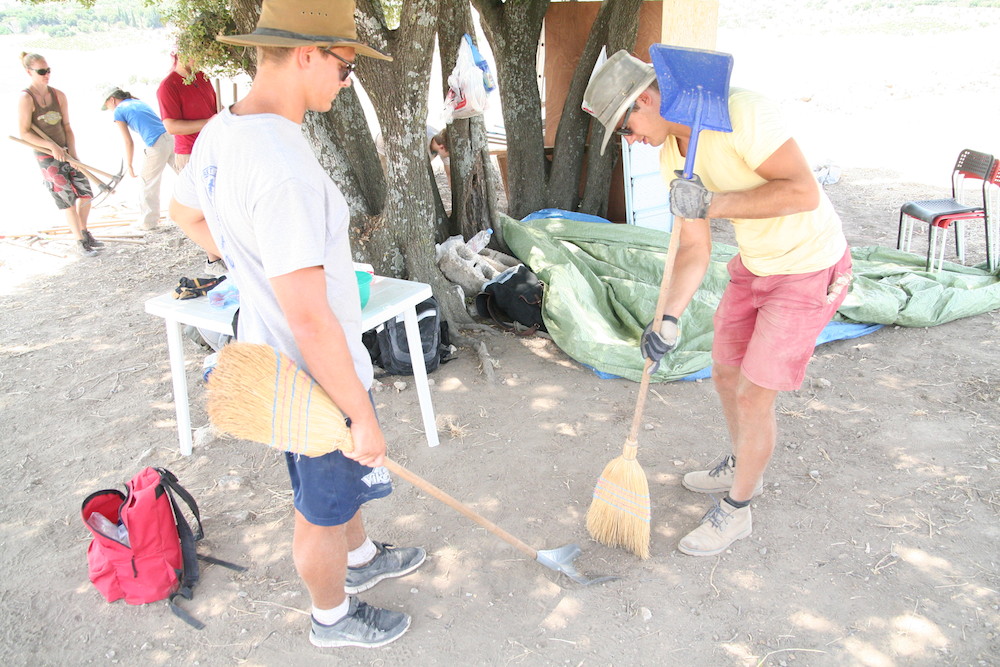
A model sweeping duo.

I can’t speak enough for the dustpan but this is perhaps my favorite use. As a kneepad, it provides a level and firm surface that saves the discomfort of regular kneeling and is in immediate reach when necessary.
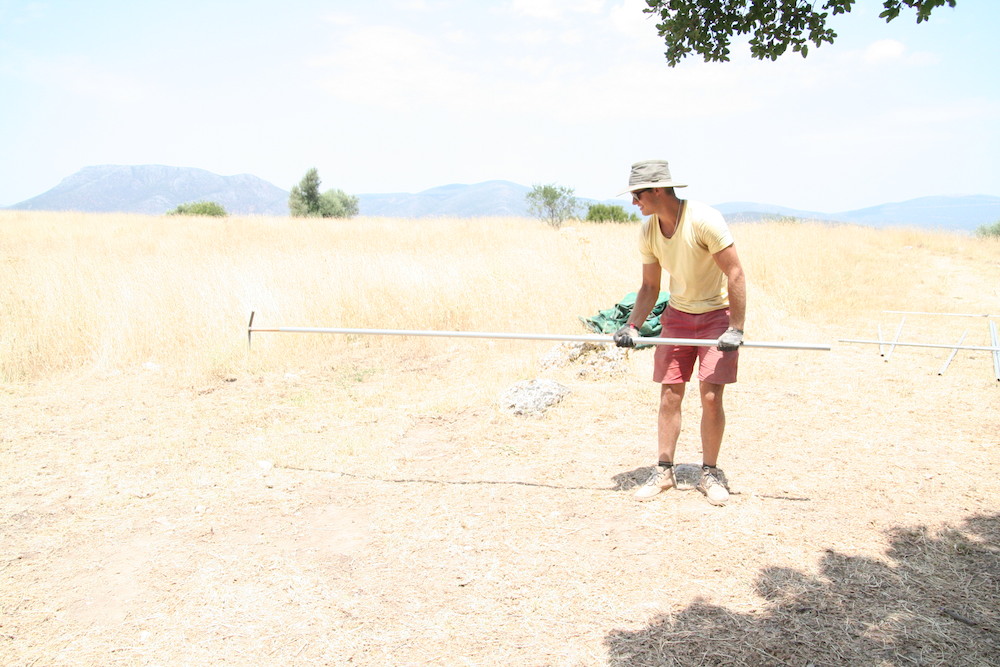
This is one more tool combination, an eight-foot pipe with either a small pick or a trowel for delicate work from a distance. Maybe you’re impeded by a pesky ancient structure or maybe, just maybe, you’ve found a nice place to lounge…
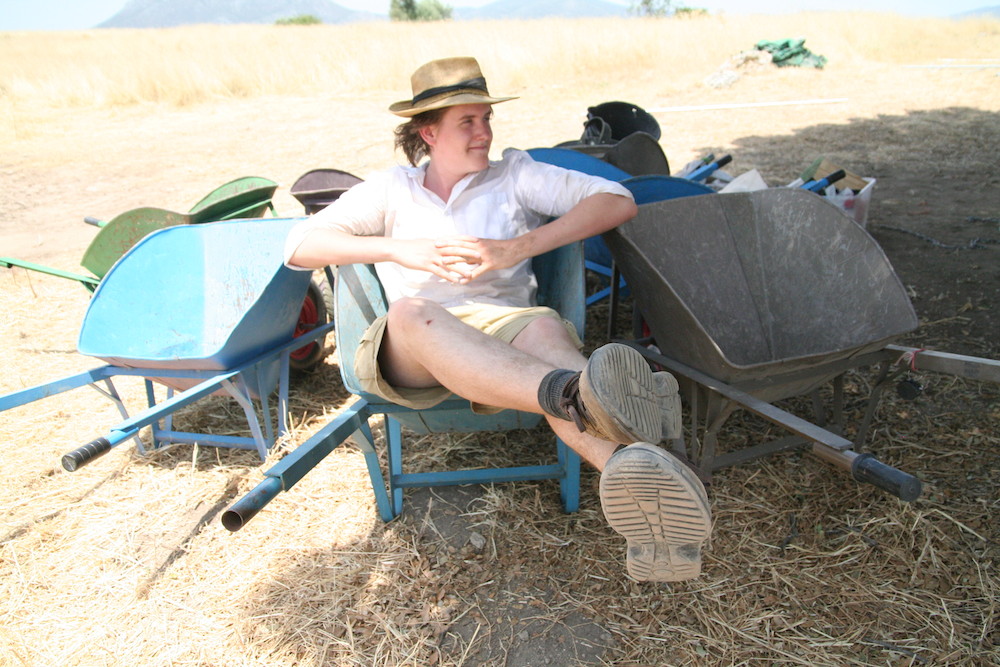
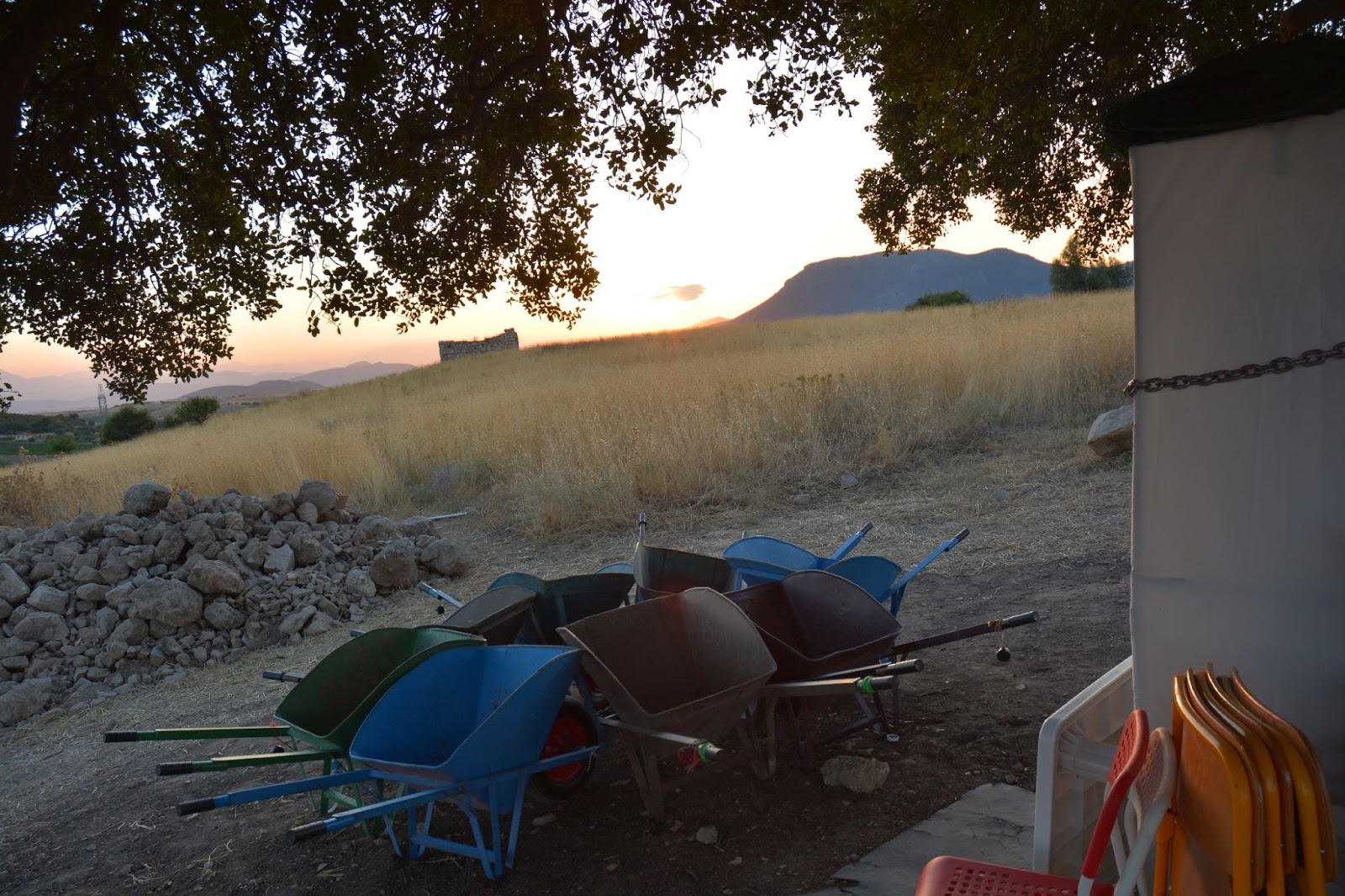
When not loaded, the wheelbarrow provides superb lumbar support, arm rests at perfect height, and even leg rests in the form of handles. It’s superior to any chair in which I’ve ever sat and I could even imagine it becoming the next wave of the healthy-sitting movement for both archaeologists and office-workers alike. Try it sometime!
Thank you for reading this brief summary of what I’ve accomplished in my few idle moments on site.  They say necessity is the mother of all invention, but I say that absentmindedly jamming things together and lounging around works just as well. I’m no genius, just a boy trying to offer what he can to a profession that he grew up admiring. Feel free to use any of these innovations in your own excavations and in your daily life. The facial hair, however, you’ll have to grow on your own.
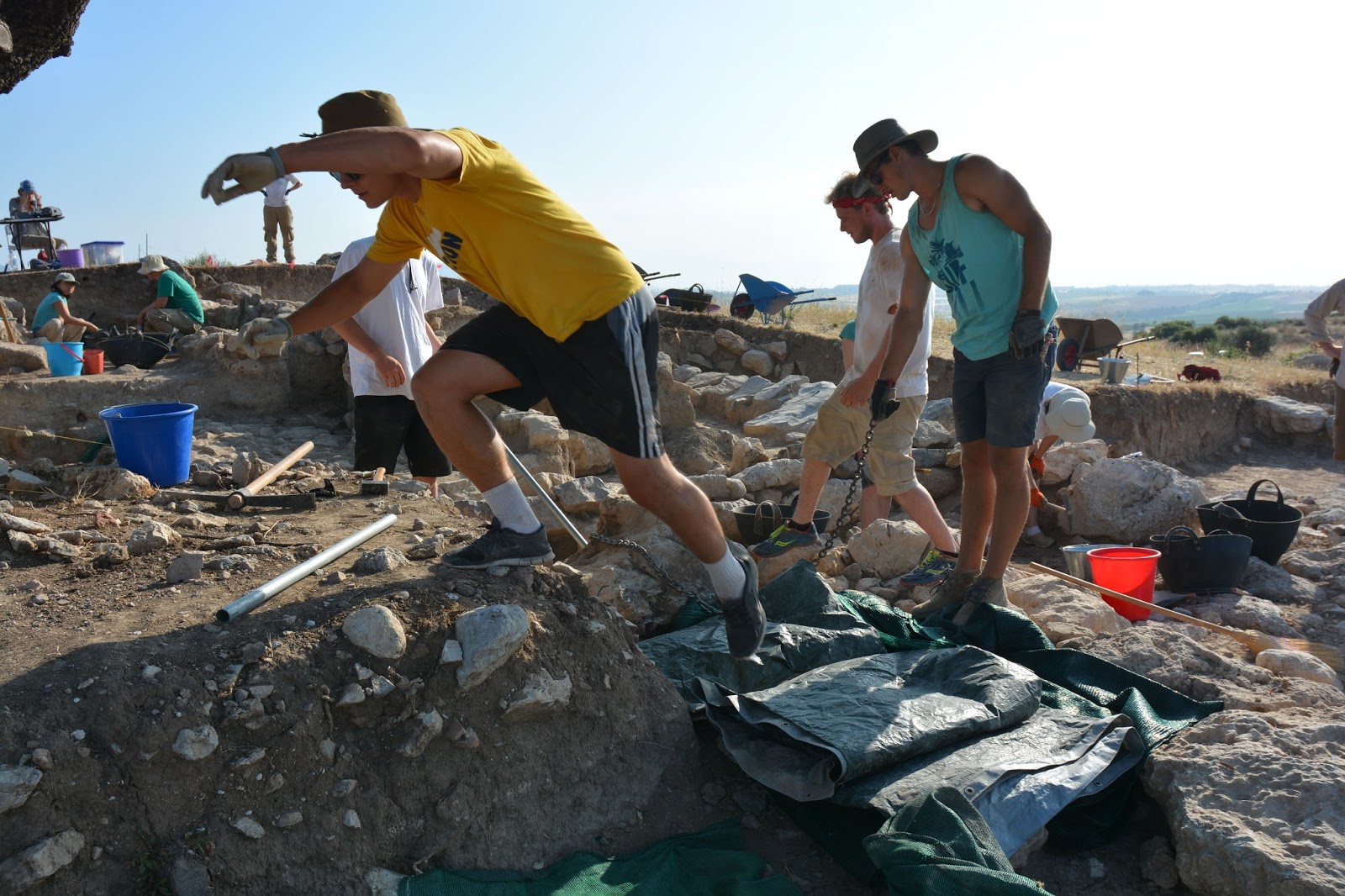
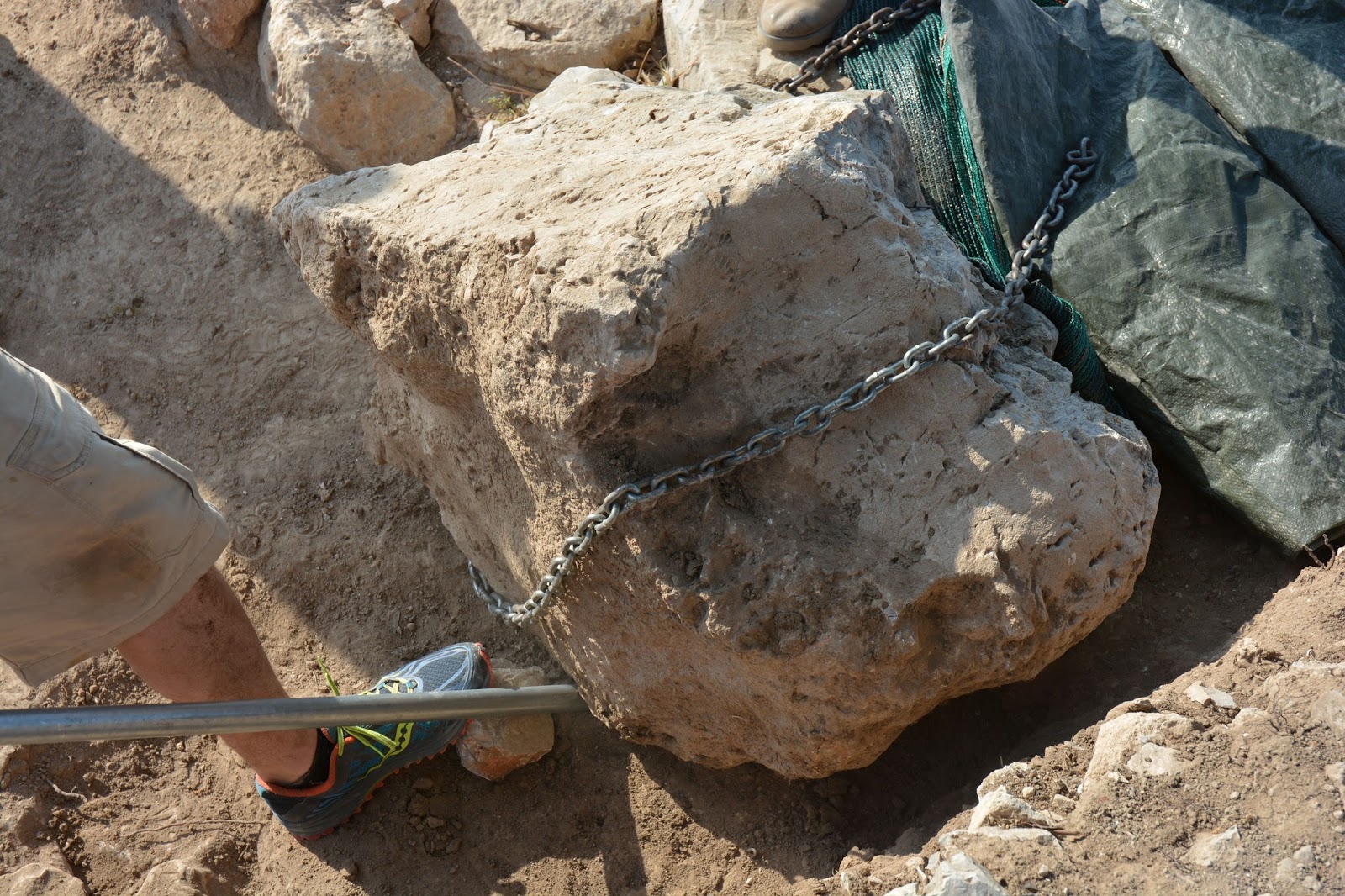
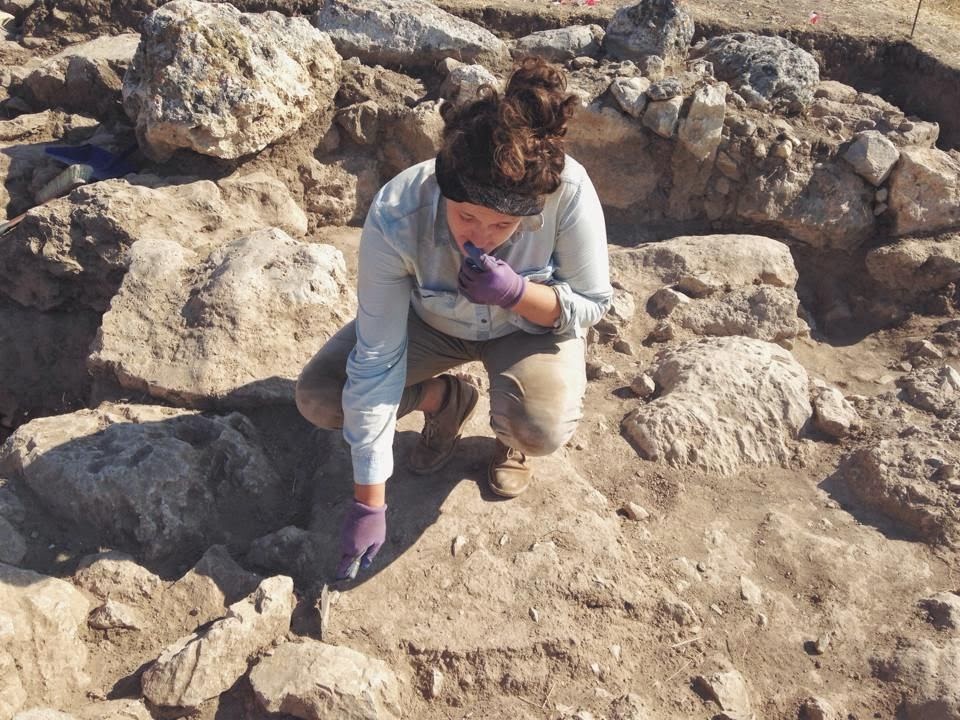
We have reached the midway point of our excavation. Last week ended with a slightly shorter Saturday than normal because of a downpour. This resulted in a very chilly lunch at Stavroula’s. The family kindly brought out every piece of clothing they had to keep everyone warm. Before the rain we were able to get a good amount accomplished – including the removal of a very large stone (photos below)
With three weeks remaining, things should be fairly exciting this week. Our project will also be getting several additional team members so our number should increase to about 35, our maximum this year. The upcoming days should be great. The weather, however, is again a little off-putting – cloudy skies and rain forecast for tomorrow morning does not sound good. We will see.

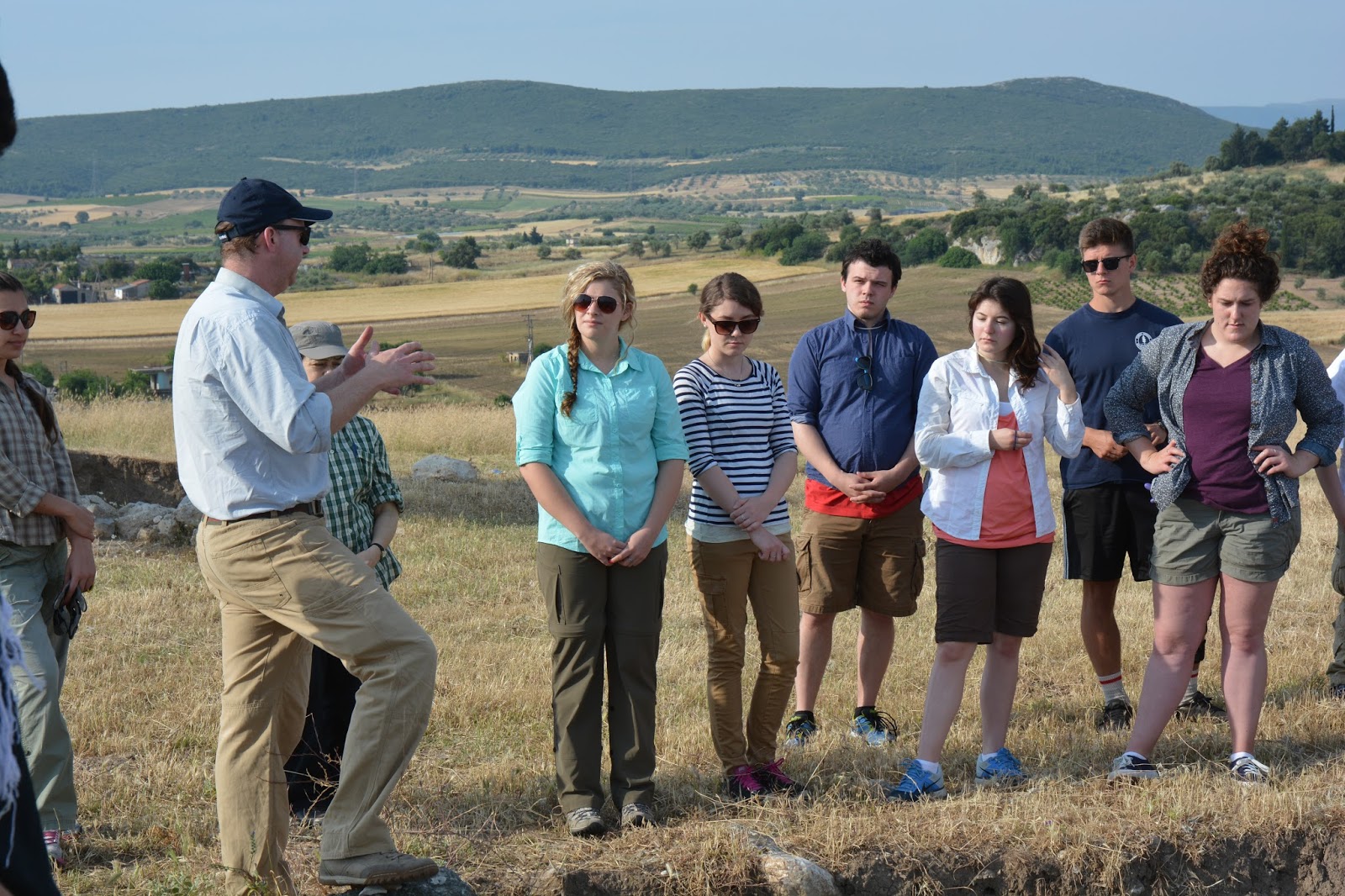
Actions have consequences. That was the title of my ‘lecture’ today as we began week three on site. It was forecast to be the hottest day of the year so far, and after a VERY sunny hot weekend, no one was surprised when temperatures reached around 35/95 degrees by the end of the day Monday. Over the weekend, several people thought it a good idea to spend the day at the beach, in the sun, all day, maybe with a beverage or two. Great fun, but I think some paid for all the fun a bit today while working the trenches. That’s originally what I meant by ‘actions have consequences’ – but there’s also another meaning.
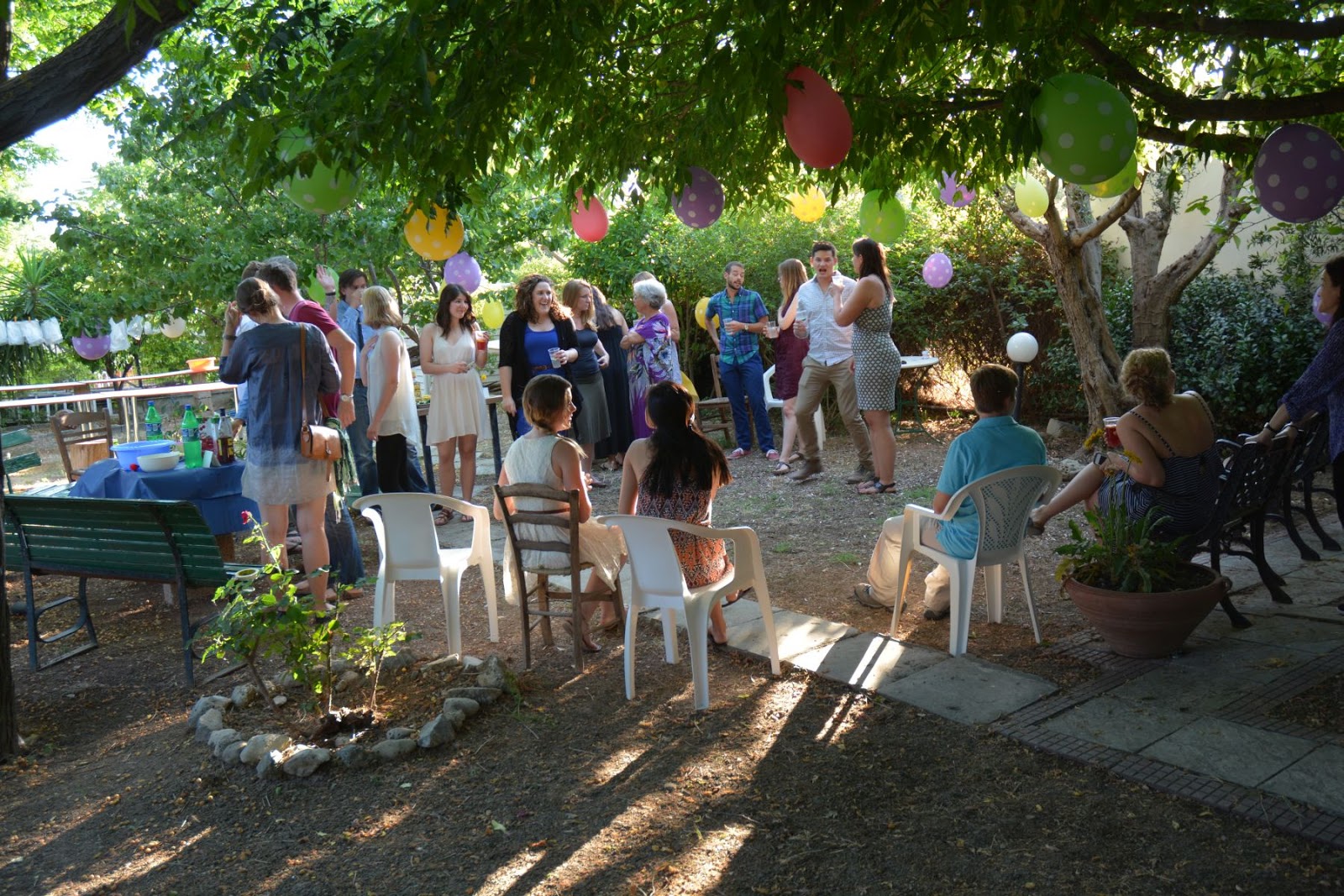
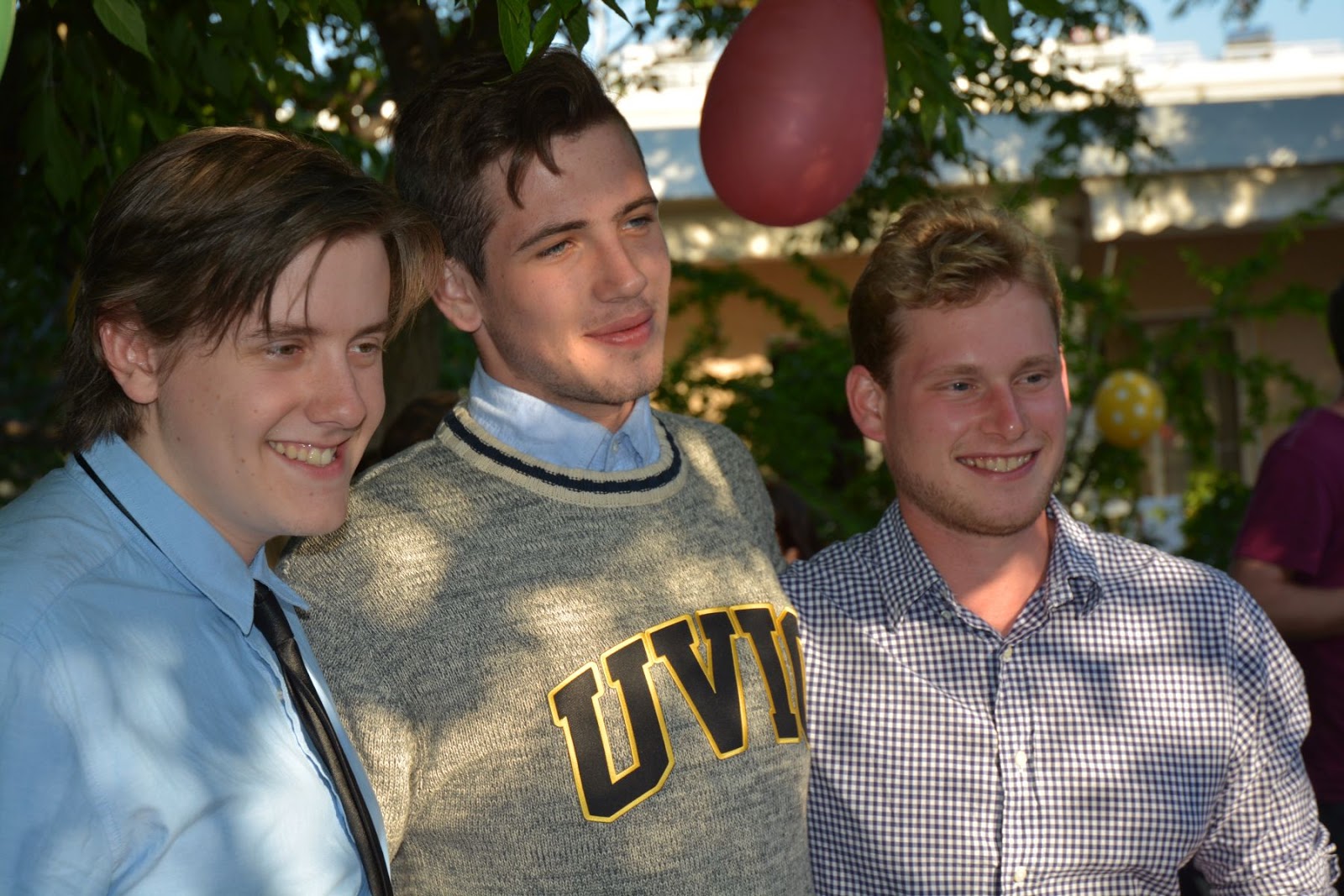
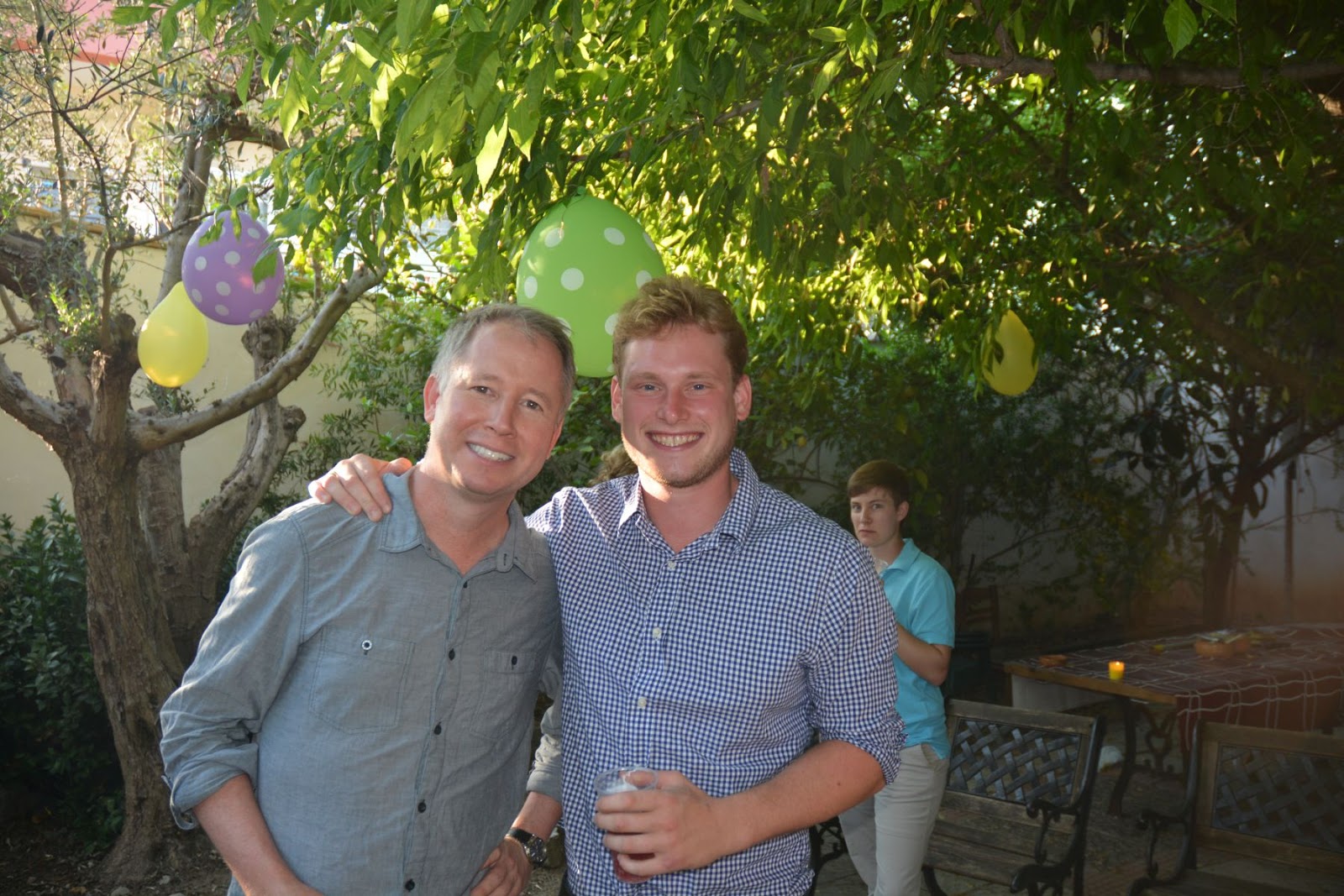
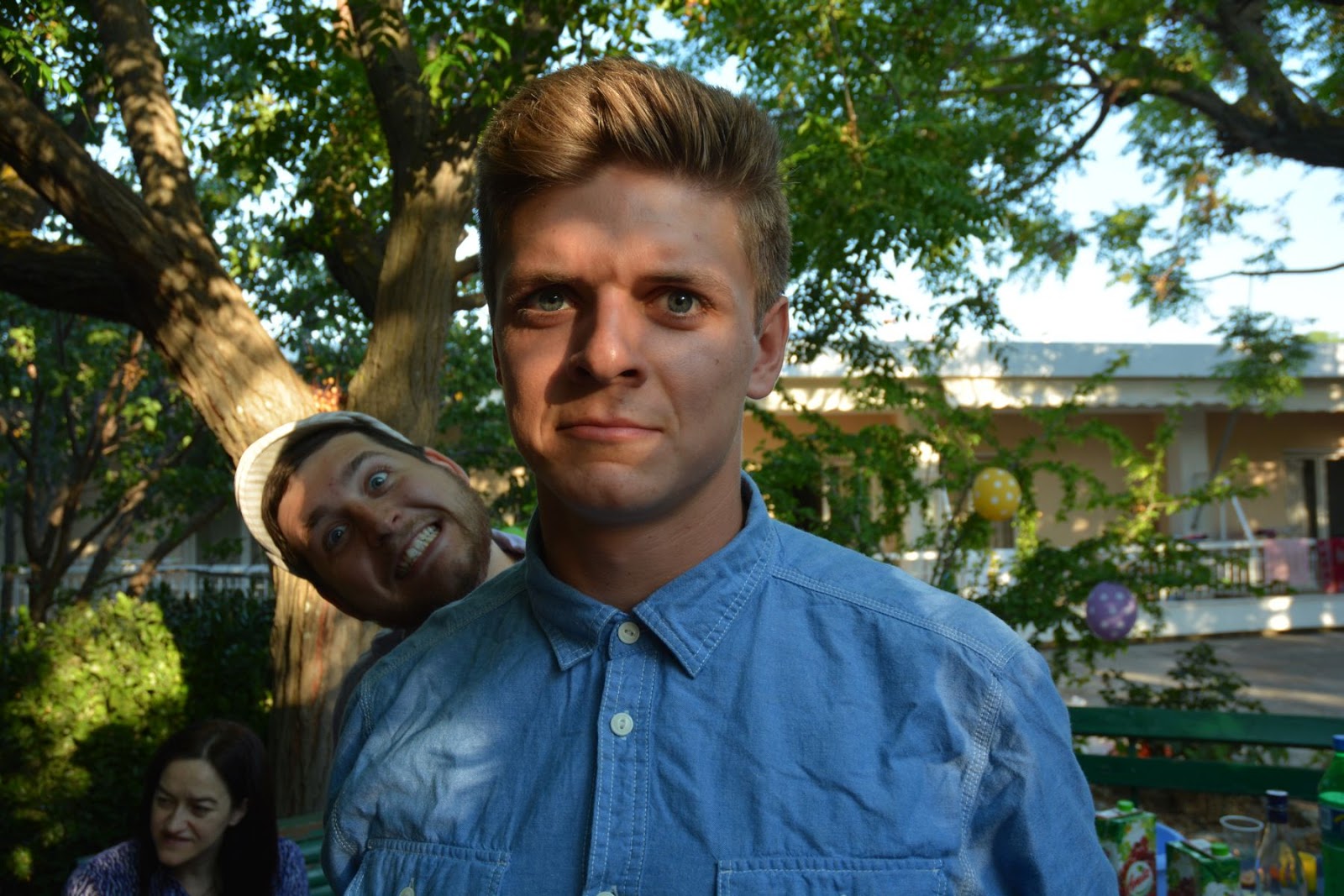
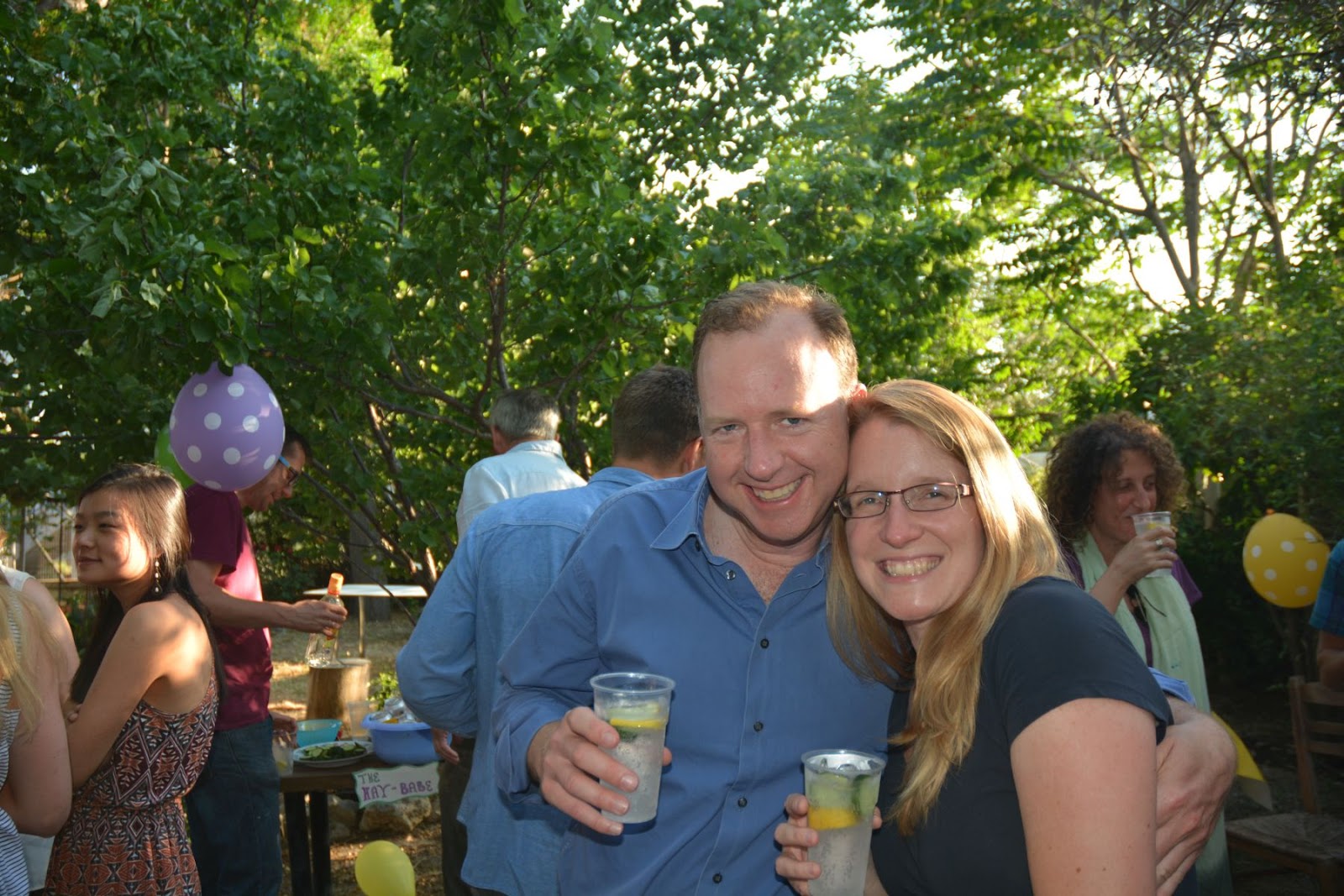
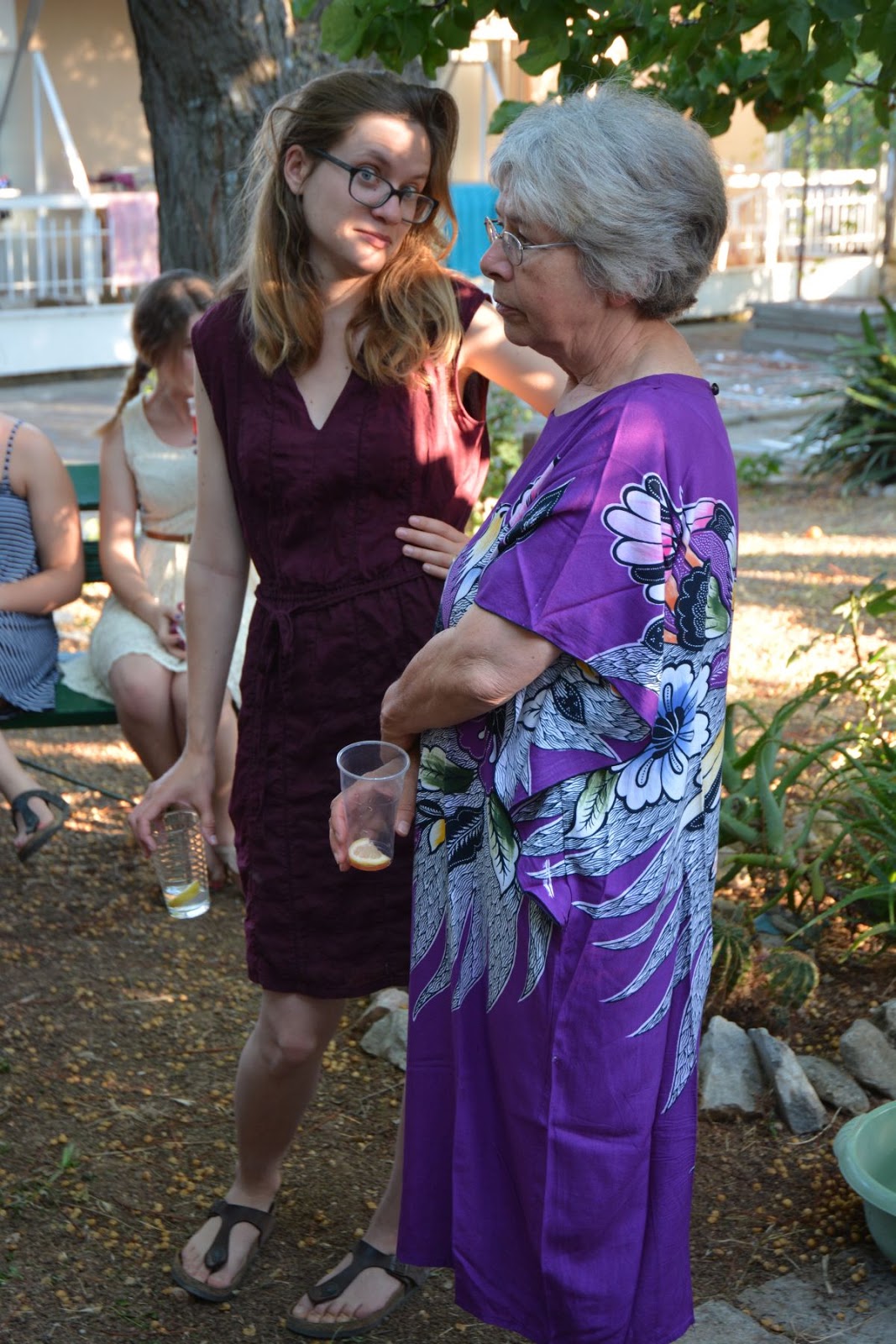
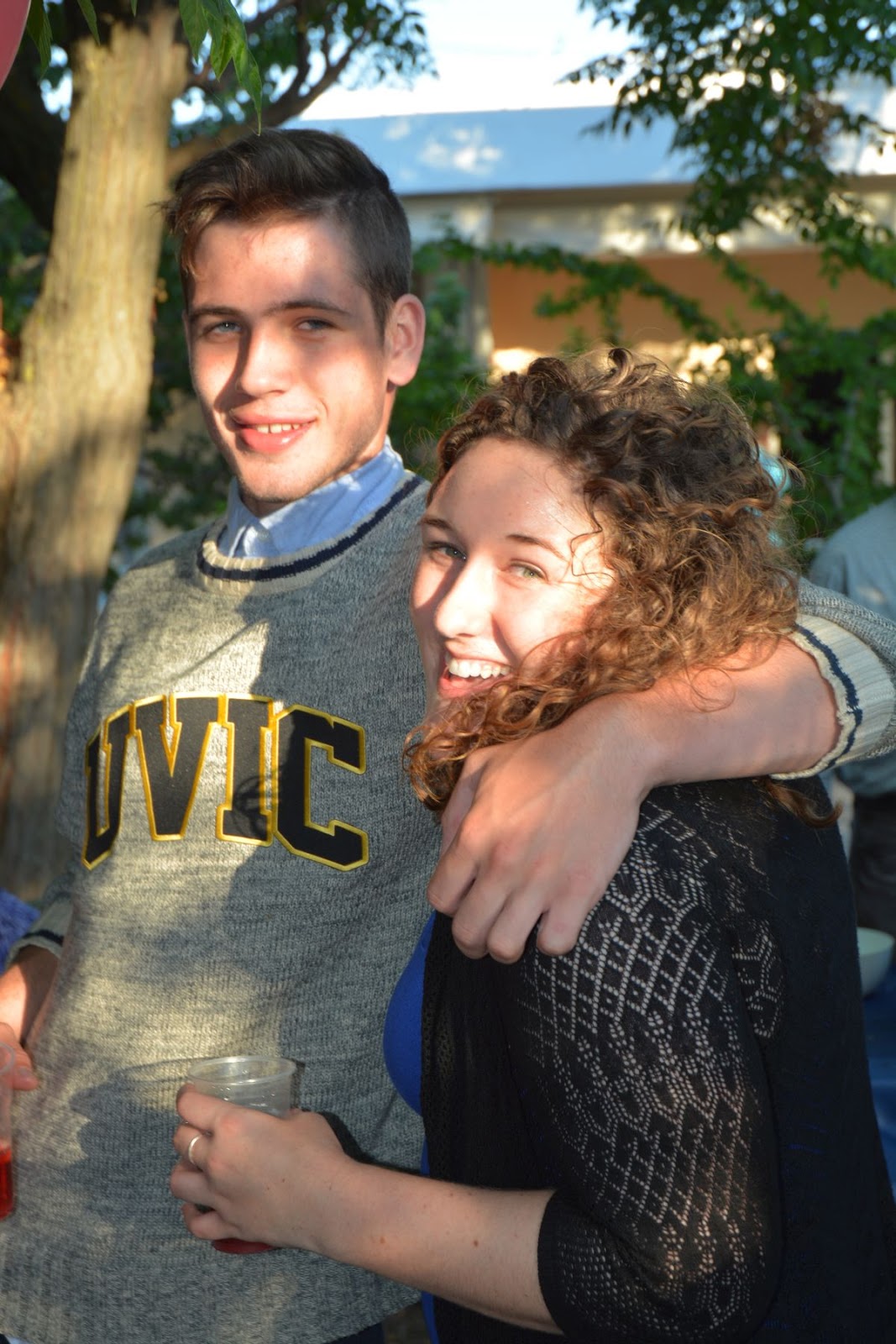
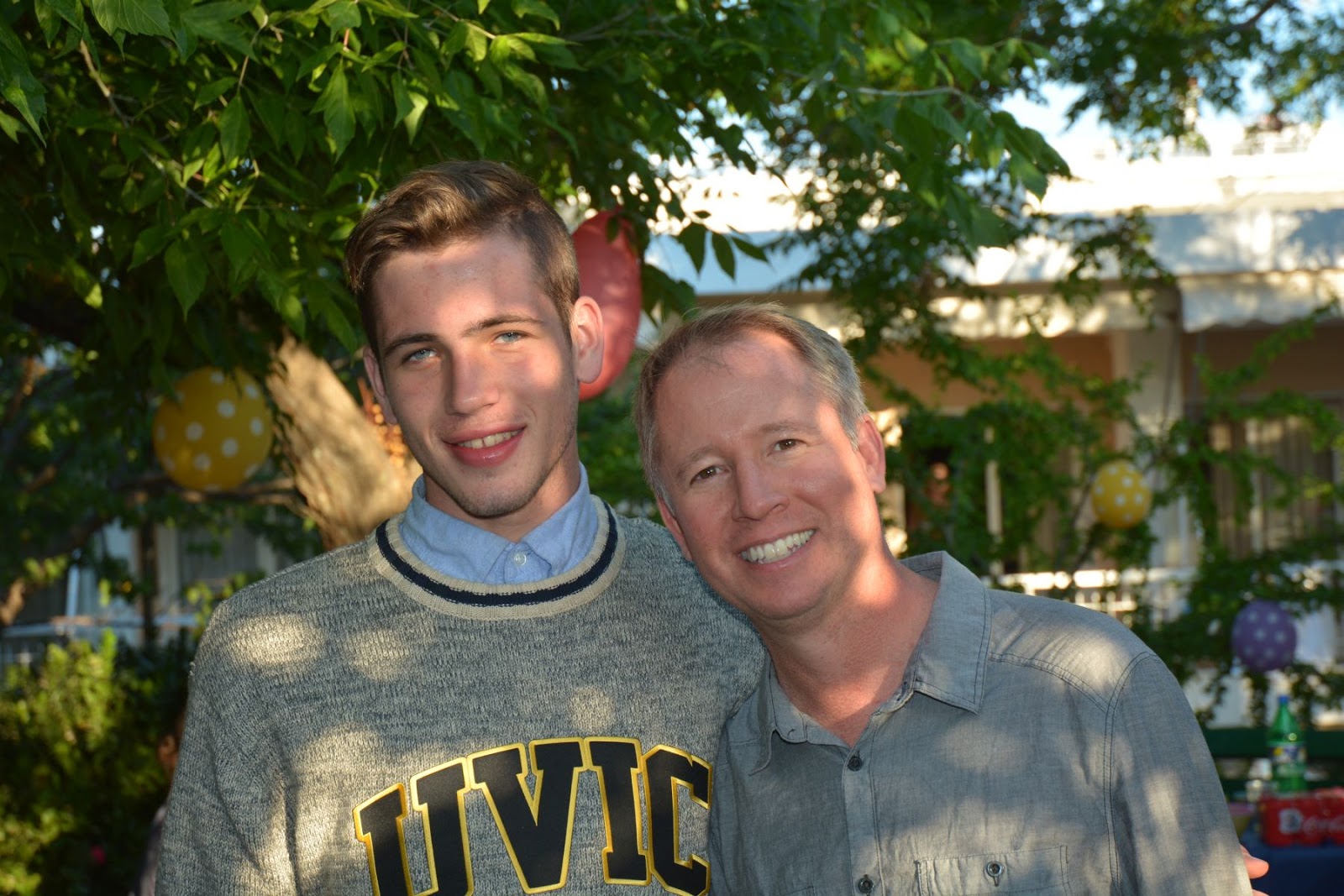
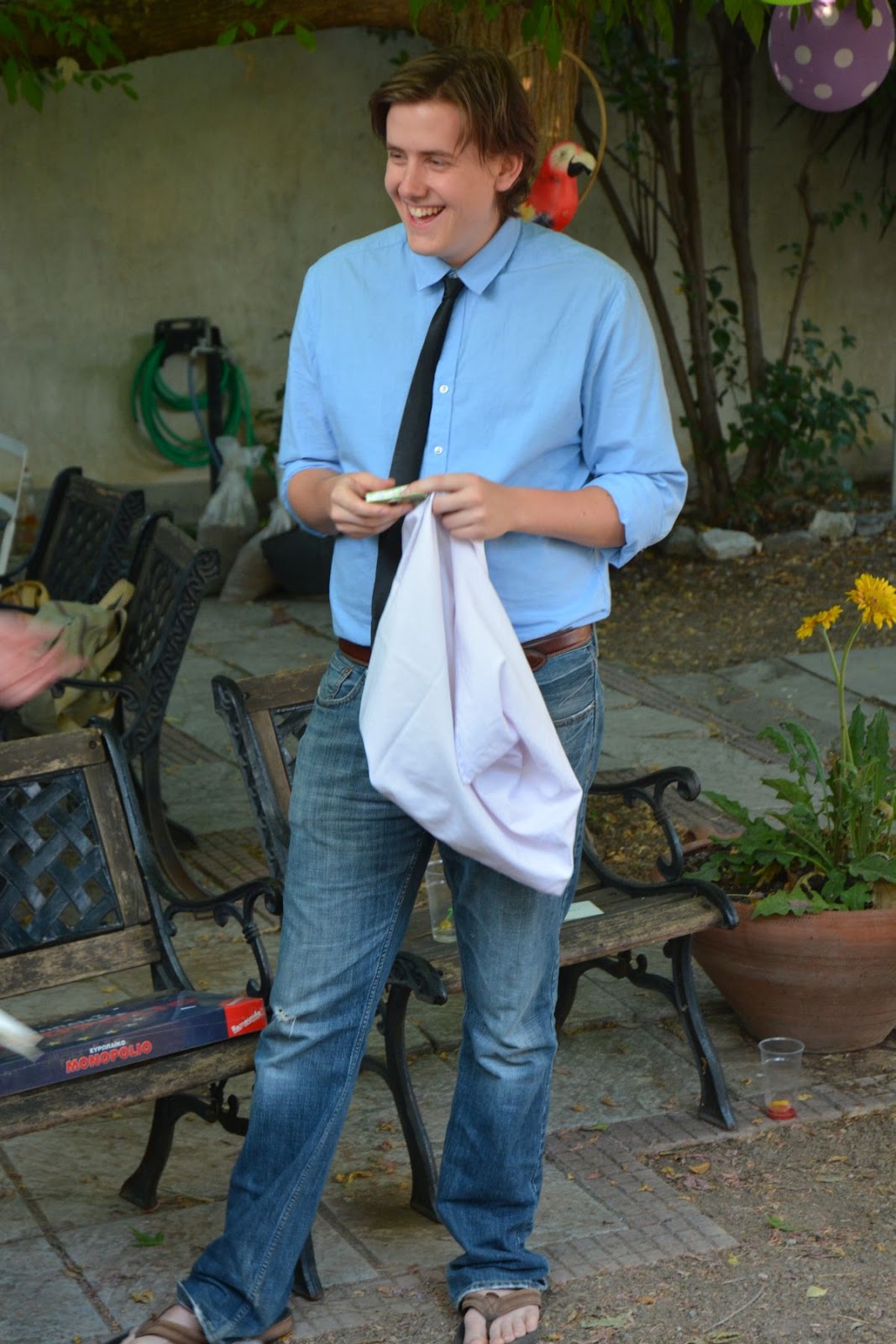
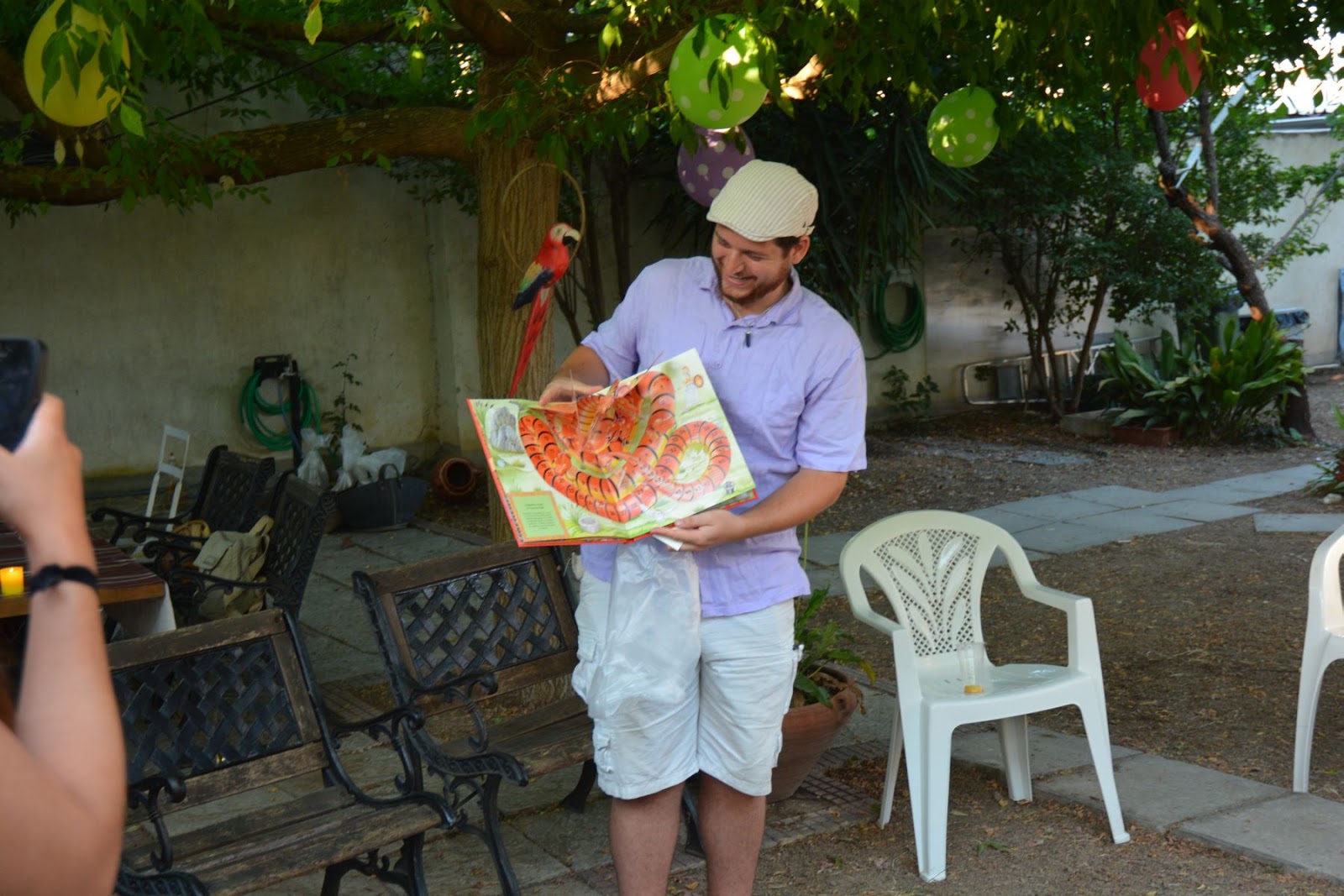
Every year, several of our students make the choice to come to the excavation during the summer and forego their home graduation. It’s a tough choice, especially when they leave behind expectant proud parents who miss out on celebrating their offsprings’ well-earned success and acclaim. To try to make up for missing their formal graduation, we typically have party for those students. This year we were very happy to celebrate a range of graduations: one from high school (Duncan Jones), two from undergraduate (Max MacDonald and David Royce) and one with her MA at UBC (Haley Bertram). Led by Sam Bartlett and Janelle Sadarananda, the party planning committee threw together a great garden party with personalized drink stations for each grad, special gifts and speeches by key members of the team for the individual graduate’s honor. It was a great Friday evening event. 
We are extremely proud of our graduates and wish them the best of luck. Two will be at UVic next year (Duncan and Max). Haley will be entering the PhD program at Cincinnati. While we sometimes look for any reason to host a party on this excavation, the great success and hard work of our students prove that ‘actions’ can have truly great ‘consequences’.
We’ve now started our third week of excavating and things are going very well. We will deal with the heat by starting tomorrow with a 6 am departure. We will consequently reduce our work time in the afternoon by a half hour. It will still be hot, but our work will continue.  

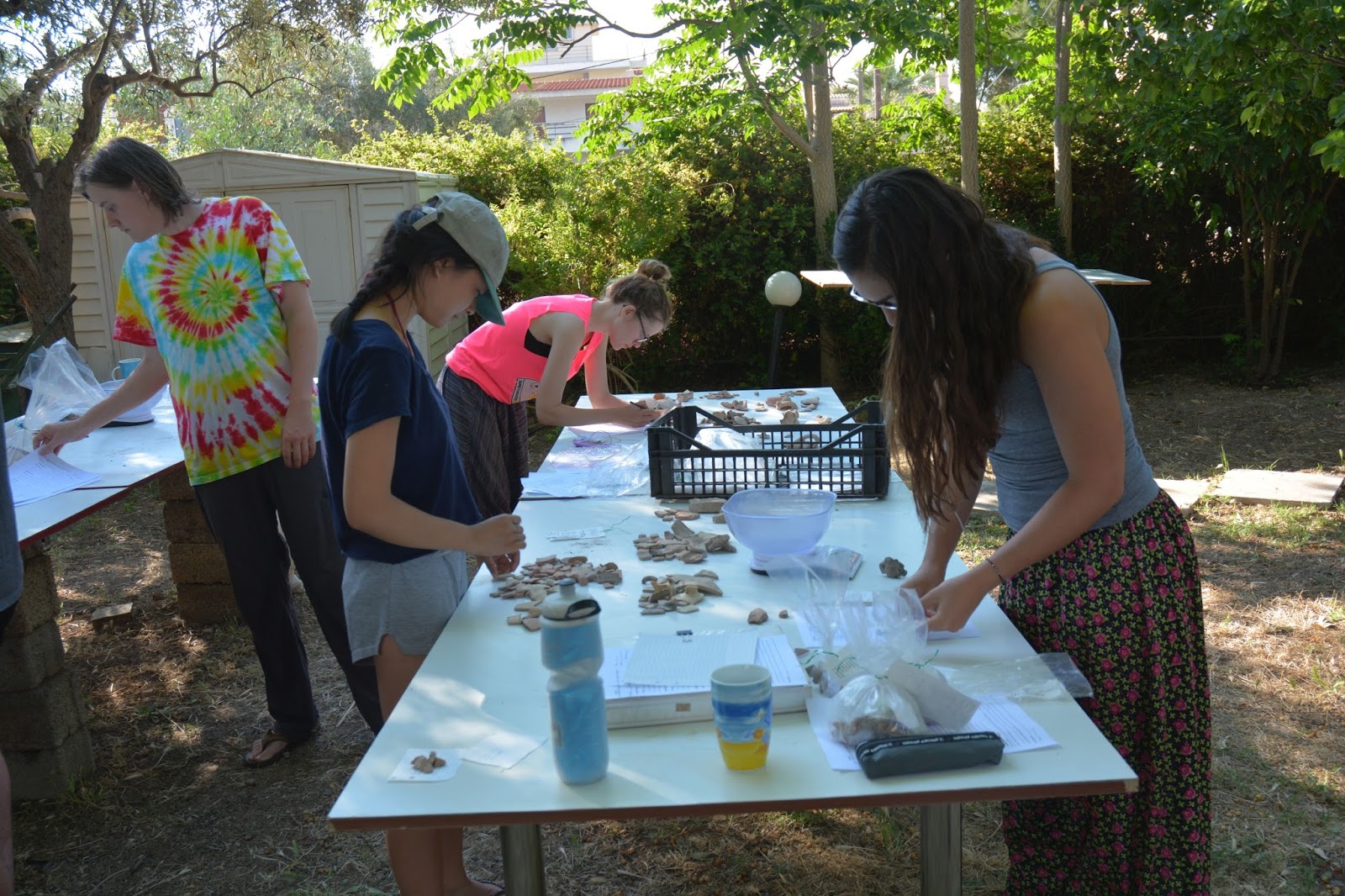
Here are some photos showing what goes on in the second half of our day, starting at 5 pm until 7 Monday to Friday.After returning from site we observe a typical Greek town rest-period, quiet hours. Some of us sleep, some swim, others read and rest. A few sneak in a bit more time working or catching up with work back home. At 5 our house comes to life. Students begin by collecting the dried pottery from the screens from the day before. These are bagged with their numerical tags inside and outside and put in bins for the supervisors to sort, assisted by students at the white tables. The sherds are sorted by weight and type. Diagnostic pieces are separated out for further detailed study and photography. Other students start washing the daily sherds we’ve brought home from the field that day. On a hot a day, it can be somewhat cool and refreshing to be gently cleaning dirt off the ceramic fragments in plain water using small brushes. We have a beautiful apricot tree providing shade and the sweetest apricots for snacking. 

Week Two
Our second full week started well. We got a new (wooden!) closet, custom made to fit our beautiful tree. This will hold our valuable equipment onsite so we don’t have to carry too much up everyday. We also had an earth mover flatten out our backdirt pile and stone heap on Saturday. This will improve the overall appearance of the site. Our only concern is that the new flatter, larger back dirt pile will cover potentially interesting archaeology for our successors in decades to come. For now though, we’re are very happy with the way the site has been cleaned up so quickly and looks really great for any visitors. Our 2015 team has proven to be an EXCELLENT selection of students and volunteers. They are engaged in ceramic studies – fighting for copies of Moutjoy – and our working diligently to learn modern Greek. They also work very hard with a happy attitude. 
This morning, Tuesday 9 June 2015, was remarkable to many because we all awoke at 4:09 am to a 5.2 magnitude earthquake. It seems to have been centered right off the coast between the mainland and the island of Euboea which our home town of Dilesi overlooks. The quake was strong and it’s remarkable that for our proximity we did not see any noticeable damage. Some students said they saw some tiles come off in their kitchen. Thankfully no other damage or injuries have been reported in the local papers. We will all be aware of Poseidon’s power!
Having started off the day with some great difficulties, reflecting on the fragility of life, we all rebounded, came together and focused on the work at hand. The weather cooperated nicely – sunny, breezy and not too scorching hot. My car read 32 when leaving the site – not terrible (I’ve seen 44 before! – this is around 92 to well-over- 100 for our Fahrenheit readers). 
The work day ended with a delicious crowd-pleasing lunch: Classic Greek mousaka by Stavroula! A small Greek masterpiece. We are extremely lucky to have such great food so expertly prepared for us in the village of Arma by Stavroula and her incredibly welcoming family. 
We will enjoy dinner at the Delion taverna by the sea – seafood tonight I believe. 

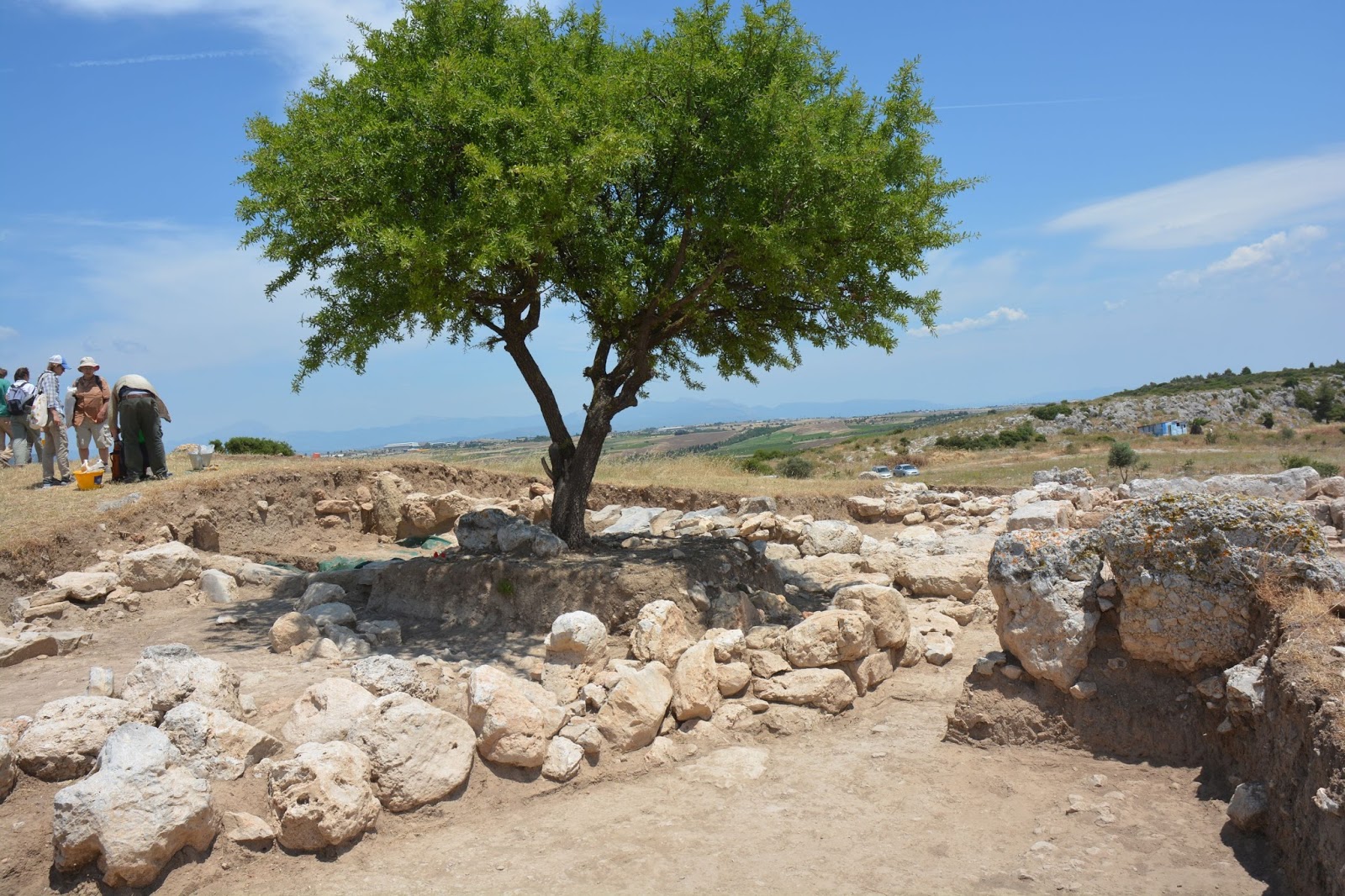
Today was our first day of new excavation for 2015. After a lot of work the site is now very clean after the winter. We removed a great deal of backfill – earth we put into the trenches to preserve the architecture we’ve exposed in previous seasons.
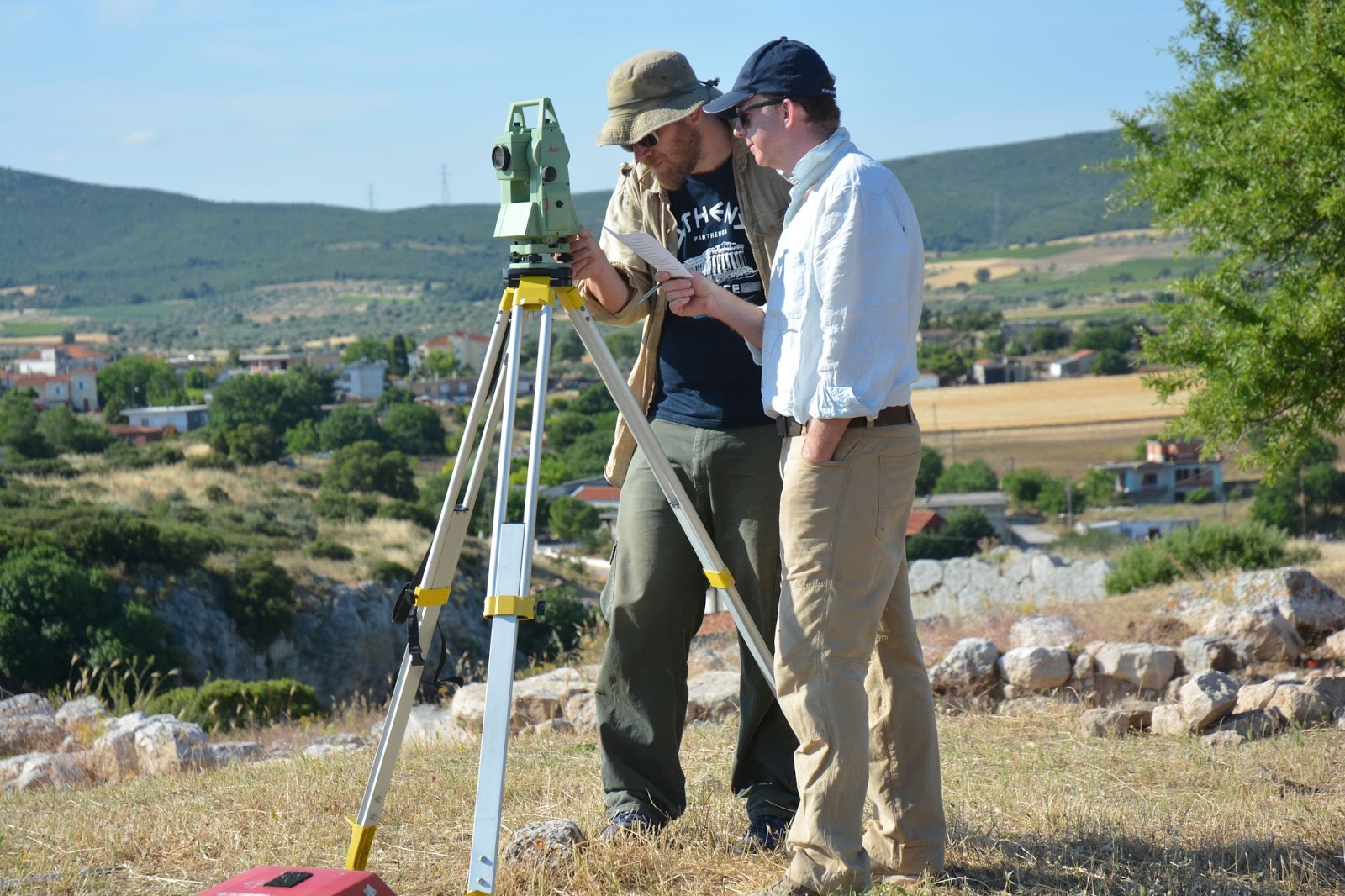
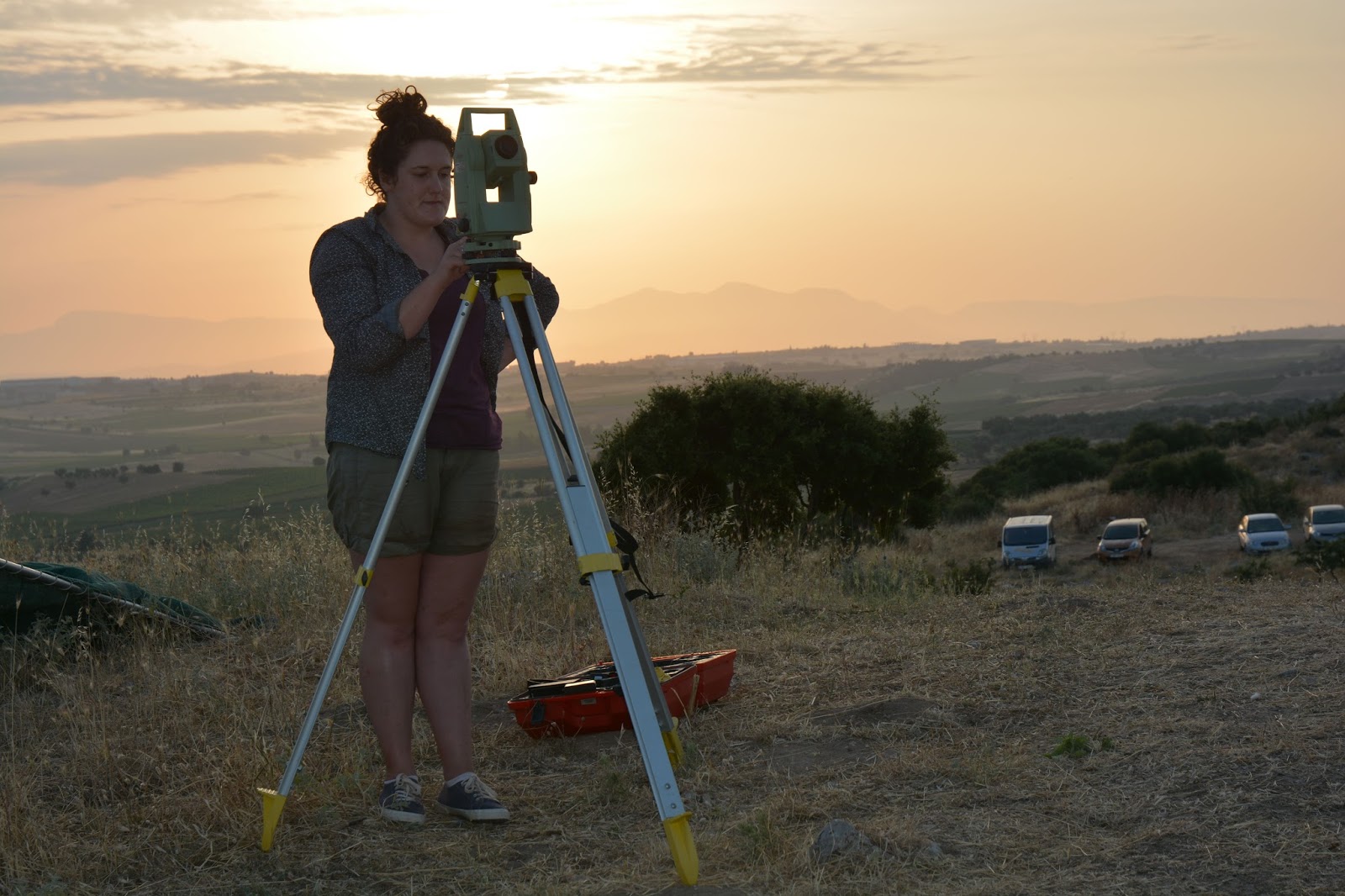
Our plan this year is not to have a large number of new trenches but rather we will concentrate on an area opened last year that was not finished. This is in Southeast quadrant of the site, very close to our zero point. This area has been the highest part of the site and so we normally were setting our total station up on it to view the areas where we were digging. Now that we are working here we need to position our total station machine in another area of the site, back-sighting to at least three known points. My co-director Bryan has fully figured out this procedure and it has given us new flexibility on site.
The new team of student volunteers has proven to be an excellent fit with our already great team of experienced workers. People bring their own diverse experiences to the project, making it a great mix of people. Everyone is working very hard and enjoying the relatively cool June weather. High heat is sure to come. Luckily we have not had any rain yet this first week – this is unusual based on previous seasons.
We had also fixed our work schedule – leaving Dilesi at 6:30, first breakfast at 9:30, second at 11:30. Lunch at 1:45. Home for rest/beach – 2:30-5. Then pottery washing 5-7. Dinner at 8. Most of us are in bed by 10 (I think!).

EBAP 2015 Begins!
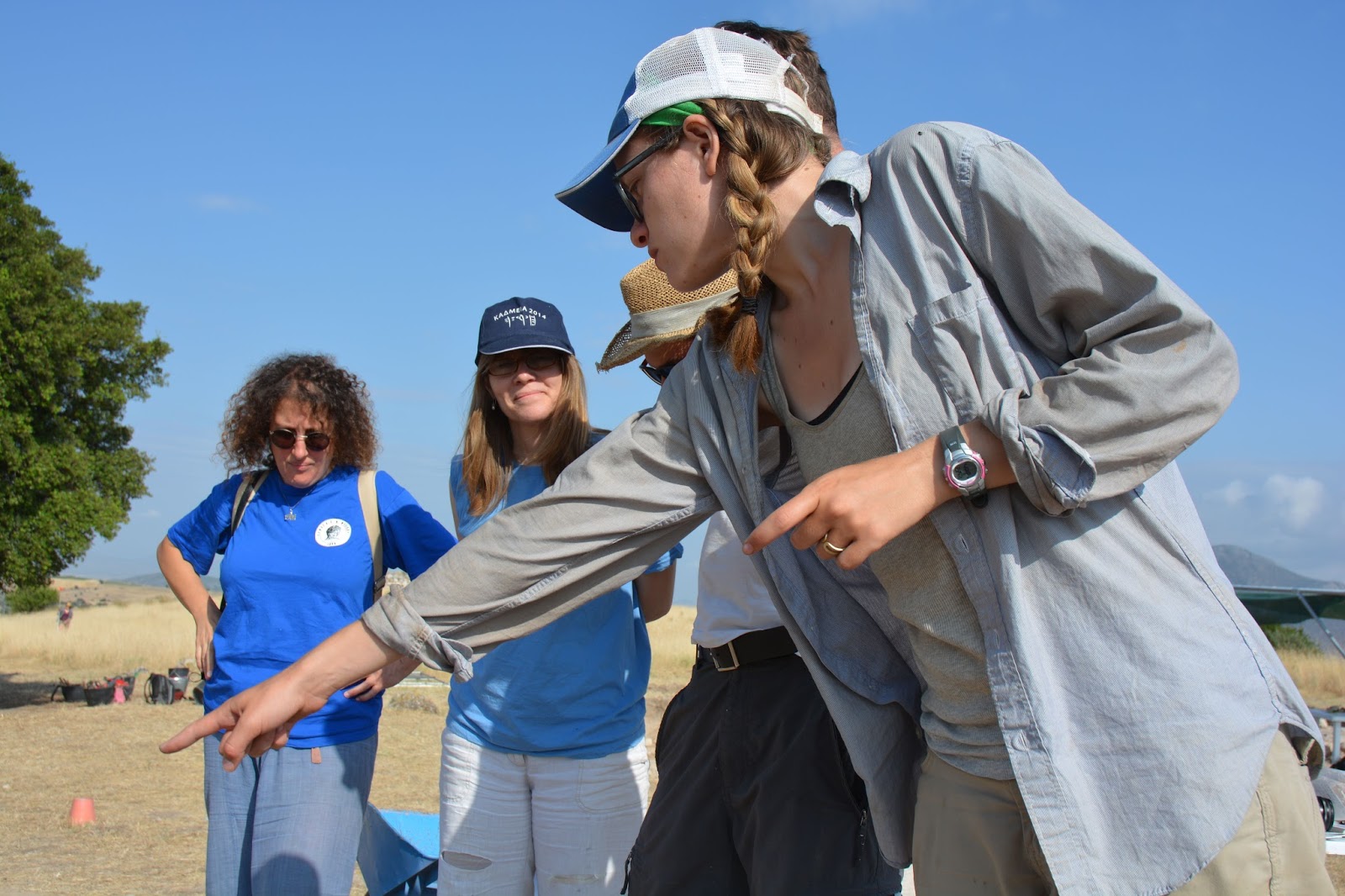
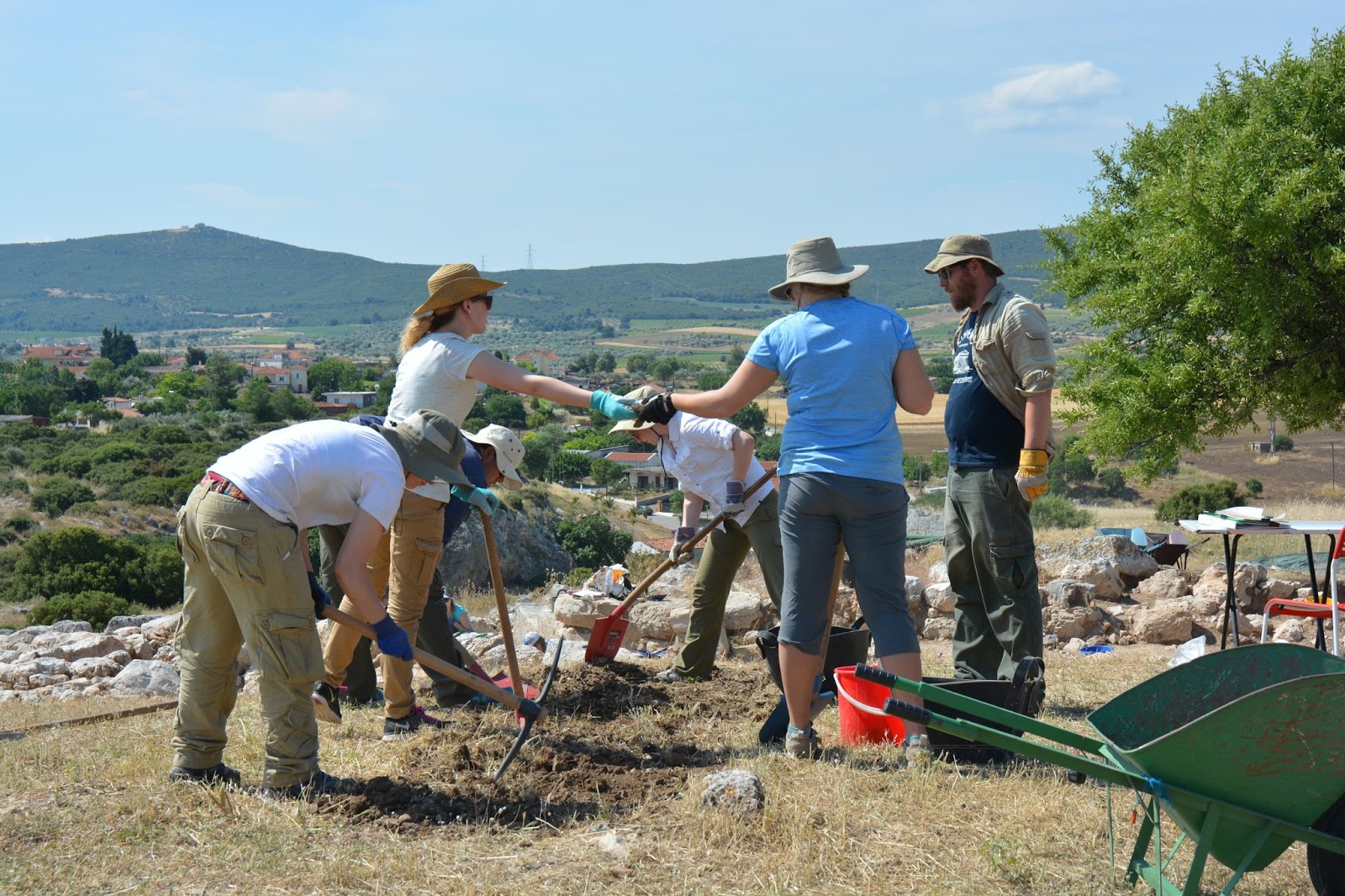
Kalo Mena. Our research project for the 2015 year begins today. Even though today was a holiday in Greece our team was able to do some limited cleaning on site, getting ready for a full season of focused excavation and study. We are still a mix of students and staff from UVic, Wellesley, and other universities. Melbourne and Warsaw are again very well-represented, making us, as usual, a highly international team. The weather is clear and cool. Our expectations are high and our attitudes very positive. Posts will be made throughout the summer. Please check back. Below our some photos of our team cleaning and getting oriented.

The Polygonal Wall

by Alyssa Allen
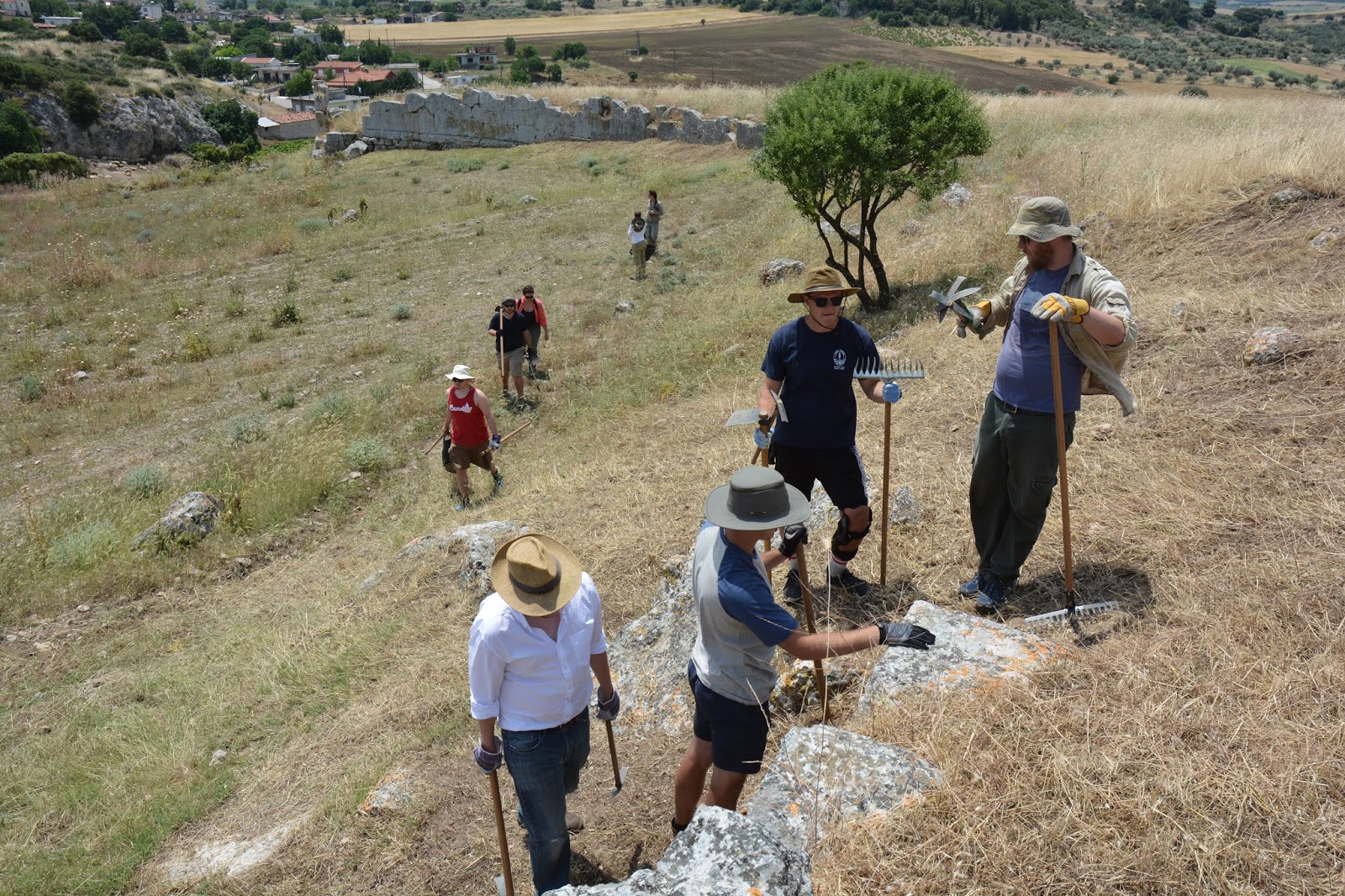
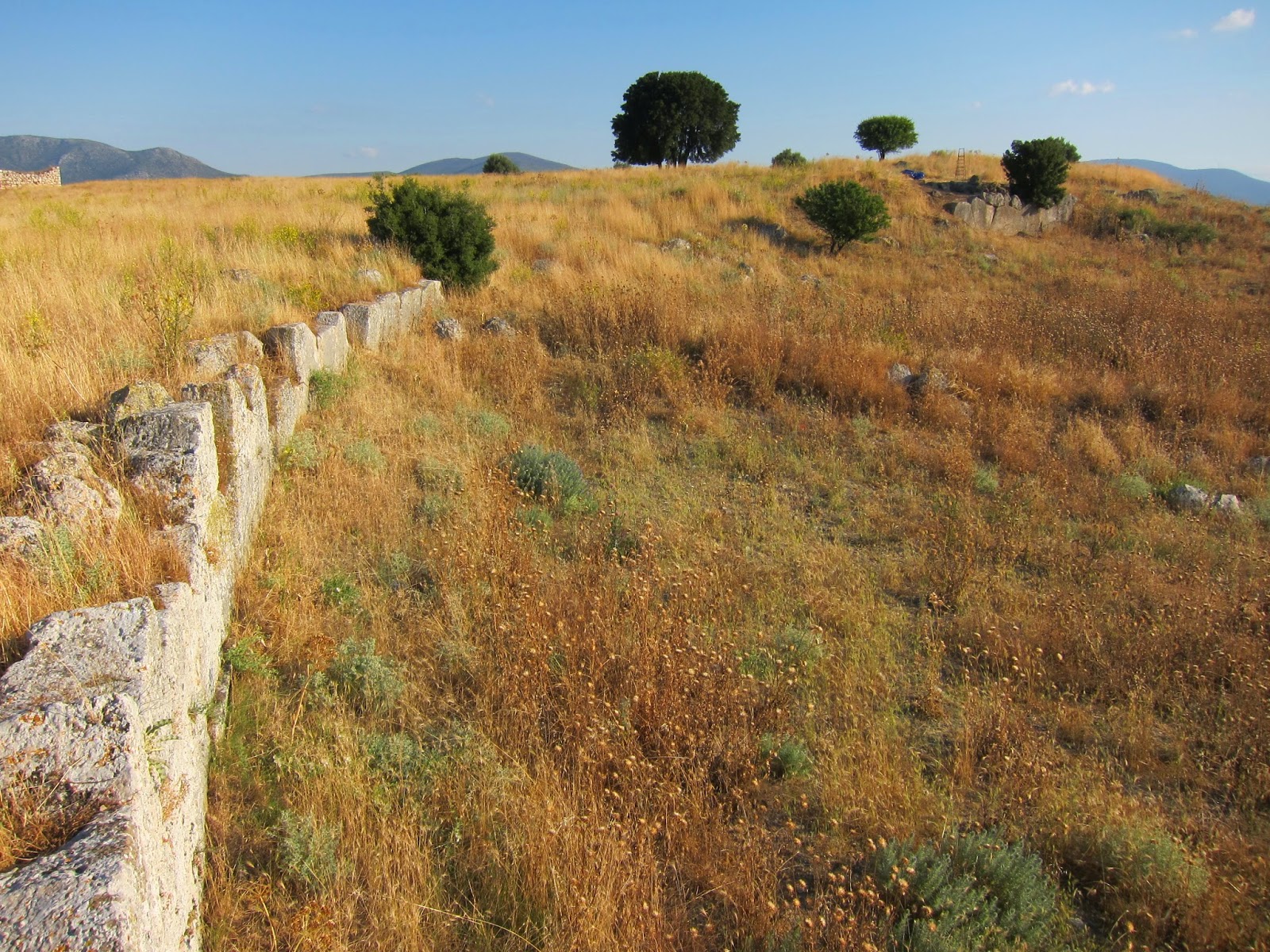
Arguably the most striking feature of Eleon is the massive polygonal wall that stretches along the southern and eastern limits of the site.  I have had occasion to become intimately acquainted with this wall, having spent two weeks digging a very deep trench alongside it in an attempt to both come up with a precise date for its construction and to find the bottom of it.  While the date and full extent is still under study, we also managed to come up with some clues as to its purpose and origin over the course of the season.
The wall at Eleon is unusual, but not entirely unique; there is a similar wall of large polygonal stones at Delphi, near the stoa of the Athenians.  The design, though striking to look at, is not particularly useful in terms of defense, which has led some to believe that its purpose was more for decoration than practical fortification; the first priority of its builders was to impress, rather than protect.  The stones are limestone quarried from a nearby cliff side, within sight of the wall.
The wall consists of large section of enormous flat, worked stones of varying straight-sided shapes, underneath which are a series of courses of large rectangular stones, which we discovered this season to be at least five courses deep in one area.  At least some of these courses would likely have been underground at the time the wall was in use, as evidenced by the fact that only the topmost two layers are worked as carefully as the polygonal stones to give them a straight, flat appearance.  Beneath these, the stones are worked only around their edges so that they can fit together with the other stones, but the center is left unworked and bulging out, a technique known as anathyrosis.  This indicates that perhaps these lower layers of stone were meant to remain underground and not be seen.
The dating of the wall was our main goal in excavating our experimental trench. Our work suggests that the wall likely dates to the Archaic/Classical period, but that the foundation trench which was dug to build it was then filled up with earth from the older levels of the site, full of Mycenaean pottery.


Another odd and interesting feature of the wall that we discovered while digging is that some of the lower courses of stone appeared to have been more carefully worked than the ones directly above them, with more attention put towards giving them a straight and even appearance. How much further down the wall goes, and what further digging may reveal about its date and purpose, will have to wait until the next excavation season, so stay tuned for future updates over the next few years!

The Trowel: An Archaeological Art Form

by Nicole Nairismagi
 
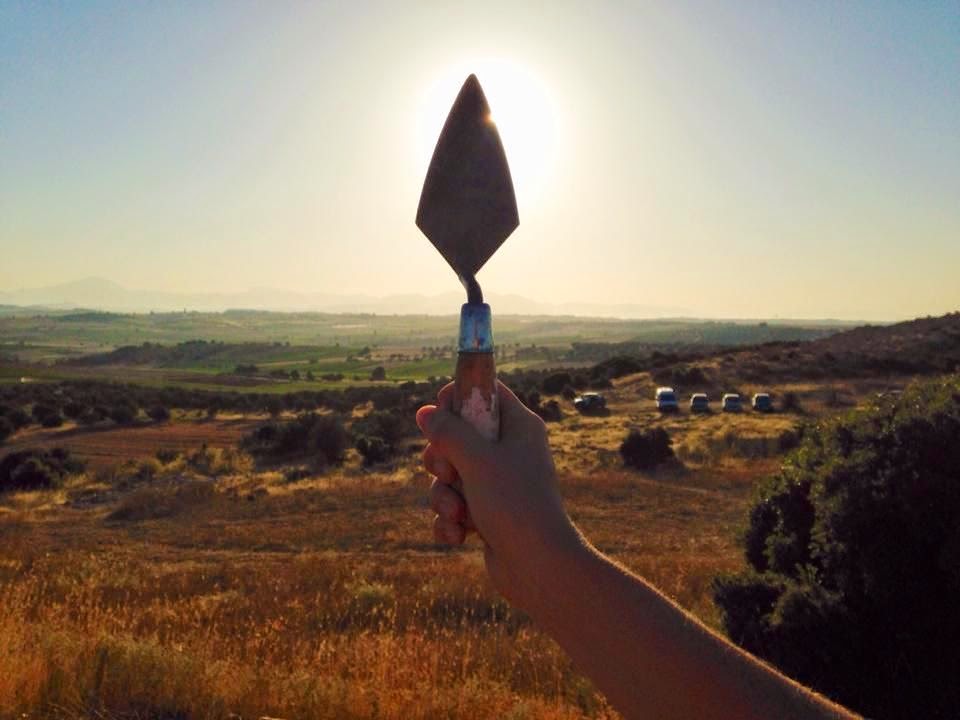
Considered practically holy to all archaeologists, the trowel is an essential tool while excavating. It’s the ideal instrument for detail-work, cleaning, scarping etc. What is common to all archaeologists is the general importance of the trowel; however, it’s method of use varies depending on each archaeologist’s personal preference. Here at the excavation of Ancient Eleon we have some very special methods.
 
1.      Happy Hamstrings
 
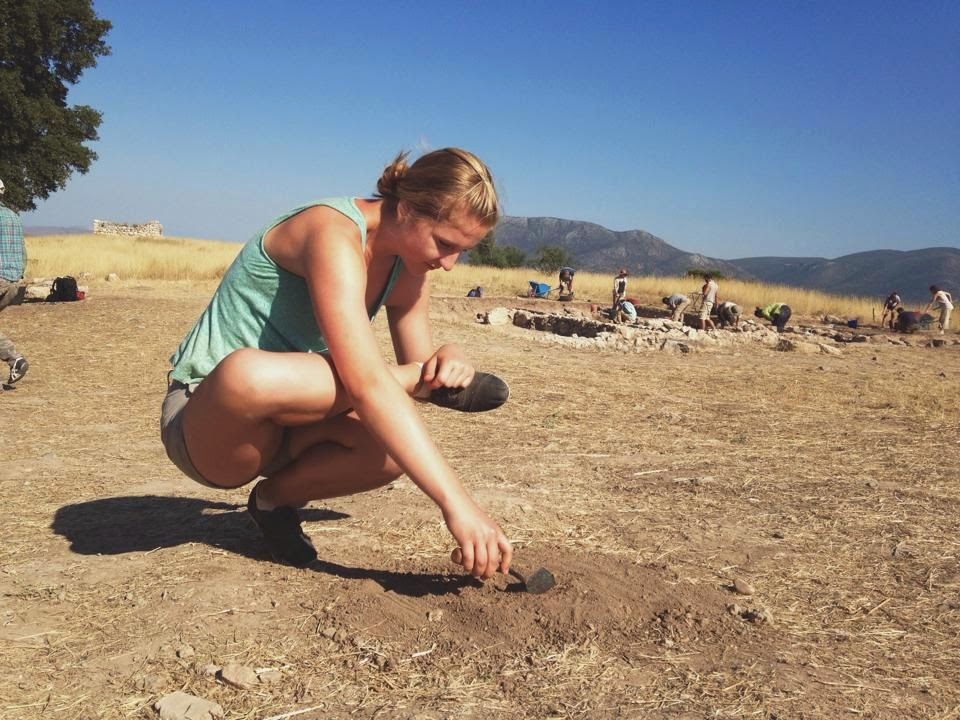
A very popular pick amongst the students here at Eleon is the “Happy Hamstrings Trowel”, given said name for the wonderful hamstring stretch it provides the trowelist. This stance is rather ideal as it is both comfortable for the archaeologist yet it allows minimum contact with the trench. Both your hamstrings and your trench supervisor will be happy!
 
2.      Criss-Cross Applesauce
 
Here Robyn demonstrates one of the most comfortable trowelling positions. Ideal for gluteal comfort and allowing for a wide arm span, the criss-cross applesauce trowel works best while articulating or scarping. The main disadvantage of this position is the childlike nature of the pose and that it can be rather abrasive to a surface area.  Overall, a comfortable position but not necessarily optimal.
 
3.      Symposium Trowel
 
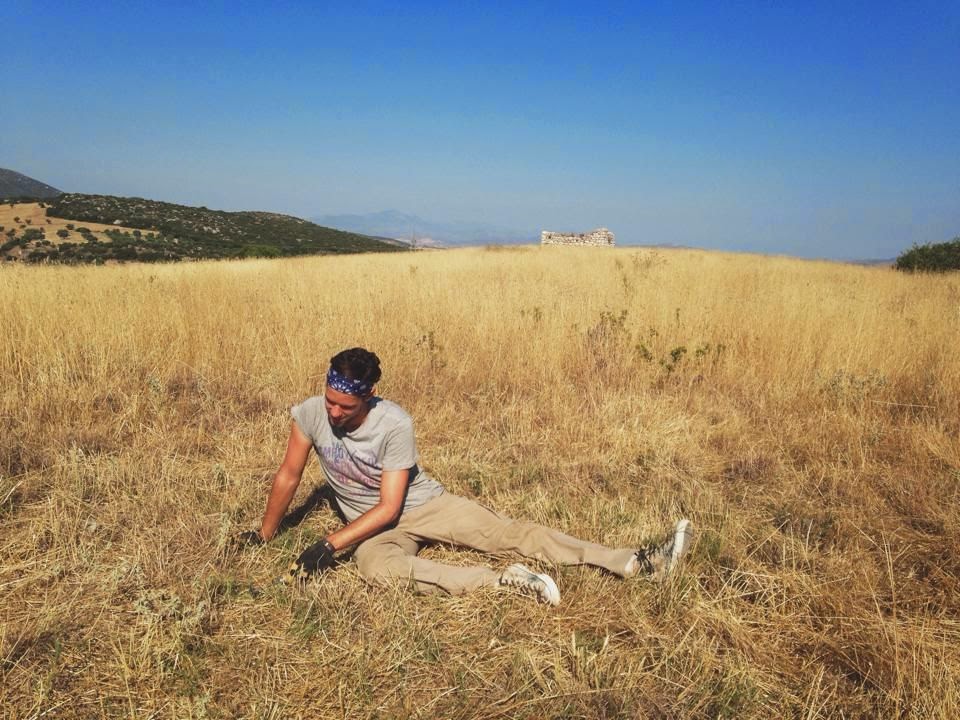
The Symposium Trowel technique is undoubtedly the most comfortable trowelling method. It involves the archaeologist lying on their side while propped up with their elbow, and trowelling away at their work in front of them. While this pose provides optimum comfort for one’s back, the trench is not an idyllic area for lounging and thus it can be frowned upon. In the pictures below Tom beautifully demonstrates the Symposium Trowel, as well as its extension: Beach Whale Symposium.   
 
4.      Smeagol Stance (2-Points Trowel)
 
The aptly named Smeagol stance involves the trowelist crouching over their work while maintaining only two points of contact on the ground. This position is very strenuous on the knees, but provides minimal surface contact and great mobility within an area. It is generally the preferred technique of professional archaeologists (and LOTR enthusiasts) and may explain the high rate of arthritis within the profession.
 
5.      One Point of Contact


      The extraordinarily zen One-Point of contact pose requires that only one foot touches the ground while troweling. Needless to say, it is extraordinarily straining and as such is generally only used by yogi’s, flexible athletes, and Yoda. Though it is rarely seen in the trench, it is truly admirable. 


The Mycenaean Era

by Cody Andersson
The Mycenaean era is famed for its impressive cities and Cyclopean masonry style. Mycenae and Tiryns are two common examples of both of these. A third and just as valid example is Midea, a hilltop citadel in the Argolid, on the Peloponnese. It exhibits a similar impressive feel and Cyclopean masonry. Eleon, a satellite community of Thebes in Boeotia, seems at first to be an unlikely comparison with Midea, but in many ways reflects the core themes of Mycenaean city-building present in Mycenae and Midea.
Midea was a citadel built on a hill approximately 300 metres in height. It flourished in the Bronze Age before being severely damaged by an earthquake at the end of the thirteenth century BCE. At the transition into the Archaic period it hosted a sanctuary but did not reach its height in the Mycenaean period ever again.
Eleon has a similar history of height and decline. It reached its apex in the Bronze Age, as Midea did, but by the Classical period had lost its previous prosperity. By that point it appears to have become a centre of religion more than population or economy. Any remaining inhabitants would have fled in the face of foreign invasions during the Byzantine period.
One major similarity between Midea and Eleon concerns fortifications. Both are encircled by defensive walls, though Midea in a much grander scale.

The Cyclopean wall at Midea is still a massive structure and would have been a significant challenge for any attacker. Eleon features a polygonal wall, not as imposing as the Cyclopean wall at Midea, but still impressive in its own right and context. Rather than containing massive boulders it is built of large slabs of locally sourced rock carved into whichever (usually irregular) shape fits best with surrounding slabs. While less of a challenge to besiegers than a Cyclopean wall, it would nevertheless have been a substantial barrier not easily bypassed. Siege warfare in ancient Greece did not essentially exist until the Classical period, several centuries after the polygonal wall’s construction in the Archaic period.

As such, an army hypothetically attacking Eleon in the Archaic period would have to take the town by attacking unexpected or by persuading the inhabitants to surrender, as there were no ladders or catapults to use.
Accordingly the polygonal wall, while more for show than function, was in its period still a significant challenge for potential attackers. Much of this is applicable to Midea, perhaps more so in that siege warfare was even more nonexistent then.
Midea’s location on a high hill is an important feature of its construction. It overlooks much of the surrounding area, from the hills in almost every direction to Nafpoli and the Argolic Gulf to the south-east.
These commanding sight lines are an important first defence, though a Cyclopean wall would be difficult to take even by surprise. Eleon is similarly placed on a small hill with good sight lines over the Boeotian plains. While not as elevated as Midea, Eleon further exploits its location through the use of at least one tower in the southeastern section of polygonal wall. Future occupants recognised this further advantage as well, as evidenced in the tower of either Frankish or Ottoman construction, or both, some distance to the west of Eleon.
Although Midea and Eleon are built on entirely different scales, the intent of their construction and location are readily comparable. Two core themes of Bronze Age, and specifically Mycenaean, city design are reflected in each place. The walls of both represent a substantial barrier to hostile intent despite the polygonal wall at Eleon being more for show than defence. Both places occupy commanding locations over their respective surrounding areas, and Eleon specifically has towers dedicated to further exploiting this terrain advantage. While Midea and Eleon appear not at all similar, they in fact share and reflect central themes of architecture and geophysical location in their eras.