TRASH OR TREASURE? A MEDIEVAL PIT FROM ELEON

By Mira Harvey

This year, GRS 482A gave me the opportunity to poke around (virtually) in Medieval garbage from the site of Ancient Eleon. I worked on a late 15th or early 16th century CE refuse pit, which is informally known as “Graham Pit” after the University of Victoria alumnus who had the opportunity to dig it as a member of the Eleon excavation team. While I was able to find helpful comparanda for similar pits at Thebes, I wanted to understand why this pit was dug – beyond just analysing the finds inside. What was the intention behind its construction and abandonment? Digging a refuse pit in a certain location is a deliberate choice that the inhabitants of the Eleon acropolis made. Understanding why that choice was made can help us imagine what daily life at Medieval Eleon looked like and lend agency to peoples in the past.

Graham Pit (Figure 1) is located on the eastern edge of the Eleon acropolis in the Archaic and Classical period ramped entrance. Other Medieval remains in the vicinity, including some poorly preserved wall fragments, may suggest a small household existed nearby. The pit is roughly circular clay-lined, and tapers slightly towards the bottom. Unlike other Medieval pits excavated at Eleon, which appear to have collapsed in antiquity, the lining of the Graham Pit is well-preserved.
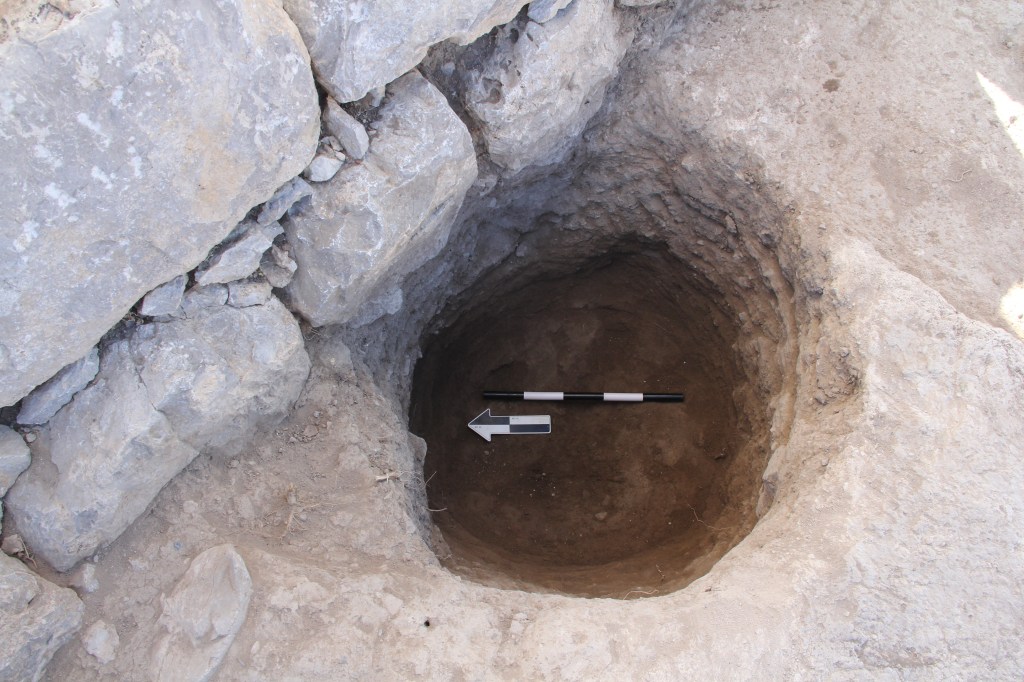
Figure 1: Graham Pit after the completion of excavation (Eastern Boeotia Archaeological Project).

Refuse pits are relatively common at Greek archeological sites. They are typically described as pits containing assorted trash (e.g., animal bones, shells, pottery, rocks) dug in sterile earth. When investigating Graham Pit, I first looked at similar refuse pits from Thebes and compared the ‘garbage’ inside. This analysis showed that the pit from Eleon was part of a wider Boeotian practice and chronologically similar in date. By taking a closer look at the construction of the pits, however, I realised that at least some of these pits may have been designed for a rather specific type of waste.

Excavations showed that the pit was intentionally filled at the end of its use-life. Finds from inside the pit include mendable pottery, an incised copper alloy bracelet, and rare earlier pottery fragments, most from the Classical and Hellenistic periods. At the very top of the pit, a large green-glazed Medieval sherd was found, helpfully providing a terminus post quem for the closing of the pit. More sherds belonging to mendable or almost-mendable vessels continued to be found into the middle layers, usually smashed on the rocks below. These sherds belonged to a cooking pot, the same green-glazed bowl, and an undecorated amphora (Figure 2).
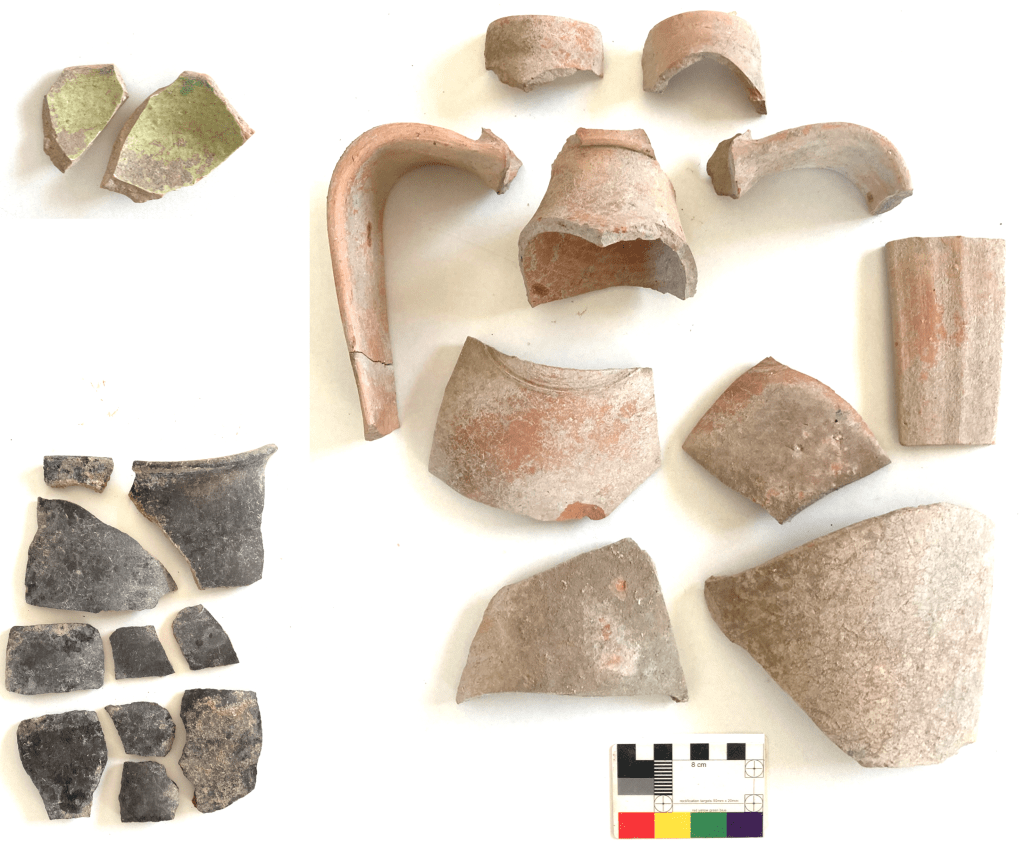
Figure 2: A selection of pottery from Graham Pit prior to mending (Eastern Boeotia Archaeological Project).

Late Ottoman refuse pits from the Pelopidou Street excavations at Thebes are similar to Graham Pit. They were filled in a relatively short period of time, generally with kitchen waste, animal bones and construction debris. The number of pits at Thebes indicate a dense population, consistent with census data that shows the early Ottoman period was a prosperous time for Thebes, whereas Eleon, a small agricultural village, has preserved only a few pits clustered in the northwest trenches and the ramped entrance. The finds from the Theban pits are also wealthier than Graham Pit, but there are also many similarities. Most of the ceramics from pits at Thebes are undecorated, unglazed narrow-necked jugs and cooking pots, much like the unglazed cooking pot and amphora in Graham Pit. Additionally, domestic items made of wood, basketry, leather or other perishable materials were likely present in Graham pits but have not survived.

While these finds can tell us about a population, its relative size, and wealth, I wanted to zoom out and think about the everyday purpose of refuse pits. If Graham Pit was only for general waste, the easiest way to get rid of garbage is to simply remove it. Why would the residents of both Thebes and the Eleon acropolis choose to spend time and energy digging holes, effectively in their front yards, to dump their garbage rather than simply remove it elsewhere? The location of the pits may indicate a need for quick, convenient disposal of waste… maybe waste of the human kind. Convenient bathroom facilities were just as important in the past as they are today!

This led me to investigate Graham Pit’s possible use as a cesspit for the Medieval residents of Eleon. The clay-lining of the pit lent itself to this hypothesis, as well as the fact that it is shallower than other Medieval pits from Eleon and Thebes. Waterproofing cesspits with clay had practical benefits, such as keeping the waste from seeping into the soil. Cesspits (Figure 3) were typically emptied of waste and reused, as it was impractical to dig a new cesspit each time you filled one. Lining a cesspit with clay would have helped clarify the boundaries of the pit and assisted in efficient removal of the waste. Clay-lining further indicates that on some level, the pit was designed by its creatorsnot just a hole dug and filled and forgotten.
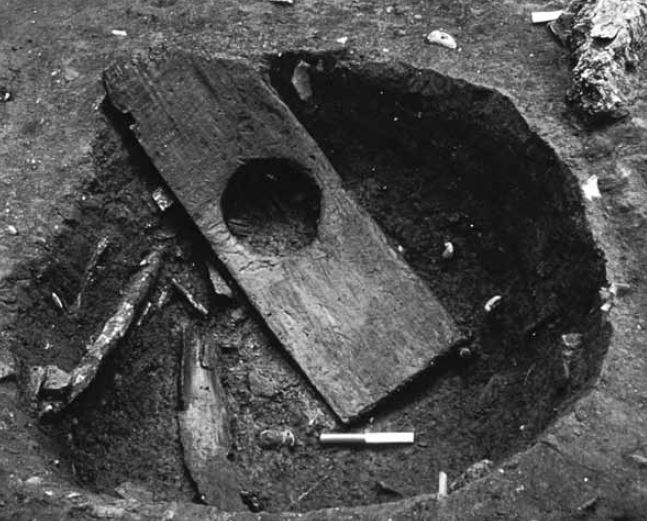
Figure 3: 12th century wooden toilet seat from 16-22 Coppergate (York Archaeological Trust), after Hall and Kenward 2015, p. 111, fig. 6.4.

Cesspits may not just have been solely for human waste disposal. Human excrement and organic waste is fantastic fertilizer, something well-utilized by farmers in both the past and present day. In Medieval Haarlem and Bruges, extant documentation even reveals that farmers paid townspeople for the privilege of emptying their cesspits for the fertilizer inside! In a small agricultural village, such fertilizer may have literally been worth its weight in gold! We might imagine a world then where the contents of Graham Pit were emptied, composted and then applied to the surrounding fields or gardens between small households.

Because Graham Pit’s fill is relatively homogenous and the pottery is mostly mendable, it was likely filled in a single episode when its creators decided to end its life. It may have gotten too smelly, or too old, and the location of the ‘bathroom’ was changed. We can think of the fill as a structured deposition, since we can trace a series of clear steps that led to its closing. First, a layer rich in rocks from small to large size, perhaps originally including organic materials. Next, other household garbage was added including large ceramic fragments that broke on the rocks below. Finally, the pit was covered with a roughly circular cap of field stones. The cap of stones may then have served as a visible reminder of the pit and prevented another pit from being dug in the same location. Similar markers above the other Medieval pits at Eleon, show that this was part of a wider strategy on the part of the inhabitants to mark out the subterranean landscape of the village.

Medieval pits in general warrant further study, not just of their contents, but of their locations, designs and purposes. In other words, rather than focusing on the meaning of the contents, we instead focus on why the pit was created, how it was used, and the broader effects of this practice. Working on Graham Pit was an incredible opportunity to work on material culture that has not yet been formally published. In my first year at University of Victoria, I was able to visit Eleon through the Semester in Greece program, and it was exciting to be able to return by studying material culture from the site. One of the reasons I love archeology and history is the ability to imagine and illustrate daily life in the past. Investigating the waste management practices at Medieval Eleon allowed me to do that firsthand.

Image Source:

Hall, A. R., and H. Kenward. 2015. “Sewers, cesspits and middens: A survey of the evidence for 2000 years of waste disposal in York, UK,” in Sanitation, Latrines and Intestinal Parasites in Past Populations, ed. P. D. Mitchell, Burlington, pp. 99-119.
PIECING TOGETHER THE EVIDENCE FOR PAINTED PLASTER AT MYCENAEAN ELEON

By Maggie Easton

In my final term at the University of Victoria, I had the exciting opportunity to research previously unexamined fragments of painted plaster found during excavation at the site of ancient Eleon as part of GRS 482A. These fragments offer small glimpses of the wall paintings that likely decorated the walls of a predecessor to the Northwest Complex in LH IIIB1 and provide insight into the social status of Mycenaeans living at ancient Eleon in the 14th century BCE. In this post, I will give a brief background on the significance of Mycenaean frescoes and describe the fragments found at Eleon that I worked on throughout the spring semester. When studied with their associated finds, these fragments provide evidence that the local elites of Eleon maintained close ties with Mycenaean Thebes and participated in a shared elite Mycenaean culture of architectural adornment documented across central and southern Greece during LH IIIB.

In the palatial period of Late Bronze Age Greece, frescoes became a staple of the Mycenaean cultural koine. Fresco is a technical term, referring to paint applied al fresco to wet plaster. Although the technique of the fragments found at Eleon is not yet known, the term fresco is used throughout this piece as a non-technical term encompassing all wall paintings.

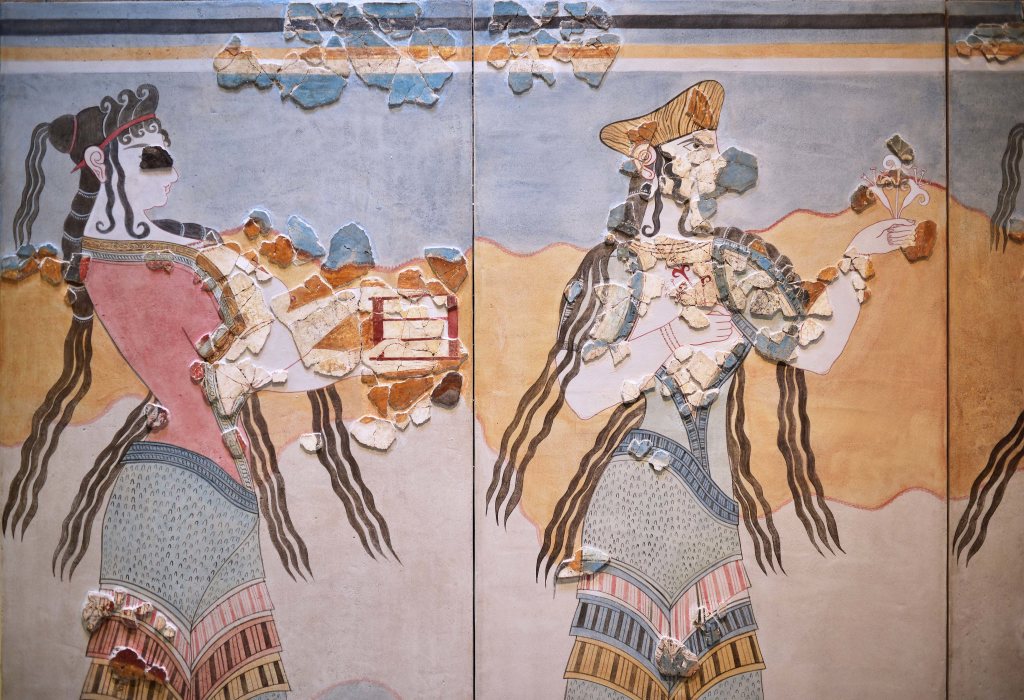
Figure 1: Procession Fresco from the so-called House of Kadmos at Thebes on display in the Archaeological Museum of Thebes (orientalizing/Flickr), CC BY-NC-ND 2.0.

The majority of known frescoes come from palatial contexts, where iconographical similarities between centers can be seen in hunting scenes at Mycenae, Tiryns, Orchomenos, and Pylos, and in the religious procession scenes at Knossos, Thebes (Figure 1), Pylos, and Tiryns. Many frescoes have been suggested to be religious in nature, perhaps depicting the actions that were expected of palatial visitors during religious festivals and ceremonies. Other pieces, particularly in the Cyclades, depict ornate natural scenes with a variety of identifiable plants and animals.

A smaller number of non-palatial sites have also produced remnants of frescoes. On the island of Thera, Akrotiri is well-known for its distinctive and extensive fresco program in a variety of structures, some apparently domestic in character. In mainland Greece, frescoes have been found at the non-palatial sites of Iklaina in Messenia and Gla in Boeotia. Though frescoes are canonically a piece of palatial decoration, they are certainly not unprecedented in other contexts. In almost all cases, however, frescoes are associated with the Mycenaean elite – buildings which produce frescoes during excavation are typically wealthy and also produce a number of other prestige goods. The frescoes found at Gla are one of very few exceptions to this, which will be explained below.

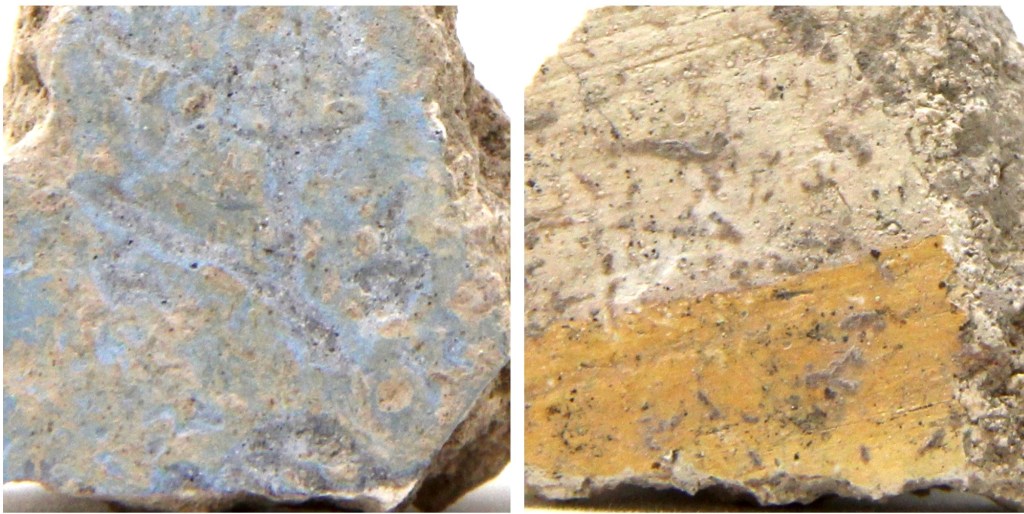
At the site of ancient Eleon, two pieces of painted plaster that may be fresco remnants were found in the Northwest Sector (Figure 2). Both fragments are small: one preserves monochrome blue decoration with possible overpainting in black while the other is white and yellow. Based on mendable pottery found in the same stratigraphy, the fragments all appear to date to LH IIIB1. The stratigraphy suggests that they may have been part of a fill consisting of levelled destruction debris.

Figure 2: Details of fresco fragments from Eleon showing preserved colours (Eastern Boeotia Archaeological Project).

Although the iconography of the frescoes which these fragments belonged to remains a mystery, it is worth pointing out that monochrome blue is a frequent background colour in Mycenaean frescoes, as seen in the Bull-Leaping Fresco from Knossos. This scene also includes sections of yellow and white separated by a straight line. Besides backgrounds, blue and yellow often appear alongside each other in clothing or wall borders, exemplified by the Procession Fresco from Thebes (Figure 1). It is impossible to guess at iconography of the wall paintings from Eleon, but the colours of these fragments certainly reflect the larger Mycenaean tradition within Boeotia.

The exact mineralogical composition of the plaster material or pigments is unknown. Further investigations might include non-destructive microscopy and reflected light microscopy to better understand the general composition and state of the plaster and pigments as well as their application technique. X-ray diffraction methods could be used for mineralogical identification. These methods have been used on Theban fresco fragments to determine that blue pigment is frequently composed of calcite and cuprorivaite (Egyptian Blue), and yellow pigment of calcite and goethite in combination with either quartz or dolomite. White pigment at Thebes is always composed of calcite, the basic mineral component of lime plaster. Replicating these investigations for the fragments discussed here could be used to compare the composition of wall paintings at Eleon to those elsewhere in the Mycenaean, Minoan, and Cycladic worlds.

Besides the fragments, the LH IIIB1 layer contained much fragmented pottery, blue glass artifacts, and even a stone jewelry mold. This mold shows a close relationship between Thebes and Eleon, which likely produced luxury goods for Theban consumption during LH IIIB. The presence of all of these goods in the NW Sector suggests the presence of palatial agents at Mycenaean Eleon, perhaps overseeing craft production. This aligns with what is known about frescoes as indicators of social standing in Mycenaean Greece and supports the idea that the LH IIIB predecessor to the NW Complex was an elite space decorated with frescoes.

Researching these small fresco fragments has been an exciting and challenging opportunity to engage directly with material culture. I have certainly gained a new appreciation for the creativity and resourcefulness that scholars must employ when considering newly excavated material, especially when, as in the case of these fragments, only a small part of the deposit has been excavated. Working on previously uninvestigated material has been very rewarding though and I hope further work can be done on the frescoes from Eleon in the future to further our understanding of the lives and social roles of the inhabitants of Mycenaean Eleon.

UVIC STUDENTS STUDY ELEON FINDS FOR GRS 482A

Although the ongoing COVID-19 pandemic has disrupted travel to Greece for much of the last year and a half, work on the Eastern Boeotia Archaeological Project continues unabated and we look forward to sharing updates about the fruits of this labour over the coming months.

On a related note, we happy to announce that an open access, comprehensive report on excavations on the acropolis of Eleon from 2011–2018 was published in the American Journal of Archaeology in 2020. This report serves as an introduction to the site and the archaeological finds made during the inaugural excavation campaigns. We would like to thank all of the students and collaborators who contributed to this research, whether by participating in the field school, conserving and illustrating the finds, or studying material in the apotheke—none of this would be possible without teamwork!

Finally, this blog post serves as the introduction to a series of dispatches, not from the field as is usual for the summer, but rather the classroom. During the spring semester 2021, students in Dr. Trevor Van Damme’s GRS 482A: Material and Literary Cultures of Boeotia seminar had an opportunity, not only to learn about the rich cultural history of the region around ancient Eleon, but to actually study finds from the site for their final research projects. Students were able to draw on primary documentation from the Eleon archives (excavation notebooks, conservation reports, line illustrations, and photography) in order to contextualize their finds and identify useful comparanda from Boeotia and beyond.

The results of this work were exceptional. So exceptional in fact that we wanted to share their findings with our readers over the coming weeks. We very much hope to see all of the contributors in the field at Eleon in the summer of 2022. Until then, please read and enjoy!