2026 Field School Application May 10 – June 20 2026
We invite applications for undergraduate students to participate as volunteers or through enrollment in the University of Victoria course GRS 495 Practicum in Archaeology (3.0 Units). Qualified non-UVic students can get UVic transfer credit to their home institution. The course will include training sessions in field techniques, topical lectures, and optional field trips.
All participants, whether enrolled in GRS 495 or not, will be required to pay a program fee of 5000 CAD to cover room and board for six weeks. International airfare is the responsibility of the individual and not included in the program fee. The excavation team lives in modest, shared apartments in the nearby town of Dilesi, which offers swimming in the Euboean Gulf, internet access, and public transportation to Athens, approximately 1 hour away.
Please read the 2026 Volunteer Information document for full description of our program and submit the application and reference form by January 31, 2026. We encourage you to send any questions as you prepare your application by email. Canadian students should write to Brendan Burke bburke@uvic.ca, and those from the US and other countries to Bryan Burns bburns@wellesley.edu.
Completed applications can be sent by email to either of the above co-directors and should include a one-page statement of interest outlining relevant coursework, experiences, and/or future career plans.
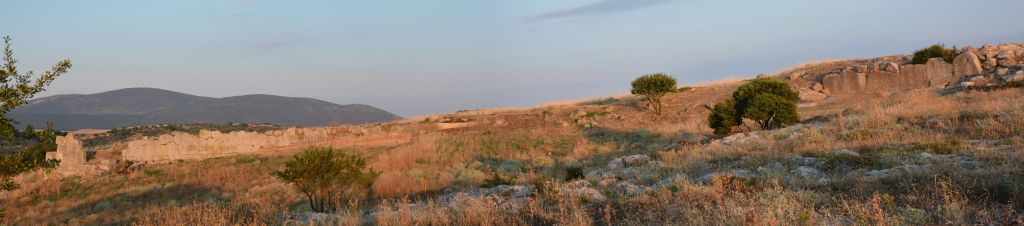
Eastern Boeotia Archaeological Project 2024: Now accepting applications
We are excited to announce the 2024 field season will run for six weeks, May 12 to June 22, 2024. This season will be the second of a five-year program of excavation and study (2023-2027).
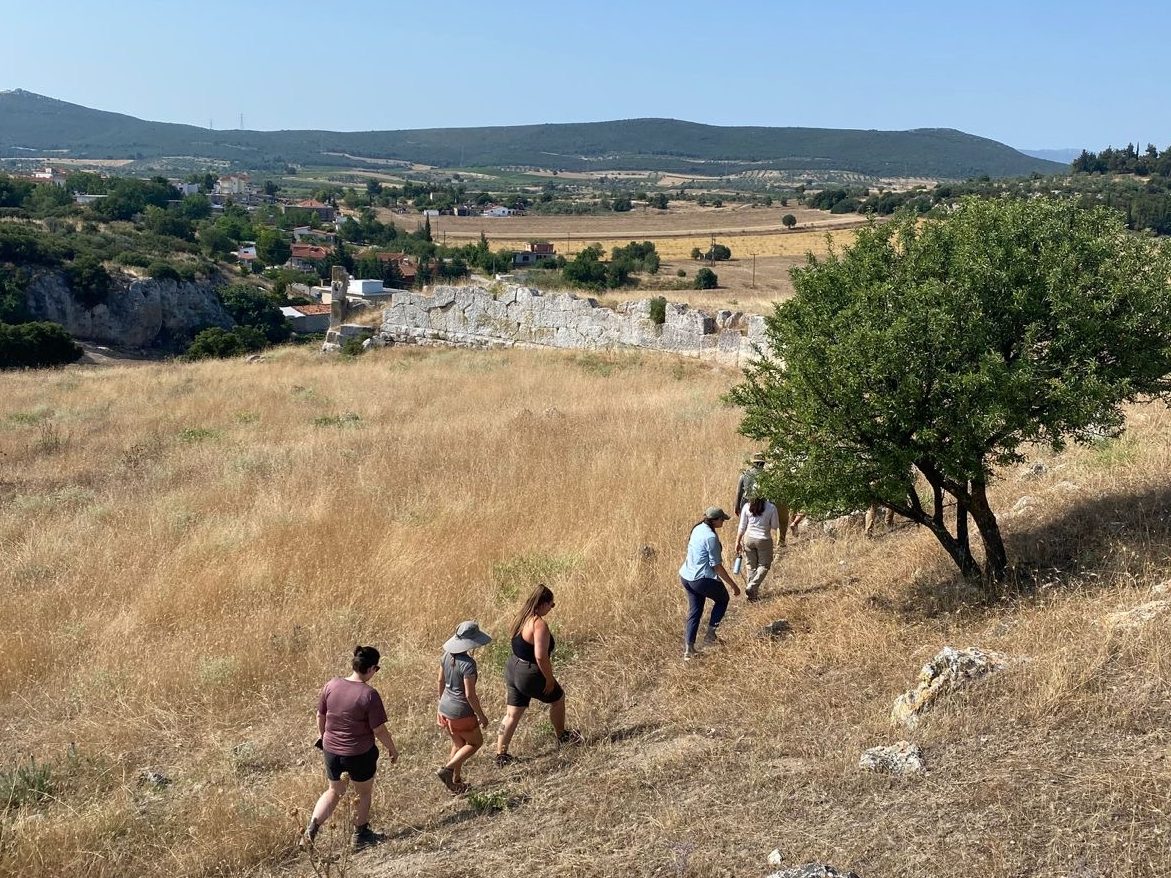
We invite applications for undergraduate students to participate as volunteers or through enrollment in the University of Victoria course GRS 495 Practicum in Archaeology (3.0 Units). Qualified non-UVic students can get UVic transfer credit to their home institution. The course will include training sessions in field techniques, topical lectures, and optional field trips.
All participants, whether enrolled in GRS 495 or not, will be required to pay a program fee of 4500 CAD/ 3500 USD to cover room and board for six weeks. International airfare is the responsibility of the individual and not included in the program fee. The excavation team lives in modest, shared apartments in the nearby town of Dilesi, which offers swimming in the Euboean Gulf, internet access, and public transportation to Athens, approximately 1 hour away.
Please read the 2024 Volunteer Information document for full description of our program and submit the application and reference form by February 16, 2024. We encourage you to send any questions as you prepare your application by email. Canadian students should write to Trevor Van Damme trevvd@uvic.ca, and those from the US and other countries to Bryan Burns bburns@wellesley.edu.
Completed applications can be sent by email to <eleonexcavations@gmail.com> and should include:
• A one-page statement of interest outlining relevant coursework, experiences, and/or future career plans
• A signed 2024 Application and Reference form
The 2023 Season Begins
By Trevor Van Damme
On May 22, the 2023 season at ancient Eleon officially got underway. The first two weeks focused on site clearing and maintenance works in preparation for the excavation of new tests trenches based on the 2021 and 2022 geophysical study. Backfilling was carried out on parts of the Blue Stone Structure to preserve this important monument for future generations and to improve the overall site aesthetics. The next phase of conservation work will entail wall consolidation of the remaining exposed architecture, following a detailed architectural study.
A major innovation to our project this season was the adoption of digital recording in real time of all finds through the use of the iDig application (Figure 1). We are especially grateful to Bruce Hartzler, the app’s creator, for taking time to assist us in setting up the system and to Brian Martens from the Athenian Agora excavations for showing us how it works in the field.
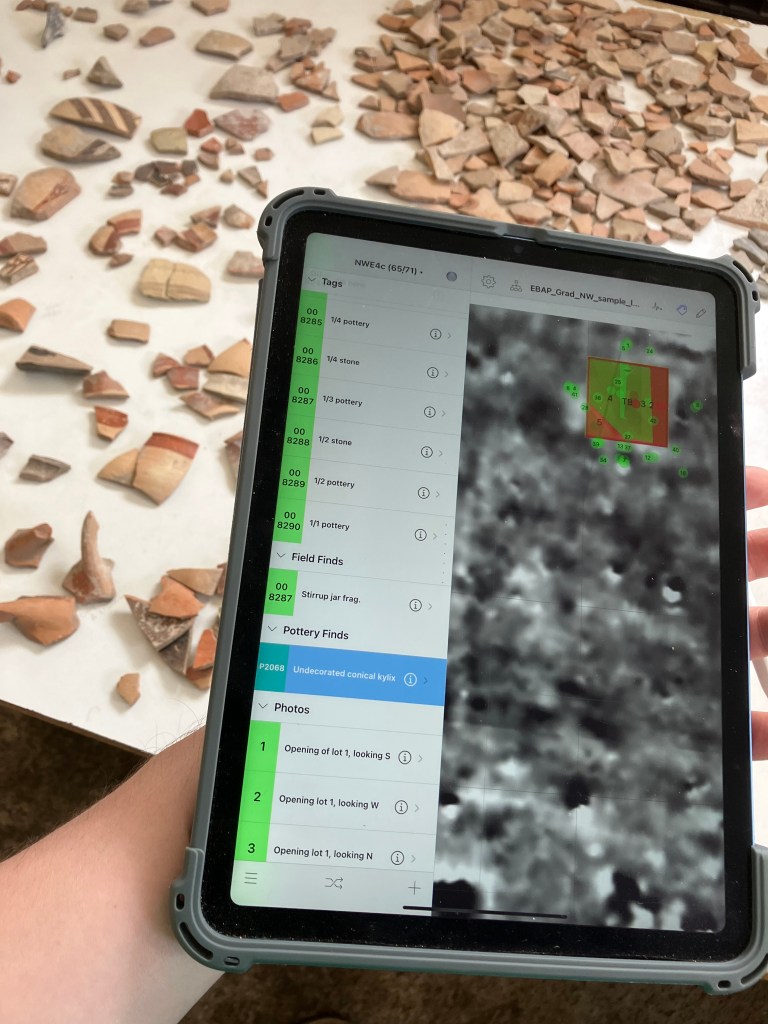
The iDig application allows data to be seamlessly entered and shared by all trenches allowing for more effective information sharing between the field team, conservators, and laboratory staff. The transition has offered exciting opportunities for integrating what were previously separate databases in one location. Next up is integrating the historical data from the 2011-2018 field seasons, so that the excavation team has access to the our project archive as well. We hope to complete this transfer in the upcoming months.
This season our team includes over 40 members, including 6 undergraduate students enrolled in GRS 495: Practicum in Archaeology offered through the University of Victoria. As is customary, our students will share insights over the coming weeks into their experiences and highlight some of the daily work in progress. We look forward to sharing their blog posts over the coming weeks!
Eastern Boeotia Archaeological Project 2023: Now Accepting Applications
We are excited to announce the 2023 field season will run for six weeks, May 21 to July 1, 2023. This season will be the first of a new five-year program of excavation and study (2023-2027).
We invite applications for undergraduate students to participate as volunteers or through enrollment in the University of Victoria course GRS 495 Practicum in Archaeology (3.0 Units). Qualified non-UVic students can get UVic transfer credit to their home institution. The course will include training sessions in field techniques, topical lectures, and optional field trips.

All participants, whether enrolled in GRS 495 or not, will be required to pay a program fee of 3500 CAD/ 3000 USD / 2500 EUR to cover room and board for six weeks. The excavation team lives in modest, shared apartments in the nearby town of Dilesi, which offers swimming in the Euboean Gulf, internet access, and public transportation to Athens, approximately 1 hour away.
Please read the 2023 Volunteer Information document for full description of our program and submit the application and reference form by January 15, 2023. We encourage you to send any questions as you prepare your application by email. Canadian students should write to Trevor Van Damme <trevvd@uvic.ca>, and those from the US and other countries to Bryan Burns <bburns@wellesley.edu>.
Completed applications including a statement of interest and signed application form can be sent by email to eleon@ebapexcavations.org.
The Mystery of Eleon’s Polygonal Wall
By Jonathan Granirer
Upon arriving at ancient Eleon, I was amazed by the site’s polygonal wall, which boasts a complex architectural design and stands partially intact defiantly upon the east side of Eleon’s acropolis, despite the passage of 25 centuries since its construction and countless robberies.[1] Immediately, I pictured Eleon as an impenetrable walled fortress. Yet I soon learned that the wall may not have served a defensive purpose at all. This left me eager to learn why this intricate architectural structure was constructed. As it turns out, there is no straightforward explanation available to us. However, this wall was likely intended to make a statement, but whether it was meant to represent a community’s religious fervor, an individual’s wealth and power, or something else entirely, is unclear.
Eleon’s polygonal wall, which was completed by 500 BCE, was built using the Lesbian polygonal masonry style–named for its many uses on the Aegean Island of Lesbos (Fig. 1).[2] This style of masonry is complex as it requires building a curved foundation and then cutting stones to match the curvature.[3] At Eleon, the southern portion of the polygonal wall is constructed within a few centimeters of a perfect circle, which makes it an impressive example of masonry.[4] Additionally, the labour force required to complete this wall would have been significant since the wall initially contained approximately 1500 cubic metres of rock and weighed 4000 tons.[5]

Despite the high level of skill and resources which were needed to construct this wall, it is actually relatively weak and it is not nearly long enough to provide meaningful protection to Eleon’s east side.[6] Therefore, it is unlikely that the wall was intended to provide defensive support for the settlement.[7] Furthermore, the complexity of the wall’s structure serves no purpose aside from appearing impressive.[8] However, it is not entirely fair to label the wall as being solely ‘for show’ as it may have served a limited purpose by directing traffic into and out of an area within the acropolis, among other things. Thus, it is likely that Eleon’s wall was built primarily to serve a certain symbolic purpose, which might be attributed to several plausible explanations.
The first possible meaning of the polygonal wall relates to Eleon being a likely religious centre during the time of its construction. There has been a significant amount of archaeological evidence unearthed which may indicate cult-related activity within Eleon, especially in and around the entrance into the acropolis, near the polygonal wall.[9] This evidence includes figurines and various kinds of votive materials,[10] which date to a time period contemporary with the construction of the polygonal wall.[11] Additionally, the sole two historical figures whom we know of from Eleon, a collector of oracles named Antichares and the seer Bakis were both religious figures, which is unlikely to be a coincidence and thus further adds to the evidence of Eleon as a religious centre.[12]
It may seem odd to link the creation of a wall with religious activity, however there is precedent for similar walls having been constructed within religious centres, despite this style of masonry being relatively uncommon within this region and era. For instance, a Lesbian polygonal wall was constructed at Delphi (Fig. 2), a foremost religious centre in Greece, which both employs the same extravagant masonry style as Eleon’s polygonal wall and was built within the same 50-year period.[13] However, while an elegant polygonal wall at Delphi is somewhat fitting considering its importance within Greece, Eleon was comparatively unimportant and thus its polygonal wall seems out of place. [14] Perhaps a rough equivalent would be finding a 50,000 seat stadium in a town of 5,000 people. While there is currently no explanation for why Eleon possesses a polygonal wall in excess of its relative importance, there are several other possible factors behind the construction of the wall which may provide some context.

Like many monuments, it is possible that Eleon’s polygonal wall was funded by one or several wealthy benefactors who may have wished to impose their prominence upon Eleon’s landscape. This would explain how this expensive construction project was funded, but, as of now, there appears to be no evidence which supports this possibility. Additionally, there were two large walls built during the Mycenaean era[15] by inhabitants of Eleon, which are located nearly directly underneath the polygonal wall.[16] This may indicate that Eleon’s 6th century BCE inhabitants were attempting to replicate the monumental constructions of their forebears.[17] It should be noted that none of these possible explanations for the mystery of Eleon’s wall are mutually exclusive. Rather, it is may have been that the construction of the polygonal wall was only undertaken due to a confluence of factors.
It is fascinating that so many resources were put into a wall without a clear practical purpose, and which seems out of place within the context of Eleon. It’s unfortunate that the specific motivations for its construction are currently obscure. Nevertheless, new discoveries are always being made at Eleon thanks to the work of the Eastern Boeotia Archaeological Project and thus there is hope that the mystery of Eleon’s polygonal wall will be solved in the future.
[1] Burke et al, 2014, p. 252. Burke et al, 2020, p. 470.
[2] Burke et al, 2014, p. 252.
[3] Ibid., pp. 252-253.
[4] Marsh and Jones, 2021, p. 166. & Burke et al, 2014, p. 252.
[5] Marsh and Jones, 2021, p. 169.
[6] Ibid., p. 181.
[7] Ibid., p. 181.
[8] Ibid., p. 181.
[9] Burke et al, 2020, p. 470.
[10] Votive material often refers to material used to provide offerings to deities, though votive objects are not always necessarily related to religious practises.
Additionally, figurines are often, but by no means always, associated with religious practises.
[11] Ibid, p. 472.
[12] Aravintos et al, 2016, p. 310.
[13] E Partida, Ministry of Culture and Sports, “The Polygonal Wall of Delphi,” 2012, http://odysseus.culture.gr/h/2/eh251.jsp?obj_id=4926.
[14] Burke et al, 2014, pp. 8-9.
[15] The Mycenaean era spans from 1750 to 1050 BCE.
[16] Burke et al, 2017, pp. 9-10.
[17] Burke et al, 2017, pp. 9-10.
Works Cited
Aravantinos, Vassilis, Brendan Burke, Bryan Burns, Yannis Fapas, Susan Lupack, and Camilla MacKay. “The Eastern Boeotia Archaeological Project 2007–2010: The Intensive Surface Survey—Eleon.” Mouseion: Journal of the Classical Association of Canada 13, no. 2 (2016): 293–357.
Burke, Brendan, Bryan Burns, Alexandra Charami, Trevor van Damme, Nicholas Herrmann, and Bartłomiej Lis. “Fieldwork at Ancient Eleon in Boeotia, 2011–2018.” American Journal of Archaeology 124, no. 3 (2020): 441–76. https://doi.org/10.3764/aja.124.3.0441.
Burke, Brendan, Bryan Burns, and Alexandra Charami. “Archaic and Classical Eleon in Eastern Boeotia: Excavations from 2011 to 2015.” From Maple to Olive, 2017, 385–99.
Burke, Brendan, Bryan Burns, and Alexandra Charami. “The Polygonal Wall at Eleon with Reference to the Mycenaean Past.” Canadian Institute in Greece 8, no. 8 (2014): 249-265.
Marsh, Ben, and Janet Jones. “The Arcuate Polygonal-Block Wall at Eleon.” Mouseion 18, no. 1 (2021): 163–82. https://doi.org/10.3138/mous-18-1-07.
Patrida, E. “The Polygonal Wall of Delphi.” Ministry of Culture and Sports, 2012. http://odysseus.culture.gr/h/2/eh251.jsp?obj_id=4926.
Studying the Lived Experiences of Ancient Eleonians Through their Physical Remains
By Skyler Buchfink
*DISCLAIMER: This post discusses the study and analysis of ancient human remains.*
The opportunity to work closely with bioarchaeologists was one of the primary reasons I applied for the EBAP field school. During my first two years as an undergraduate, I have settled in my belief that studying burials and human remains allows an archaeologist to connect with people from the past directly.
Although I did not anticipate working directly with human remains on this field school, because of my lack of experience, during the first week, I was given the opportunity to assist with the bioarchaeology specialists. This is how I found myself sitting at a crowded table in the apotheke (storage depot), peering over a box of bones carefully wrapped in acid free tissue paper. I was instructed to take a toothbrush and carefully remove the dust and soil from the bones over a tin tray. This was my first time touching ancient human remains, and for a time I didn’t think about it. I set to work brushing away dust, enamored and concerned at the delicacy of the bones. Many were small. Some were so poorly preserved after millennia of sitting in damp tombs that they were little more than dust.
Although they are dead, and have been for a very long time, this bone was once united with the soft tissue of an individual. It carried them through life. For every bone I held, I began to wonder who it belonged to and their story. What was their name? How did they die? How did they live? Experiencing human remains has come to mean more to me than a connection with the past: it has become a reflection of the stories shared by humans through time and space.
Many bones have markings upon them. Some from before death, perhaps because the individual was injured or suffered a condition which was visible in their bones such as arthritis. Some happened at or around the time of death, possibly being the cause of death. In this case, there is no healing or growth present around the injury. Many more happened after death, during the process of decomposition, rearrangement by their descendants, or sitting in the earth for thousands of years. All of these markings and breakages work together to tell the story of where a bone comes from and why it is a certain way.
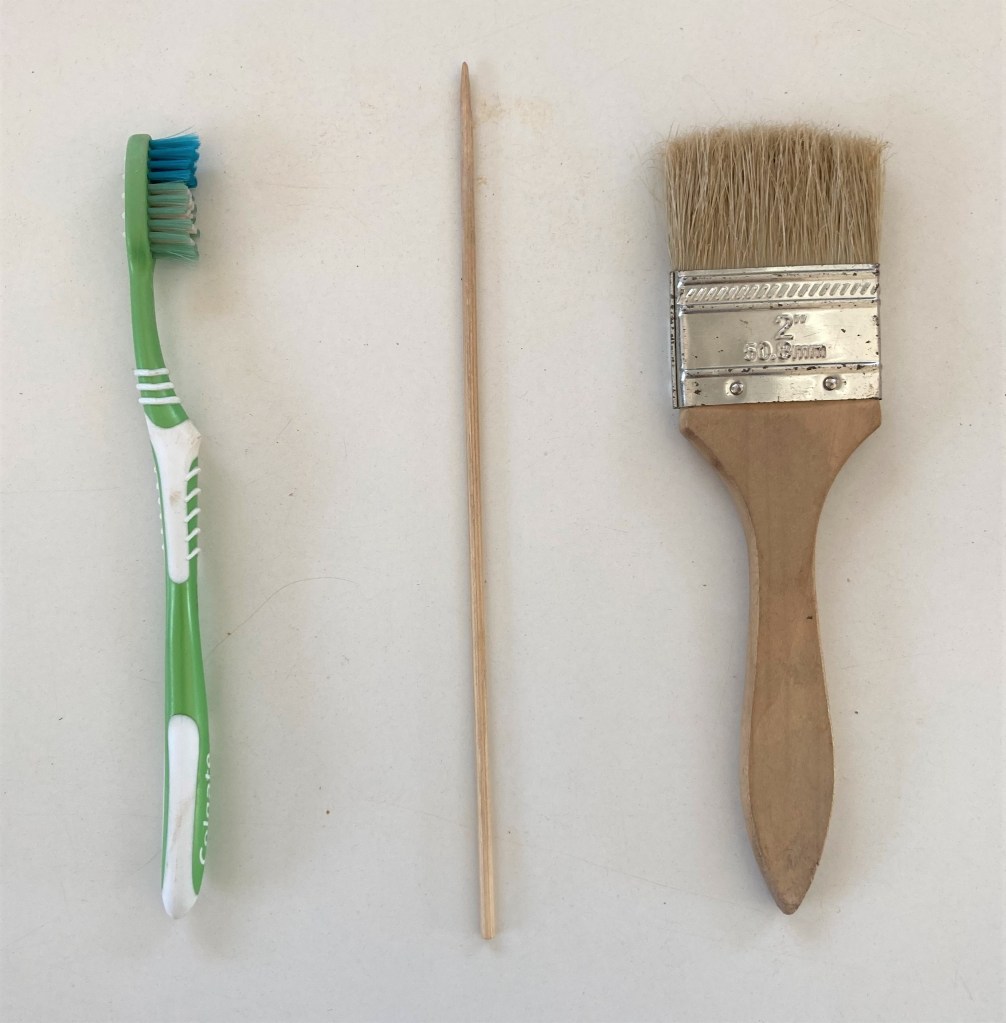
At Eleon, bones are removed from site and taken to the apotheke to be carefully dried in a controlled environment, wrapped, and stored for future study. When the time comes, the bones are removed and cleaned using gentle equipment like a soft toothbrush and a small wooden stick to chip away hardened dirt (Fig. 1). Then they are repackaged and organized. They are measured, weighed, and analyzed closely. Any noteworthy physical features of a bone are recorded and interpreted. Then isotope analyses may be conducted, which can reveal dietary patterns, whether a person has migrated from another region, and how old the remains may be. This information helps reconstruct the history of a person and gives some context to how people lived in ancient Eleon.
I spoke to a bioarchaeology student on site who is studying diseases, injuries, and abnormalities of bones. She uses this data to research the malnutrition and illnesses that affected children at ancient Eleon. I asked why she believes this is an important topic, and she explained that understanding the way in which people lived and died in the past can contribute to our understanding of health now. The example she used was the malnourishment of impoverished children in many countries leading to deficiencies which can stunt growth or lead to chronic conditions. Evidence of this can be seen in some of the children at Eleon, who had evidence of deficiencies in their bones. I sat with this thought for a long time, imagining the many conditions that people face, and how some reveal themselves in the bones: arthritis, gout, breakages, infections, cancers, malnourishment, rickets, polio, and venereal syphilis, among others. If we can find evidence of these conditions in past populations and place these in the context of the diet and lifestyles led by the people of that time, we can better understand what leads to increases in these conditions today. We can then also advocate for prevention in our own societies.
The first step to observing the bones or running tests on them, however, is cleaning them and this is the task that I was presented with in week one. While sitting with a toothbrush in hand and wiping dust off of the ancient bones for several hours may seem tedious, it is work that I have come to understand as a first step in a long process of revealing someone’s story.
After my first experience at EBAP, I hope to spend many more hours working with these bones, and perhaps learning more about their burial contexts to gain a better understanding of the time period in which they lived and the way they were put to rest.
Drawn to See Sherds (Including ‘How to Draw a Potsherd’!)
By Zoe Wieler
I began my time at the EBAP field school of ancient Eleon with a week in Athens drawing Mycenaean pottery. Here, learning the very precise process of archeological illustration, I also learned how to better see what it was that I was drawing. What struck me as meaningful was that it was the particular practice of seeing which had to come first. There is a branch of visual anthropology that explores illustration as (an ethnographic) methodology. The idea is that drawing allows us to see with a greater attentiveness because we are tasked with rendering realities’ details in a concretely visual way; drawing is implemented as a means of learning to see more precisely, holistically, and truthfully, as the way we are seeing is marked down in the production of some understanding. Reflecting on this methodology while daydreaming about how to draw the sherds of pottery that came up during our first week of fieldwork, I realized that maybe—through the archeological illustration I am getting to pursue here at EBAP (Fig. 1)—I am both learning how to see pottery so as to better draw it and drawing pottery in a process that enables me to better see and understand it. As a maker of ceramics, practicing the art of illustrating this material from Eleon has been an exciting opportunity!

Sherds, broken fragments of pottery vessels, are some of the most sensitive chronological material at Eleon. For all eras of past human activity on the acropolis of ancient Eleon, there is more pottery than any other material. Unearthed from long buried strata, these sherds are contextualized by their date, by their vessel forms, by their use, by their style, and also by their manufacture. Since pottery follows stylistic trends that change over time, Early Helladic Ayia Marina ware can be distinguished from a green-glazed piece of a Byzantine plate or a Late Helladic Mycenaean drinking kylix, and here at Eleon, each may help to date the contexts in which they are found. Thus, to enhance understandings of various chronologies, site usage, and artistic and technological change, pottery is often recorded in archaeological publications in the form of a catalogue entry and illustration.
When learning to catalogue sherds with Charlie in the apotheke (storage depot), I experienced the importance of producing precise illustrations. The slightest angles and smallest details matter for archeologists seeking comparanda to date or regionally place their piece. But how to go about visualizing sherds which emerge from the time periods represented at Eleon? For the beginner sherd artist like me, I present my version of a brief guide to pottery illustration (distilled from the lessons of Trevor and Charlie).
How to Draw a Potsherd: A Brief Guide:
Step 1: I quickly learned that how to see a potsherd informs how to draw a potsherd. To begin, the sherd in front of you should be oriented so as to indicate its relation to the whole form from which it came. This is called ‘stancing’ the sherd. The stance will allow you to understand how to draw the profile of one tiny piece of a pot, at the correct angle in which it would have existed in the original vessel. (For me, this was a kind of learning how to see in the practice of visual anthropologists who propose illustration as a method of attentively understanding all that an object or view offers our perception).
Step 1 continued: If a rim or base exists, place this edge as flat as it will go on a flat surface. The angle at which the edge meets most of the surface is the angle the piece likely stands, since pottery vessels are often begun or finished either on a flat wheel head or parallel to one. With the piece stanced, you can use a diameter sheet and a standing square to draw out a ‘T’ to the measurements of the diameter and height. Next, stance the piece in profile, angling it so that the rim edge runs horizontally with cm paper when viewed from directly above. The harder I squint, the better this goes. Trevor Tip: Pay attention to the orientation of wheel bands or coils visible in the clay body to help you stance, especially when you are without a rim or base piece.
Step 2: Concentrating very hard on your sherd stance, draw the outer section of the shape. From directly above, with one eye closed, your outline should match the stanced outline. Now you can take the thickness of the walls with a caliper and use these points to draw the inside of the sherd section!
Step 3: With half the shape drawn in section, you can trace this, flip it over to mirror the section, and draw the exterior view of the profile on the other side. You are now ready to draw and/or carefully trace any decoration on the piece! When drawing your Boeotian Kylix Ware, prepare for zigzags, concentric triangles, linear stripes, and more (Fig. 1)…
Step 4: Note down the basic colours of the paint or glaze. Draw the interior decoration on the section view and don’t forget bases and feet! Measure and include the handles of your BKW and/or indicate where they join, and draw in any rim decoration. Trevor Tip: You can indicate a painted circle on the vessel floor by drawing a little dome–to scale of course.
Step 5: Finally, include a scale under your illustration, above which you can record the sequential drawing number and the specific EBAP find number (Hurray for EBAP# tags). Write your illustrator initials under the scale, and voila–you have archaeologically illustrated a sherd!
Research in Real Life: Hearths in the Northwest Complex
By Mira Harvey
Over the past year, from September to May, I worked on an independent research project supported by a Jamie Cassels Undergraduate Research Award (JCURA) that focused on ancient Eleon. Specifically, I looked at the (many) hearths in the Northwest Complex, a household that primarily dates to the post-palatial period (1200-1050 BCE). I did this having never seen the hearths in-person, relying solely on archival documentation (e.g., photos and excavation journals). It has been amazing to be able to see and touch them over the past couple weeks!
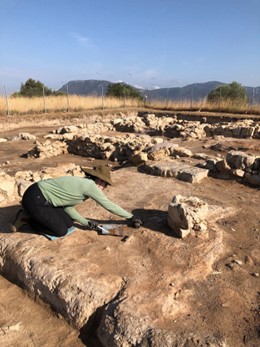
I was very excited to step onto site for the first time. Before I got to see the hearths, however, we had to de-tarp the site. These huge tarps keep Eleon preserved while the EBAP team is away. Once uncovered, we started cleaning the trenches, which meant clearing eroded soil and creating a nice edge of scarp again. Cleaning around the hearths in the Northwest Complex was a delicate project (Fig. 1). We used soft brushes to remove only the loosest soil from the tops and sides to prevent further erosion from the crumbly hearths.
I was very happy to see how they were constructed in real life. I knew that most of the hearths in the Northwest Complex were built on a bed of sherds, which were then covered with a layer of clay. But now, I can see exactly what kind of sherds: big roof tiles, smaller pieces of broken cookware, even a very large jug handle lodged in the Room 6 hearth. In the photos, each hearth looks raised, but they would have been mostly level with the floor while in use. Over time inhabitants would re-pave, clean, or just pack over the hearth. In Room 5, probably the “kitchen,” hearths were frequently moved and packed in with new floor levels. The hearths are also often near column bases, which would have held up the roof and/or created a space to ventilate smoke. These installations influenced the architecture and layout of a household, and also structured daily life as places of warmth, lighting, cooking and crafting.
Working from home on the hearths, I sometimes struggled to get a sense of the people who lived in the Northwest Complex. The site was a series of pictures and maps and words, not a place. But here, I can walk through the doorway to the Northwest Complex, and walk in the same footsteps that people in the Bronze Age did. While cleaning the hearths in the Boeotian sun, we talked about how hot it would have been, to be cooking food over the fires in the small Room 5. I thought about that while writing in the past year, but to actually feel how hot it gets in summer… that gave me a new understanding of what it would have felt like to live here, thousands and thousands of years ago. I wanted to study hearths in the first place because I felt they could connect me to ancient people’s daily lives. That goal definitely feels realized now.
Unlocking a New Season at Ancient Eleon
By Trevor Van Damme
On May 30th, we officially returned for the 2022 campaign at ancient Eleon. This season promises to be an exciting one–our first with undergraduate students from the University of Victoria, since 2019!
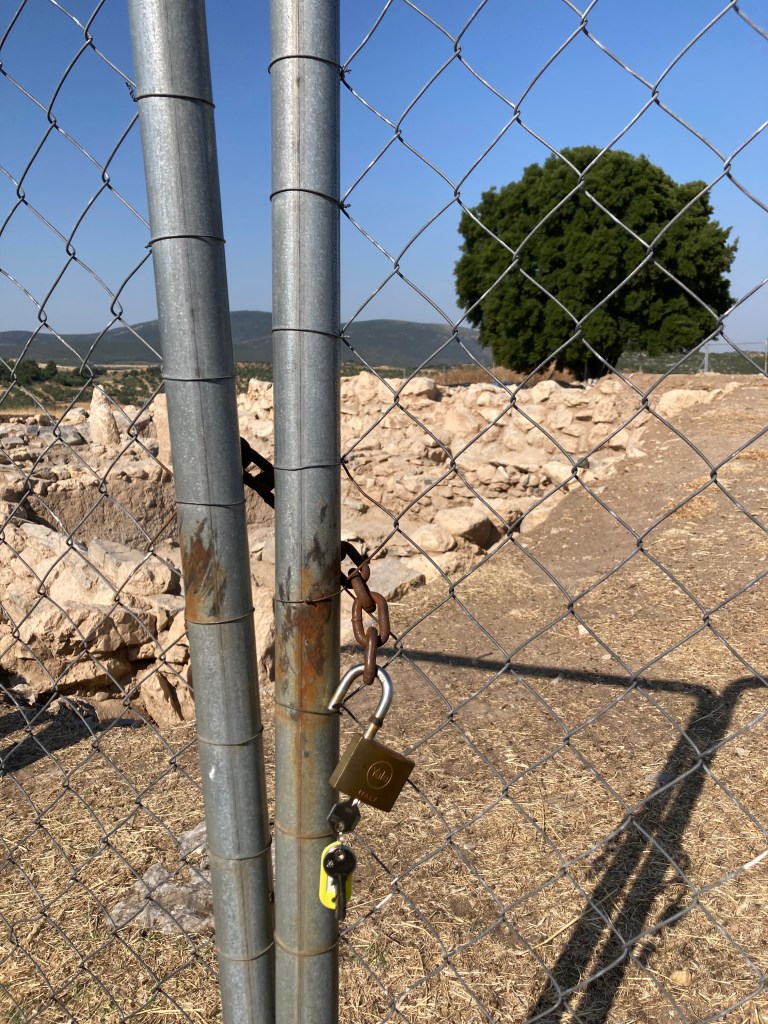
Our season began with unlocking the site (Fig. 1), removing the tarps that have protected the excavated architecture, and cleaning the site in preparation for a new, more accurate, digital model.
The focus of our work this season, however, will not be on the acropolis of ancient Eleon, but rather to the west of it. Here we aim to document the existence and extent of the lower town of ancient Eleon, first noted by Colonel William Leake in his travel diary from 1806(!), in order to better assess diachronic changes in the use of space over time. We also hope to refine the sequence of occupation and perhaps even fill in some of the current gaps in the history of settlement, as revealed by our limited excavations on the eastern edge of the acropolis. A cleaning and geophysical permit will allow us to document and protect the remains of an impressive fortification wall around the lower town for future generations.
In the apotheke, conservation of finds from our final campaign of excavations in 2018 will, at last, be completed and specialists continue their work towards final publication. In tandem with the work in the lower town, we are also revisiting the survey material collected from 2007-2009 for publication with the results of the present campaign of work in the lower town.
Check back at this blog soon for debriefs from the students enrolled in GRS 495: Practicum in Archaeology: Ancient Eleon and learn about our work in real time.
 EBAP Excavations