Technology and Archaeology

by Ashley Hopper
 
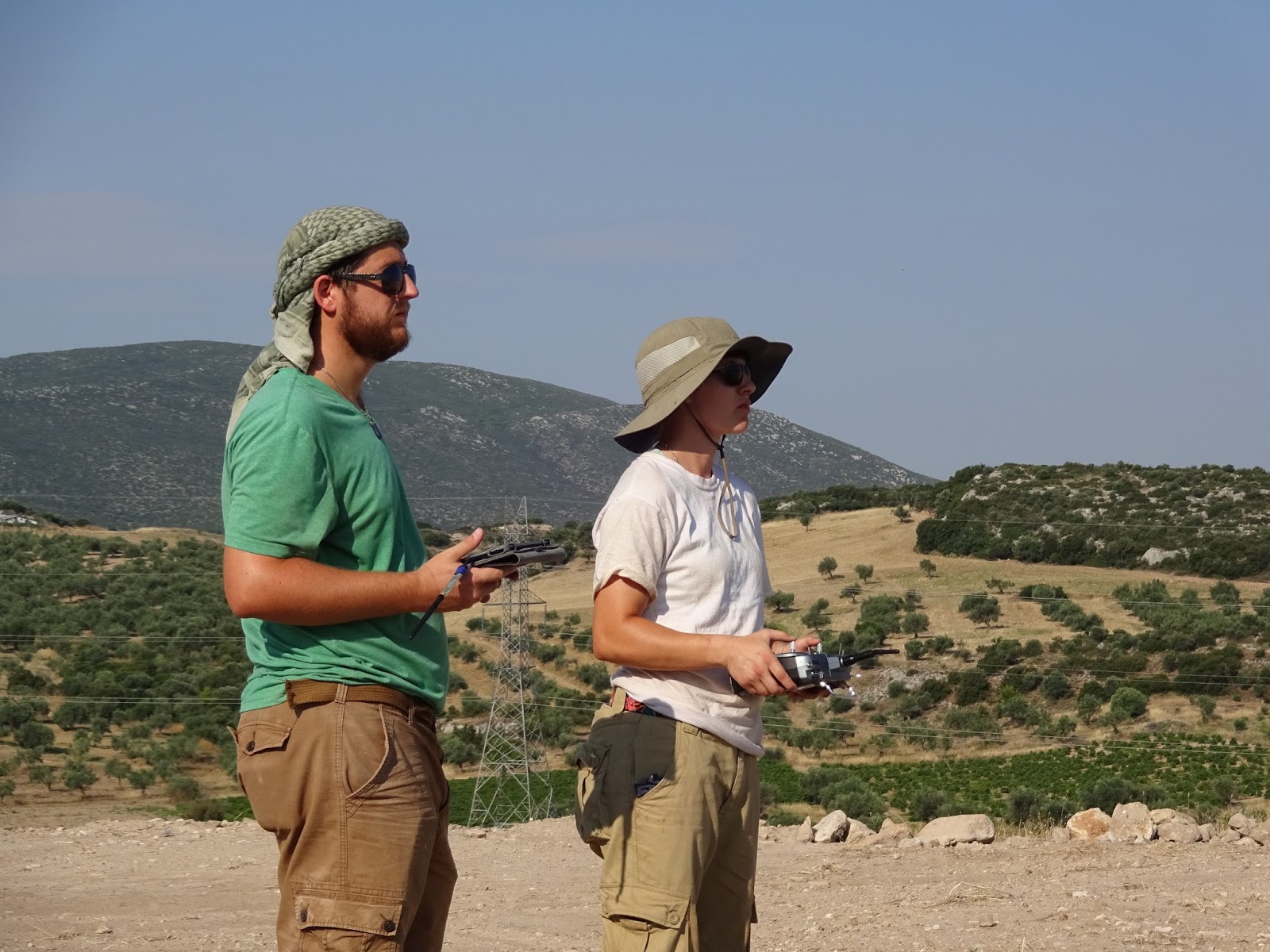
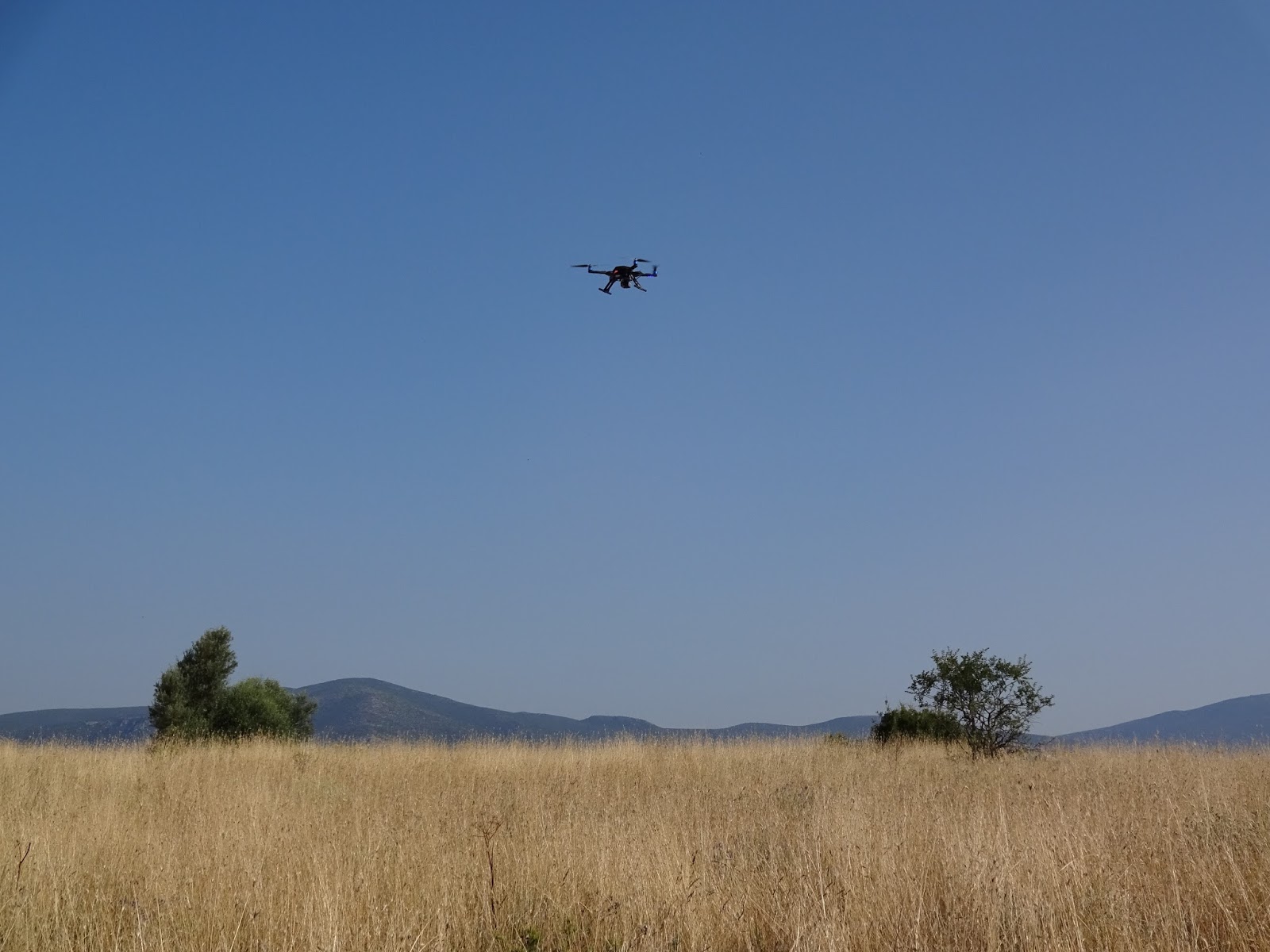
For the first time this year, we had the opportunity to use a drone to take aerial photography of our site. They did have the drone last year, however, they never got the chance to take high quality photos of the site due to some rather unfortunate mishaps. Jordan Tynes, a professor from Wellesley College visited us for a week to help teach us about the technology and take photos of the site. Kaylie Cox, a fellow student and aerial protégé, was Jordan’s assistant and took over for him when he had to leave. She is quite the expert on drone technology already.
Flying the drone is a two-person operation and requires careful coordination so the drone won’t crash. A Go-Pro camera is attached to the bottom of the drone, while photos are taken using the time-lapse setting with two photos being taken every second. While one person is controlling the drone, the other watches the timer so the battery won’t run out. The battery only lasts for eight minutes of active flying, making it very important for the co-pilot to give regular updates on how much time has passed. The highest that we have seen the drone fly over the site is 125 feet but Kaylie would not recommend going over 100 feet due to the drone’s sensitivity to wind. With such thoughtful consideration of the elements, there have not been any crashes yet!
This technology is important for archaeological sites and excavations because it can document changes from the air that might not be as noticeable from the ground. It gives us a bigger picture of how things are progressing on site and provides a different perspective for our photography. It also gives us a direct overhead view of the site compared to our photography taken from the ground, as it is not always easy to take photos from the ground due to awkward angles or positioning.

The only downside to the technology is that it can only be used in certain weather conditions. We had to learn this the hard way one day when we rushed to clean up our trench but it turned out that the wind was too strong for the drone to fly. It will be very interesting to see how drone photography on archaeological sites progresses in the coming years!

Advanced Excavation Techniques: The Future Digger

by Vaughn Gaston

Advanced Excavation Techniques: The Future Digger

(A Non-Intentionally Alliterative, Complimentary, Semi-Collaborative Continuation of Mr. Jones’ Previous Blog Entry)
            Throughout the history of archaeology, evolved methods have allowed for increases in information acquisition and advancements in archaeological accuracy. We have total stations, digital databases, and chemically literate conservators. However, the lowly laborer attains no newfound skill, performing techniques that just might be as old as archaeology itself. Thankfully, that is all about to change.

            Please be cautious in attempting any of the following presented techniques, as many of them require considerable balance, excellent physical coordination, and perhaps a couple of extra handfuls at nut break. Additionally, anyone with a history of cardiac illness, weak lung capacity, or lack of mental fortitude should refrain from the following, or consult a specialist before attempting to engage in any of the activities listed below.

The Flying Sherd:

 The name is self-explanatory. An accurate sherd toss into a pottery bucket can save the time and energy one requires to constantly walk back and forth. Plastic buckets are recommended, not metal, in order to reduce impact, and possible sherd damage. Also, this technique should not be used with faunal material, as it is often far more fragile. Lastly, if one is especially concerned with the well-being of airborne material; the “alley-oop” method may be initiated.

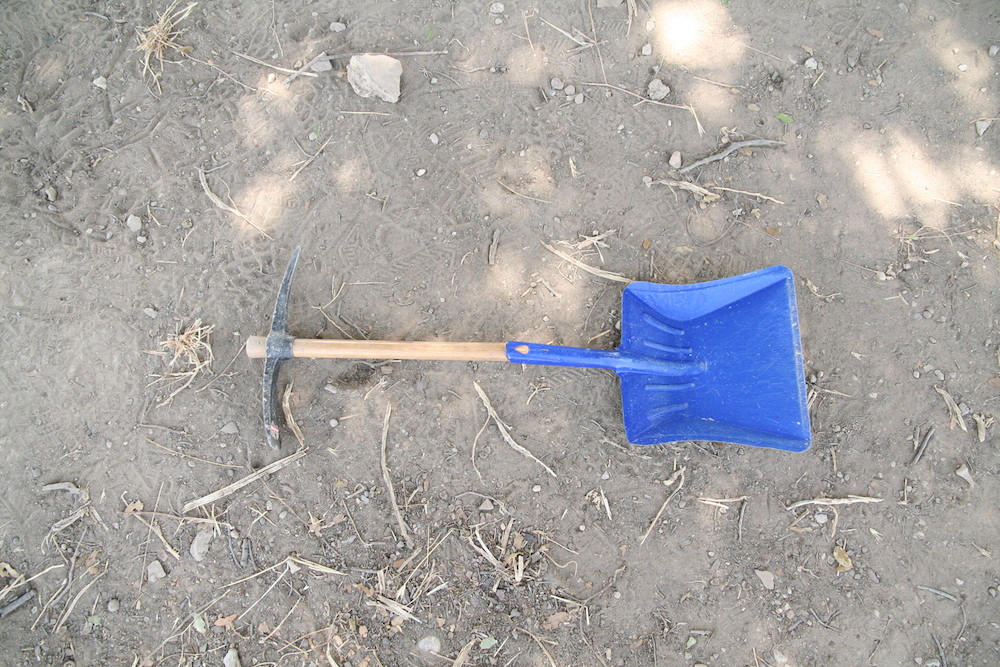
The Reverse-Through-The-Legs Dustpan and/or Shovel Disposal:

Once again, the title of this technique is description enough. It is a technique found most useful in tight, awkward spaces, in which zembili placement options are adequate at best.

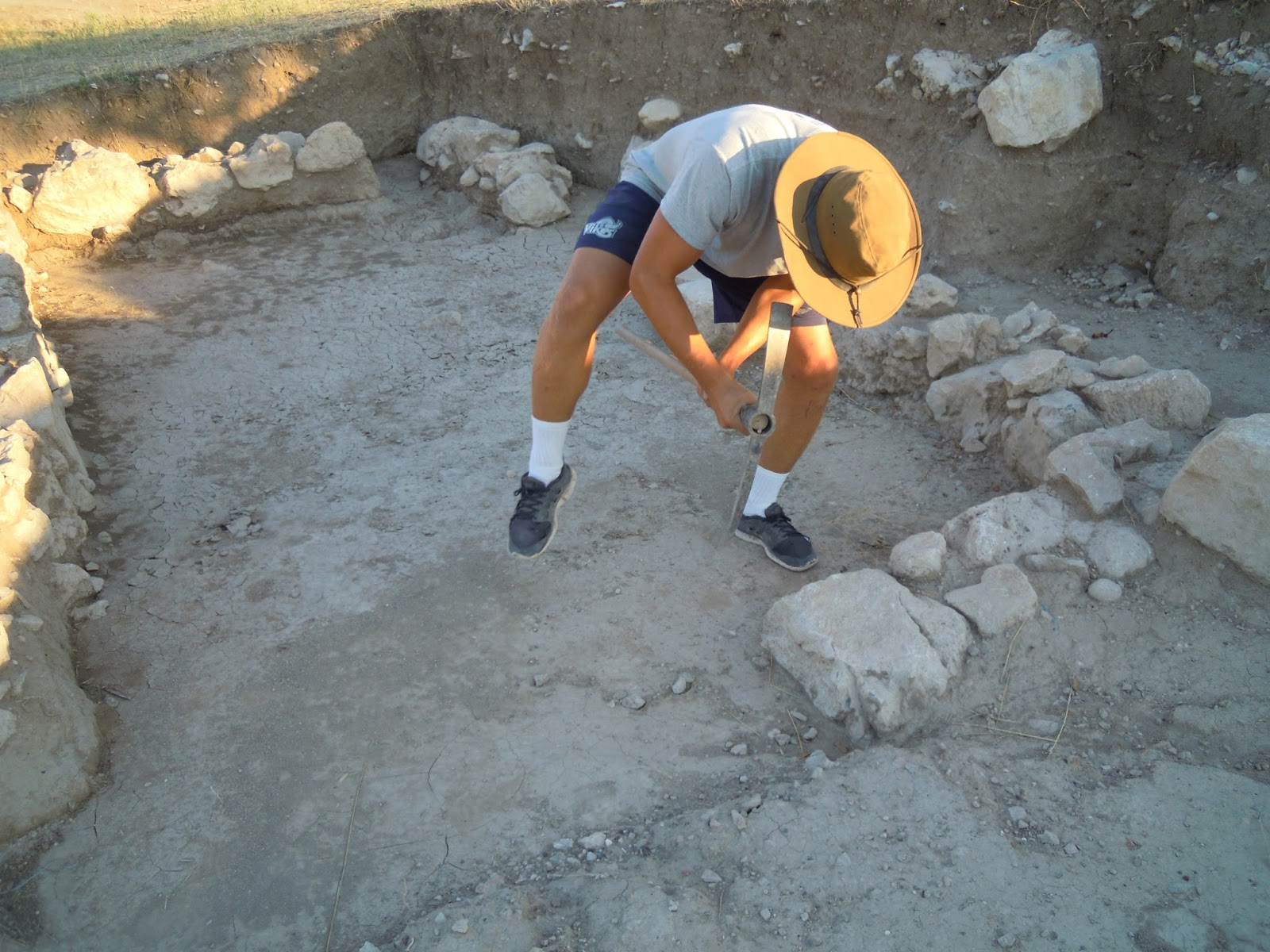
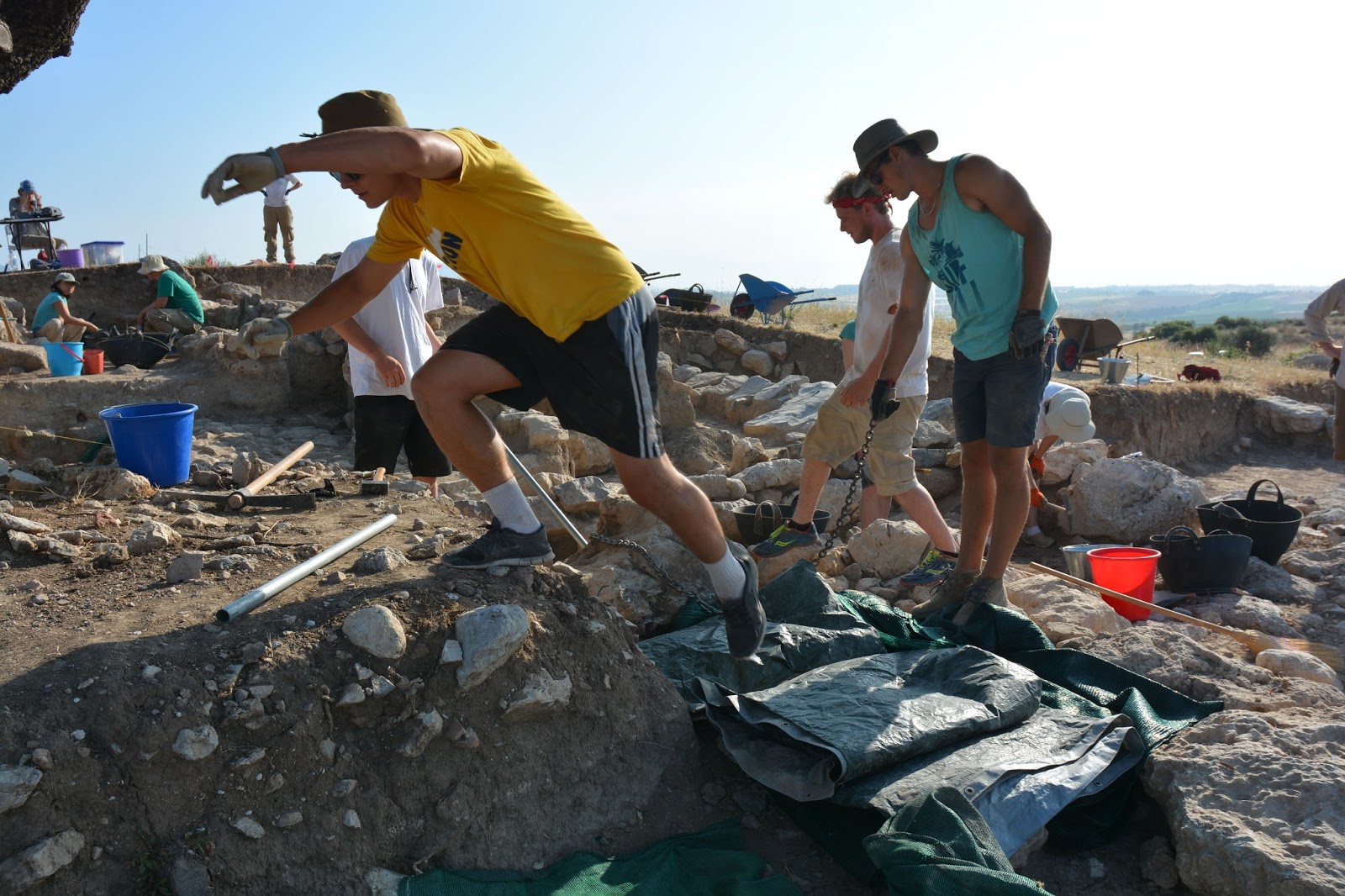
The Schliemann Shuffle or The Heinrich Hop:
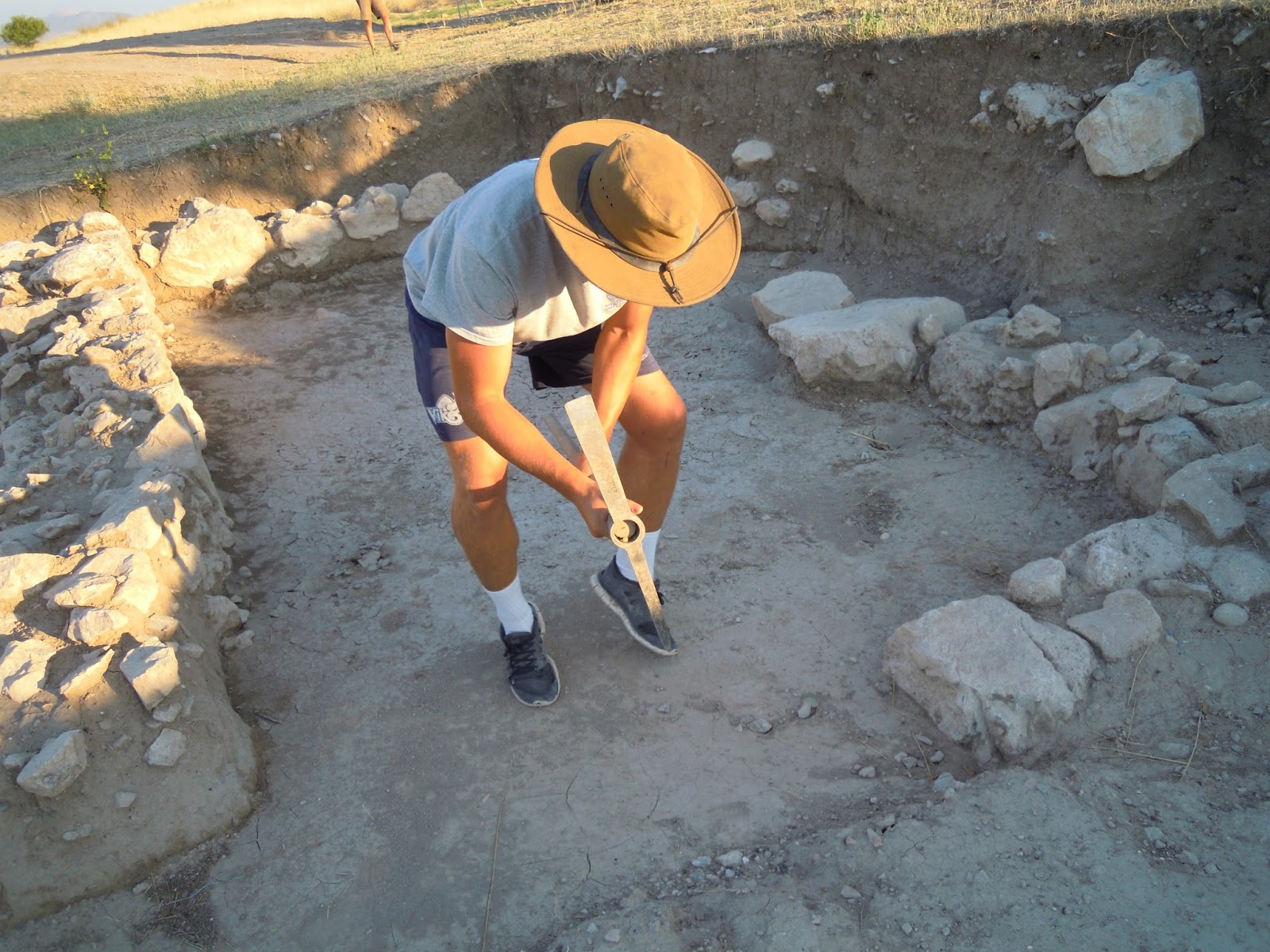
It depends on the region: in Beotia it is referred to as The Schliemann Shuffle, and in Attica, The Heinrich Hop. To perform this technique, simply make a lateral two-step hop to move positions while digging with a pick. The technique is conducted in order to maximize picking efficiency, covering more ground without having to reach, therefore preventing possible muscular injuries.

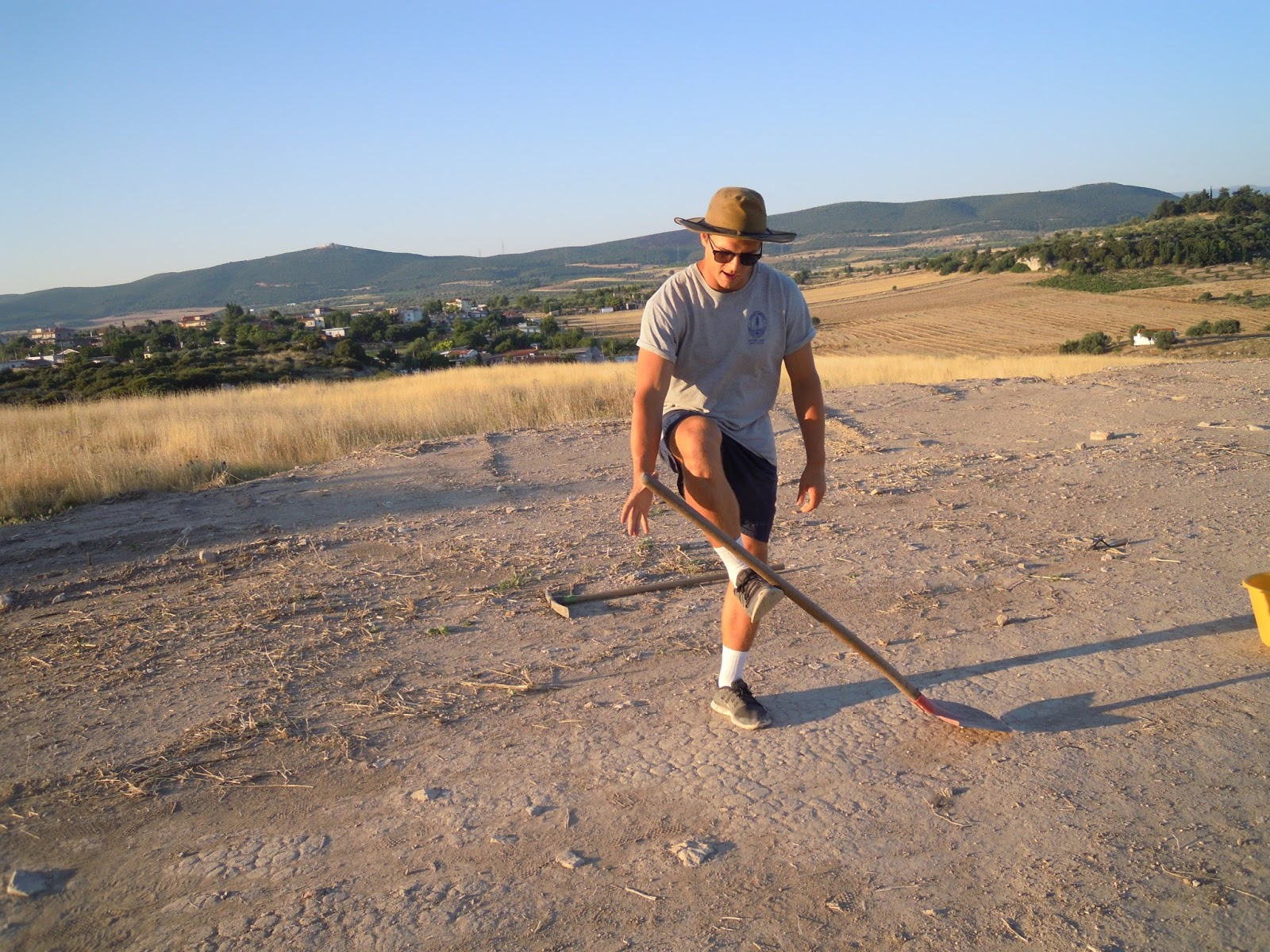
The Foot-Flick and Catch:

The brilliance of this technique is due to its simplicity. By catching the shaft of ones’ hand-tool with the laces of the shoe, the fall is cushioned, the floor of the trench avoids being marked, and energy is not wasted by bending down to slowly place a tool. Furthermore, the opposite technique may be applied by sliding one’s foot under the shaft of a grounded hand-tool and lifting/flicking the foot; raising the tool in a quick but controlled motion. This technique not only maximizes labor efficiency in terms of speed, but also saves ones’ lumbar region from a possible chronic injury. Plus, it looks cool.

Shirts, Shorts, and Sherds:

Although this next technique is more indirectly related to excavating than the previous listed, a freshly washed, crisp garment can make a 5:00AM rise almost pleasant. However, it can be difficult to find time for doing laundry within the busy schedule of an archaeologist. And of course, properly cleaned archaeological materials are essential to any successful dig. So, this technique is quite straightforward: sherd washing and laundry at the same time.


The Stratigraphy Sommelier:

Few archaeological laborer grunts are savvy with the information one can gain if they are able to recognize things like soil changes, various stratified layers, material inclusions, etcetera. So, this technique allows for even a mindless pawn to notice a subtle, significant event that may occur in his or her trench. To excel at this technique, one need only to lick every bit of earth, rock, fauna, flora, and ceramic available in the surrounding environment, constantly. Eventually, one will acquire the skill to distinguish different types of stone based on their texture against the tongue, or even, taste a date.
            Although it is safe to say that the field of archaeology will never be the same, the provided examples serve merely to scratch the surface of archaeological technique advancement. Lastly, It is important to note that many of these techniques may be combined in several ways with the groundbreaking tool technologies presented in Mr. Jones’ earlier blog entry.


Tools Required for Excavation: An Archaeologists Tool Kit

by Sydney Giesbrecht
Every good archaeologist has a set of essential tools used daily on site. While some are more important then others each plays an important role in excavation.


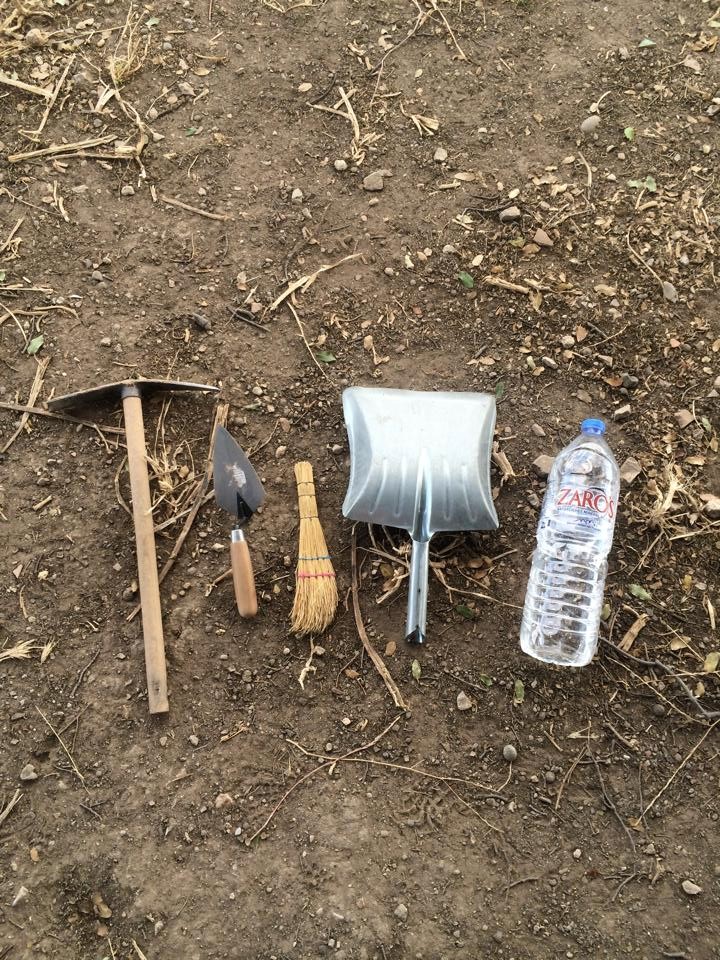
The Small Pick:

Required for more detailed work such as articulating large rocks or cleaning a bulk at the end of the day. A pick does less damage then most other tools because when breaking into the earth there is only on small point of contact rather than with a shovel where more extensive damage can be done due to its width.


The Trowel:A multipurpose tool.

Sometimes it feels as though there is nothing that a trowel cannot do. During my first few days on site the trowel felt awkward in my hand and I wasn’t quite sure of its full purpose. Now after 5 weeks on site it fits naturally in my hand, almost like an extension of my arm. A trowel to an archaeologist is like a scalpel to a surgeon. Since arriving on site not a day has gone by that I have not required my trowel. It can be used for a variety of things on site ranging from scraping a bulk to examining soil changes on a surface, or simply collecting dirt into a dustpan. It’s most important use in my experience is for checking for changes in soil on a surface. For example if you are working on a surface using picks and shovels you may not notice a change in soil density that clearly. If one area is denser or more clay like then another, a quick scrape on the surface with the edge of your trowel will help to clarify any changes.


Brush:Necessary for all cleaning styles

The brushes found on site range from paintbrushes to large brooms. Small straw brushes as shown in the image above are particularly useful for brushing off rocks and cleaning uneven surfaces. Paintbrushes can be used on site for more delicate work and gentle cleaning in order to not damage or displace the item being excavated. For example if you were to come across a mud brick that you wanted to articulate and photograph a paintbrush would to the least damage.  Larger brooms can often be used on harder surfaces at the end of the day to clean up, in a similar fashion to the way you would sweep the floor at home.


The Dust Pan:

While dustpans may seem insignificant in day-to-day life they are very important at an excavation site for soil removal. When working in smaller areas where a shovel is not an option, the dustpan is a lifesaver. Also very helpful at the end of the day to clean up any messes created during excavation. A clean trench is the best kind of trench.


The Water Bottle:Most important tool of all.

Without water nothing can be done on site. This may seem silly but dehydration is no joke here at EPAB.  With hot days and lots of physical activity you can become ill very quickly if you aren’t drinking lots of water. The average team member will drink 2-4 liters of water before lunch. If you aren’t hydrated you cant dig, and that’s no fun for anyone.
Shovel and Large Pick:
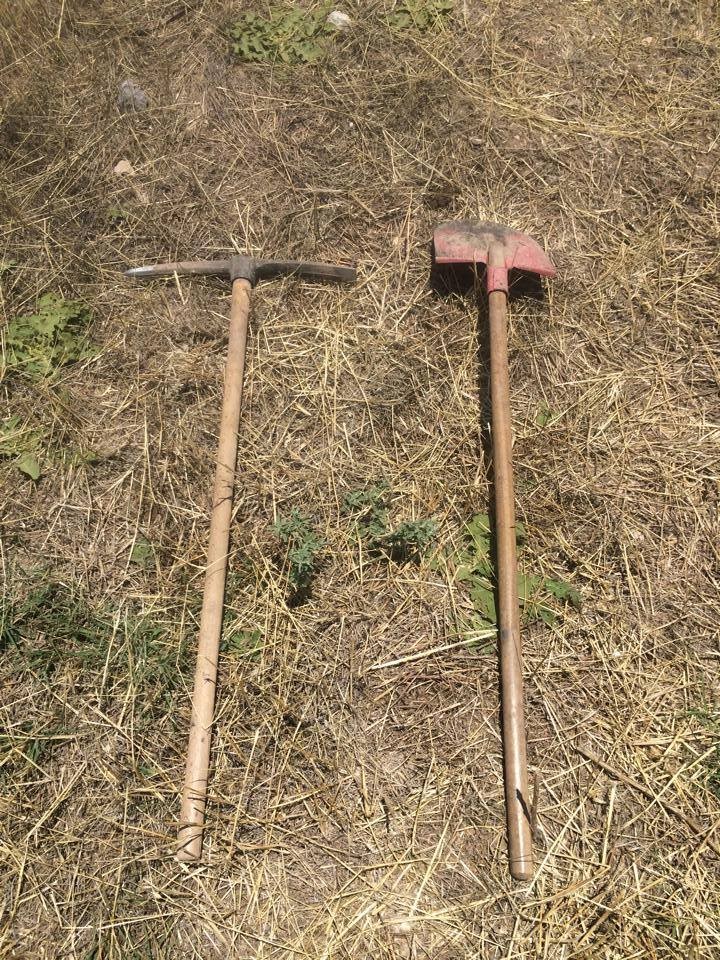
The shovel and the pick go together like peanut butter and jelly. When removing a layer or soil, or making a pass, the pick will be used along with the shovel. Similar to a small pick a large pick is used to loosen soil. Large picks play an important role in the removal of soil, particularly when opening a new trench and getting through the layer of top soil. The pick like make somewhere between a 5-10cm pass and a shovel will follow behind removing the soil being careful not to carve into the newly reveled layer below. This technique is used in order to prevent unnecessary damage to potential artifacts in the soil.


Wheelbarrow and Zambeili:
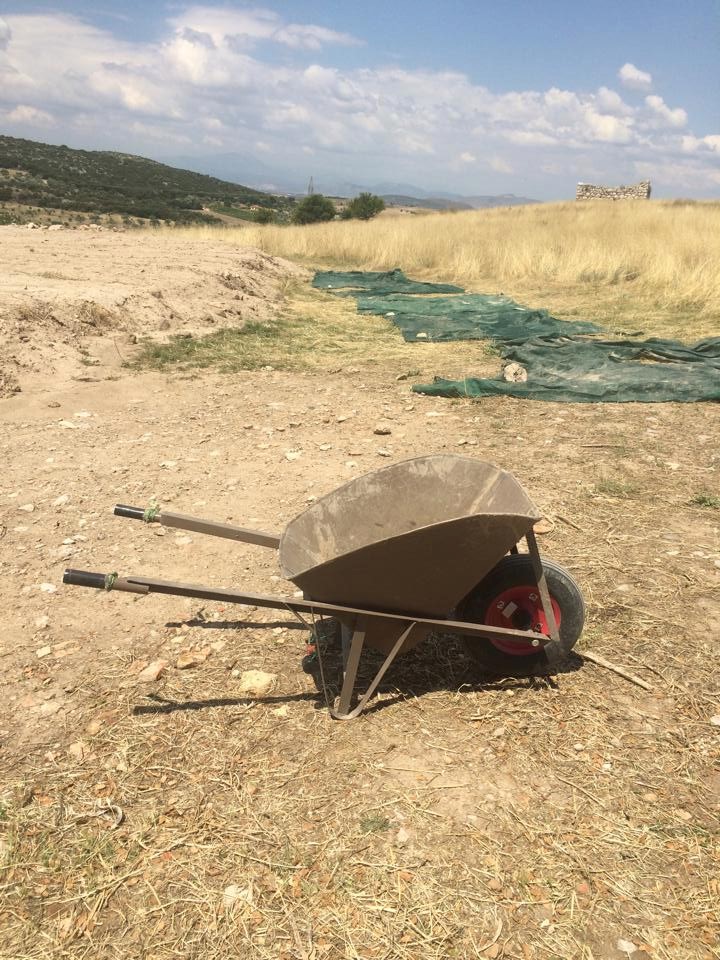
Two tools that are often unappreciated but play an important role on site. A Zambeli is a large rubber bucket placed in the trenches and is very important in removing soil. Soil it transferred from the trenches to the wheelbarrows via the zambeli and then transported to the dirt pile away from the trenches. In order to excavate a site you need to be clean and precise, so soil needs to be constantly moving. Wheelbarrows are often running non-stop all day long on site.


Bulk Scraper: The secret weapon.
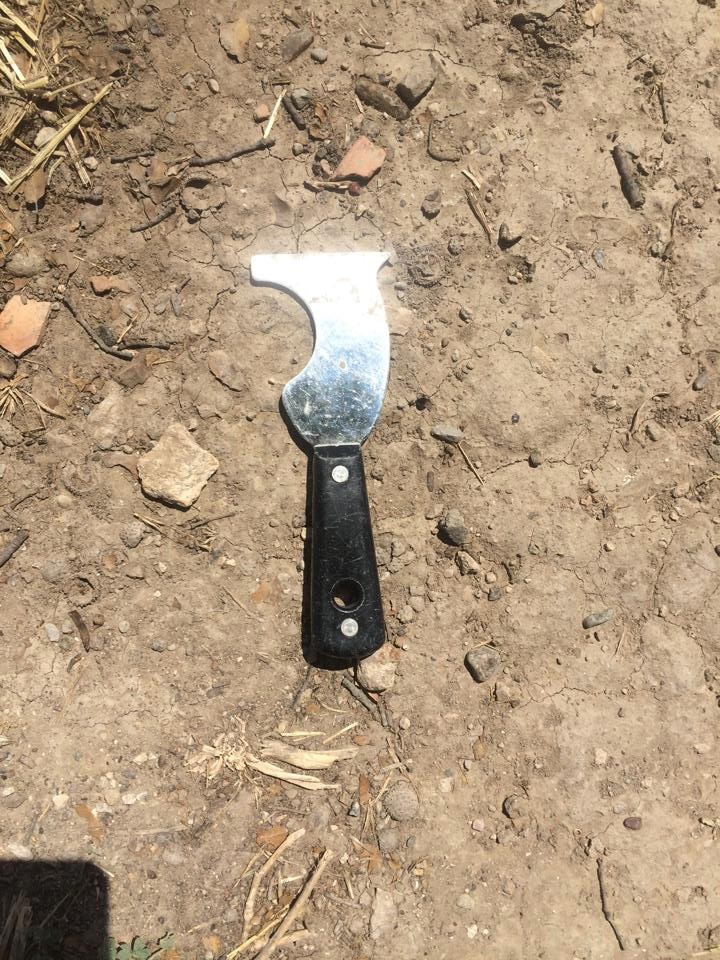
This tool is how you get the straightest bulk walls on site. Archaeological sites are broken down into grid units and on our site each grid is a 5 X 5 meter square. Bulk walls for as you move down into the soil sort of like a small shaft. These bulk walls need to be straight and vertical in order to ensure that you are collecting everything that is within you grid unit. If your bulk slants you could miss an important artifact or feature within the soil. This tool shown above helps to create perfectly flat and vertical bulk walls.


The Search for Ancient Eleon

by Braden Stanley
This summer I embarked on an incredible journey to the beautiful country of Greece to take part in an experience I will never forget. It is hard to captivate the entirety of my experience with mere words, so I decided I would try to express my summer in Greece via video. When I first began this journey I often wondered what exactly I would be doing in the trenches of Eleon. Would I become the next Indiana Jones uncovering the temple of doom, or would I be an average person just moving dirt? As cool as Indiana Jones is, I would have to say that my experience at Eleon was far superior to any adventure that Jones took part in, and I say that for one simple reason…The big pick. In the infamous indy movies you never see Indiana wielding the big pick axe doing actual archaeology, where as in my opinion, there is nothing more satisfying than swinging the big pick doing a clean 10cm pass, and uncovering an ancient history in the process. I feel obligated, however, to mention a particular illness that will take over once the smooth wooden handle first touches your fingers. To the common man your body may just feel warm, as if you have received to much sun, but to the experienced archaeologist it is known as “the fever.” The fever can be described as the irresistible desire to big pick, disregarding all cautionary measures to maintain locus levels and to observe differences in soil change. The fever will take over your body and mind in a way you never thought possible, and without realizing it you will have done three full 10cm trench passes before first break. By the end of the day you will have moved 150 buckets of dirt and ask yourself…what happened to me? Some may say they cannot tell if they have the fever or not, but perhaps the easiest way to diagnose the disease is when someone has been asked to do a shallow 5cm pass, but in reality they were digging closer to 10cm. Your body will do this on its own as it is something you will not be able to control. It will be up to your supervisor to get you out of the trench, feed you a cookie, insist that you take an Almora rehydration tablet, and tell you to go sit under the tree for some shade in order to get rid of the fever for the time being. I myself am burdened with this illness, but I do not intend on treating it. In all seriousness, my time in Greece has been something I will never forget. From the gorgeous beaches of Dilesi to the breathtaking 6am sunrises, from the incredible friendships to the amazing food, this experience will be an ever lasting memory. Being able to take part of an excavation at the incredible site of Eleon cannot be described with words – it is something that you will have to experience for yourself. But I warn you…if you do ever make it into the trenches, beware of the fever. 
Along with the video below, I have included a few time lapse clips to demonstrate the work we do in the trenches – Enjoy!


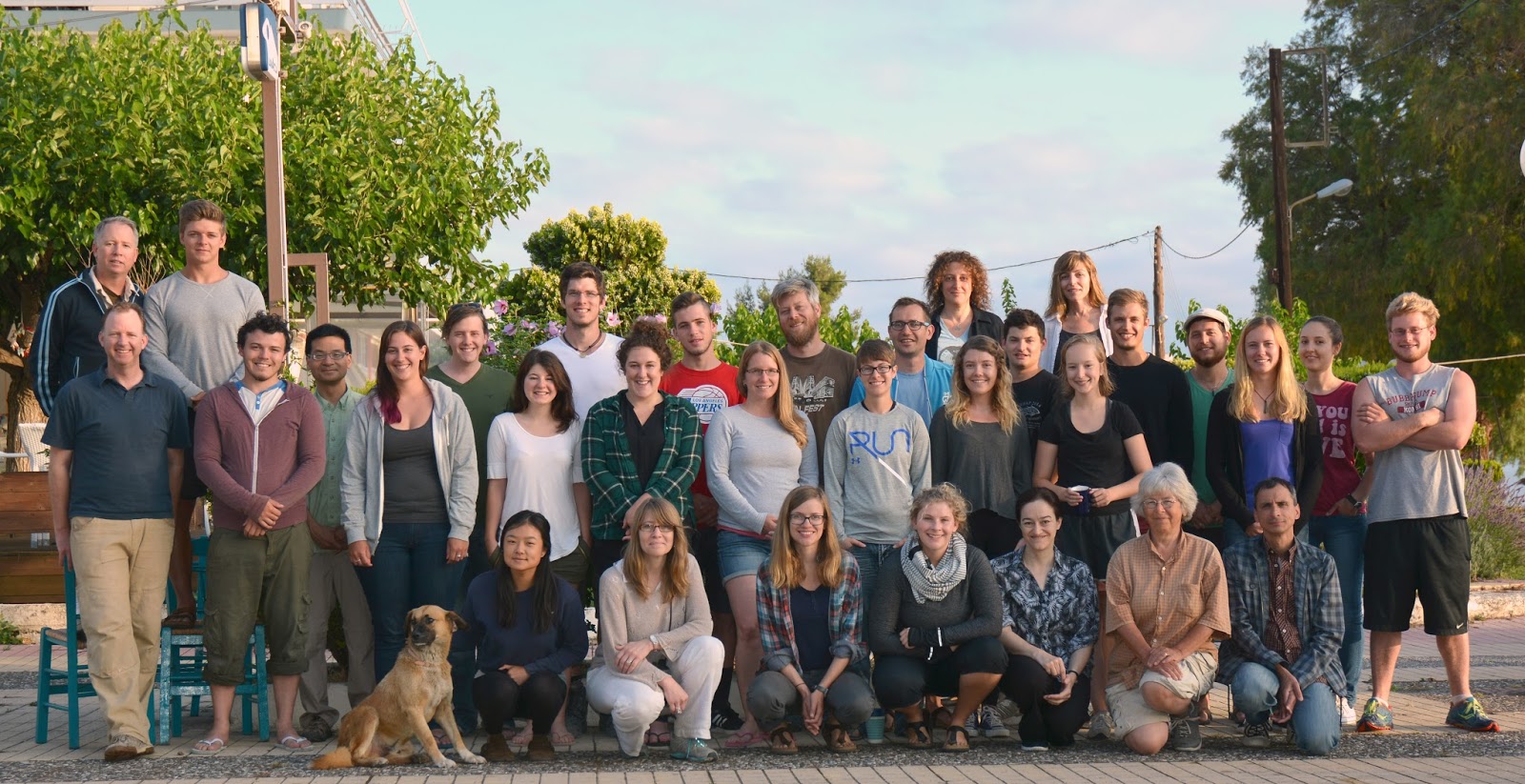
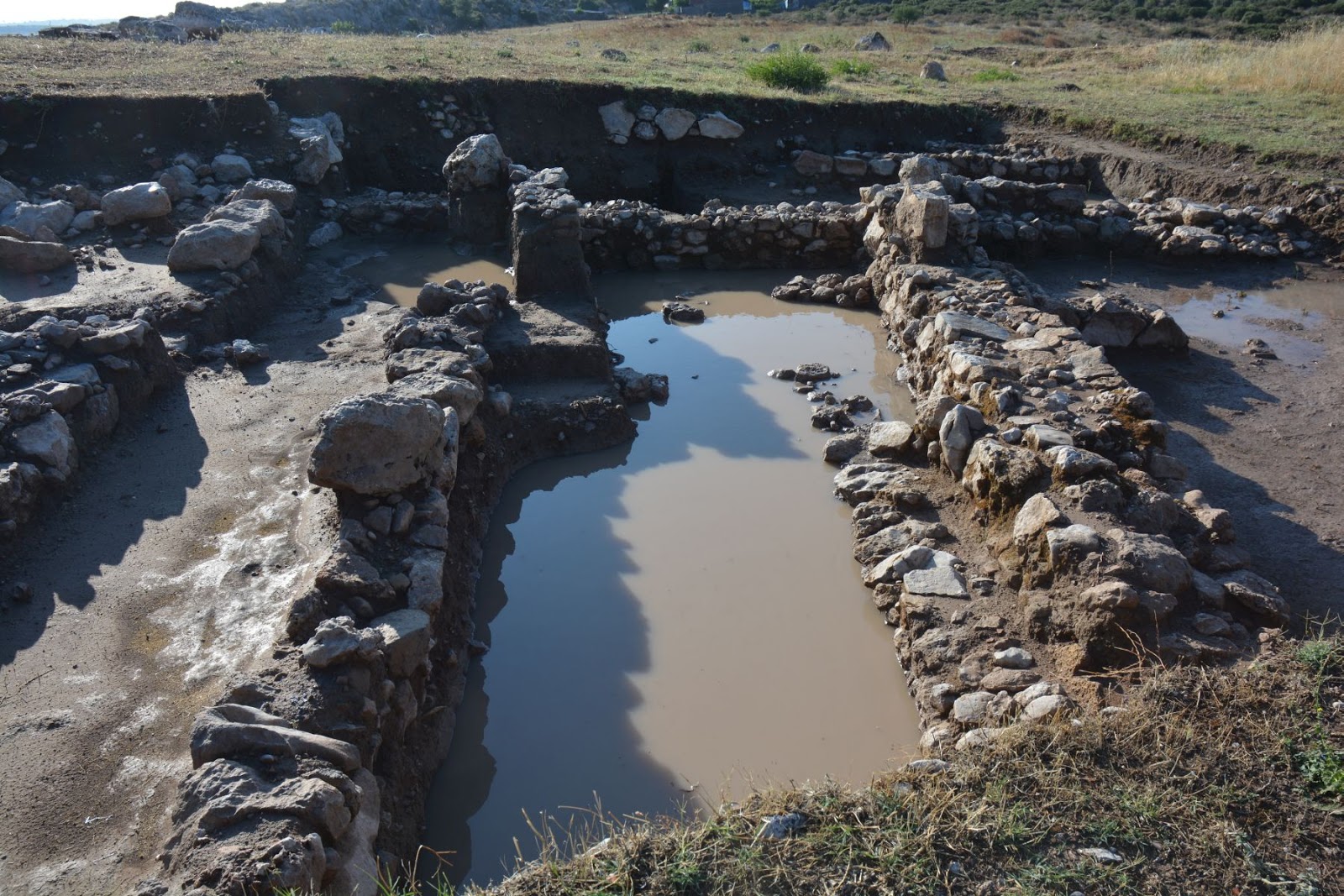
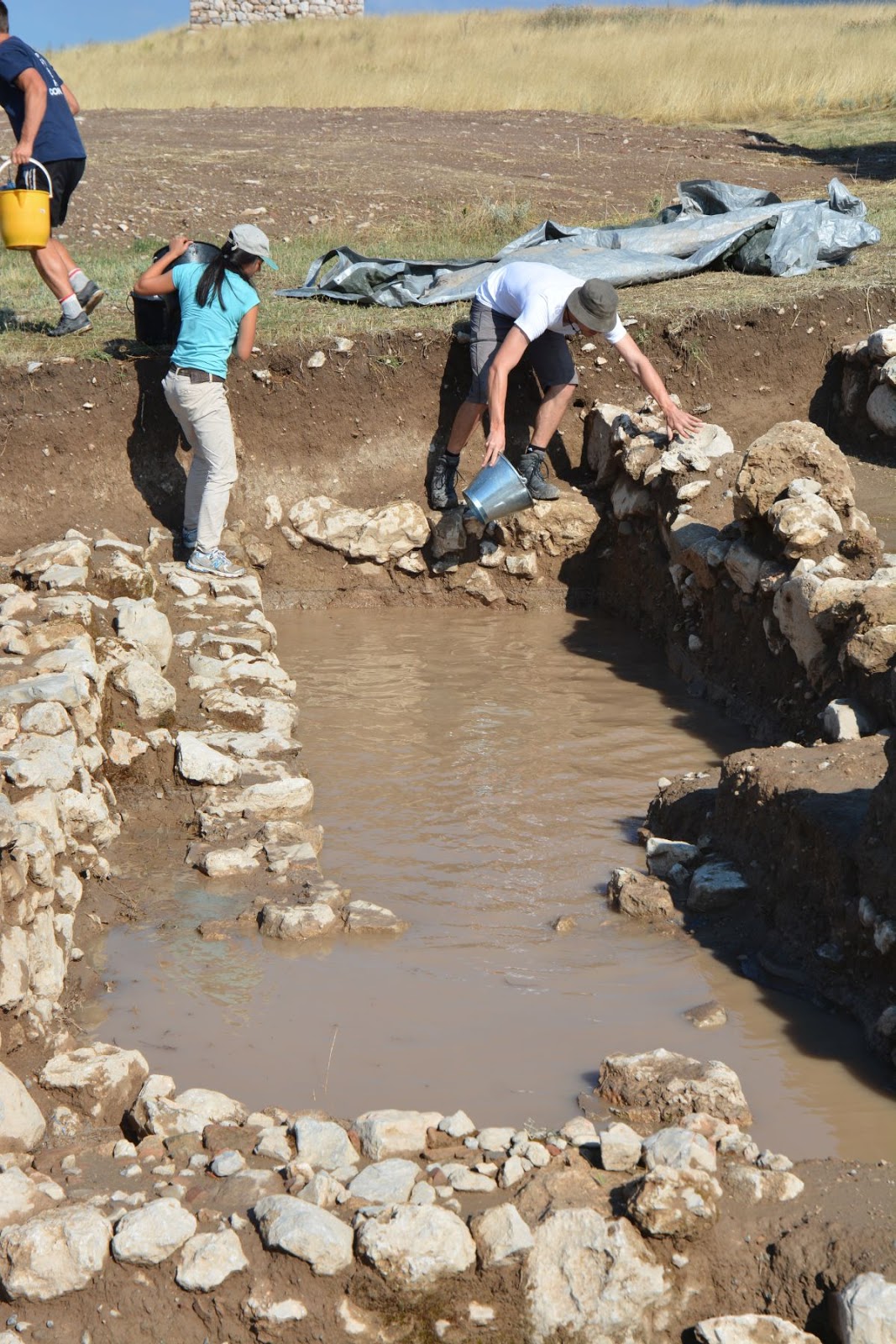
What a great group for 2015! And not everyone on our team is in the photo unfortunately. We took this photo yesterday, on Canada Day. We had heavy rains the night before so we had a very leisurely 7 am start time. Many of us went to the site, others to the apothiki (our work/storage area), and the rest stayed back in Dilesi, for data entry and pottery analysis. I was part of the team that went to the site. What we found was pretty surprising – pools of water in several of our newly dug trenches. 

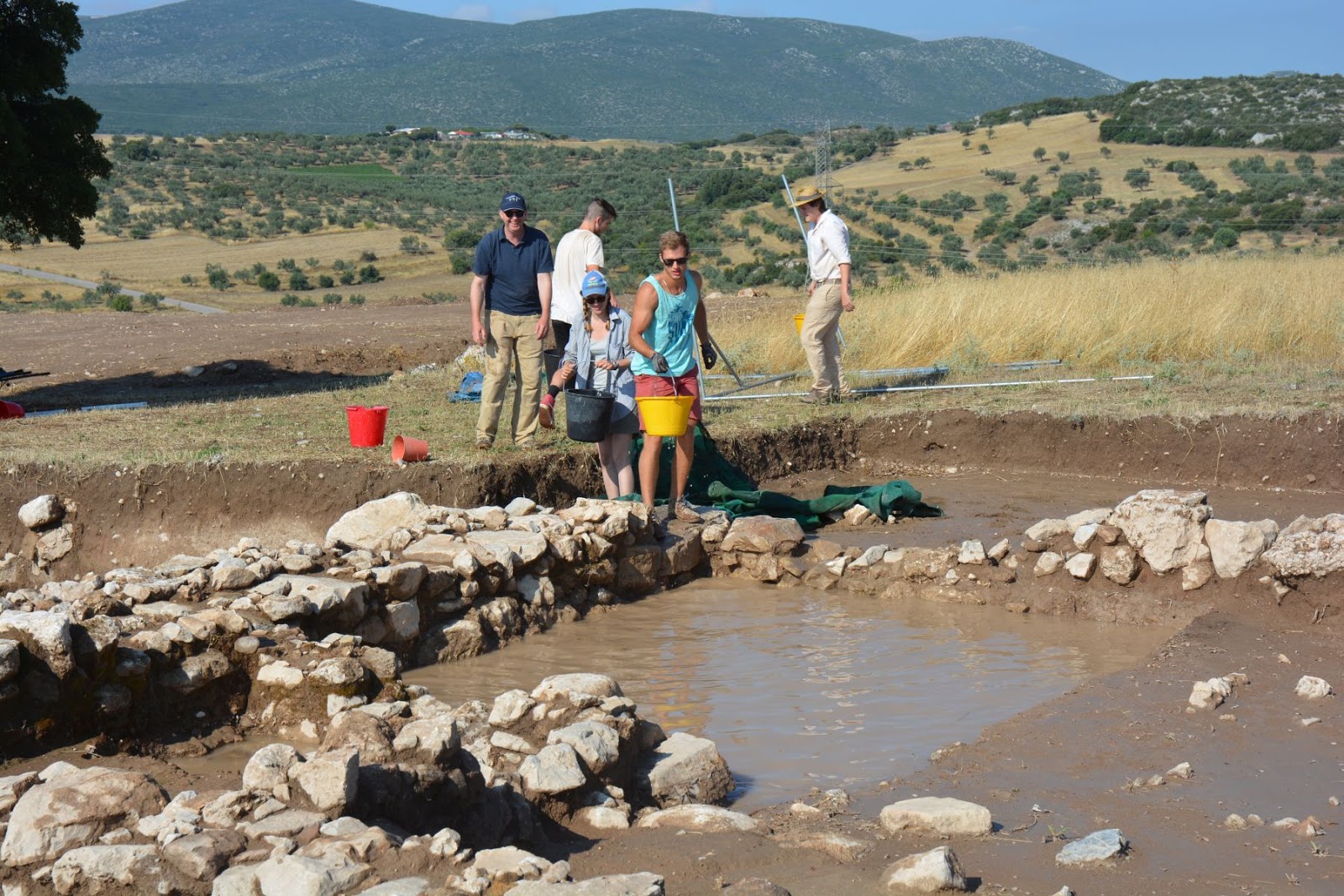
We assembled a crack team of water-balers and quickly were able to empty the most heavily filled trenches. We let it all dry in the sun and by today we were back in business, more or less. With only a week or so left in the excavation season, every day matters. 
Our students are also going to be blogging a lot more since it’s part of the course requirements – so look out for those. Thanks to the ones who have blogged already – Duncan and Tyler. 
The end will come very quickly for us – as usual we are busy with end of season photos, t-shirts, group photos, etc. Our Greek colleagues came to visit the site today and were as usual very helpful and supportive. We are very lucky to have such great partners during this very difficult time in Greece. This afternoon I was interviewed for our local CBC morning program back home in Victoria. I tried to give a balanced perspective on the choices facing Greece. People are uncertain of the future, of course, and how Greece will manage over the coming days and weeks. My only thought is that something has to happen soon because what’s been going on over the last few years has obviously not been solving the many problems so many people are facing. We hope for the very best for this country that have given us all so much. 

The Grecian Summer of Mr. Jones

by Mr. Duncan Jones
Recently I’ve been trying to consider the history of archaeology itself as I excavate. At some point I realized that I’ve always separated archaeology and history in the sense that archaeology is a method by which history is elucidated but that archaeology is not necessarily a part of history. Human curiosity certainly must be older than recorded history because otherwise there would be no impetus to examine, detail, and preserve all that’s allowed such an extensive account of so many cultures and peoples. Human curiosity has compounded and led our species to dramatic lengths and, accordingly, dramatic achievements, archaeological discoveries not being the least of them. Many careers have been made and passions have been ignited in the field of archaeology, and it’s this component of archaeology I’ve always overlooked—that while archaeology has fed from the past, it has also evolved into the future, and that archaeology as we perform it has developed its methods and crucial historical context as a result of the years archaeology that have come before.
 One particular component of many sites that’s always struck me (along with the sites themselves, of course) is the photographs of the excavation, which typically feature archaeologists from bygone centuries with burly mustaches perched below stoic glares, leathery tans, and crisply tucked shirts. From inside the air-conditioned museum, I’ve always felt bad for the poor men and women using their archaic methods in the sweltering Mediterranean summer, but at some point along the line I realized that I must have been tricked because even though we have hot-doggers driving backhoes and flying drones around the site, and a machine that shoots lasers around willy-nilly, the majority of us are just grunts using the same shovels under the same sun… what happened? We’ve had centuries to figure something better out—this is 2015, doing manual labor is passé… Who will do something?
Fortunately, I’m here as archaeology’s savior and though I can’t completely rid us of manual labor, I can make it considerably easier. It turns out that the only difference between me and the grunts of the past is that one of us gets to be immortalized on the wall of a museum and the other can’t grow a mustache. In fact, if the pictures of our excavation were changed to black and white there would be no discernible difference, and so I’m starting with our tools due to their prevalence in both excavation and in pictures so that our work can be expedited and so that our pictures will have some more character in order to compensate for the naked upper lips and lack of stern looks. I’d like to present just some of my innovations that will no doubt shake archaeology; all I ask is that you remember my name (and maybe write it on some checks and send them my way).
Firstly, I’d like to say that the dustpan is a crucial and underrated tool. It’s always served me exceptionally well, and when combined with more tools its potential is unlimited. Observe:

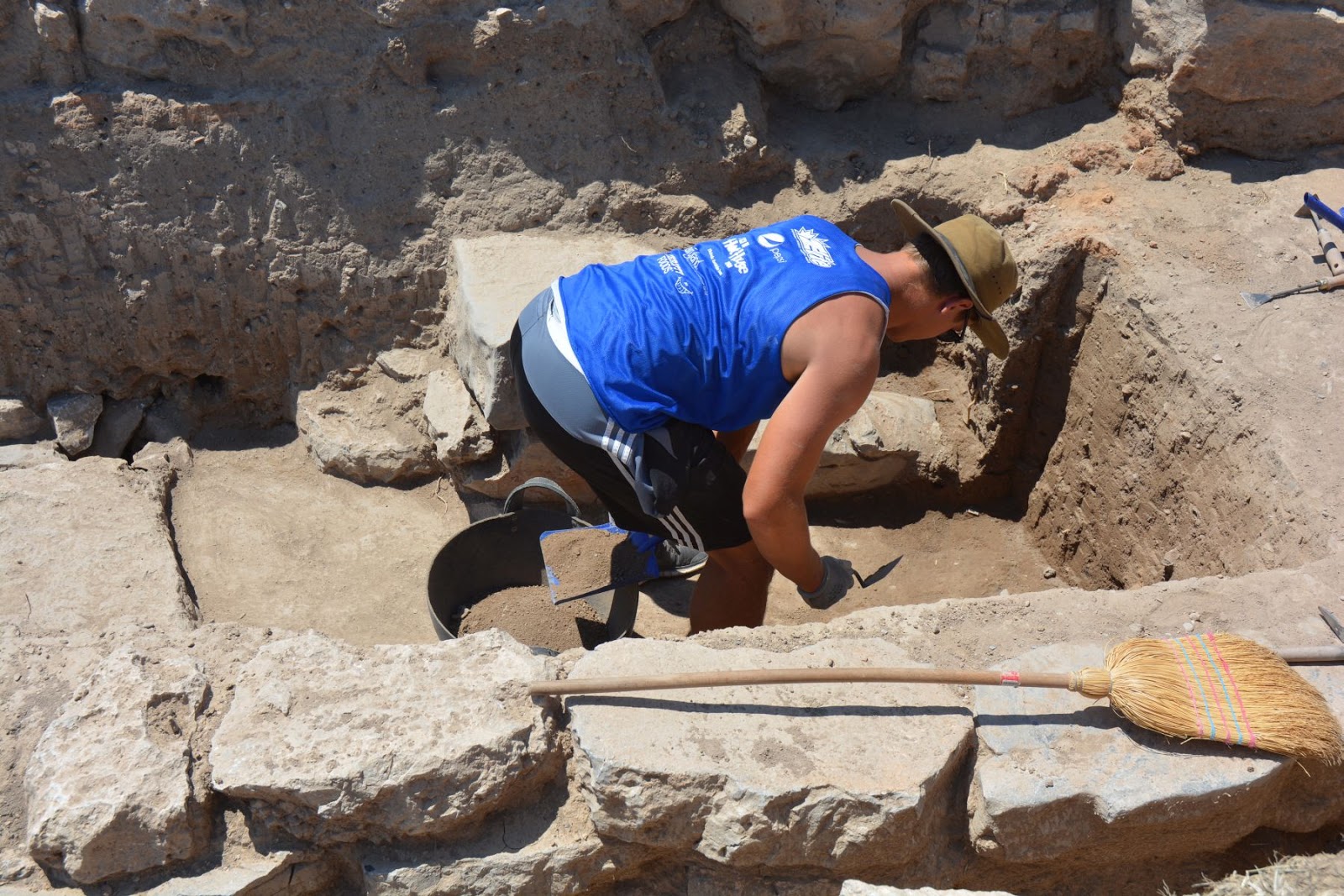
This is the pick-pan, once fully mastered one can spin the tool so that picking and panning alternate and the loose dirt will be removed by the time the pick falls again. With enough thought towards trajectory, you can hit the wheelbarrow from anywhere and not even break picking momentum!
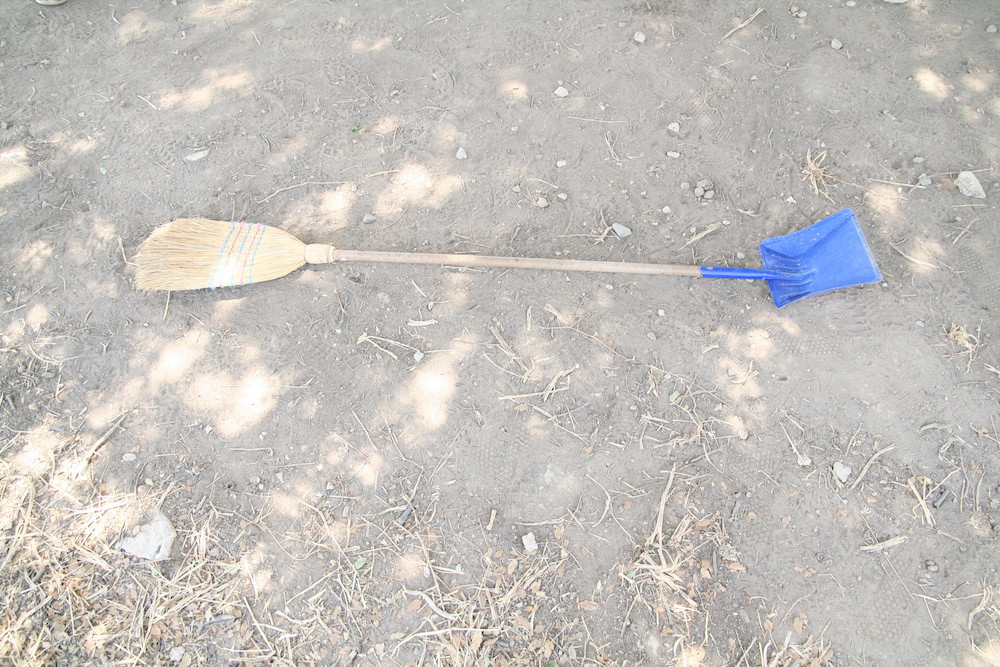
Here’s another dustpan combination that should be self-explanatory. It’s an ideal tool for a sweeping duo and it increases your pick-up range and drop-off range considerably. It can also be used to present things to the trench supervisor with minimal motion.
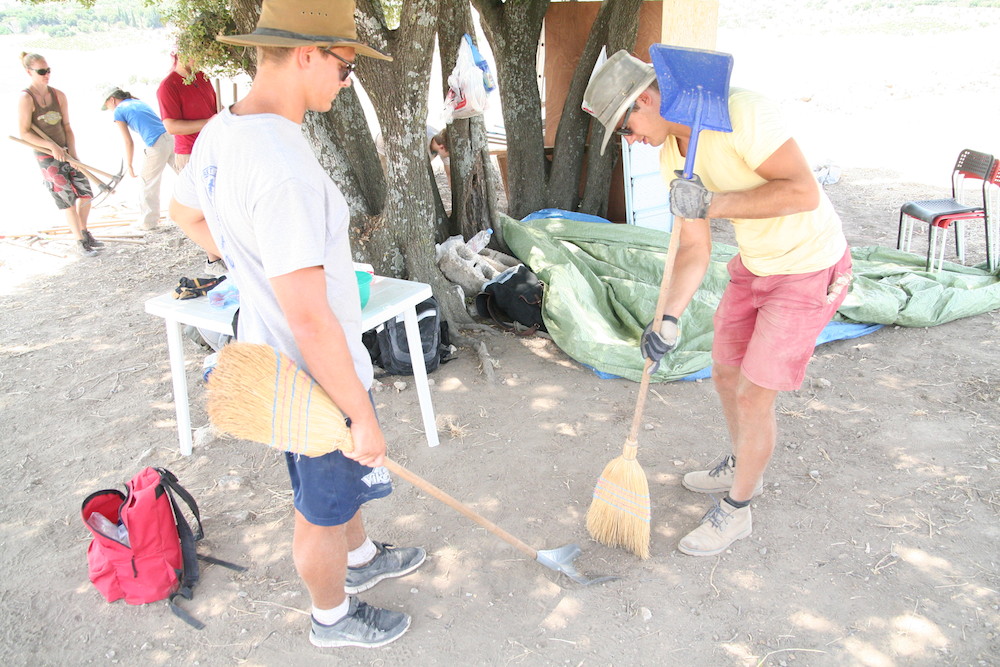
A model sweeping duo.

I can’t speak enough for the dustpan but this is perhaps my favorite use. As a kneepad, it provides a level and firm surface that saves the discomfort of regular kneeling and is in immediate reach when necessary.
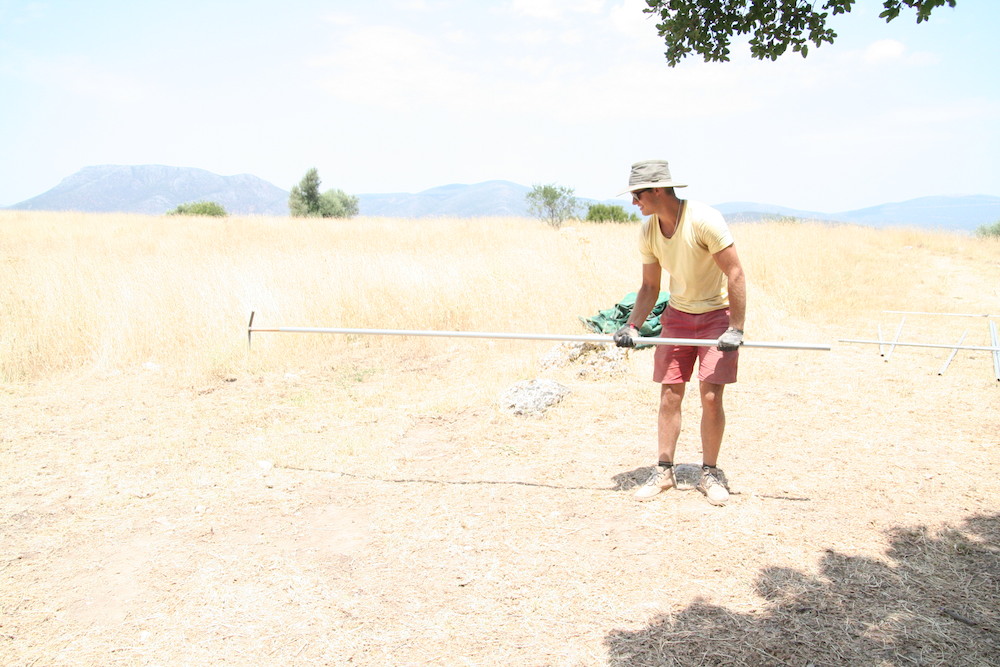
This is one more tool combination, an eight-foot pipe with either a small pick or a trowel for delicate work from a distance. Maybe you’re impeded by a pesky ancient structure or maybe, just maybe, you’ve found a nice place to lounge…
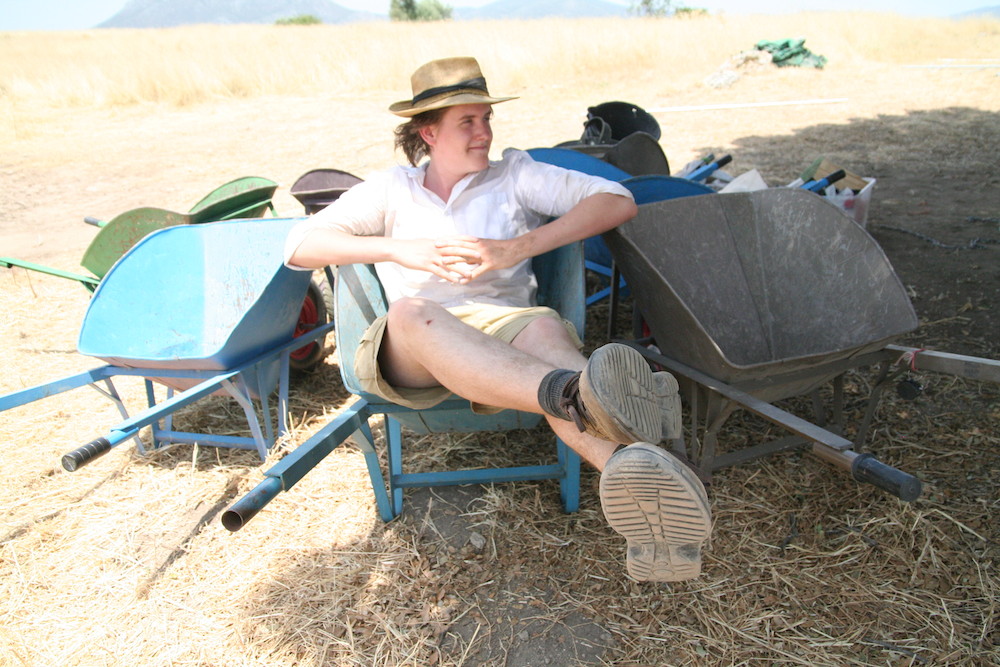
When not loaded, the wheelbarrow provides superb lumbar support, arm rests at perfect height, and even leg rests in the form of handles. It’s superior to any chair in which I’ve ever sat and I could even imagine it becoming the next wave of the healthy-sitting movement for both archaeologists and office-workers alike. Try it sometime!
Thank you for reading this brief summary of what I’ve accomplished in my few idle moments on site.  They say necessity is the mother of all invention, but I say that absentmindedly jamming things together and lounging around works just as well. I’m no genius, just a boy trying to offer what he can to a profession that he grew up admiring. Feel free to use any of these innovations in your own excavations and in your daily life. The facial hair, however, you’ll have to grow on your own.

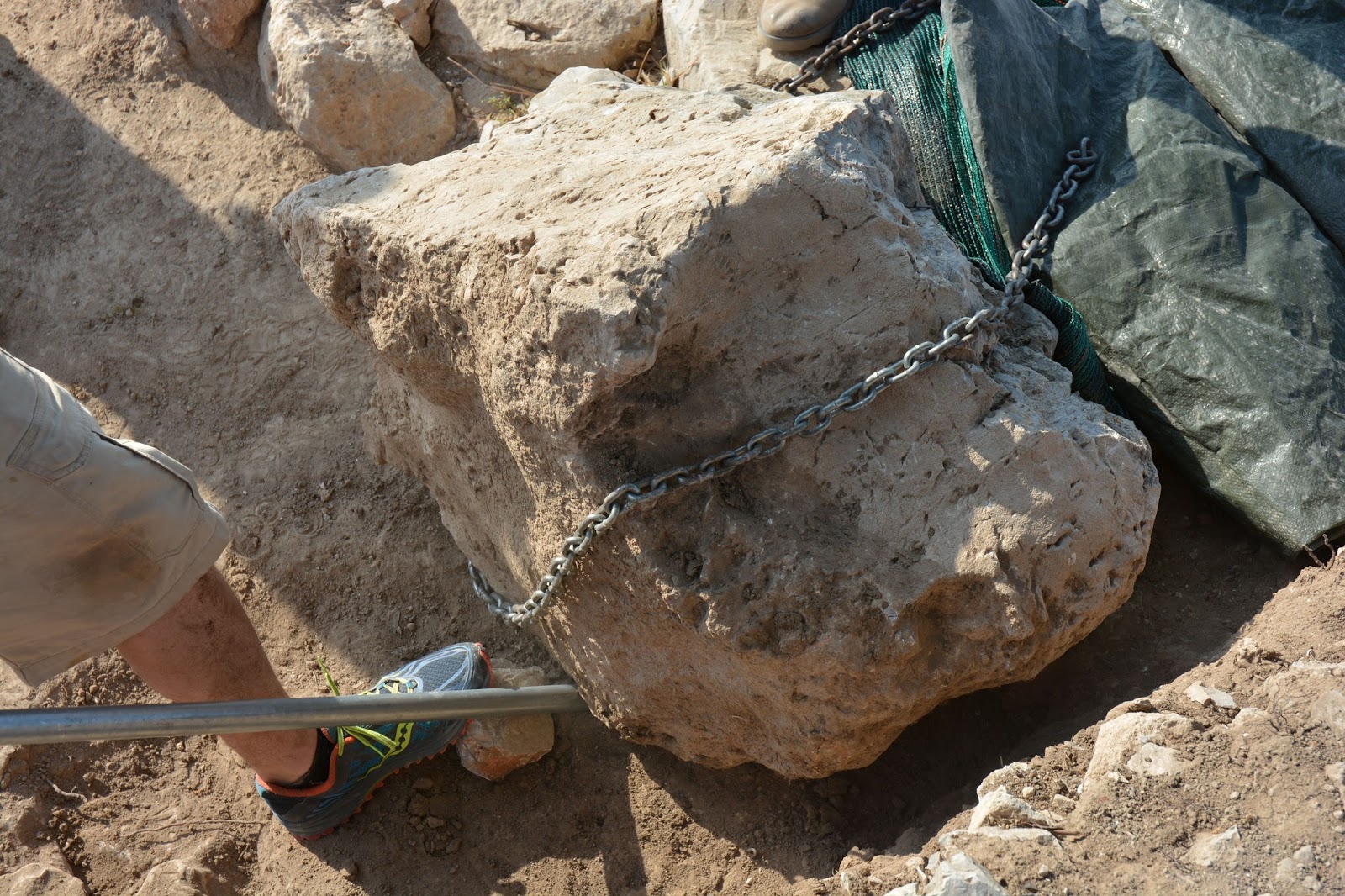
We have reached the midway point of our excavation. Last week ended with a slightly shorter Saturday than normal because of a downpour. This resulted in a very chilly lunch at Stavroula’s. The family kindly brought out every piece of clothing they had to keep everyone warm. Before the rain we were able to get a good amount accomplished – including the removal of a very large stone (photos below)

With three weeks remaining, things should be fairly exciting this week. Our project will also be getting several additional team members so our number should increase to about 35, our maximum this year. The upcoming days should be great. The weather, however, is again a little off-putting – cloudy skies and rain forecast for tomorrow morning does not sound good. We will see.
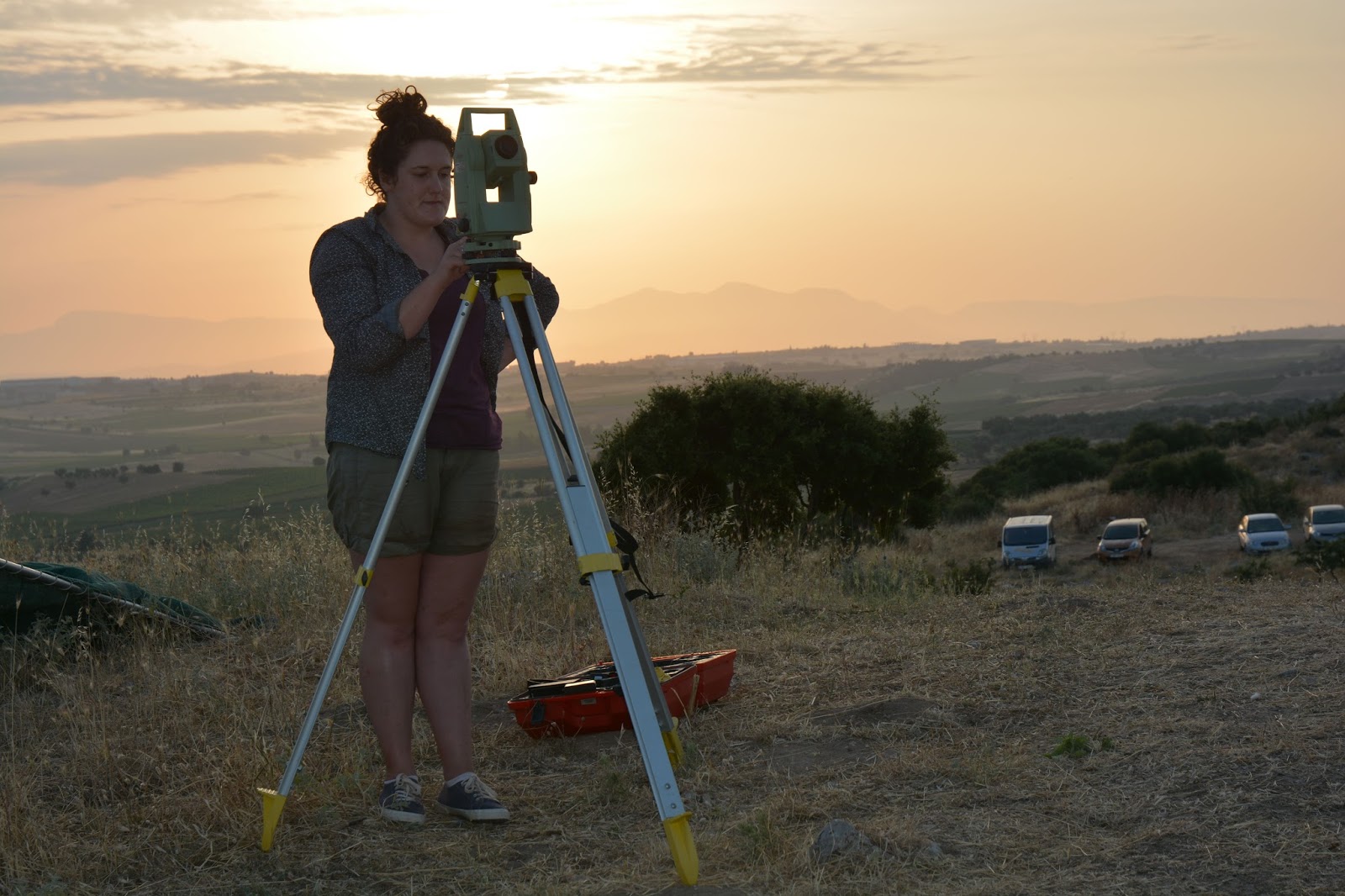
Actions have consequences. That was the title of my ‘lecture’ today as we began week three on site. It was forecast to be the hottest day of the year so far, and after a VERY sunny hot weekend, no one was surprised when temperatures reached around 35/95 degrees by the end of the day Monday. Over the weekend, several people thought it a good idea to spend the day at the beach, in the sun, all day, maybe with a beverage or two. Great fun, but I think some paid for all the fun a bit today while working the trenches. That’s originally what I meant by ‘actions have consequences’ – but there’s also another meaning.
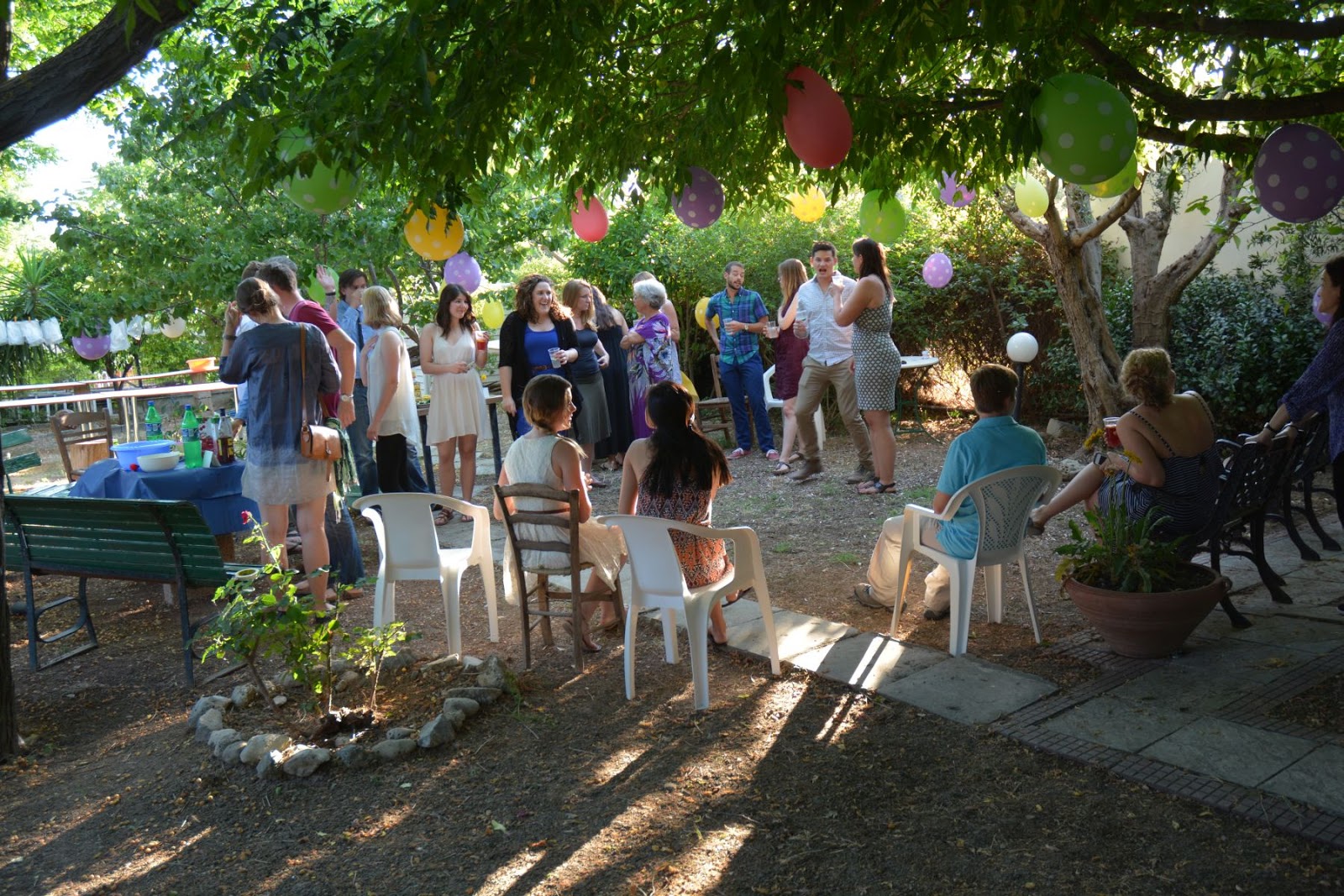
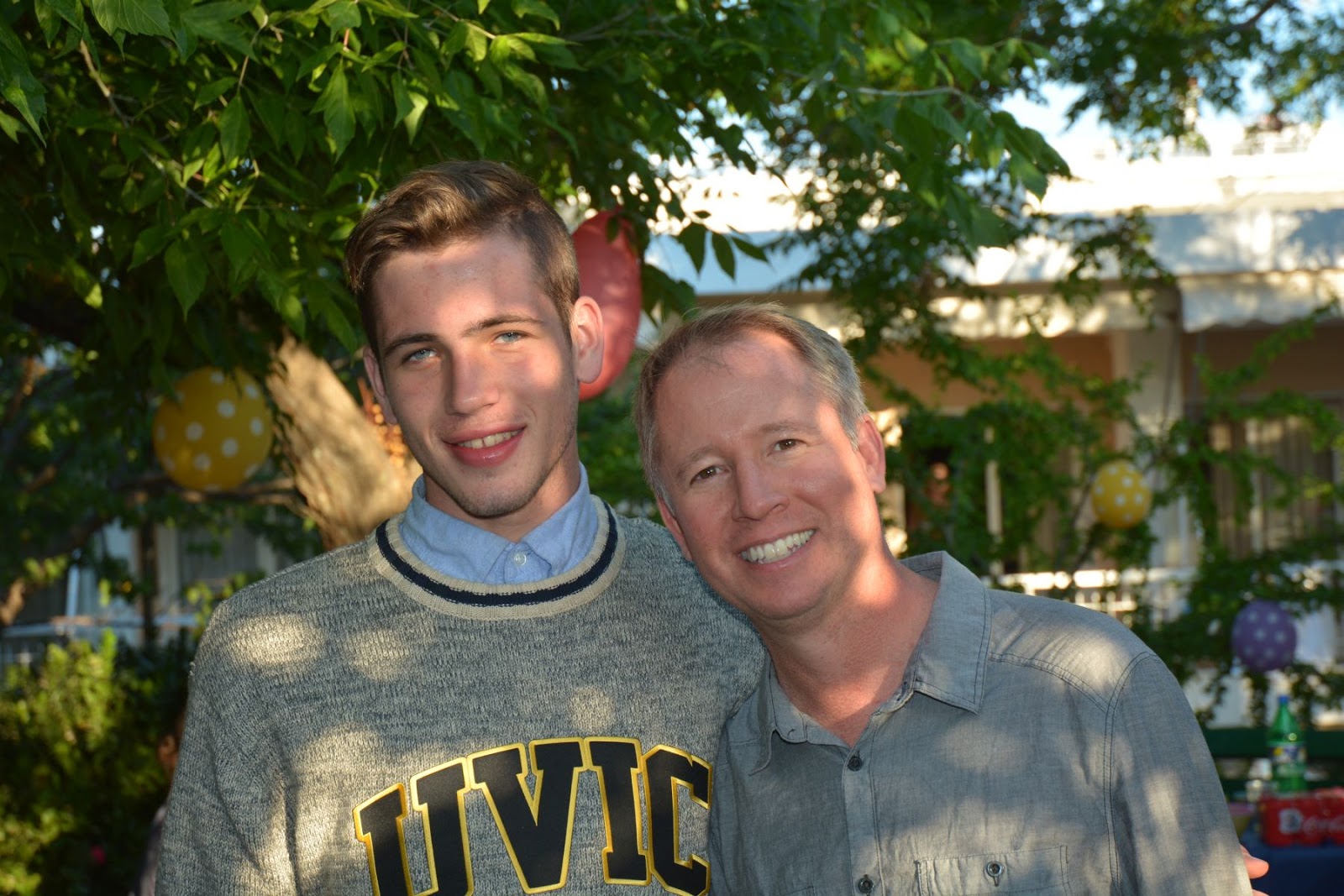
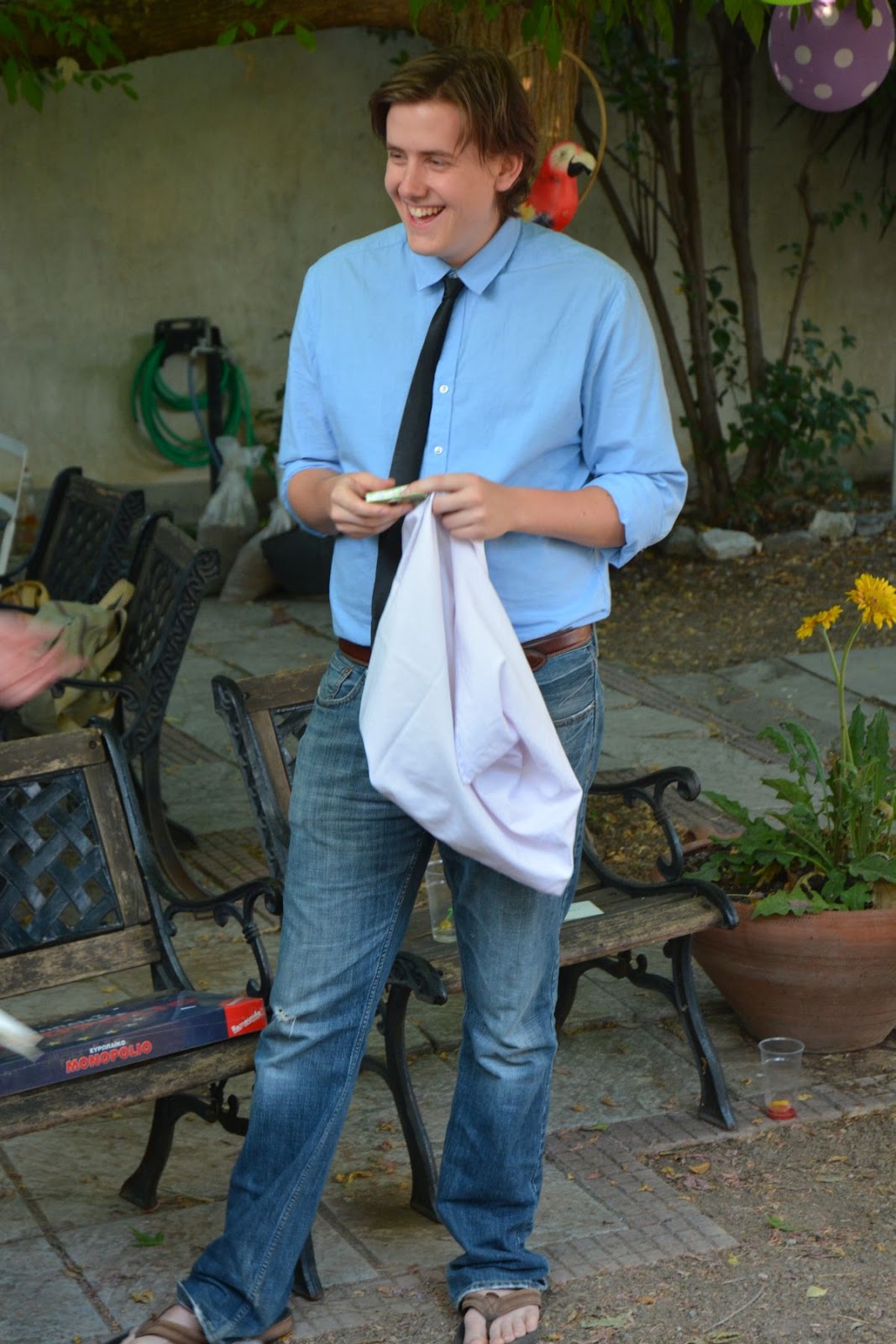
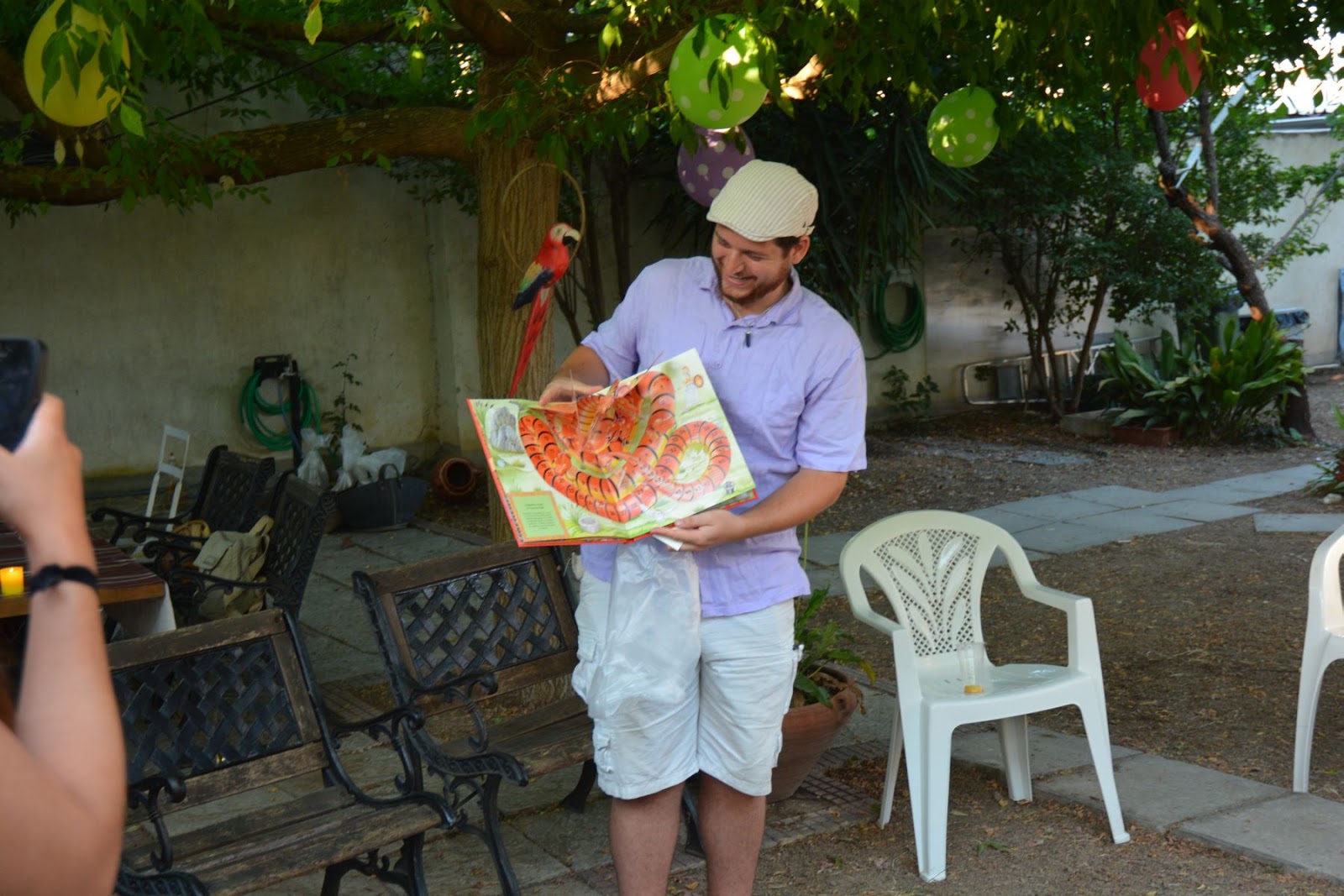
Every year, several of our students make the choice to come to the excavation during the summer and forego their home graduation. It’s a tough choice, especially when they leave behind expectant proud parents who miss out on celebrating their offsprings’ well-earned success and acclaim. To try to make up for missing their formal graduation, we typically have party for those students. This year we were very happy to celebrate a range of graduations: one from high school (Duncan Jones), two from undergraduate (Max MacDonald and David Royce) and one with her MA at UBC (Haley Bertram). Led by Sam Bartlett and Janelle Sadarananda, the party planning committee threw together a great garden party with personalized drink stations for each grad, special gifts and speeches by key members of the team for the individual graduate’s honor. It was a great Friday evening event. 
We are extremely proud of our graduates and wish them the best of luck. Two will be at UVic next year (Duncan and Max). Haley will be entering the PhD program at Cincinnati. While we sometimes look for any reason to host a party on this excavation, the great success and hard work of our students prove that ‘actions’ can have truly great ‘consequences’.
We’ve now started our third week of excavating and things are going very well. We will deal with the heat by starting tomorrow with a 6 am departure. We will consequently reduce our work time in the afternoon by a half hour. It will still be hot, but our work will continue.  

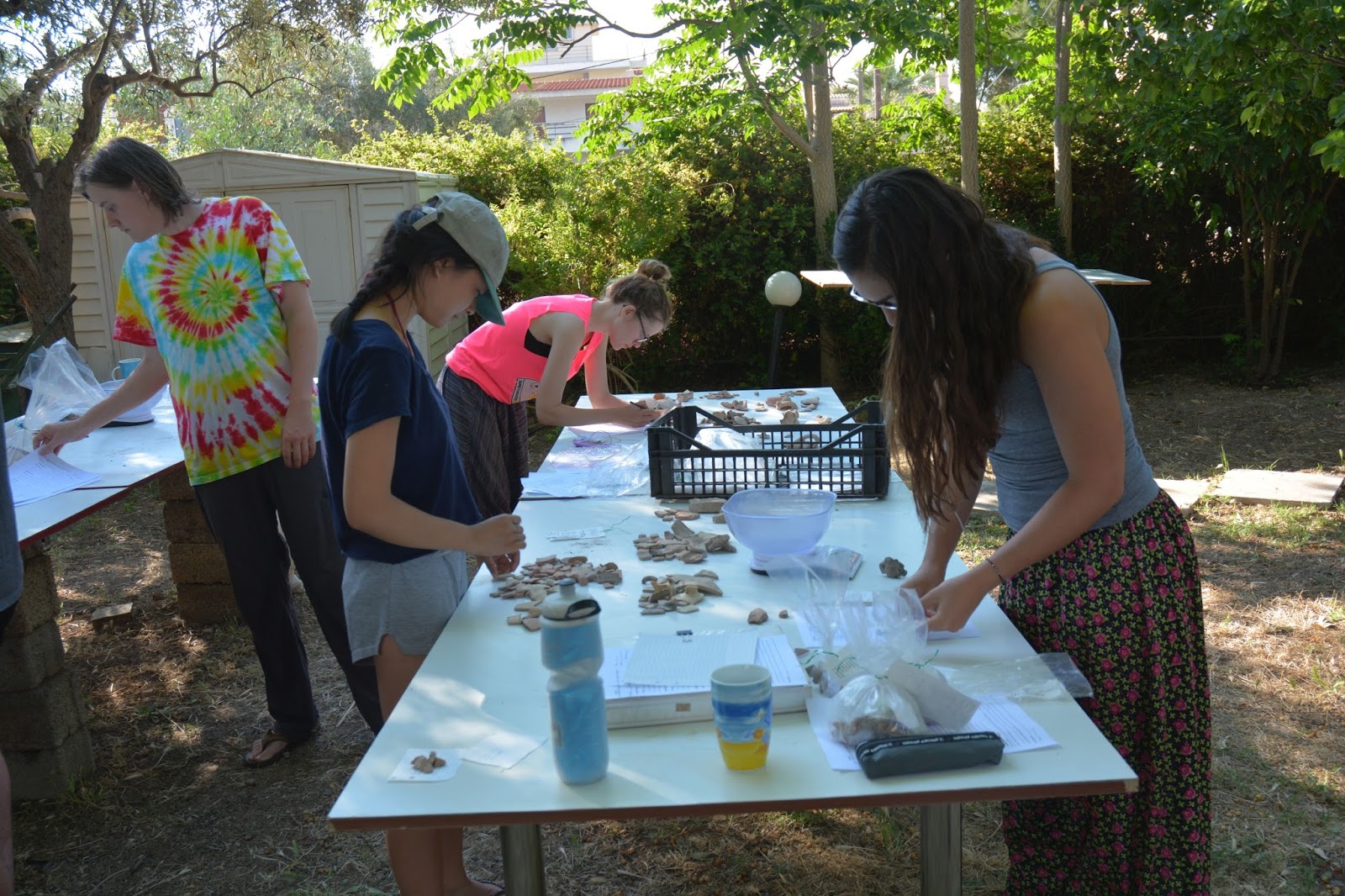
Here are some photos showing what goes on in the second half of our day, starting at 5 pm until 7 Monday to Friday.After returning from site we observe a typical Greek town rest-period, quiet hours. Some of us sleep, some swim, others read and rest. A few sneak in a bit more time working or catching up with work back home. At 5 our house comes to life. Students begin by collecting the dried pottery from the screens from the day before. These are bagged with their numerical tags inside and outside and put in bins for the supervisors to sort, assisted by students at the white tables. The sherds are sorted by weight and type. Diagnostic pieces are separated out for further detailed study and photography. Other students start washing the daily sherds we’ve brought home from the field that day. On a hot a day, it can be somewhat cool and refreshing to be gently cleaning dirt off the ceramic fragments in plain water using small brushes. We have a beautiful apricot tree providing shade and the sweetest apricots for snacking.