Final Week

We had a great weekend thanks fully to the Canadian Ambassador to Greece and Allison Stewart who invited us to the Ambassador’s residence for a pool party with another Canadian team, the Western Argolid Research Project.The barbecue and the pool gave us all a great break before we start our final full week of work. We are truly VERY grateful!
This coming week will involve several final projects to get full clarity on issues of chronology – when certain structures and features were constructed. If we can’t get an exact date at least we will try to figure out the building history – what was built before what. We also want to figure out the function of a few of our more interesting features. 
We will also prepare the site for our final season event. On Thursday, July 10, at 7:30 pm we will host anyone in the area for an Open House.Our team will be on hand for people from the town of Arma and elsewhere to visit, see our results and ask questions about what we’ve found. We did this last year and found that it was a great opportunity to create a dialogue with the people who live in the area. Over the year, while we’re back in North America, we rely on our friends here in Boeotia to keep on eye on the site.  
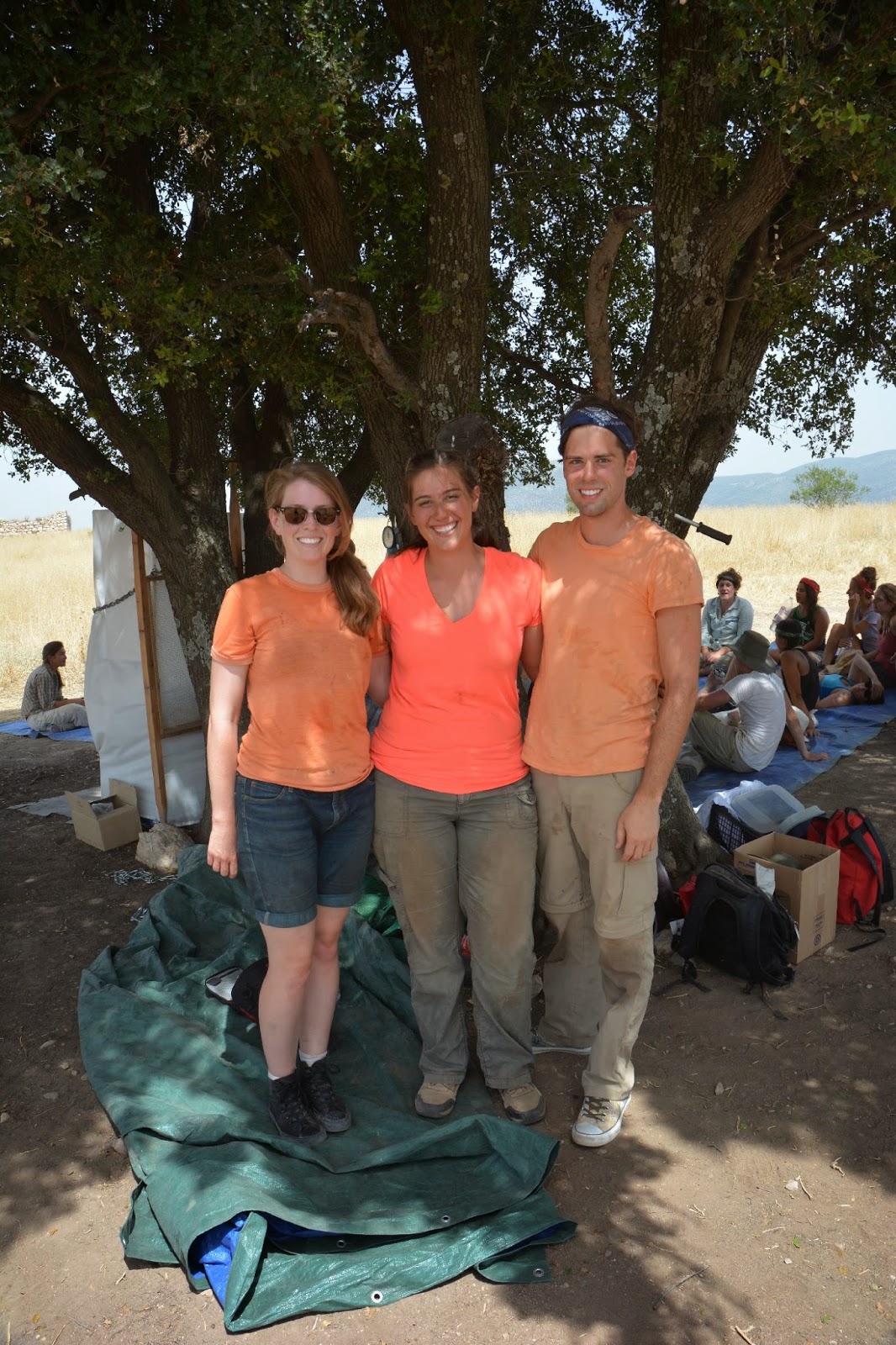
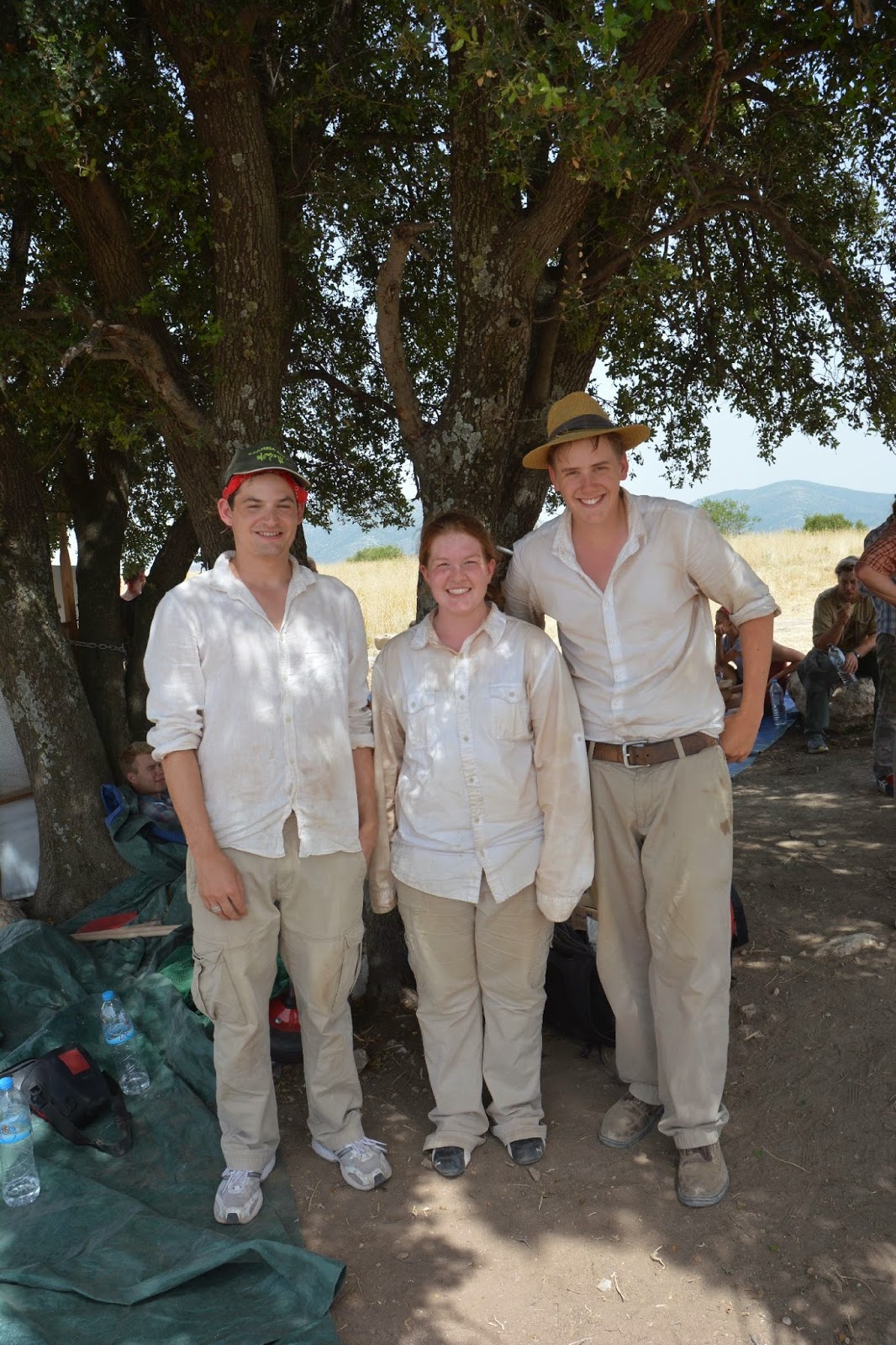
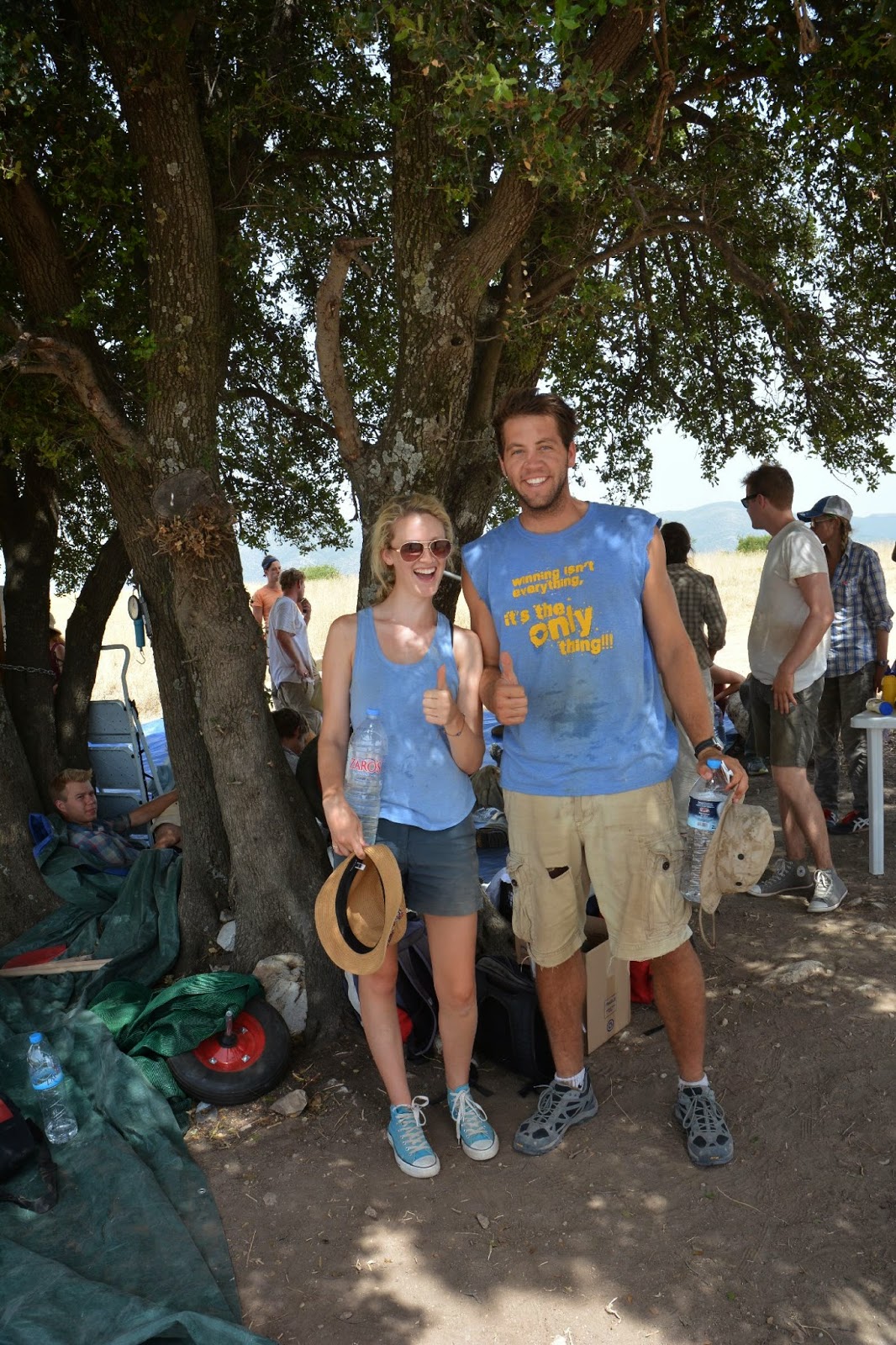
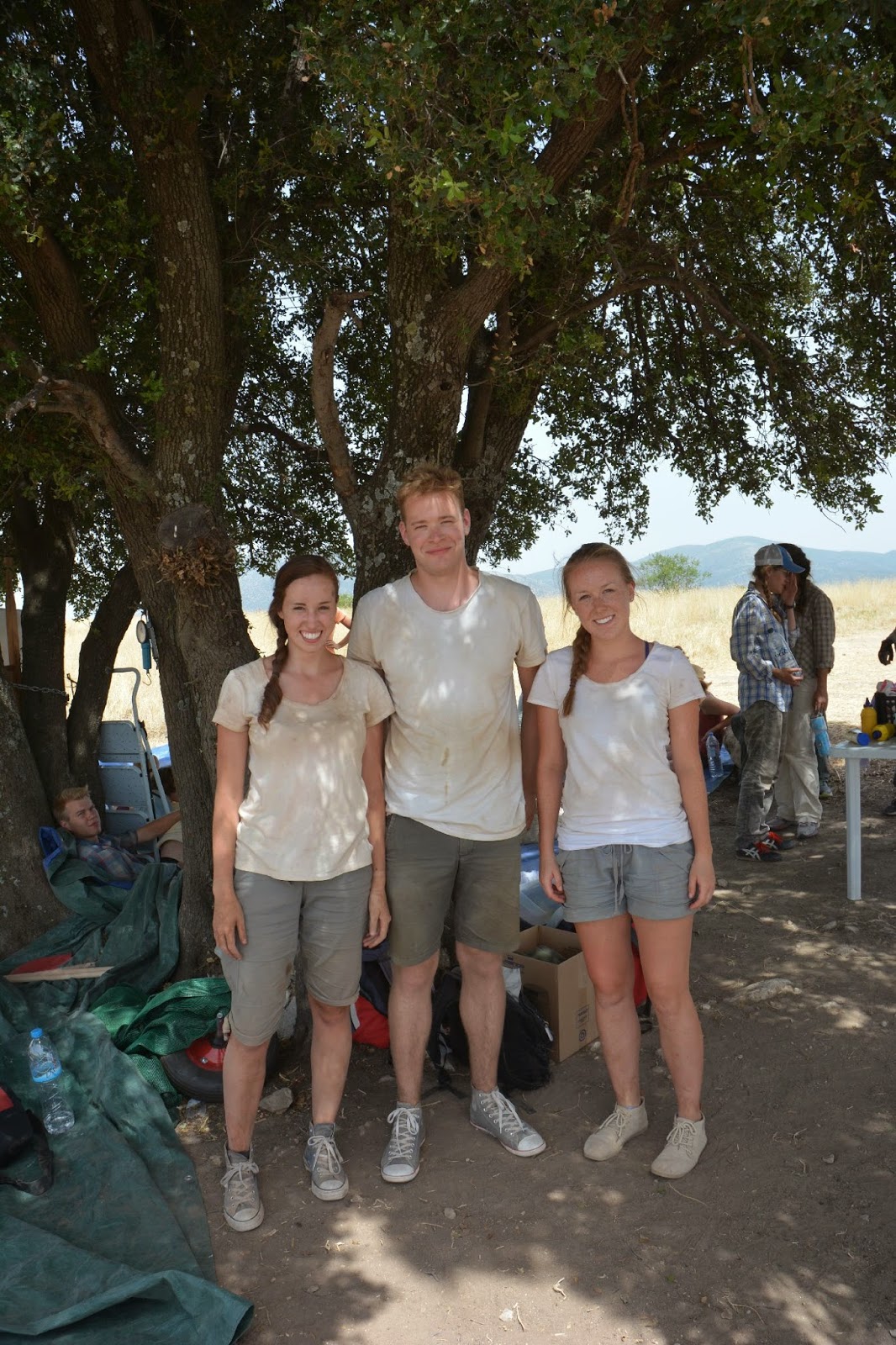
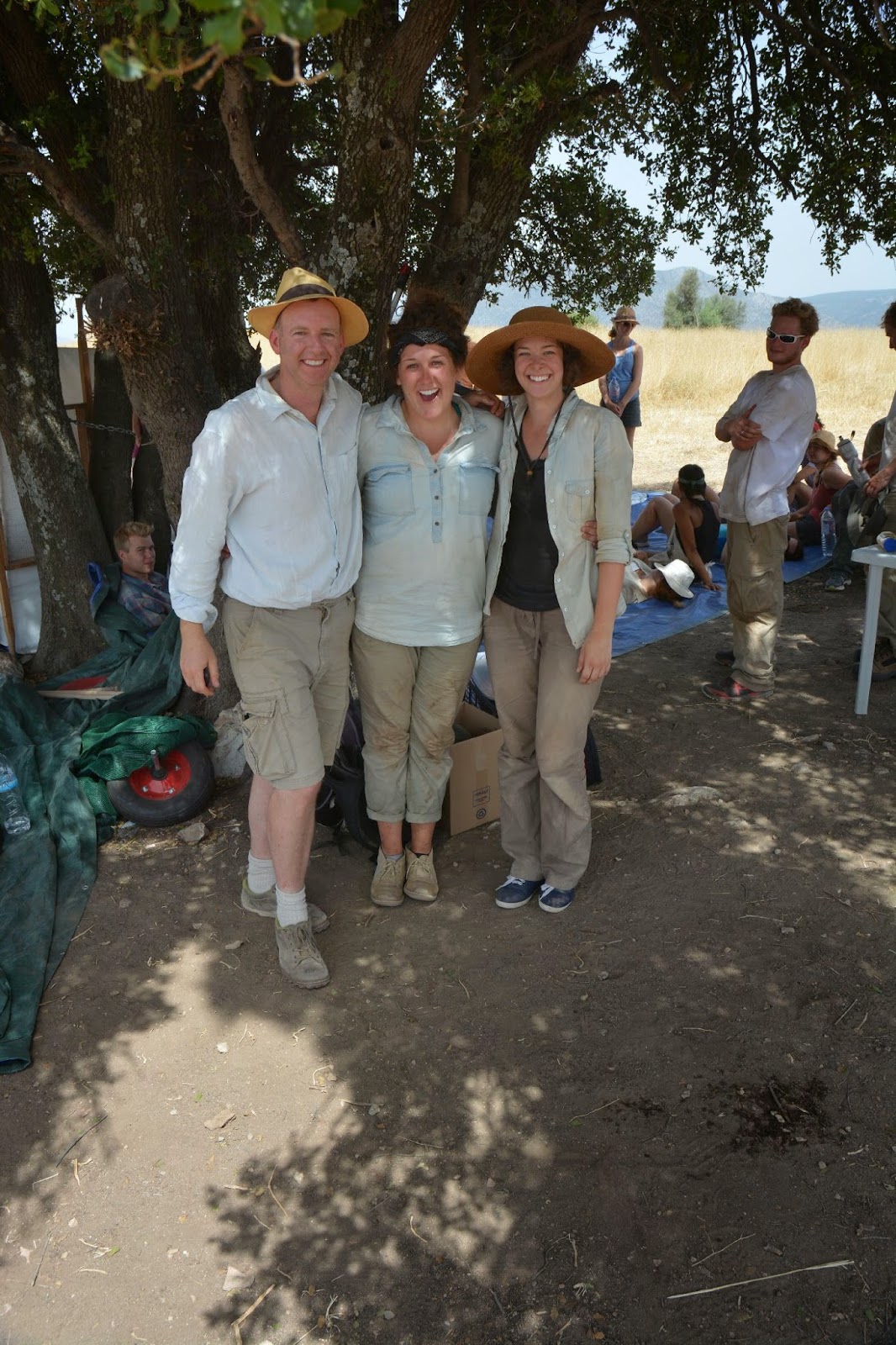
Below are some photos from the end of last week. We know this coming week, like all the others, will be better than the last. 

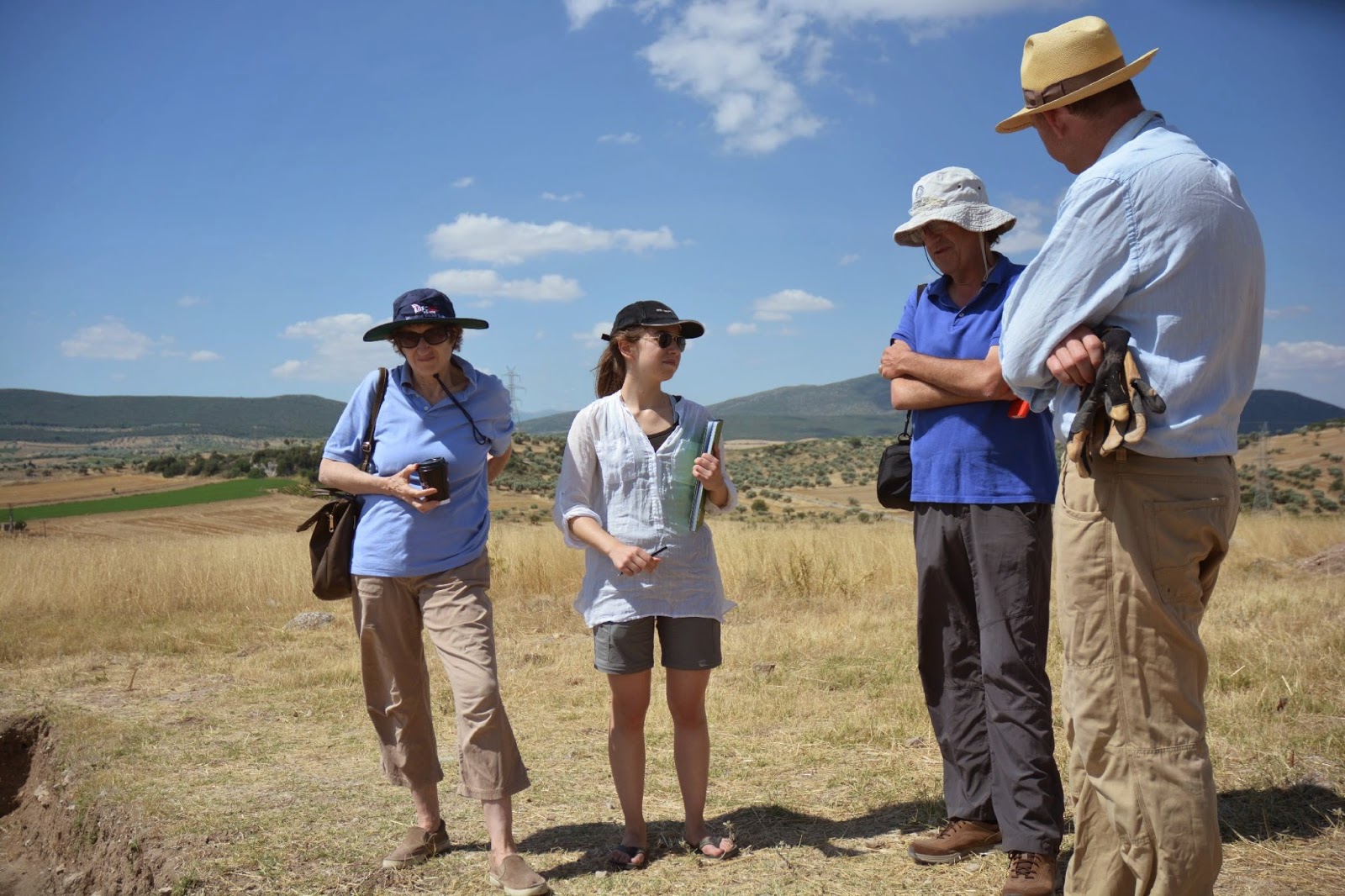
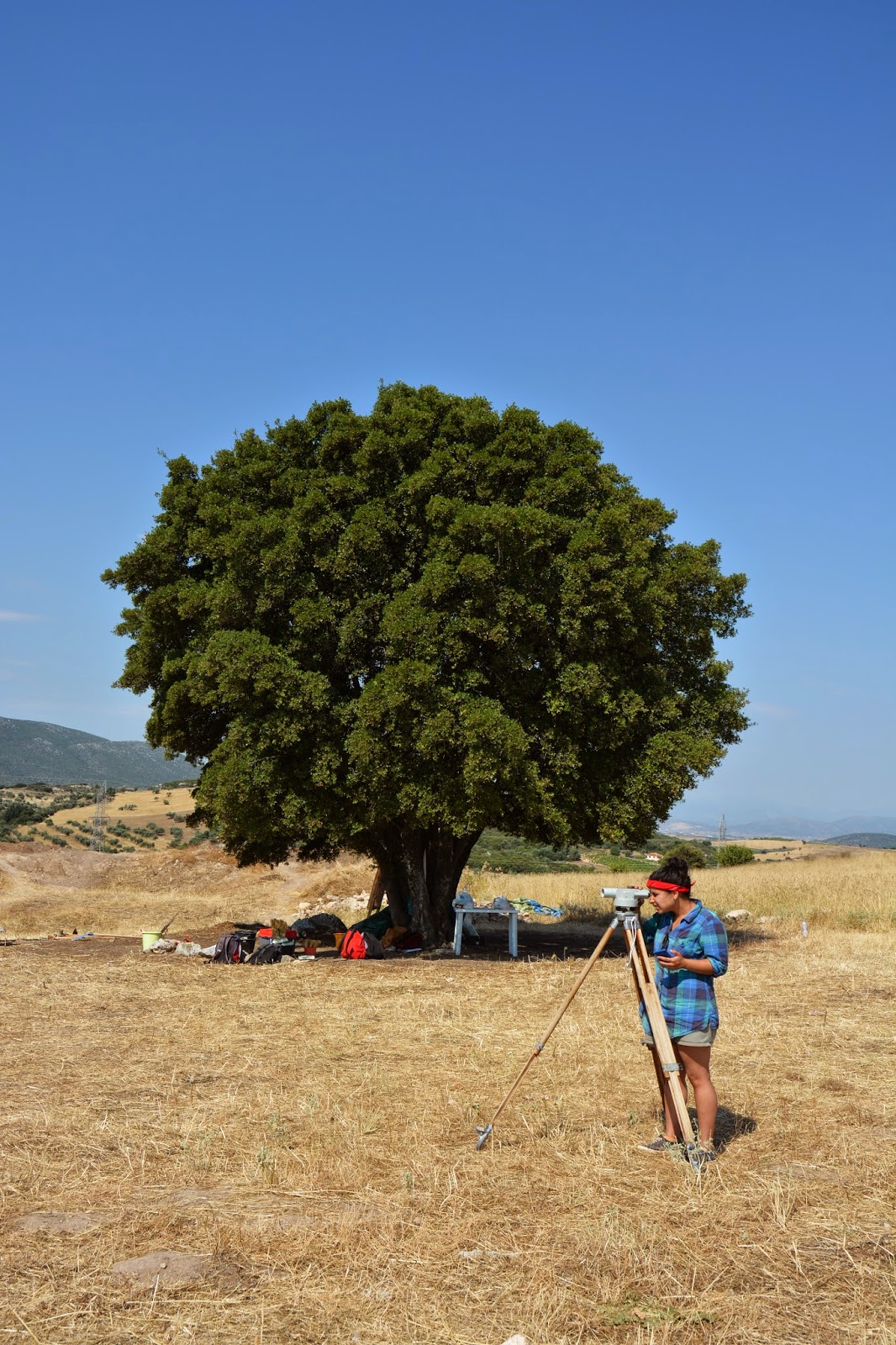
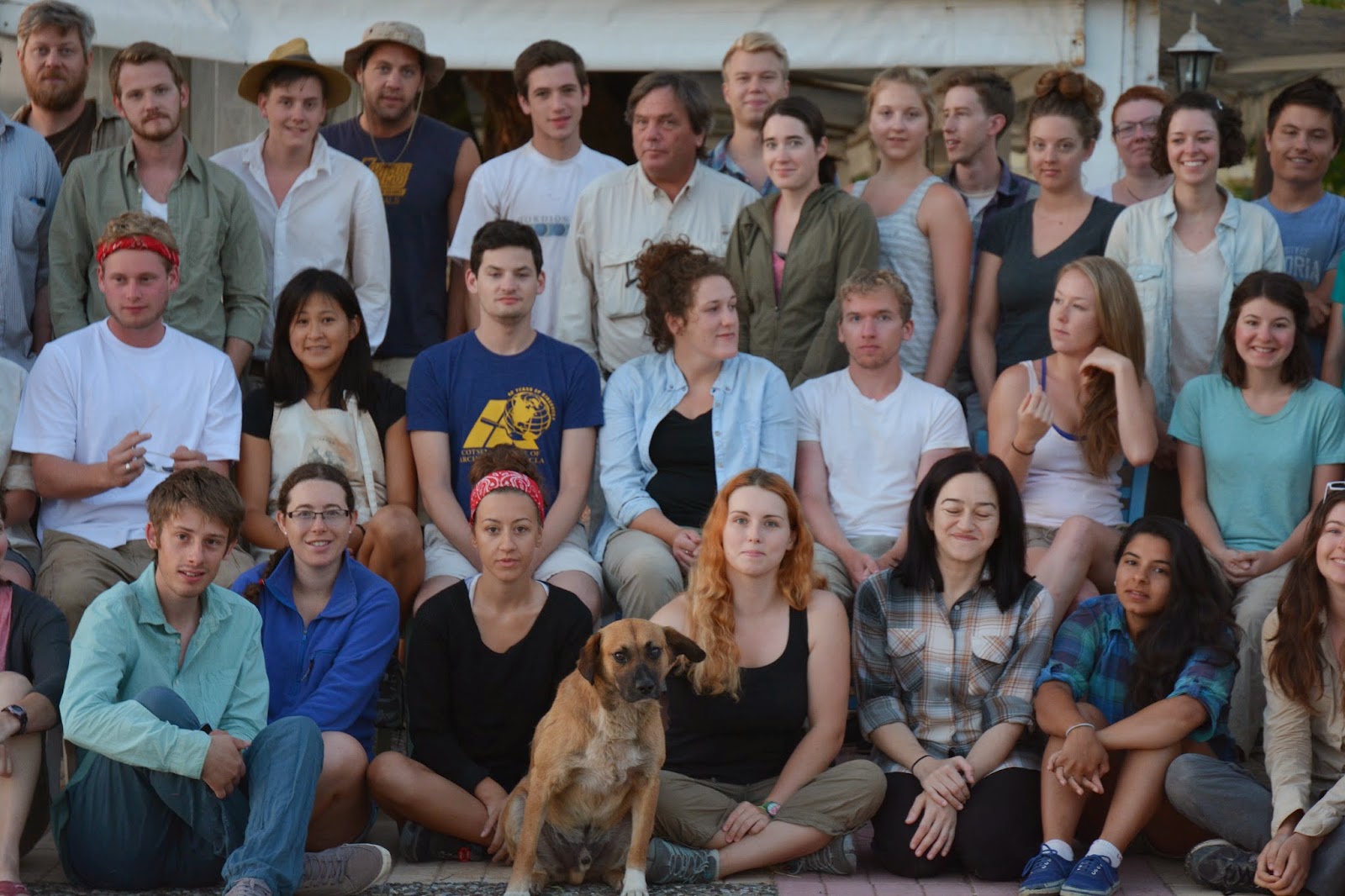
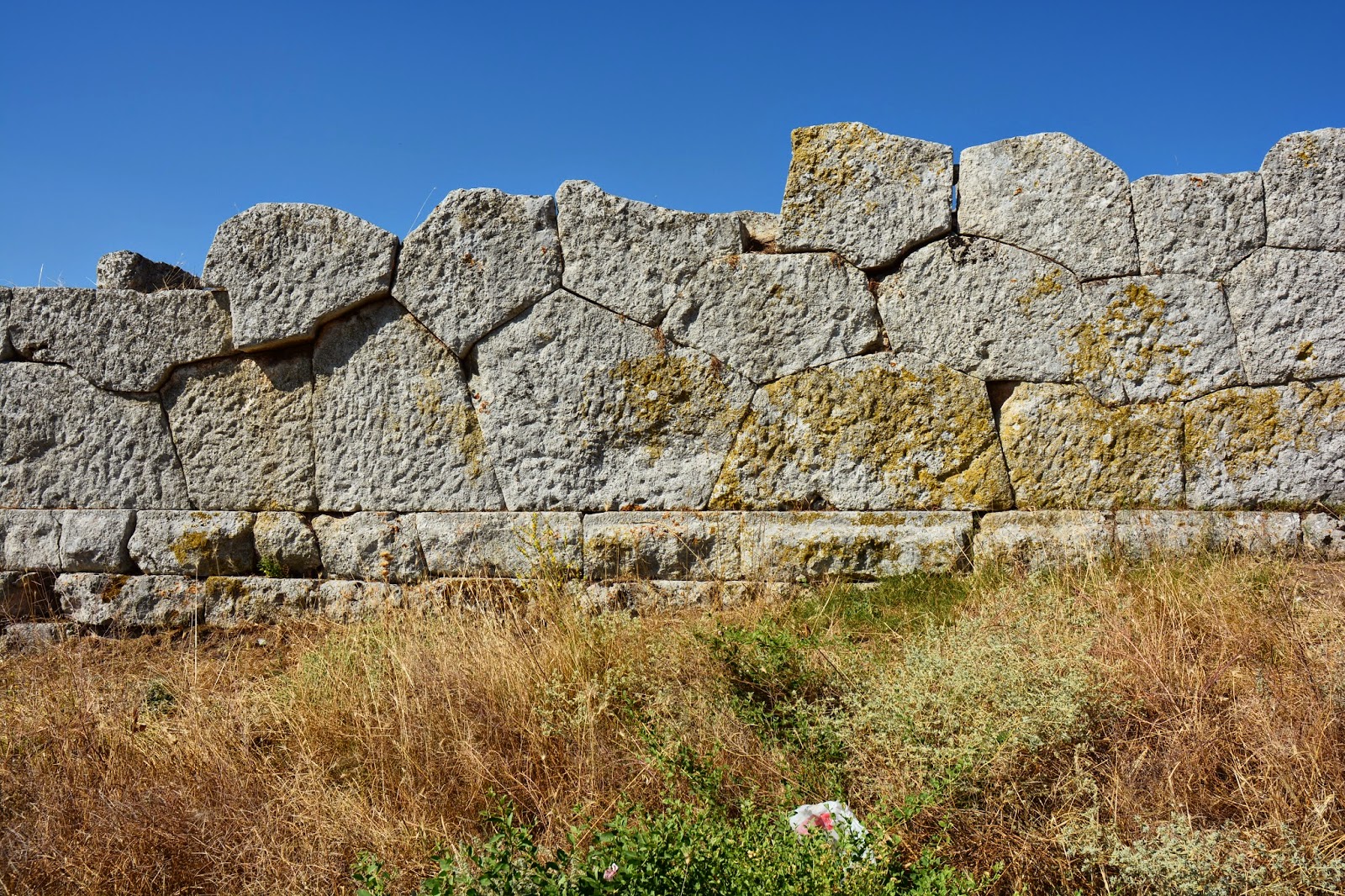
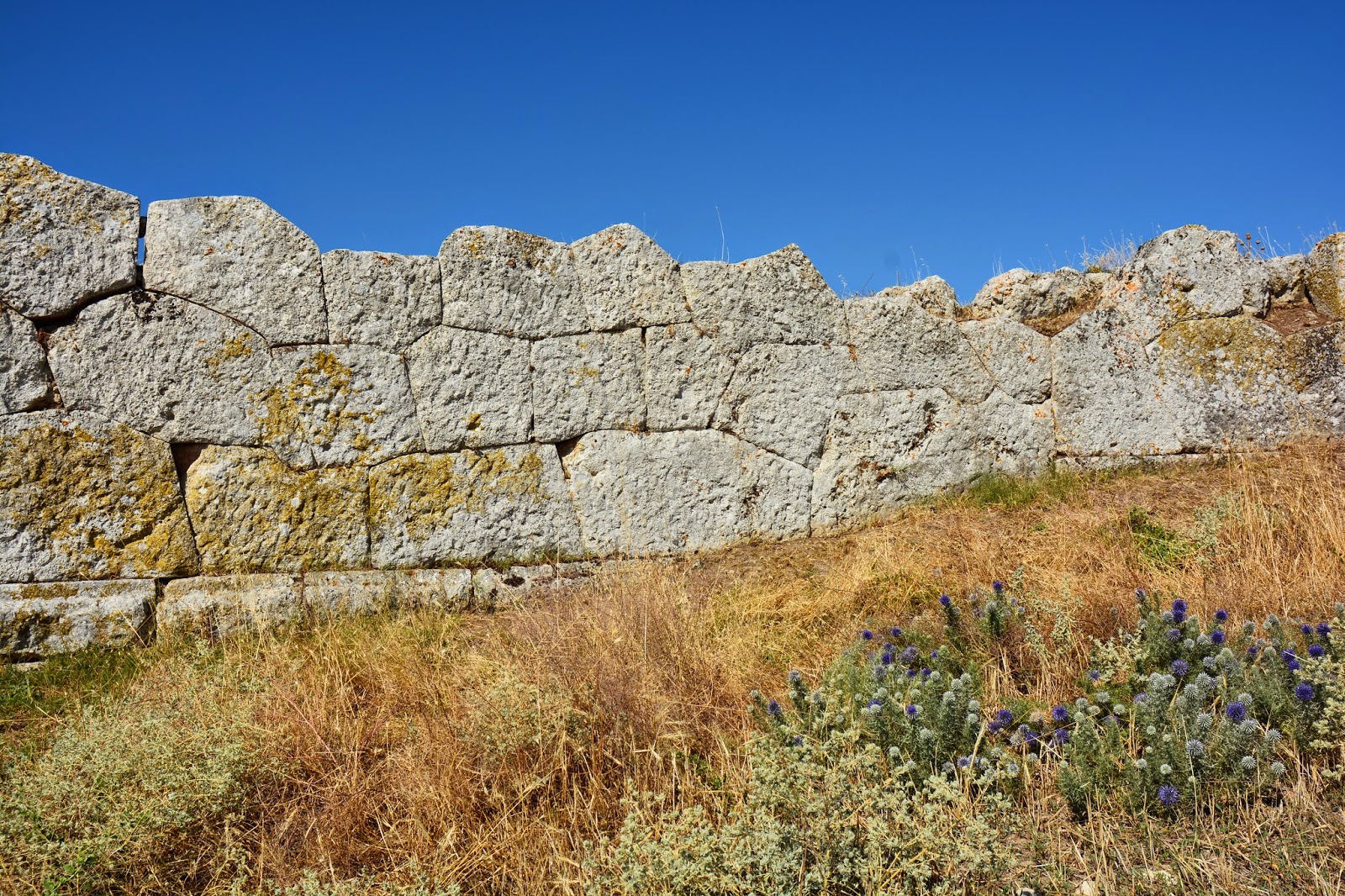
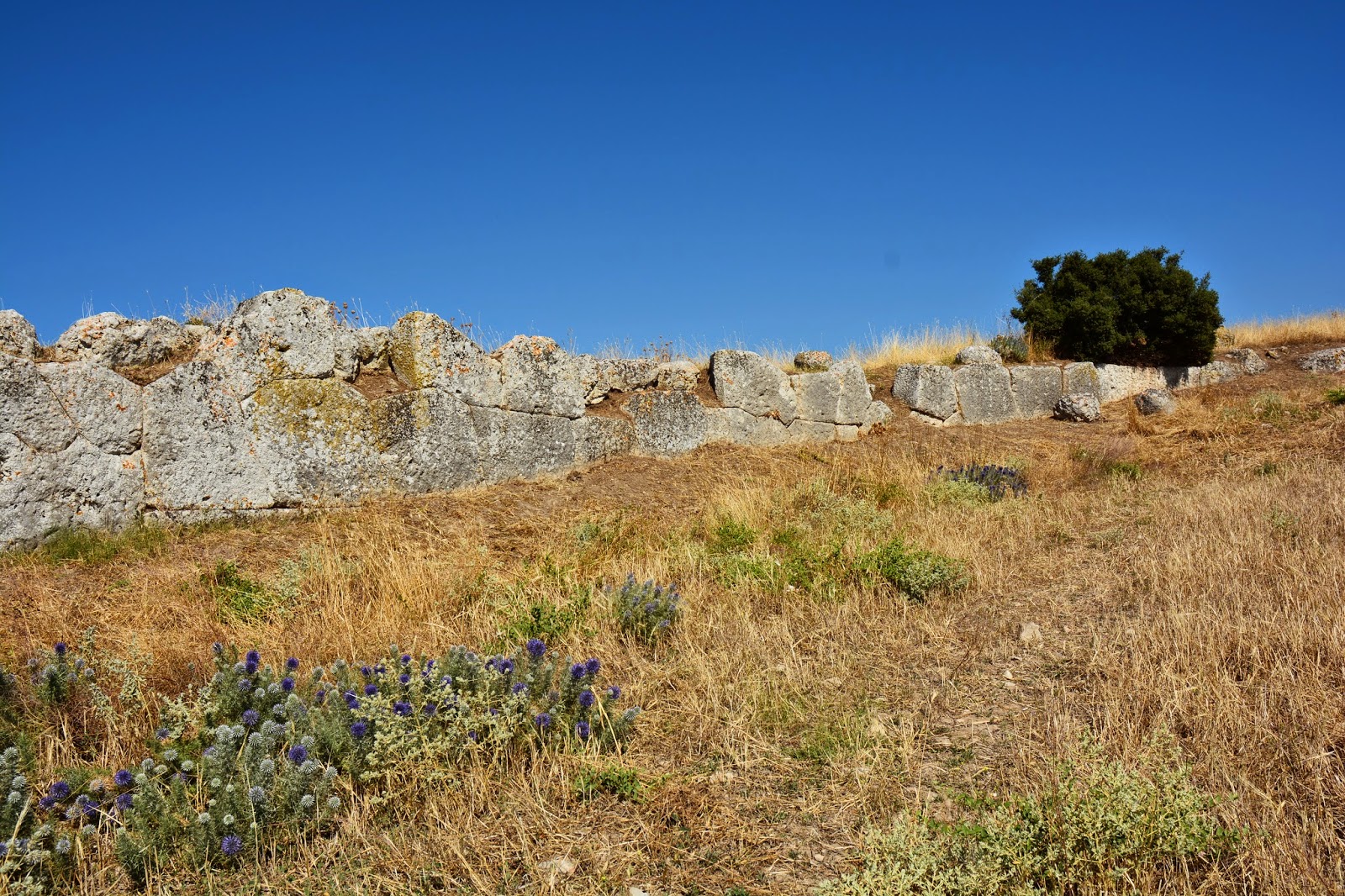
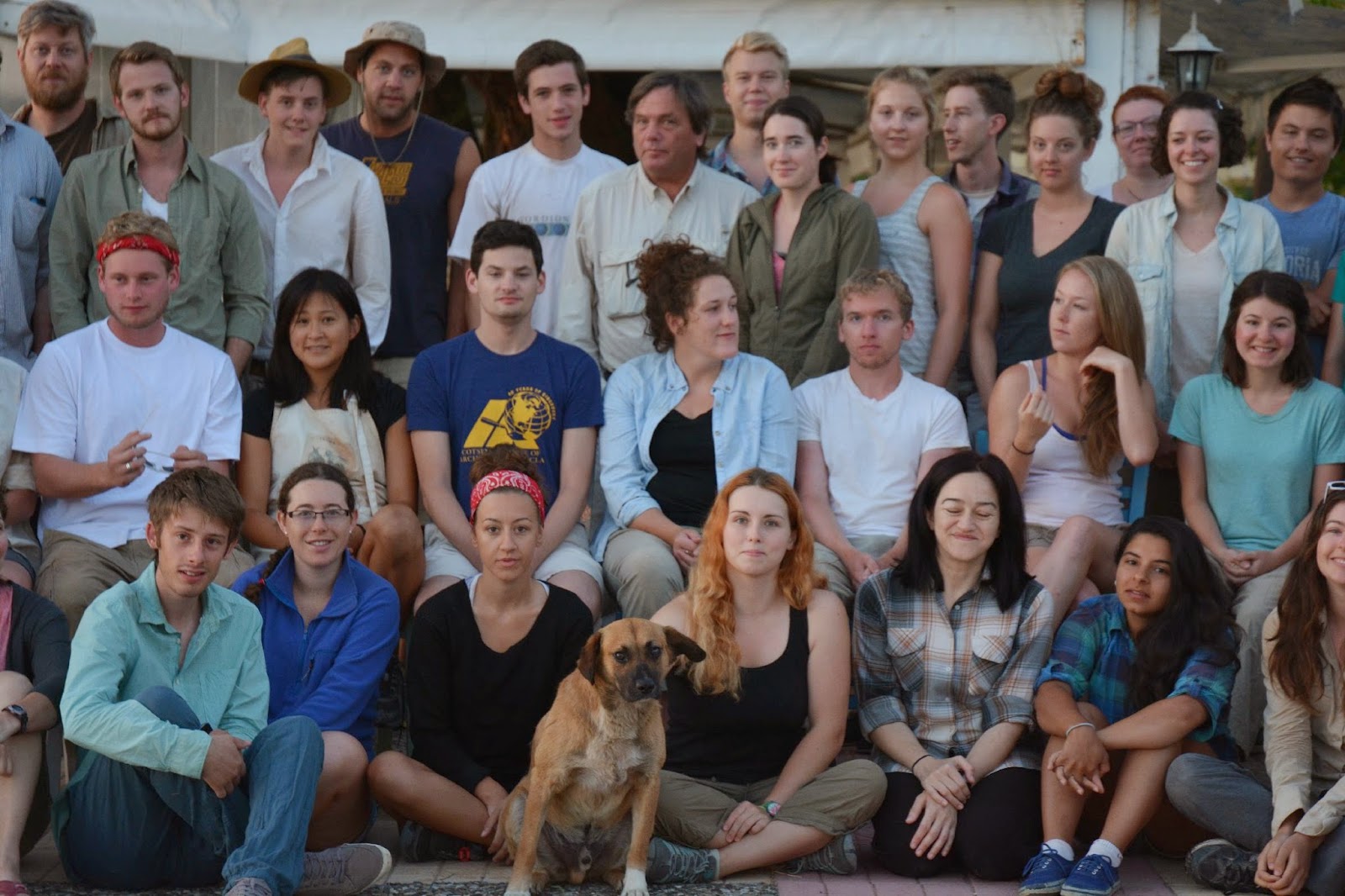
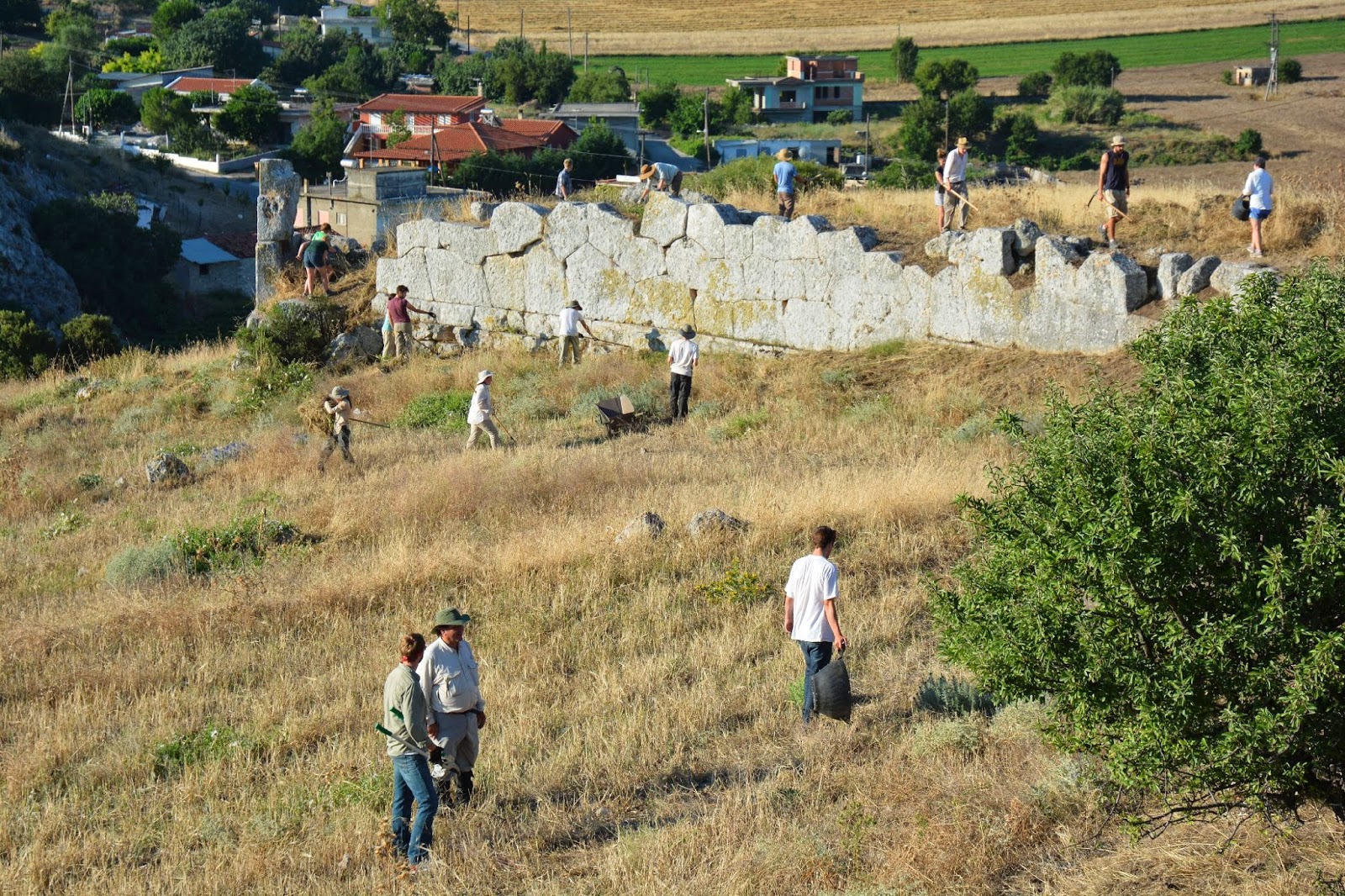
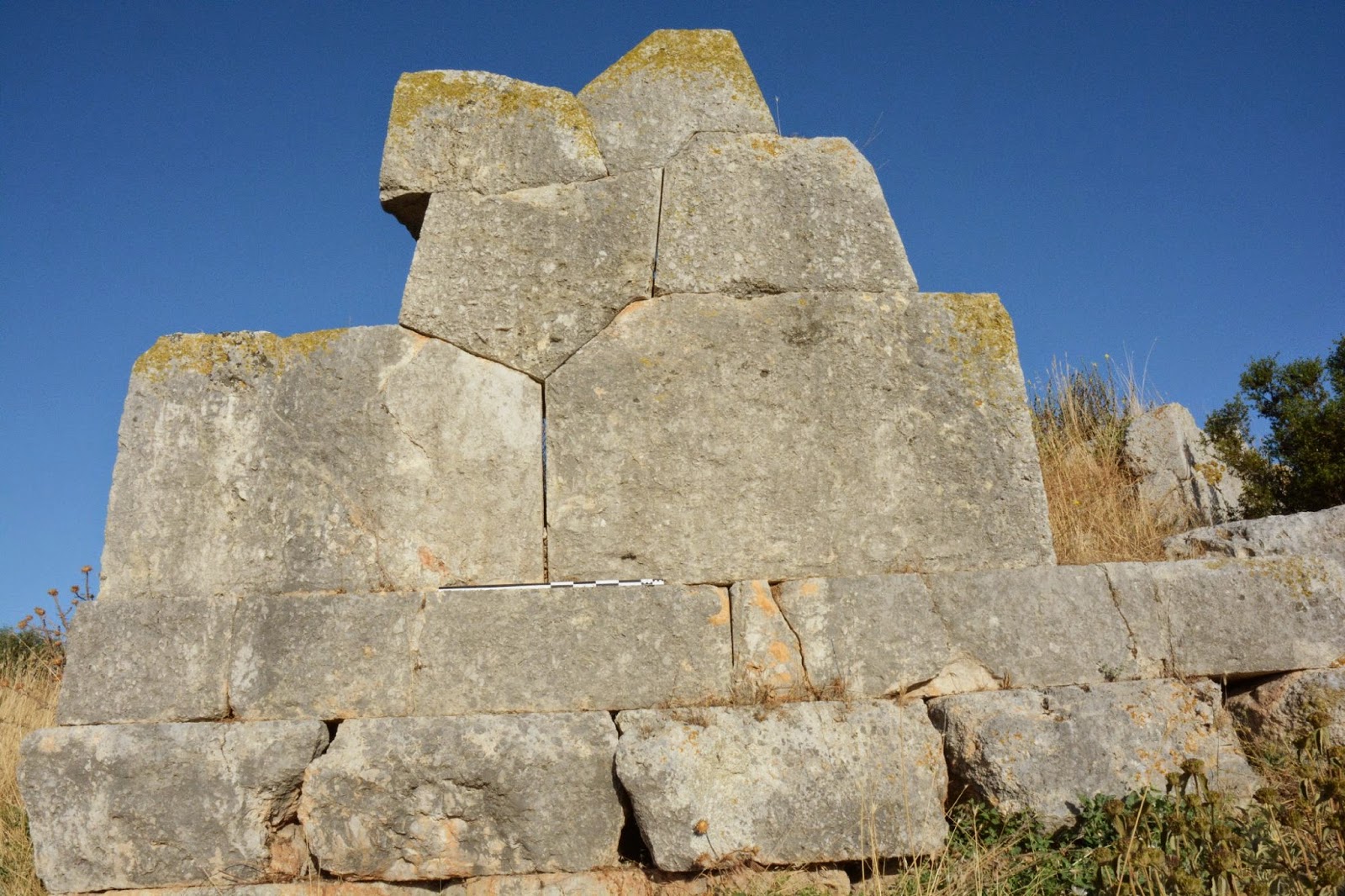
As we near our final week of the project there is a little bit of stress on everyone. We have a lot going on; a lot trenches with a lot of interesting/important information coming to light. The trick will be scheduling the end of our digging and the processing of our material before the season ends. We’ve done it before and we’ll do it again, but on top of all the archaeological research we have to make sure all of our living quarters are vacated and cleaned and we have to shut down our office and storage spaces. It’s a lot to think about over the next two full weeks. I’ll try to blog as much as I can – but students will also be blogging as well. In the meantime, here are just a few relatively random photos of work at the site and our impressive polygonal wall. I also include one detail from our group photo shoot a few weeks ago with one of our most popular Dilesi Dogs. 

Story Time…

by Steven Mooney


Now, this is a story all about how
My life got flipped-turned upside down
And I’d like to take a minute
Straight from my lawn
To how I became the prince of a town called Eleon


In west Calgary born and raised
Uvic was where I spent most of my days
Chillin’ out maxin’ relaxin’ all cool
And all writing some essays outside of school
When a couple GRS students, up to no good
Started talking archeology, no one understood
I got in one little debate knew I was gone

Mom said ‘You’re diggin’ with your professors in Eleon’ 
I begged and pleaded with her day after day
But she packed my suitcase and sent me on my way
She gave me a shovel and then she gave me my ticket.
I pulled out Herodotus and said, ‘I might as well kick it’.


Sandy beaches, yo this is bad
Drinking ouzo out of a champagne glass.
Is this what Boeotia be living like?
Hmmmmm this might be alright.
But wait I hear there’s hard work, real labour, working the lands
Is this the type of place that will have use of my soft hands?
I don’t think so
But I’m already gone
I hope they’re prepared for the prince of Eleon

I whistled for a cab and when it came near
The license plate said φρέσκο and it had a kombolói hanging on the mirror
If anything I could say that this cab far from rare
But I thought ‘Nah, forget it’ – ‘Yo, homes to Eleon’
Well, the pickaxe landed and when it came out
There was a Mycenaean sherd that flew out
I ain’t trying to find this era yet!
I just got through the first locus here
I sprang with the quickness like lightning, on to the next tier


I pulled up to the Mamoni’s about 6 or 7
And I yelled to the cabbie ‘Yo homes smell ya later’ 
I looked at my main dog Ryan
It was just about dawn
Time to dig up the throne for the Prince of Eleon

Entering our second month of digging, time is flying by. We have quite a few goals that we are aiming to achieve before digging stops July 12. With good weather and hard work, we should be able to accomplish them. Last week had some terrible, windy HOT days, 40+. This week seems better.
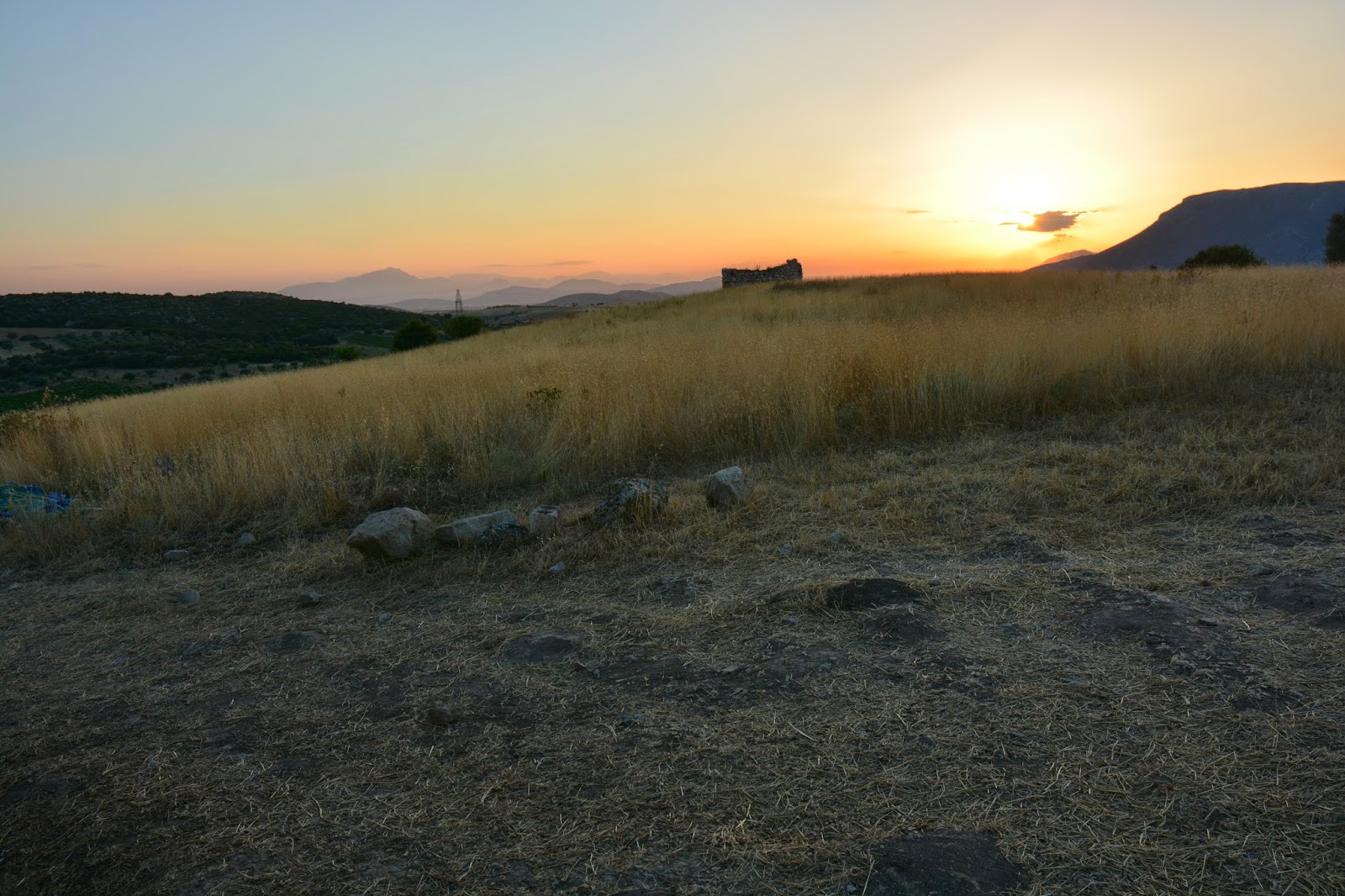
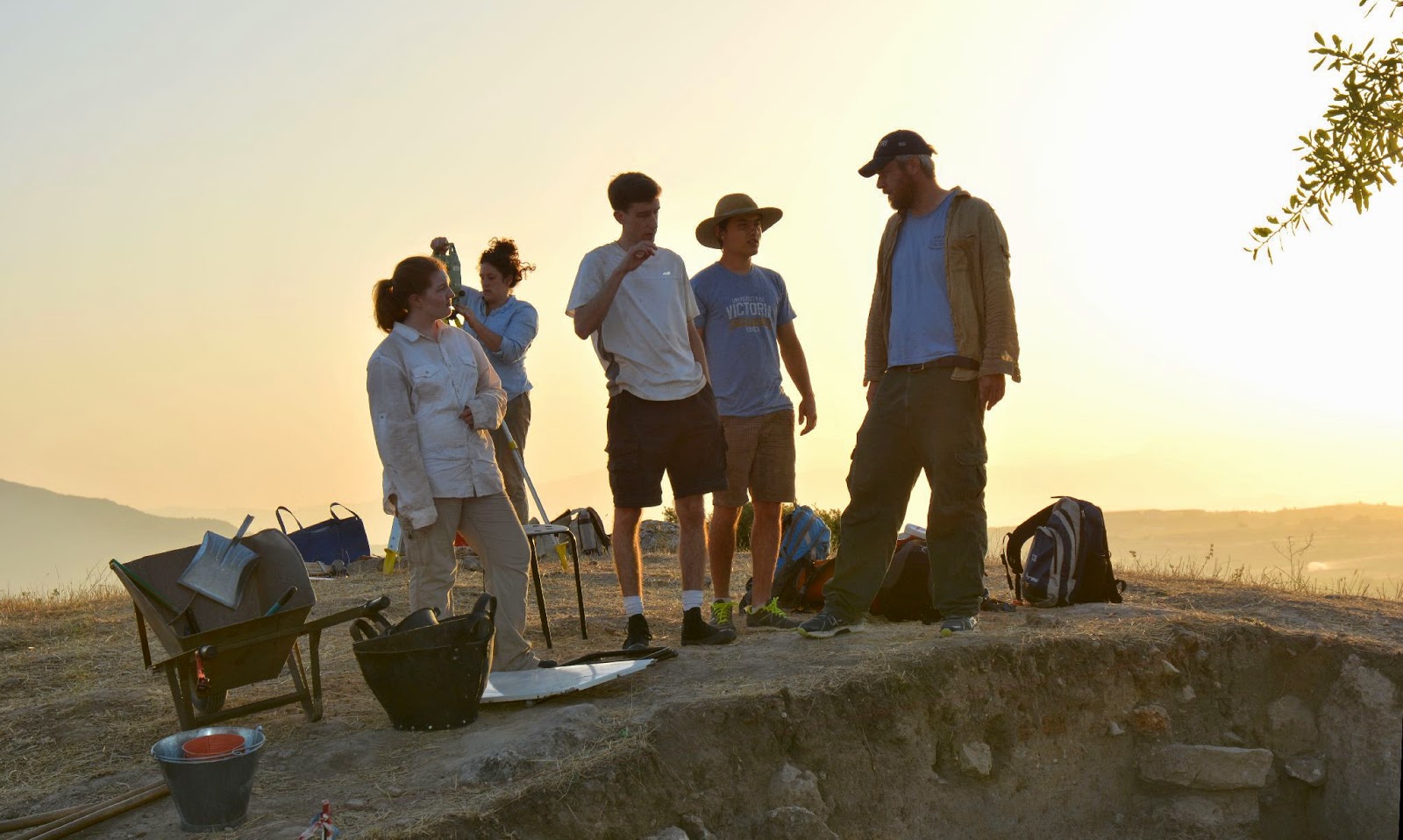
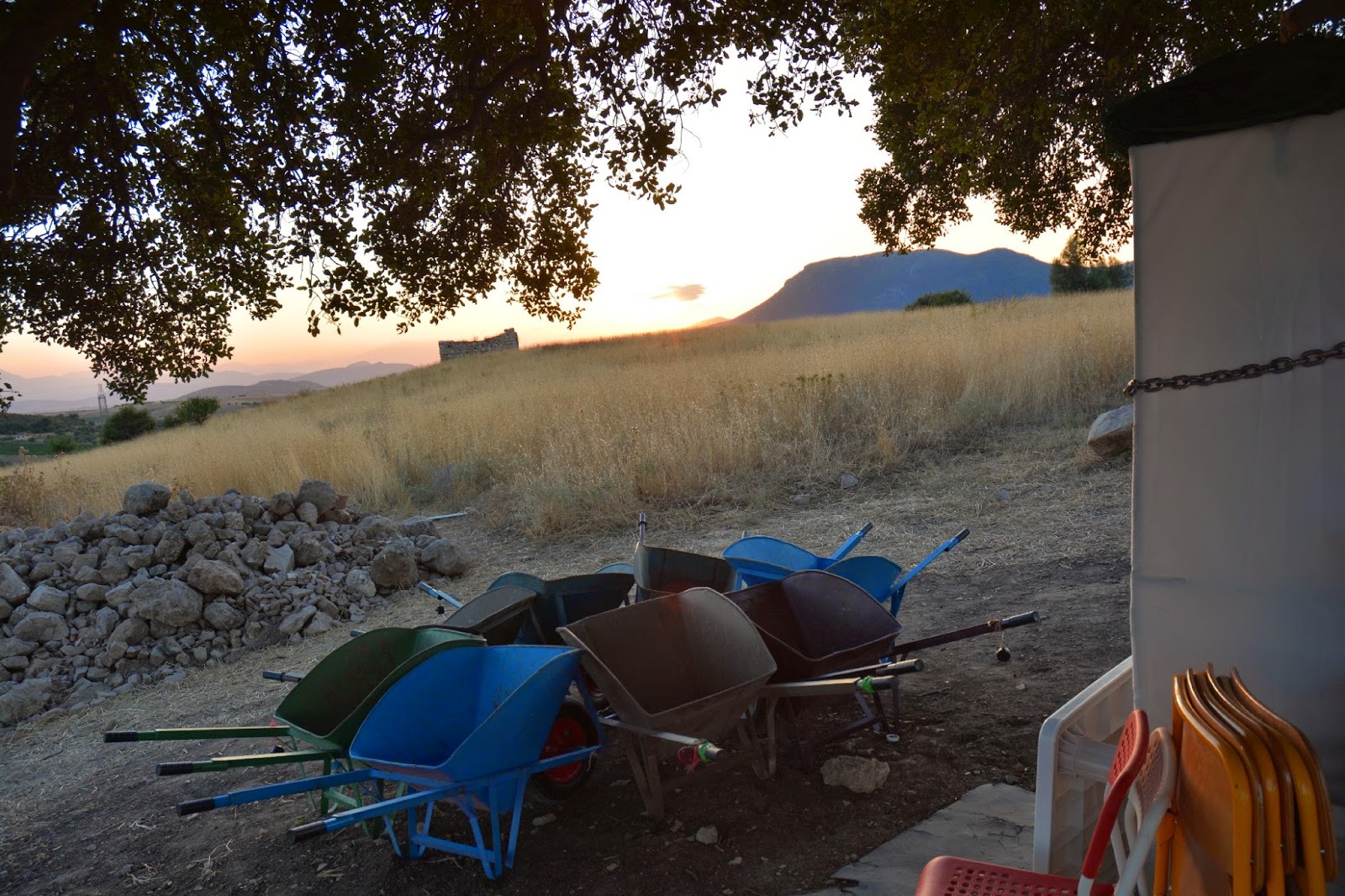
On Saturday we had a trench tour from Aiden Chimney, a visit from Oxford Professor Irene Lemos, Director of excavations at Lefkandi, and we had a late evening session to finish some important excavations. We also had a chance for a nice Arma sunset.
I’ll post some photos now and hope to continue more with the blog during the week.

Pottery Processing

by Evelyn Feldman

We pack up the site for the day around 1:00, but the day’s work is not over yet; after a delicious lunch at Stavroula’s, the 25-ish minute car trip back to Dilesi, and a break during siesta, the hottest period of the day, the whole group goes to work again at 5:00 pm for pottery washing. The only exceptions are on Saturdays, when we skip pottery washing and start the weekend early (saving the unwashed pottery and bones for an extra big work load on Monday) and on this past Thursday the 19th, when we started right when we got back and worked through siesta. That experience made me truly appreciate the mid-day break, as it was much, much sunnier and hotter in the courtyard where we work at 2:30 than it is at 5:00.

 
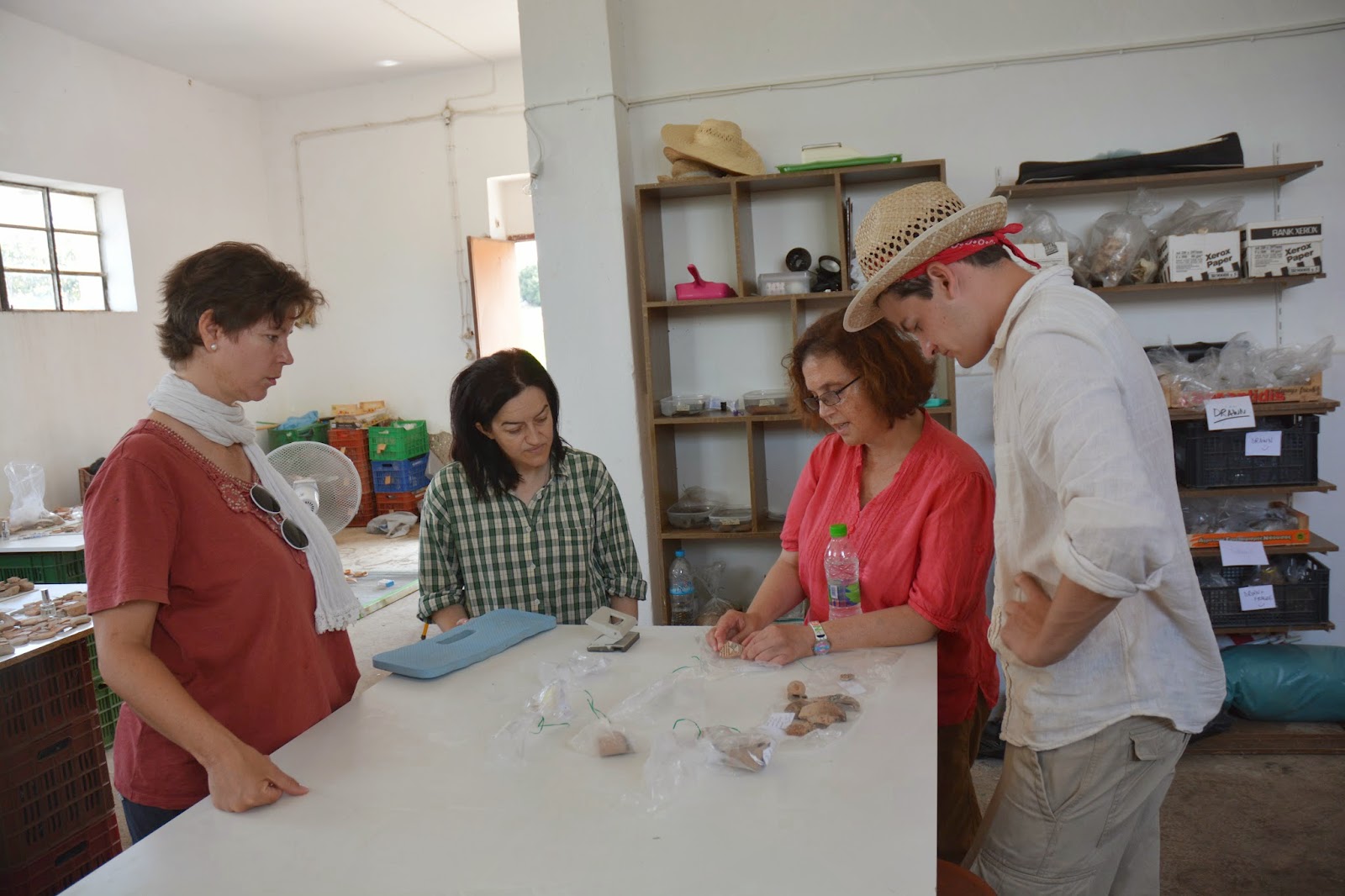
There are other things going on besides pottery washing too. There are also bones that need to be washed, which we all do, and a small group of students with lots of knowledge of osteology go through already-washed bones and process them in mysterious ways. Lately many students have also been helping the supervisors to process the pottery, including myself. Last week, Sara Daruvala and I worked together as a team to process pottery sherds from Morgan’s trench. 
 
This means grabbing a bag of some of the already-washed pottery from one or two days earlier and laying it all out in a pile on a table in the courtyard. Together Sara and I go through it and sort it into various categories: fine-ware, medium-ware or coarse-ware; painted or unpainted; and what part of the vessel it is from, such as a body sherd or a handle or part of a base. This part of the process usually takes quite a while, depending on the size of the bag we selected, and afterwards we count the different categories, weigh them, and record all the numbers on special sheets made for this purpose. 
 
The teamwork is especially helpful to have, because it’s not always easy to tell what category something should go into. Though Sara and I work twice as fast going through a bag by sorting together, the real triumph of our team is being able to ask questions of each other. “Medium or fine-ware?”; “is that paint?”; “does this look like a handle to you?”;  “isn’t this a rock?” The first two questions are the most common, and usually if we can’t make a decision alone, we can at least make one together.
 
The part I find most difficult is definitely deciding what category of coarse, medium, or fine something should be in when it’s somewhat in between two categories. In that case, we have to look extra closely at inclusions, the larger chunks of things that are part of the sherd’s fabric. If there are more than just a small amount, it’s medium, and if there are a lot it goes in coarse. But it’s often difficult to see the fabric and inclusions very well, because the only place to get a good look is the edges of the sherd, and those are just a tiny slice sometimes; plus often they’re still a bit dirty–it’s very hard to get pottery perfectly clean. Then the dirt will look like inclusions, because dirt is lumpy, but it’s usually actually just dirt.
 
It’s really great getting to look at all the pottery when it’s clean and dry and getting to examine it so closely in order to sort it. I often notice things I normally might not have, and in general it’s an opportunity to examine great amounts of very old  and sometimes very beautiful pottery  as closely as I would ever like to. And last week, there was added enjoyment through the fact that on site I had also been working in Morgan’s trench. I got to examine and process lots of pottery that I myself had dug up. It has also provided an opportunity to be able to observe a change in the trench in a way that isn’t quite possible on site, when the pottery is still covered in dirt and when I am only one of many people adding to the pottery buckets; when processing, you get to see everything that’s there, after it’s been cleaned, and after processing for Morgan for a week, I feel like I was definitely able to observe a change in the types of pottery sherds Sara and I were processing as Morgan’s trench progressed to deeper levels.
 
It has been wonderful working with Sara and helping Morgan. I love how much I’ve been able to learn and experience from this job, and from the entire trip so far. 
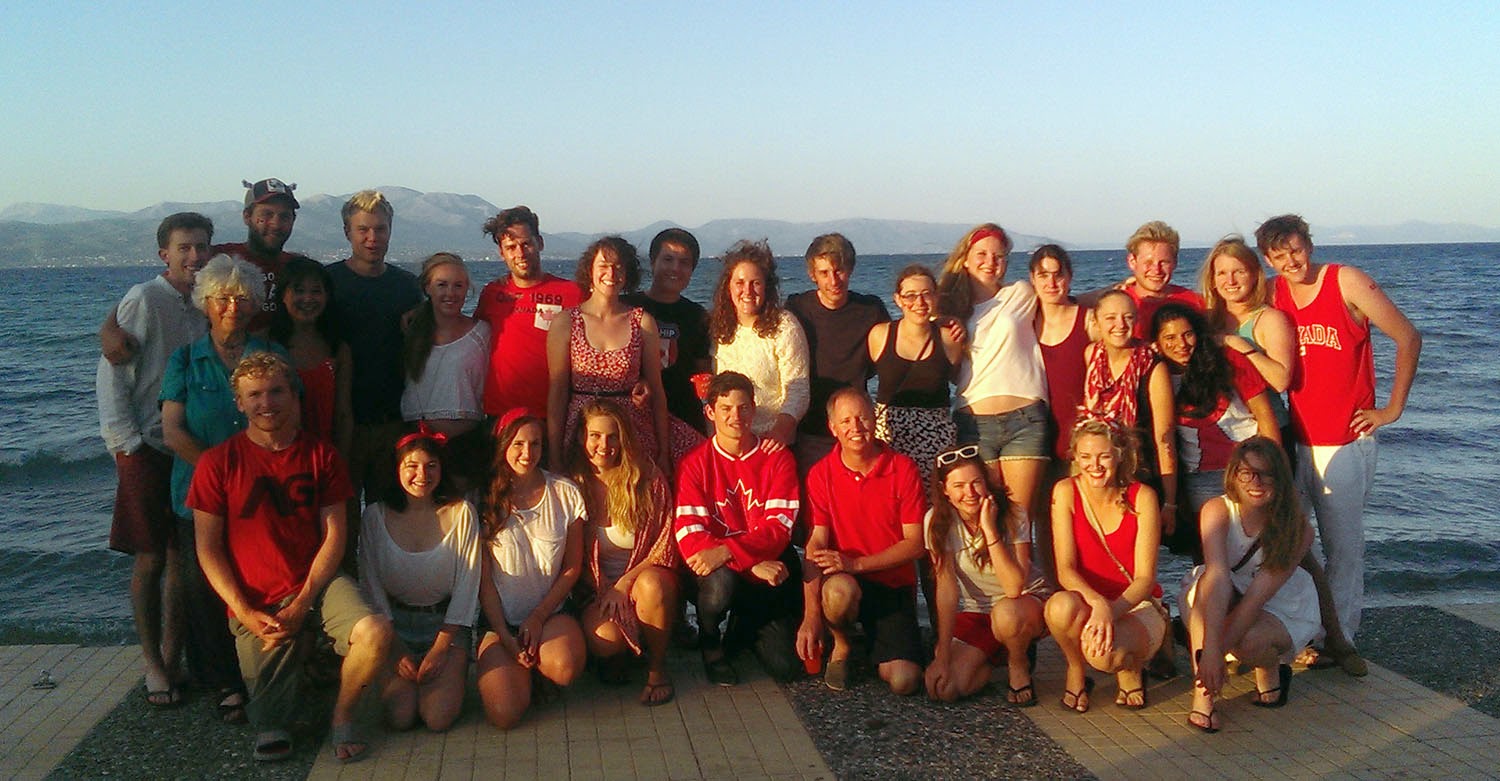
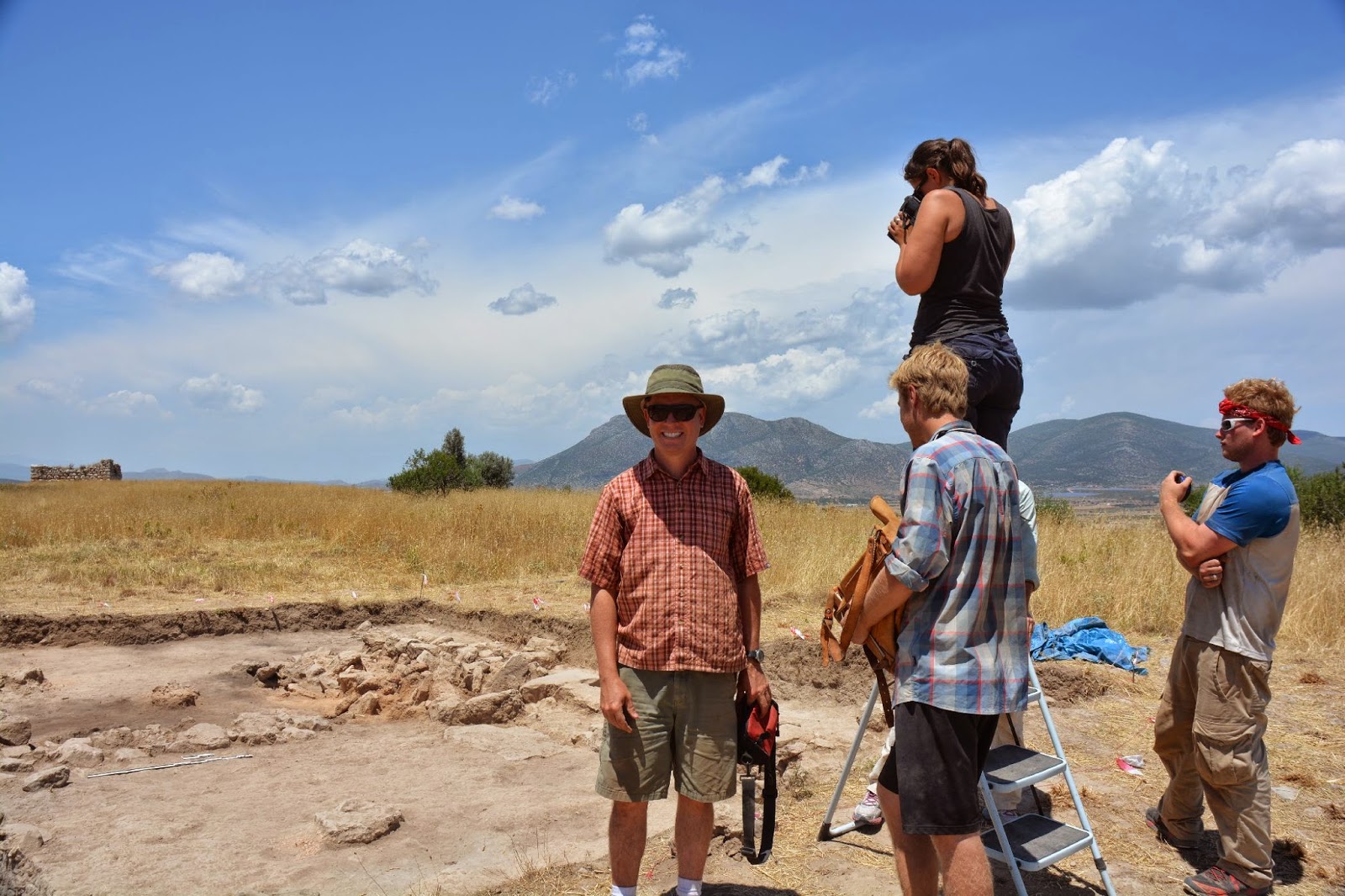
Group photo Monday. Midpoint of the season, reaching maximum numbers = 51 people all together. We welcome back Matt Pihokker and Mina Nikolovieni, and, new to our team, Vassiliki Nikolovieni. Sadly we say good-bye to Dr. Ben Marsh and his son Duncan. Both have contributed a great deal to our project. 

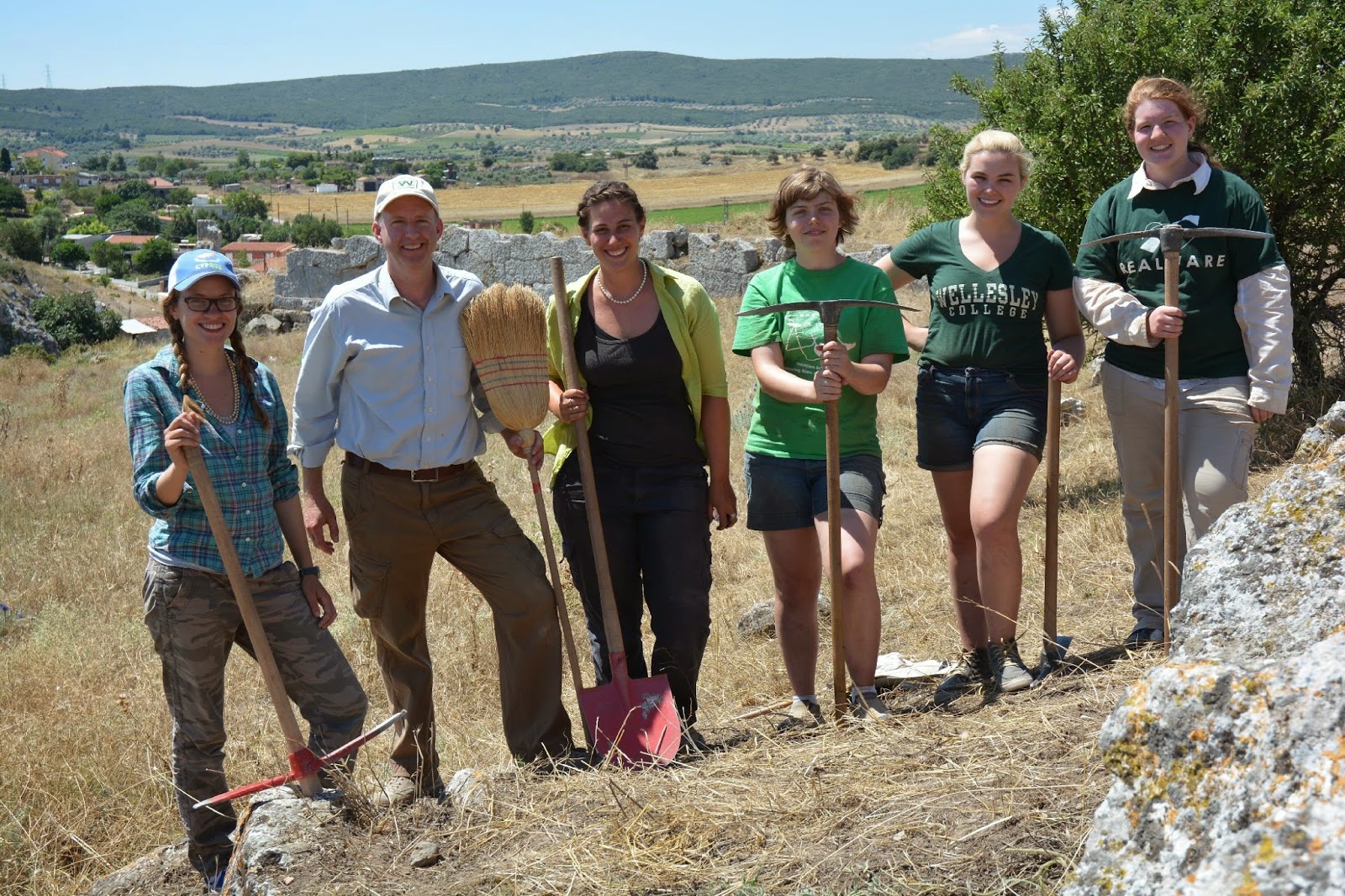
The day started well with wall clearing and then good earth removal. We took a small time out to make a photo of our Wellesley College contingent, led by Professor Burns.

The Truth about the Raiders of the Lost Ark

by Lorna McVey
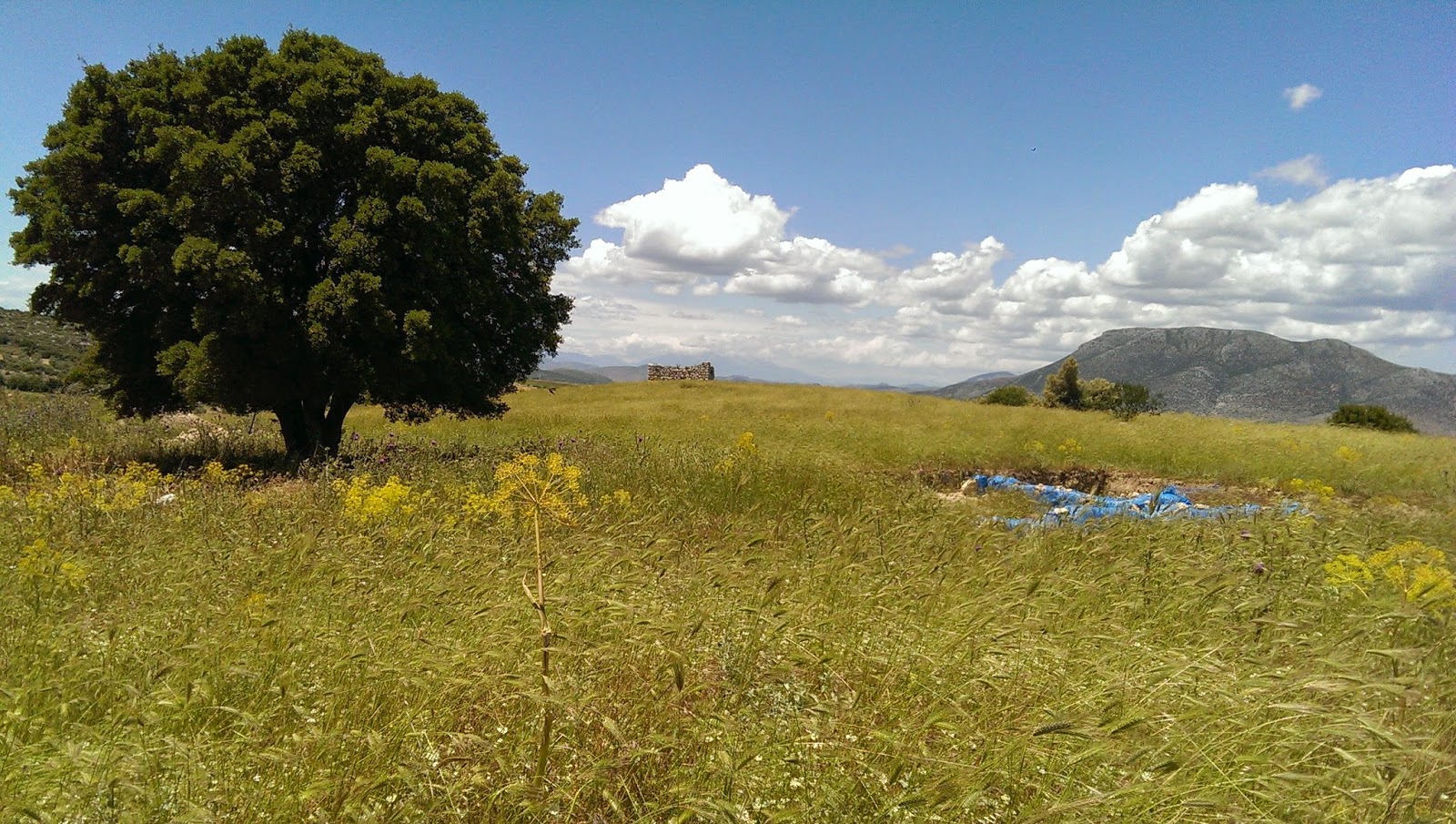
When I first visited Eleon on May 16th 2014, on the Uvic ‘May trip’ (GRS 395 Classical Studies Abroad), where students are given the opportunity to spend four amazing weeks visiting many different ancient sites and museums, it looked from a distances like any other small cairn in Greece. It was a beautiful little hill covered in tall grass, big purple thistles the kind you would find in highlands of Scotland and two old trees that provided the only shade at the site. At the top of the hill there were four large square trenches and the exposed ancient ramped entrance to the site running down to the edge of the polygonal wall and these were mostly covered by tarps and over grown with grass from the past year.
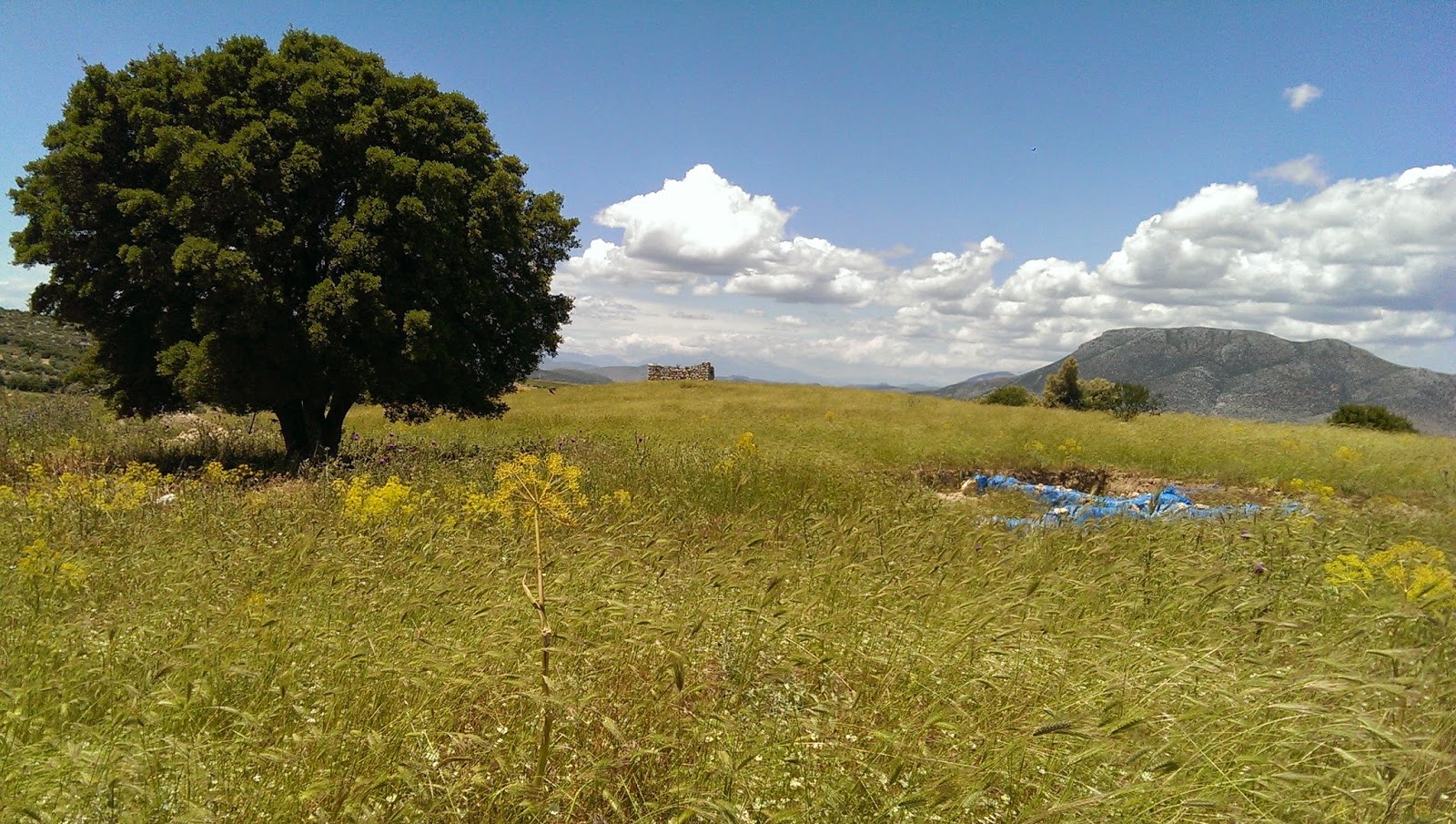
We are now in our third week of excavations at Eleon and the grass covering the site has been removed with a combination of hoeing and weed whacking. The transformation of the hill into a working archaeological site has been astonishing. In three short weeks the site no longer looks over grown, but is clean and trim and trenches and surrounding areas are clear and there is a path leading up to the site and all the viciously sneaky thistles have been removed. I would never thought to have referred to a thistle as sneaky before this trip, but no matter how hard you try to remove all the thistles while avoiding their thorns there is always one that gets through your gloves and you have to spend the next ten minutes looking for it. Rather than four trenches there are now nine new ones, giving us a total of thirteen trenches that are slowly revealing more and more about the people who once occupied the site of ancient Eleon.
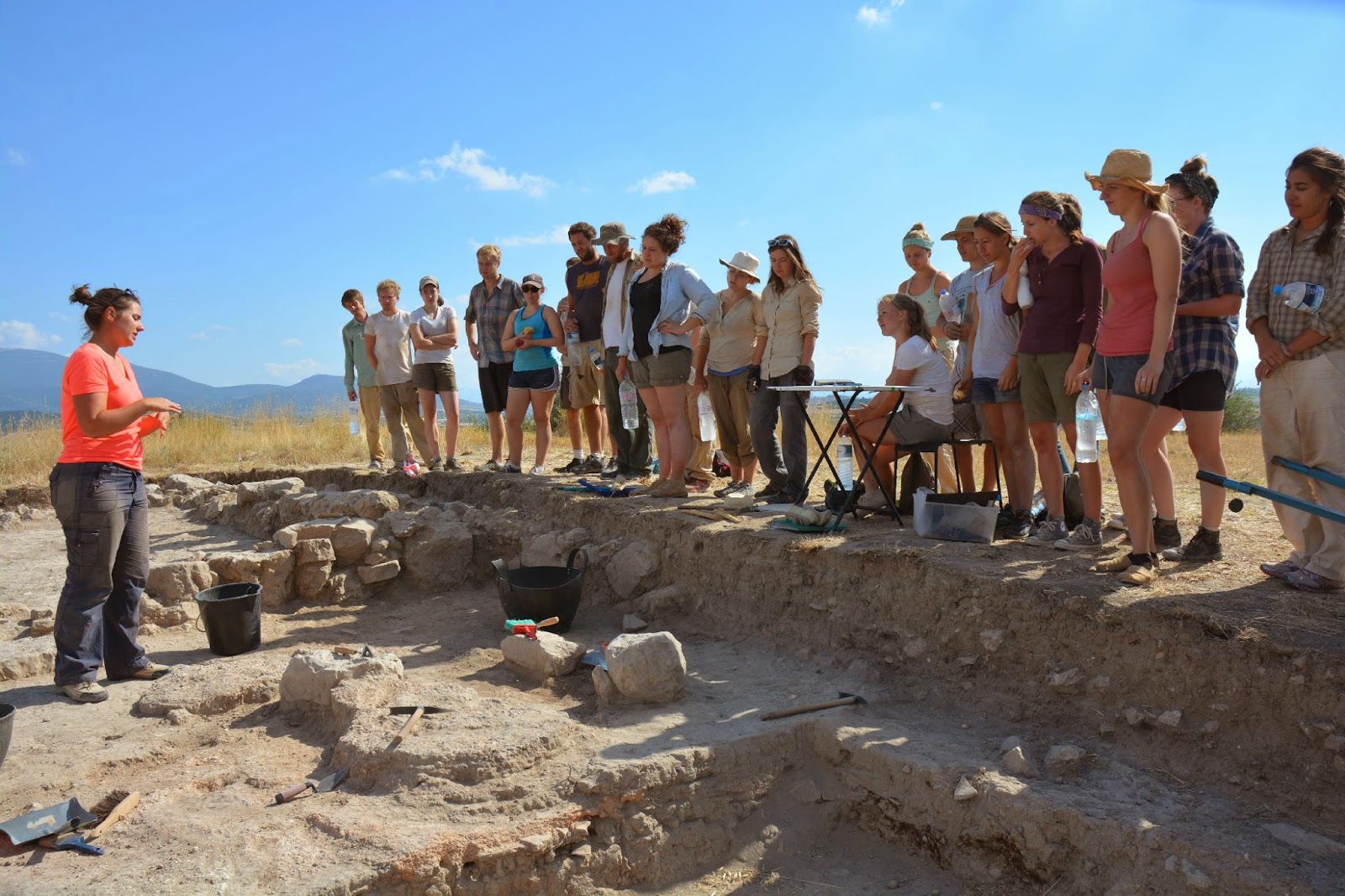
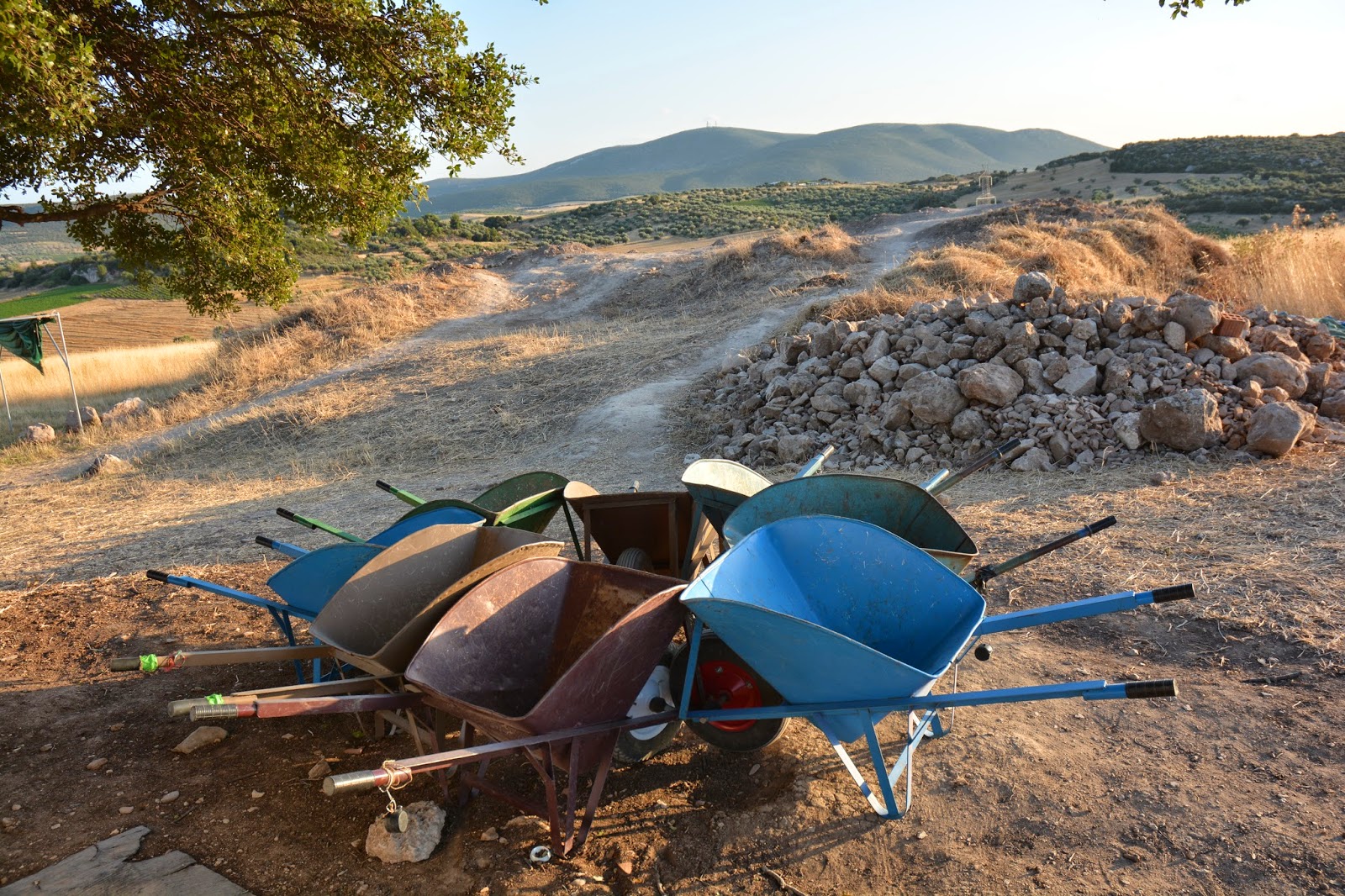
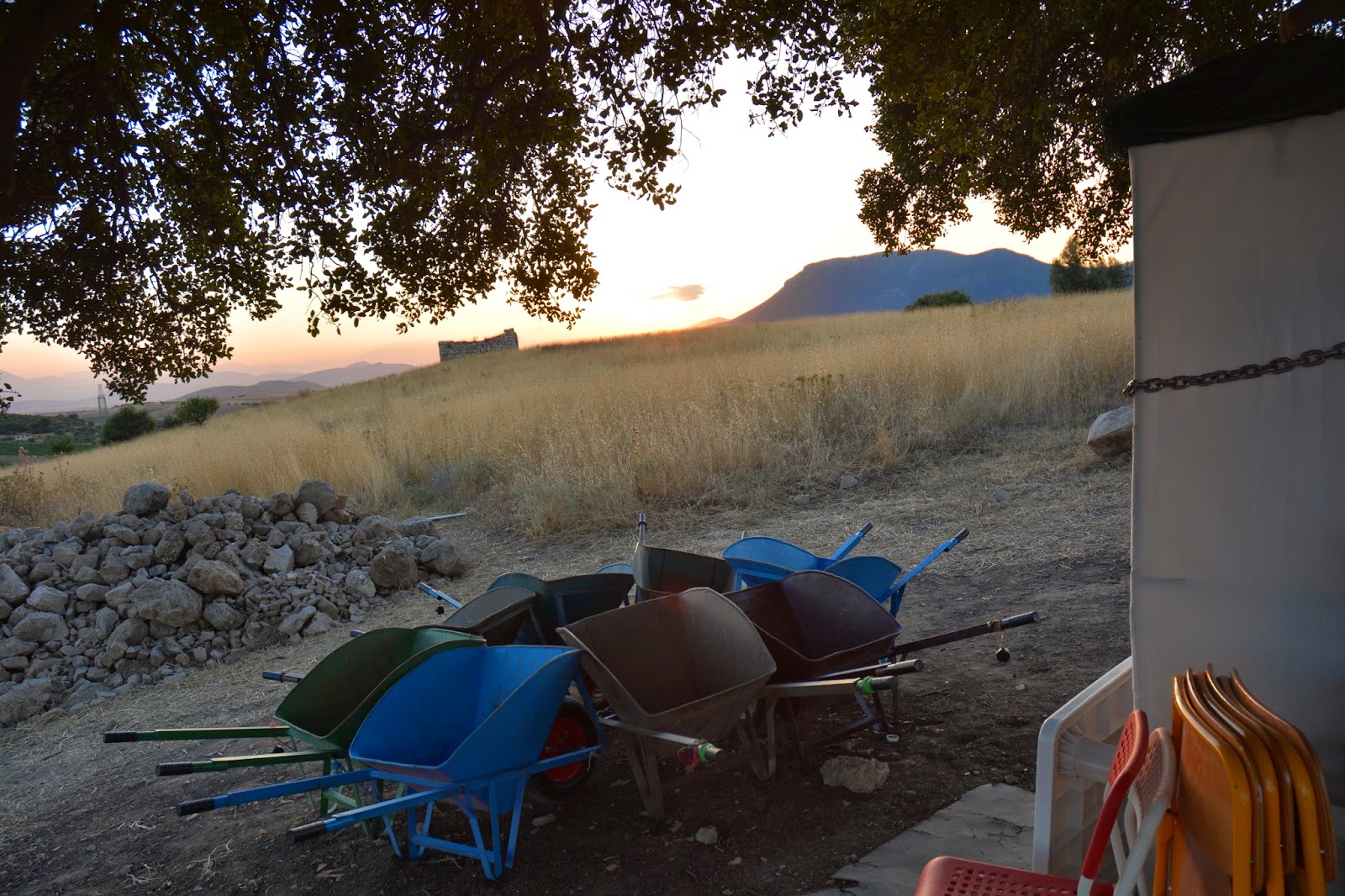
        Days at Eleon start with watching the sunrise every morning over the island of Euboea causing the sky and sea to turn beautiful rays of pink and gold as a new day of excavation begins. I do not think I will ever have enough photos of the sunrise here in Dilesi. Then it is a half hour ride to the dig site and if you are lucky enough to be in the right car you get to go the back way to the site which is a lovely dirt road through fields of wheat, orchards of olives and past the military air base whose fighter jets fly formations over us while we dig. At the site we collect our tools, shovels, hand picks, buckets, trowels and brushes. We then divide up into our trench teams which are rotated every week to give us the opportunity to work with many different people who are on the project and to get the chance to work in different trenches. This way we are able to gain experience with many different types of surfaces, finds and perfect our skills at how to properly excavate and preserve them. I had the great pleasure this week of being able to watch a piece of metal be excavated from our trench by our trench leader very carefully  and slowly with small metal tools that remind you of what you might see at the dentist, some wooden scrapping tools and a fine brush. Most of the day though is spent working hard to remove the hard packed soil with large and small picks keeping a careful eye out for things like pottery, bone or terracotta which are the most common to find. The dirt we shovel into buckets that are wheelbarrowed up ‘wheel barrow mountain’ that is a giant mound of earth removed from previous years of the excavation. Every day we find many different pieces of pottery and roof tile both from Mycenaean times to the late medieval period. They are then taken back with us, washed and cataloged. At one pm our digging ends due to the heat of midday and we go for an amazingly delicious lunch at the house of a woman named Stavroula, who cooks the most wonderful lunches. The afternoons are filled with washing, sorting the finds of that day and learning how to identify and preserve them. The evenings are watching the sun set as we eat dinner at the sea side tavernas.

It has been a long time since I have thought archaeologists were all handsome men in leather jackets and hats who battled against the evil plots of the Nazis and the old Soviet Russian state to control the world using ancient magical relics. It has been a real pleasure to be given the privilege to work a long side professional archaeologists and to see how a real site is excavated and to be a part of that. Although sometimes when you are picking through dirt that just will not move I cannot say that I would not turn down a secret entrance that is only revealed at high noon by the staff of Ra. It would certainly make digging much easier.
 

Intermission

We are on our mid-season break now – 2 and a half days off, for rest, travel, laundry and other work obligations. Our project is a full six weeks and now we’ve reached the midpoint. Yesterday on-site I tried to make the comparison to some epic film, and how this was like intermission – where we don’t know how the story will end, but the truth is, we’ll never fully know everything. The story will continue for a long time. Research like ours will be a series of constant questions and theory-testing. With the limited time remaining we have to set specific questions that can be answered and go about achieving those goals. It’s easy to get distracted because there are so many interesting, puzzling problems with lots of potentially spectacular answers. 
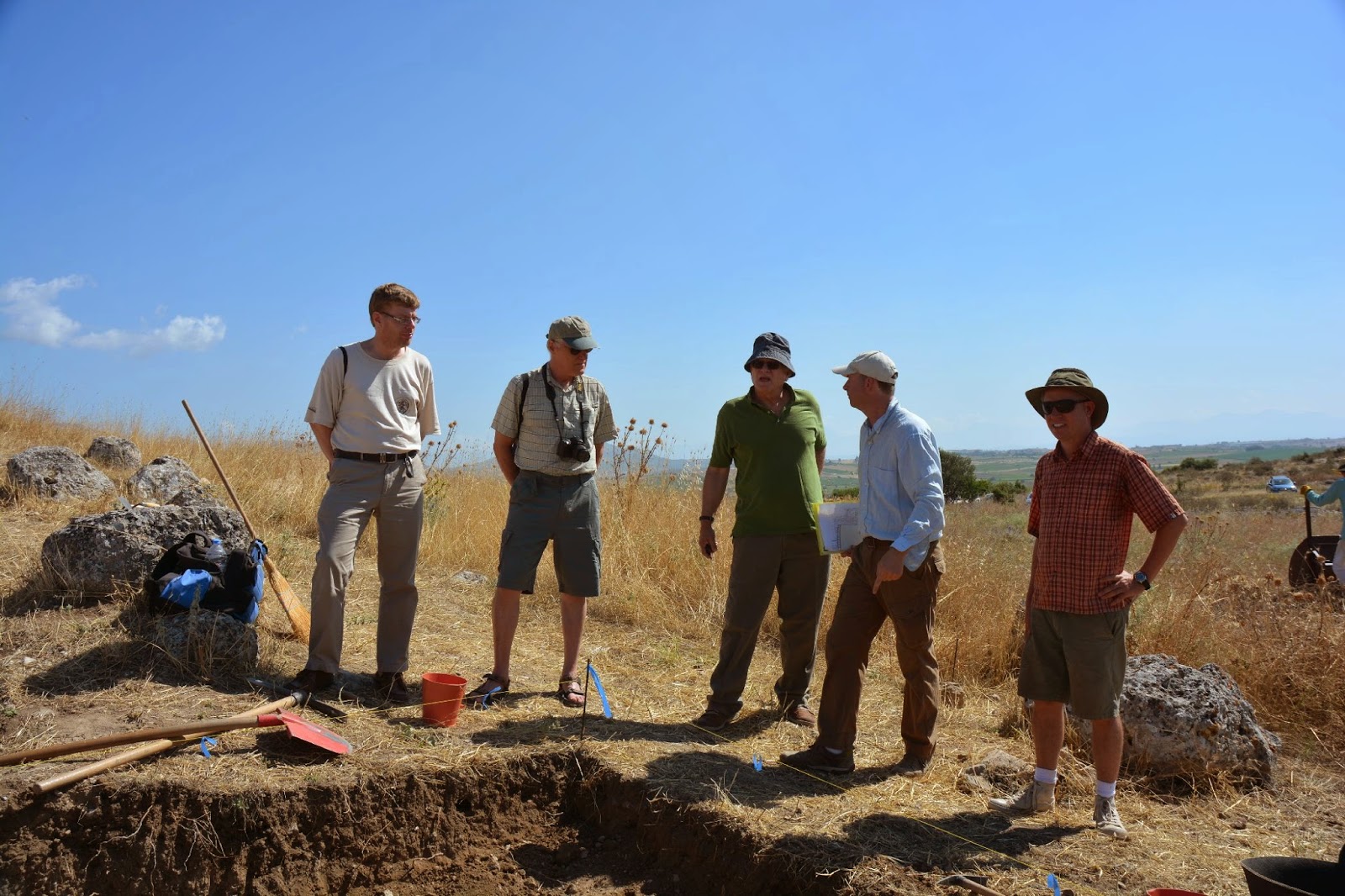
Yesterday the Director and Assistant Director of the Canadian Institute in Greece (David Rupp and Jonathan Tomlinson) and the chairman of the Board of directors (Gerry Schaus) visited us. Bryan and I were happy to give them a detailed tour of the site and our apothiki. They were able to meet our team and see work in progress. 
The majority of the students this weekend are heading to the beautiful Greek city of Nauplion, about 3 hours away from Dilesi. This old Venetian/Greek city is the perfect hub for exploring the important archaeological sites in the area – like Mycenae, Tiryns, Lerna, Argos and the Argive Heraion. Of course it doesn’t hurt that the city is incredibly beautiful with great restaurants and a nice beach. I visit this site every year with the UVic in Greece course I teach, so many of those students this year have decided to save some money and stay back at Dilesi. Others are sailing off to the Greek island of Skyros, famous for the miniature ponies and for being the location where the movie Mama Mia was filmed. I’m spending the weekend in Athens doing errands, research, and laundry. 
Next week we are excited to welcome a few new excavators and staff members to the project and to continue to build on the work we’ve begun so energetically in the first half of the project. We also have some birthdays to celebrate. Below I post several random photos from yesterday:
Bryan, Sr. and Jr. (aka Max)

Nicole, Arianna, and Tom with Arma, ca 6:45 am

Team 4 – Chandra, Sam, Elliott, Aiden and Jake. Sunrise.

the Wall

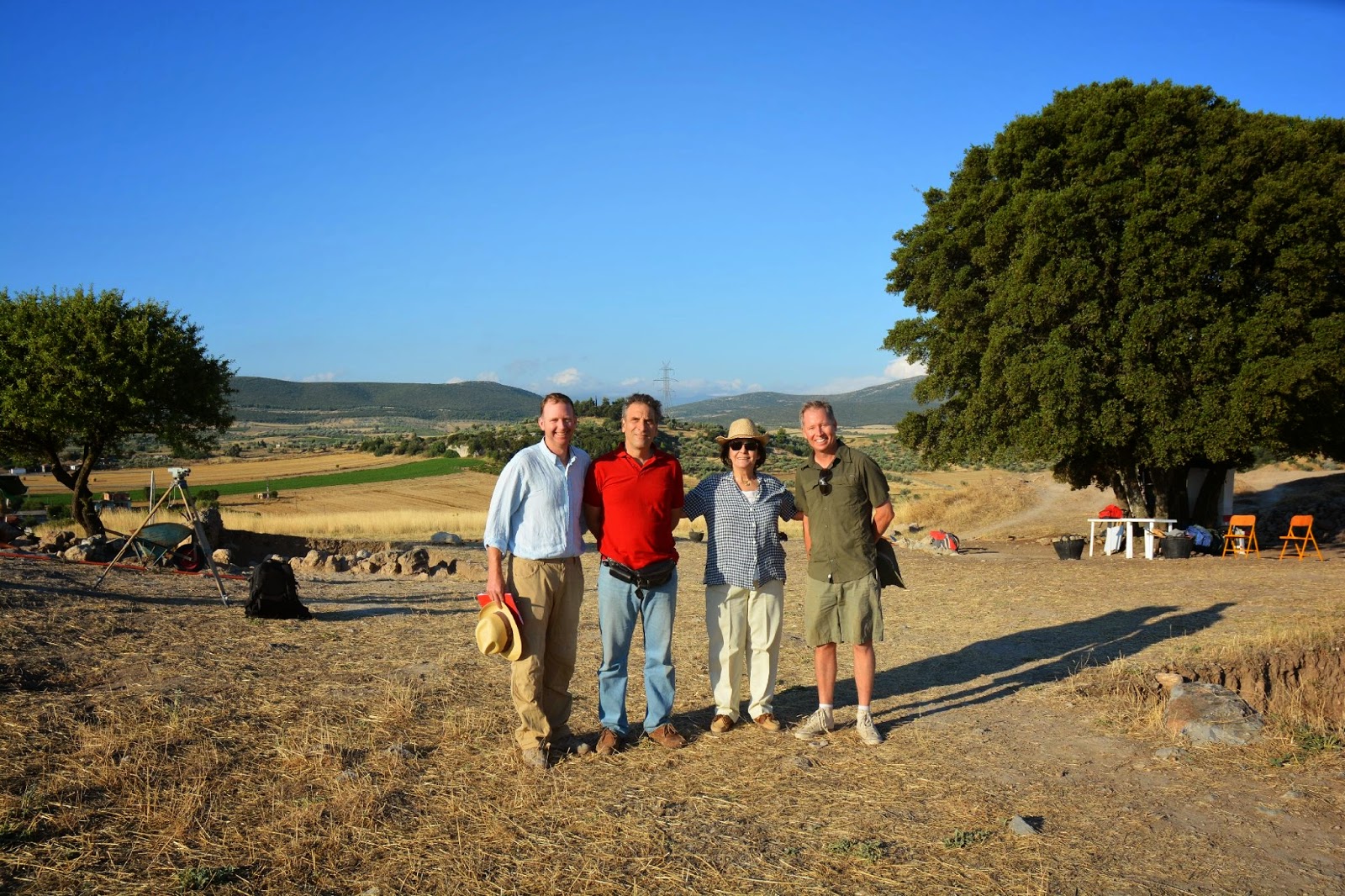
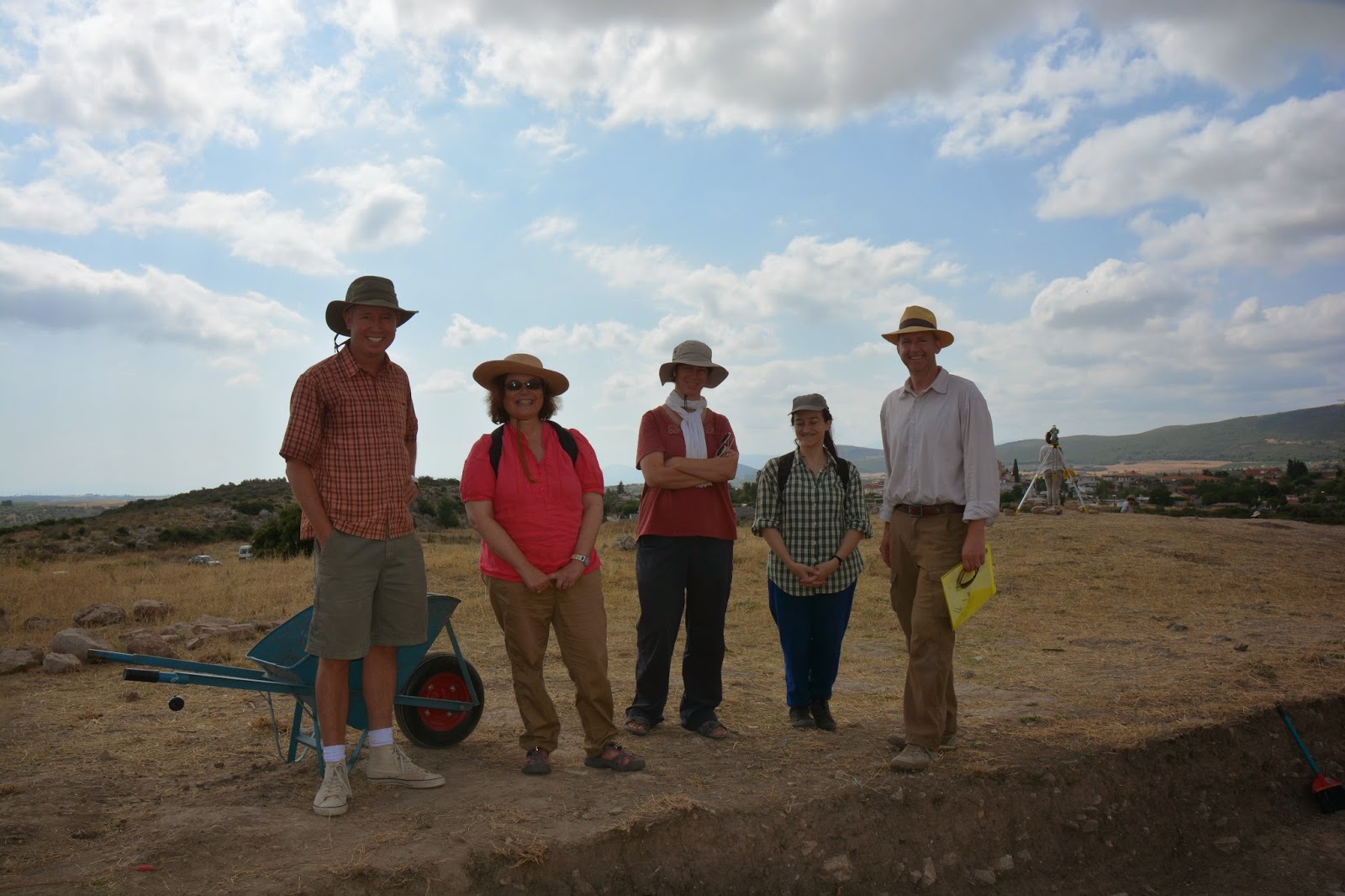
CIG Visit: Jonathan Tomlinson, Gerry Schaus, David Rupp, Bryan Burns, Brendan Burke

CIG Visit: apothiki team. Gerry Schaus, Bartek Lis, Trevor Van Damm, David Rupp, Jonathan Tomlinson

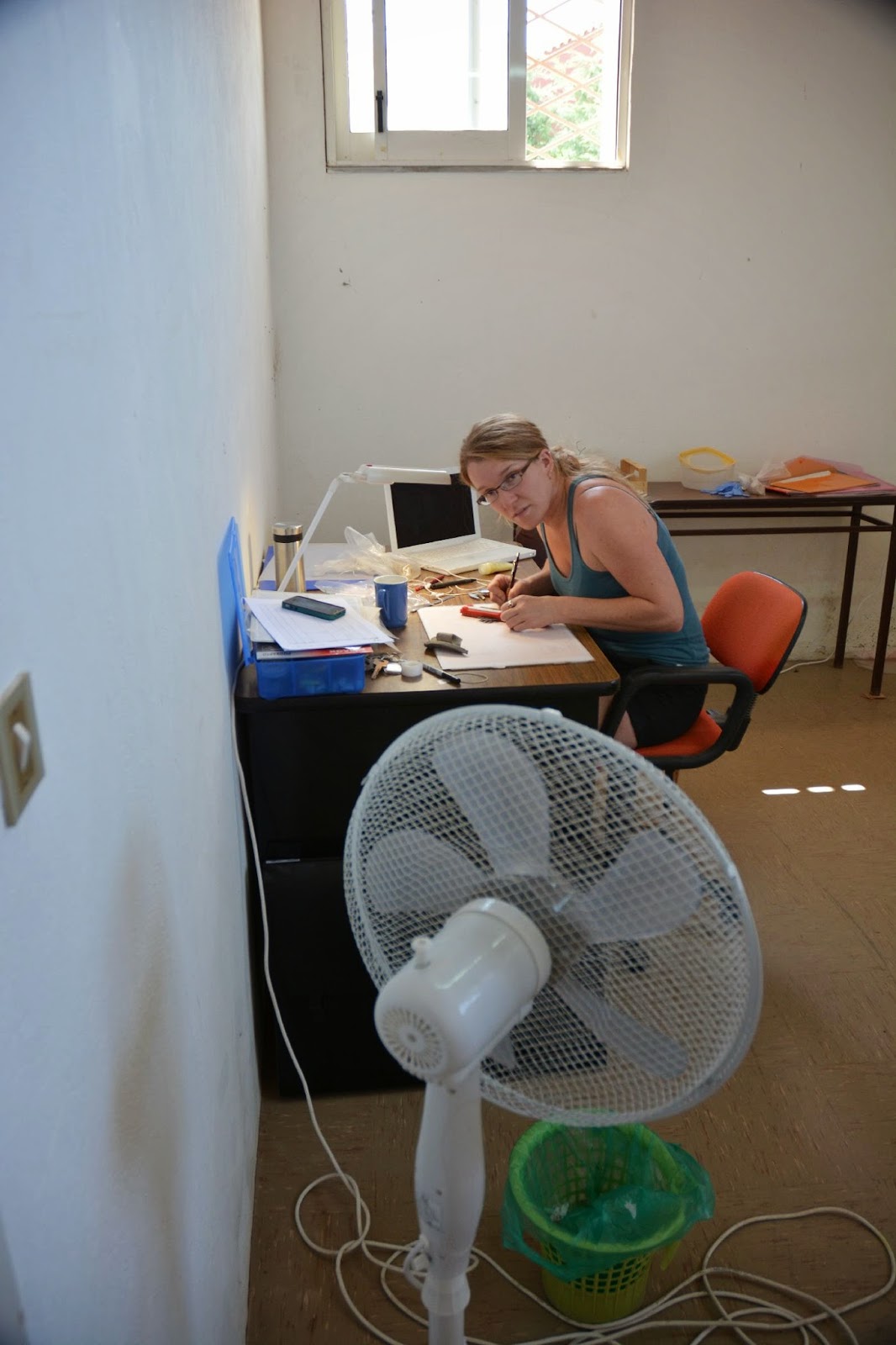
Tina Ross, our extremely talented illustrator in her office

streets of Arma

some good excavatin’ Aiden
This is why we need a drone – coming soon!?