A Beginner’s Misconceptions of Archaeology

by Tom Brown
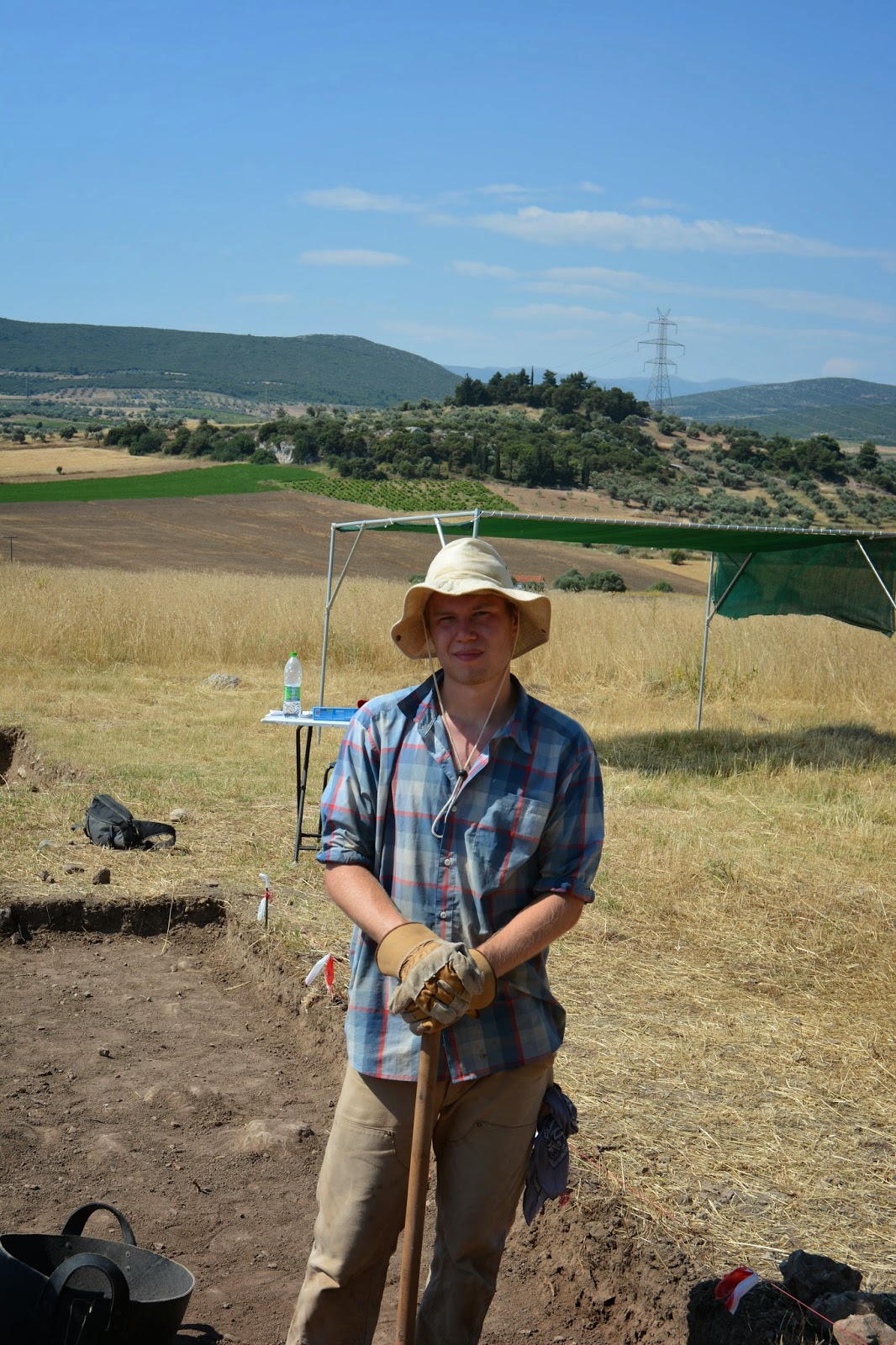
The first couple weeks of this archaeological dig have been incredibly eye opening. The differences between how I thought a dig was run and the reality of it are quite different. I’m also finding that what my parents thought I would be doing and what I am actually doing are also vastly different. To clear all this up I thought it would be helpful to post a few common misconceptions of an archaeology dig from someone who is completely new to the experience.
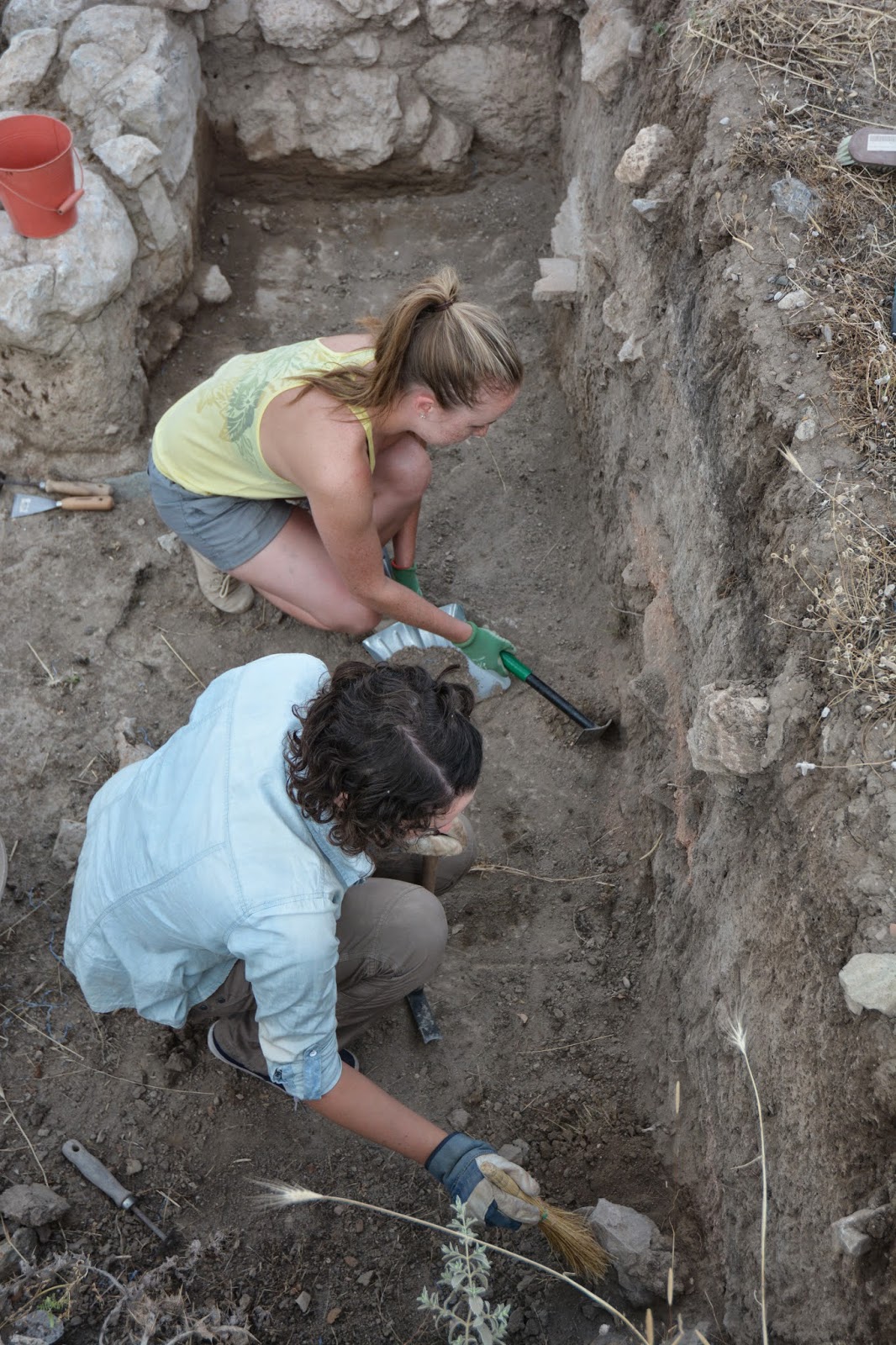
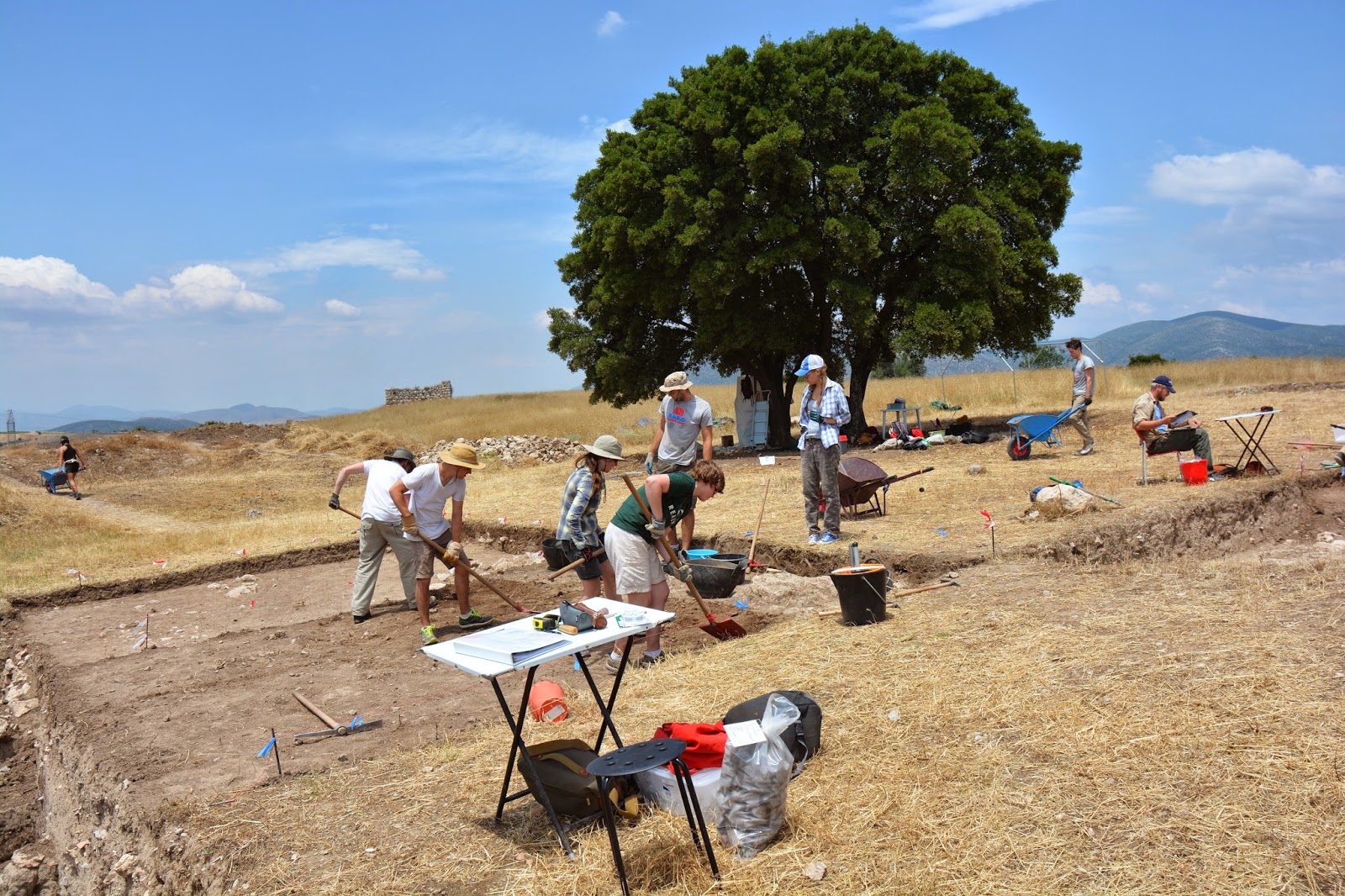
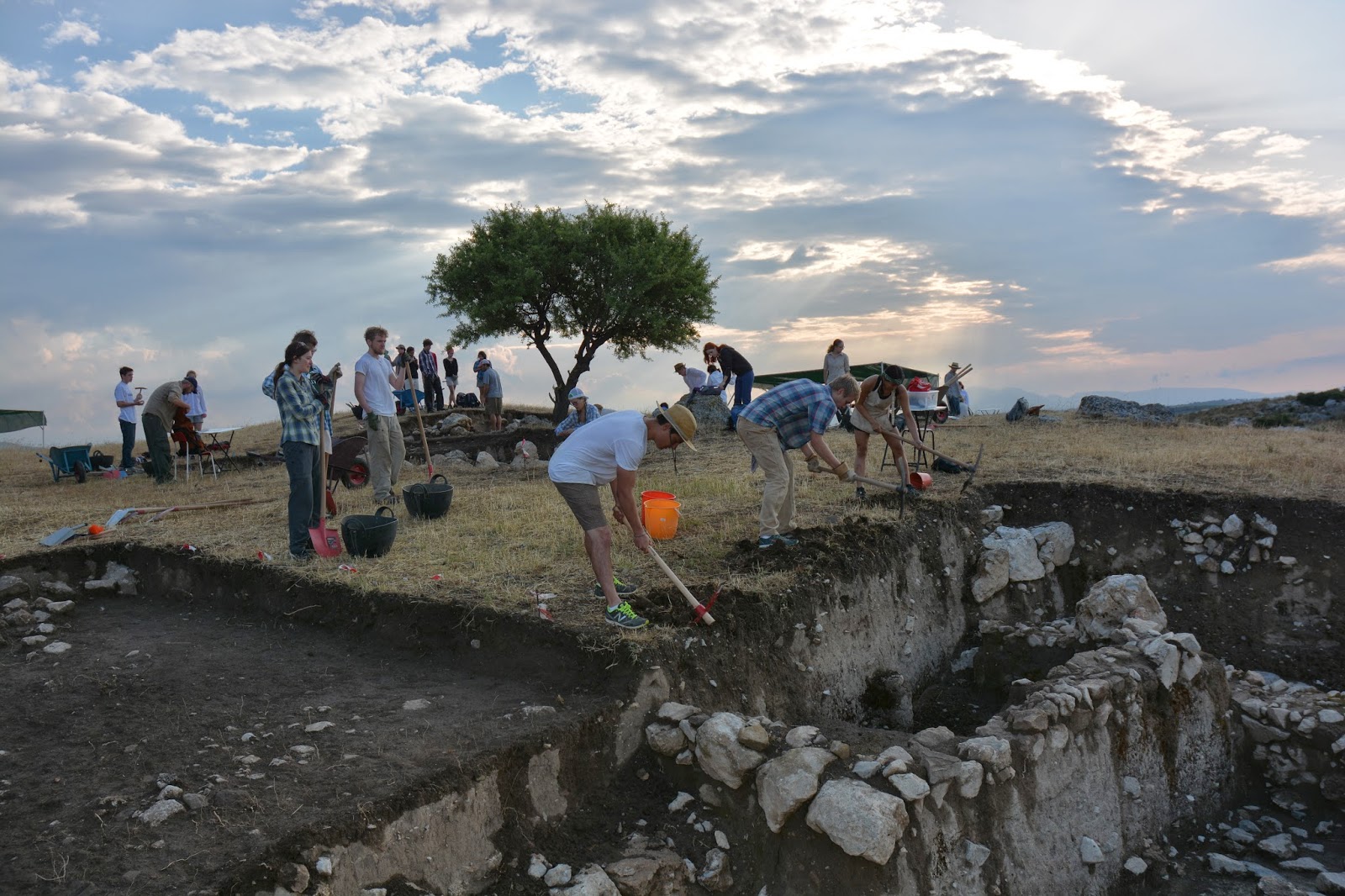
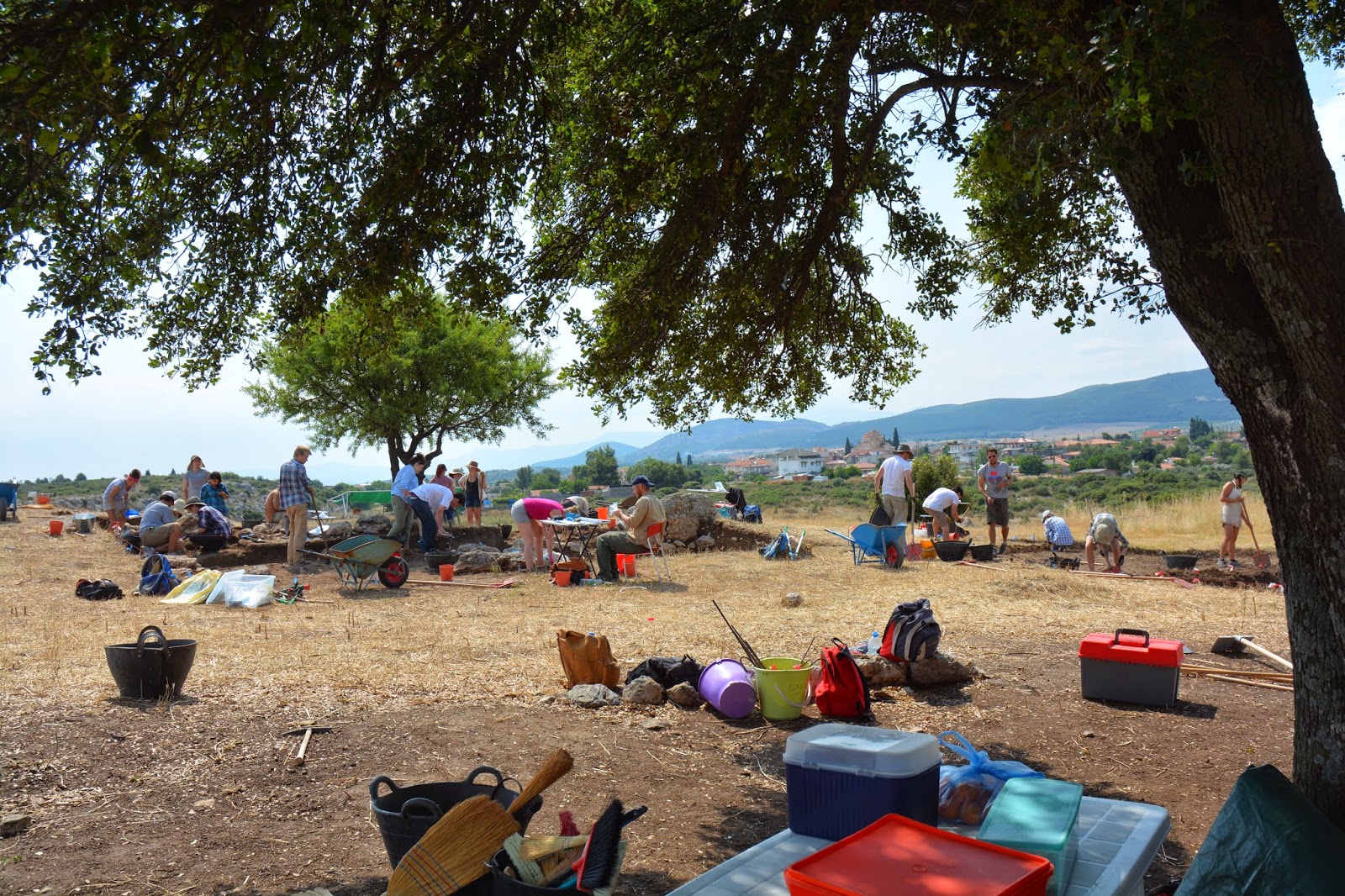
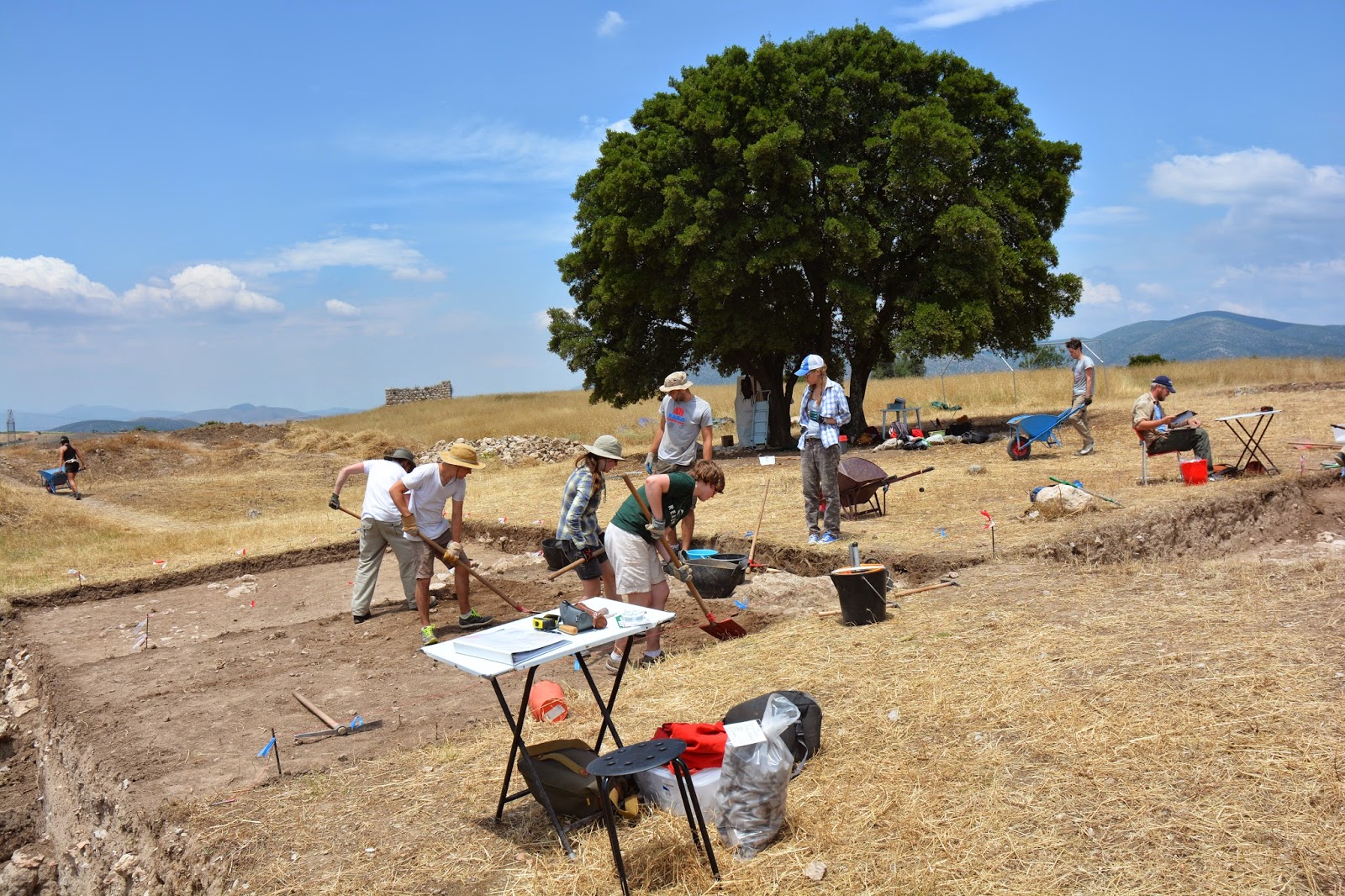
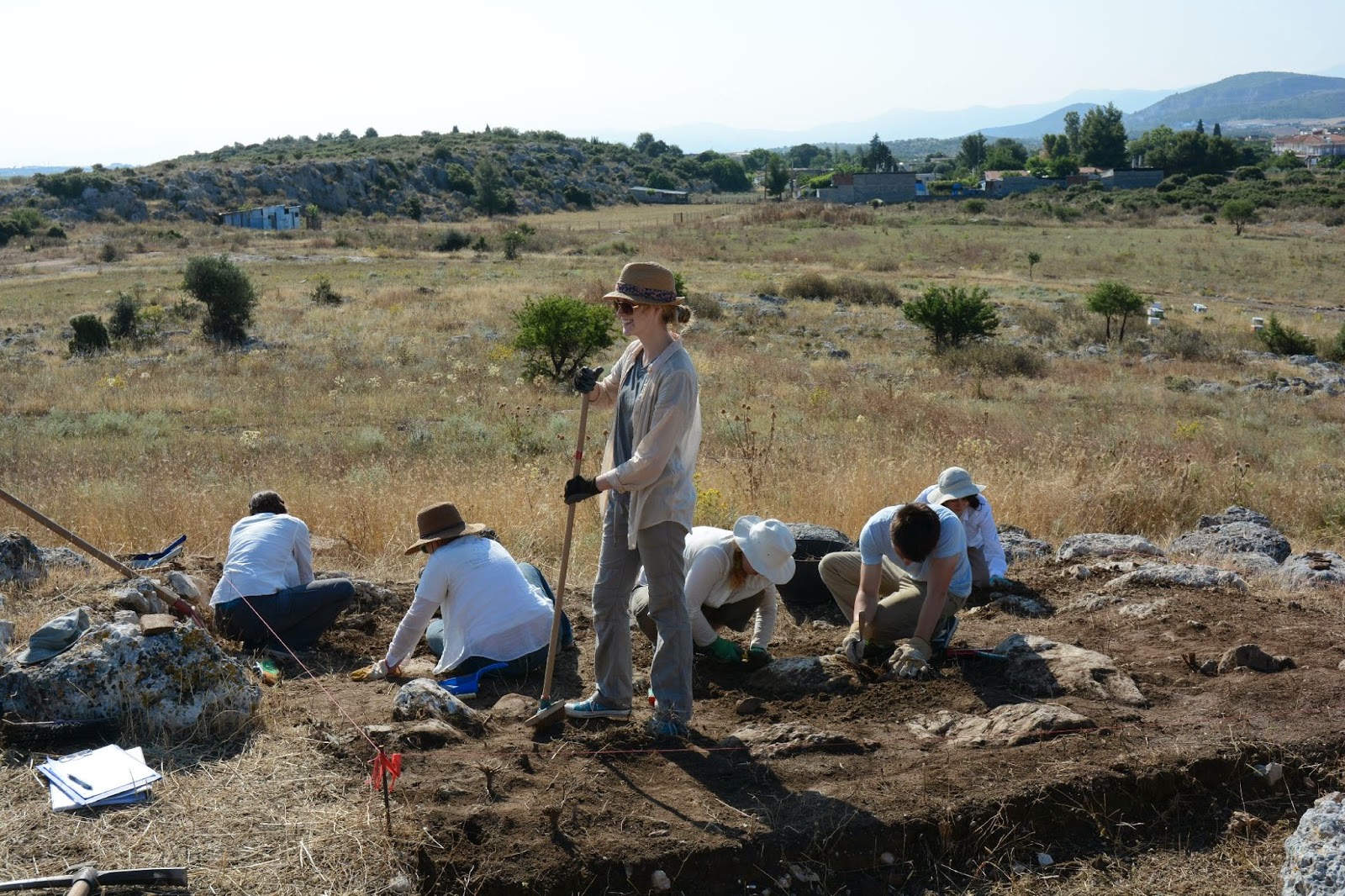
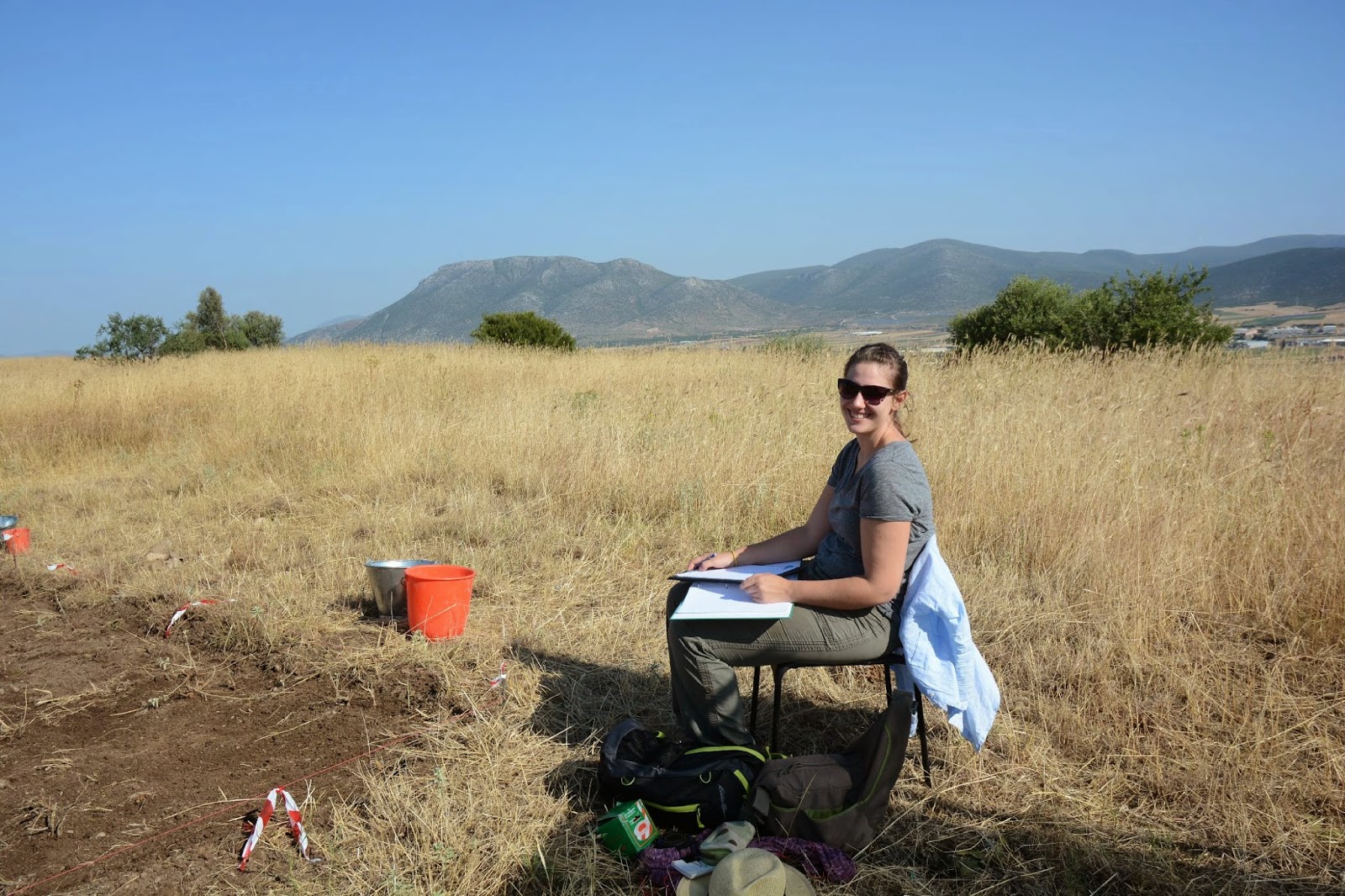
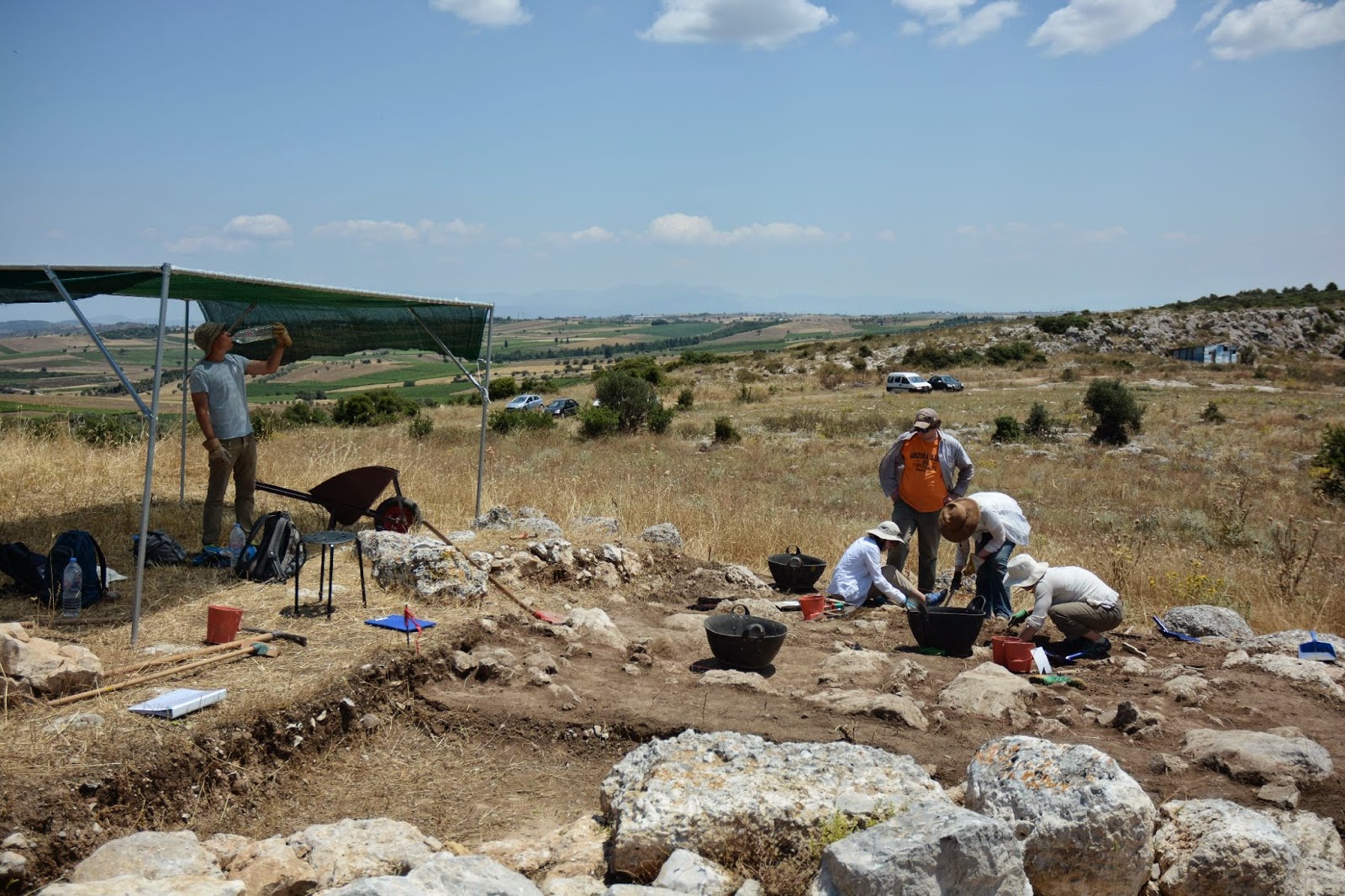
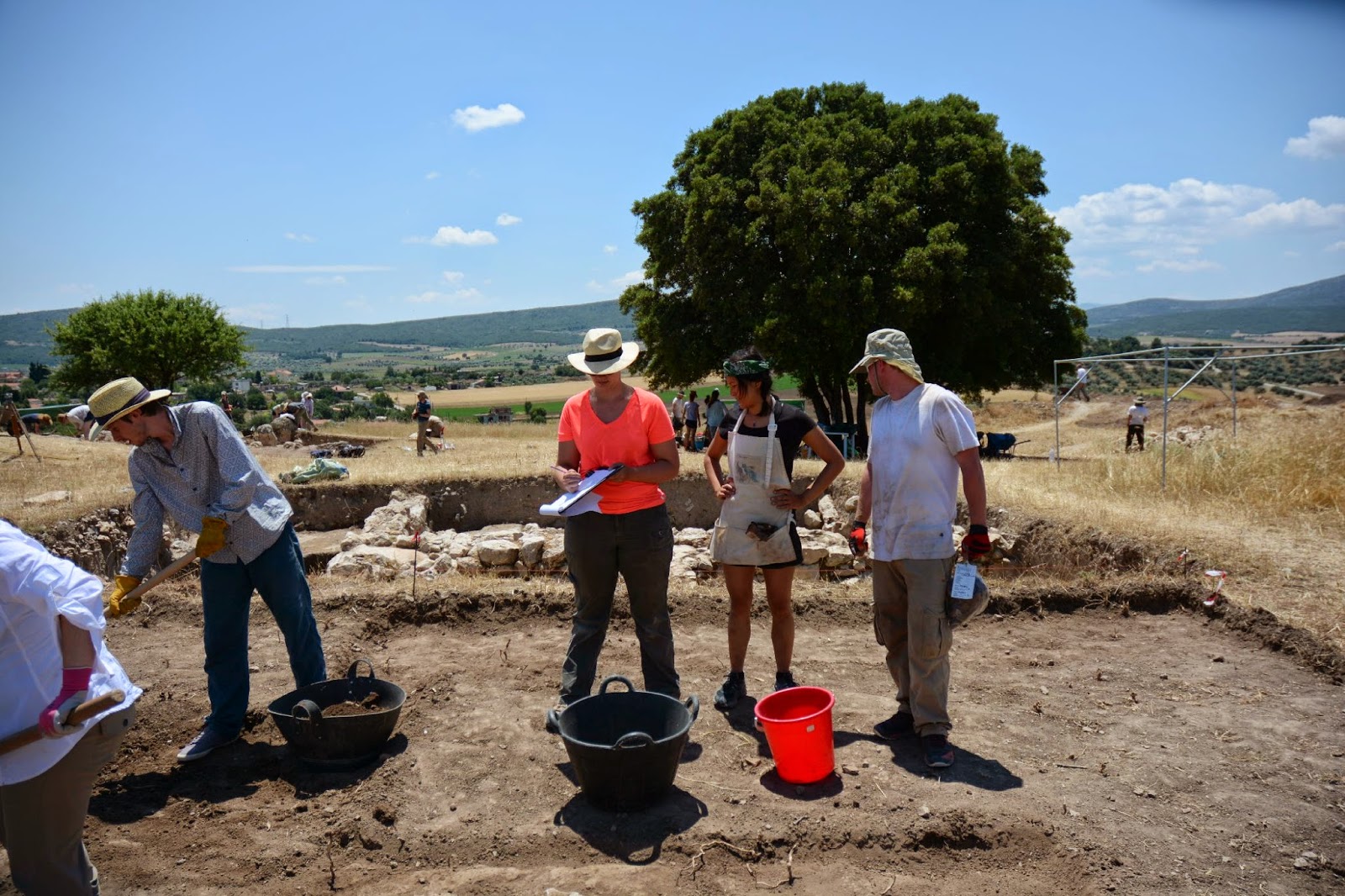
To start, my parents were very supportive of me going on this adventure but their idea of what I would be doing was a little skewed. From conversations with my mother, the word “hole” came up a lot when referring to the dig. I imagine that they were envisioning me belaying down a long shaft with a head lamp, uncovering Fraggle Rock in the depths of Boeotia, not seeing the sun for hours at a time. Fortunately (or unfortunately on those really hot days) we are in the sun the entire day and we have no trenches that would require a hard hat for fear of falling debris. The typical trench is a 5 ‘by 5’ square that we take off roughly 10cm (or less after we get past the top soil) at a time, exposing the layers of soil one at a time. This allows us to document the stratigraphy (varying layers) of the soil and document its history.
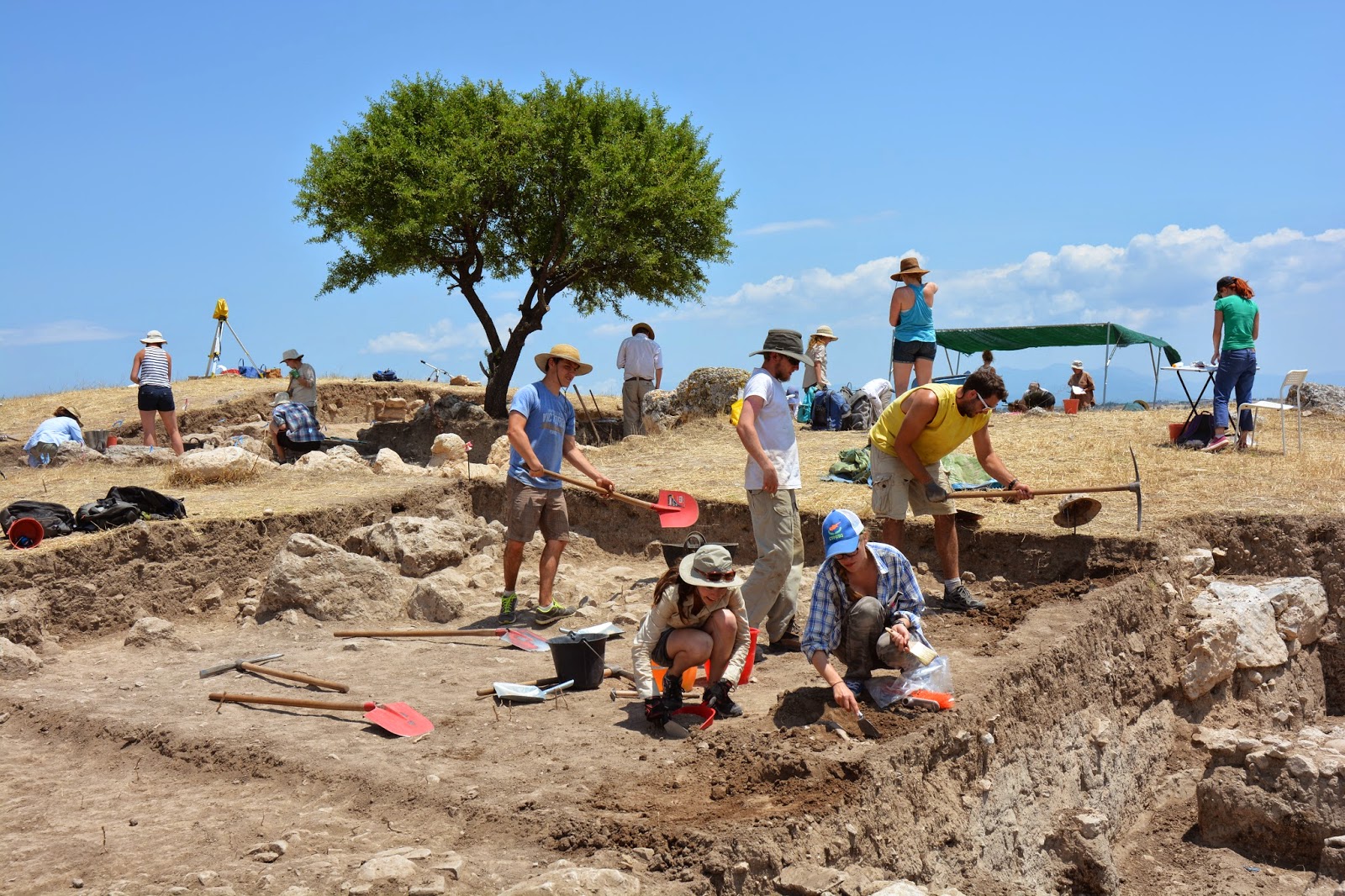
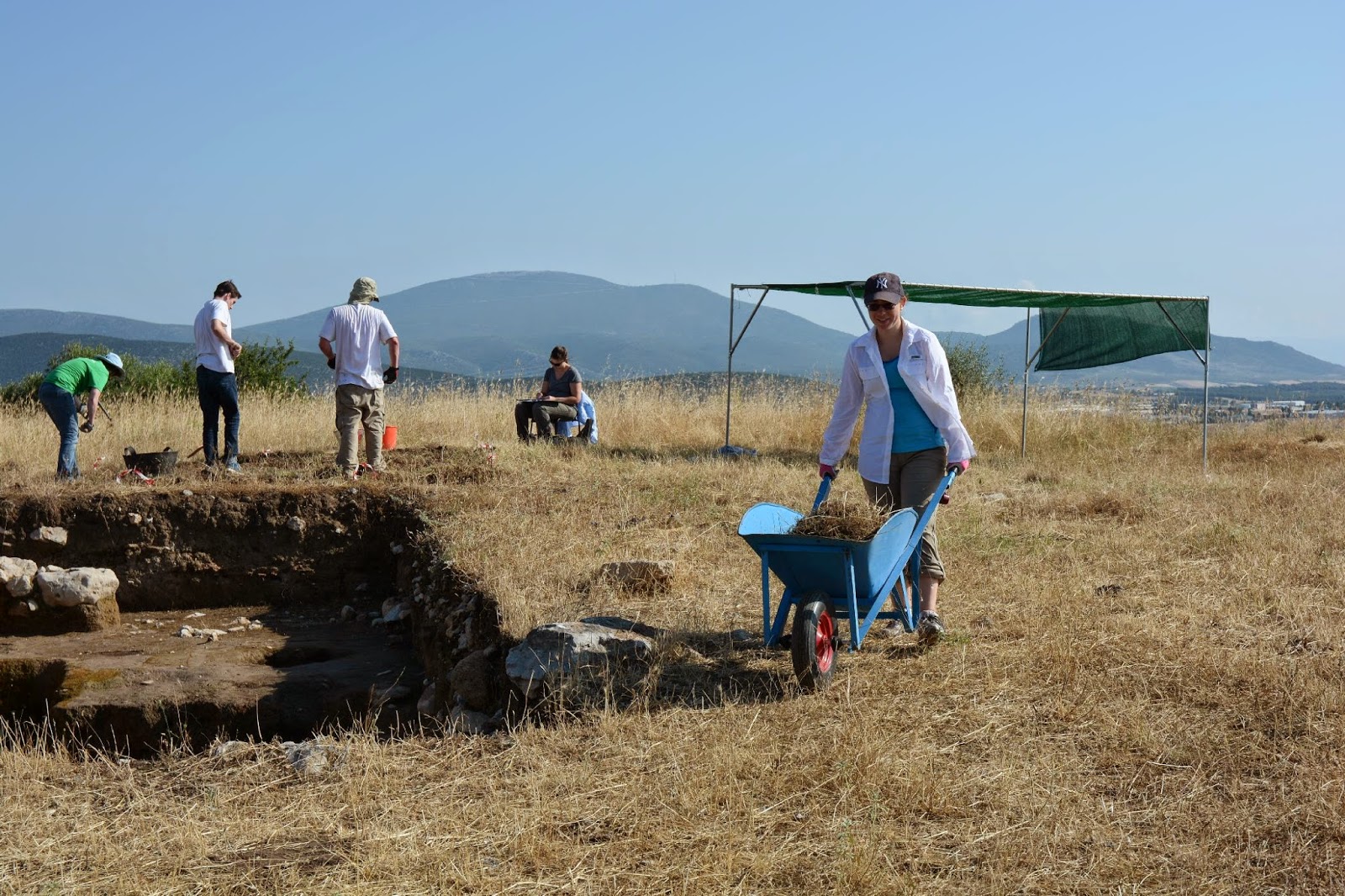
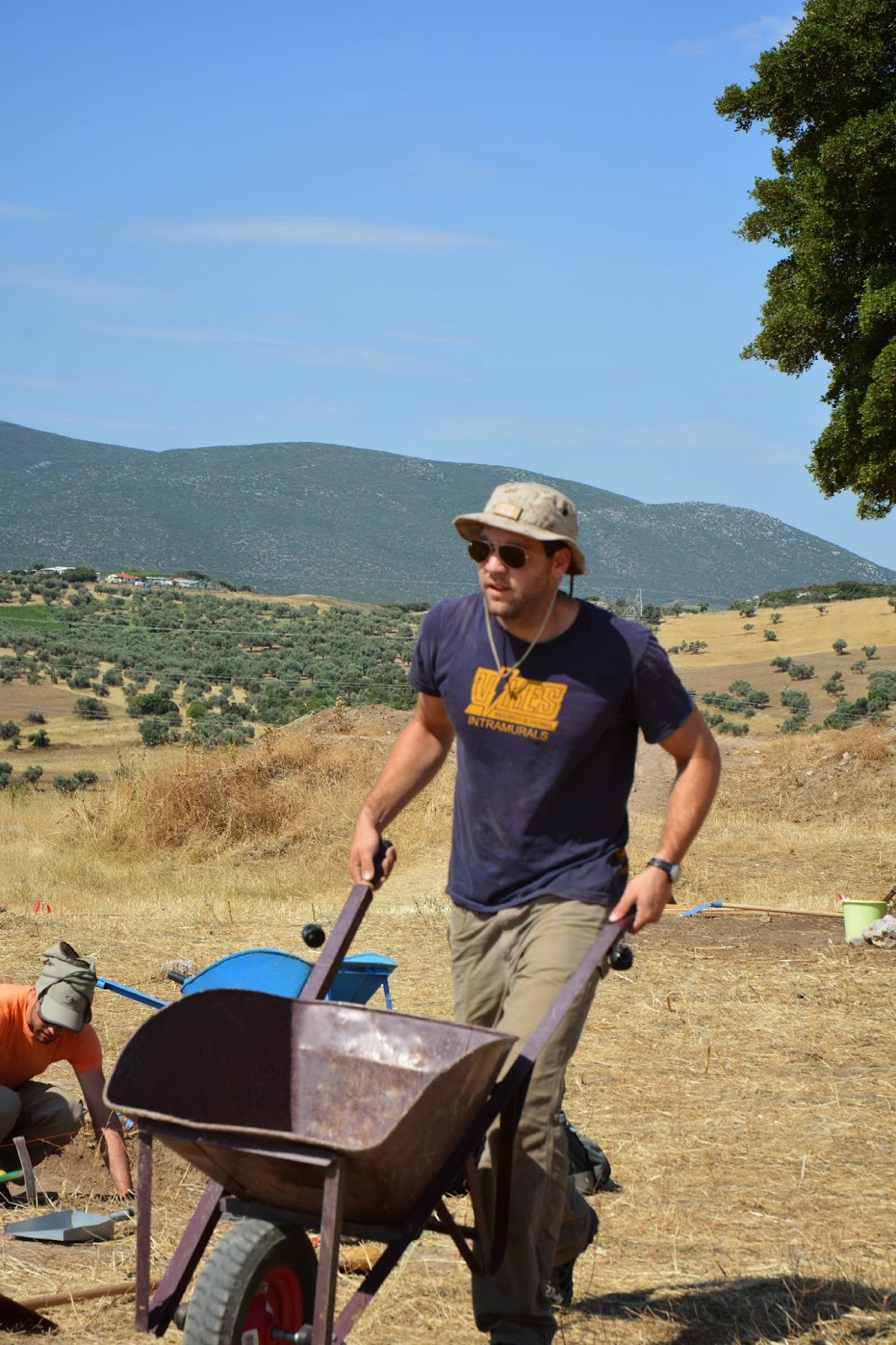
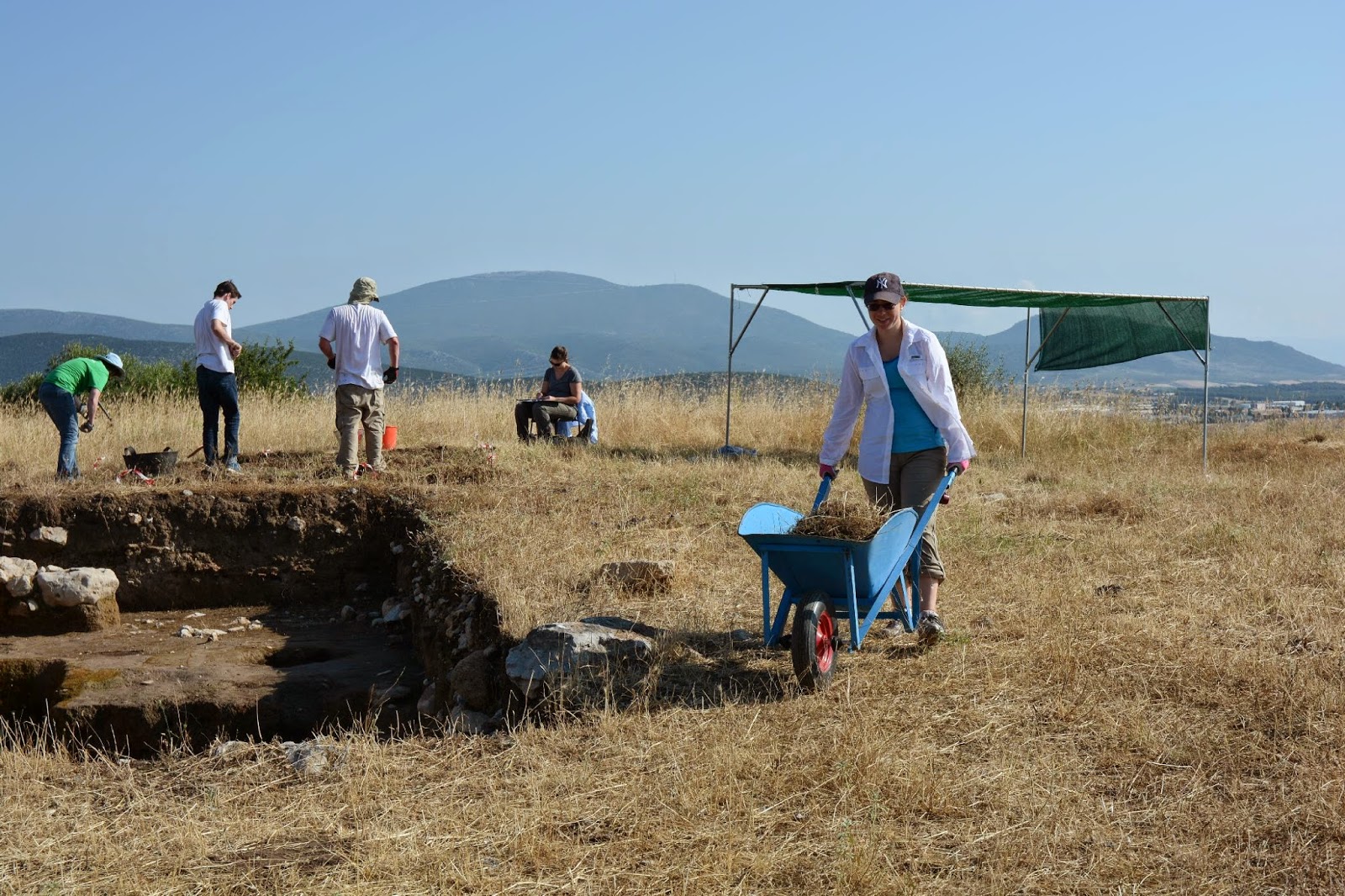
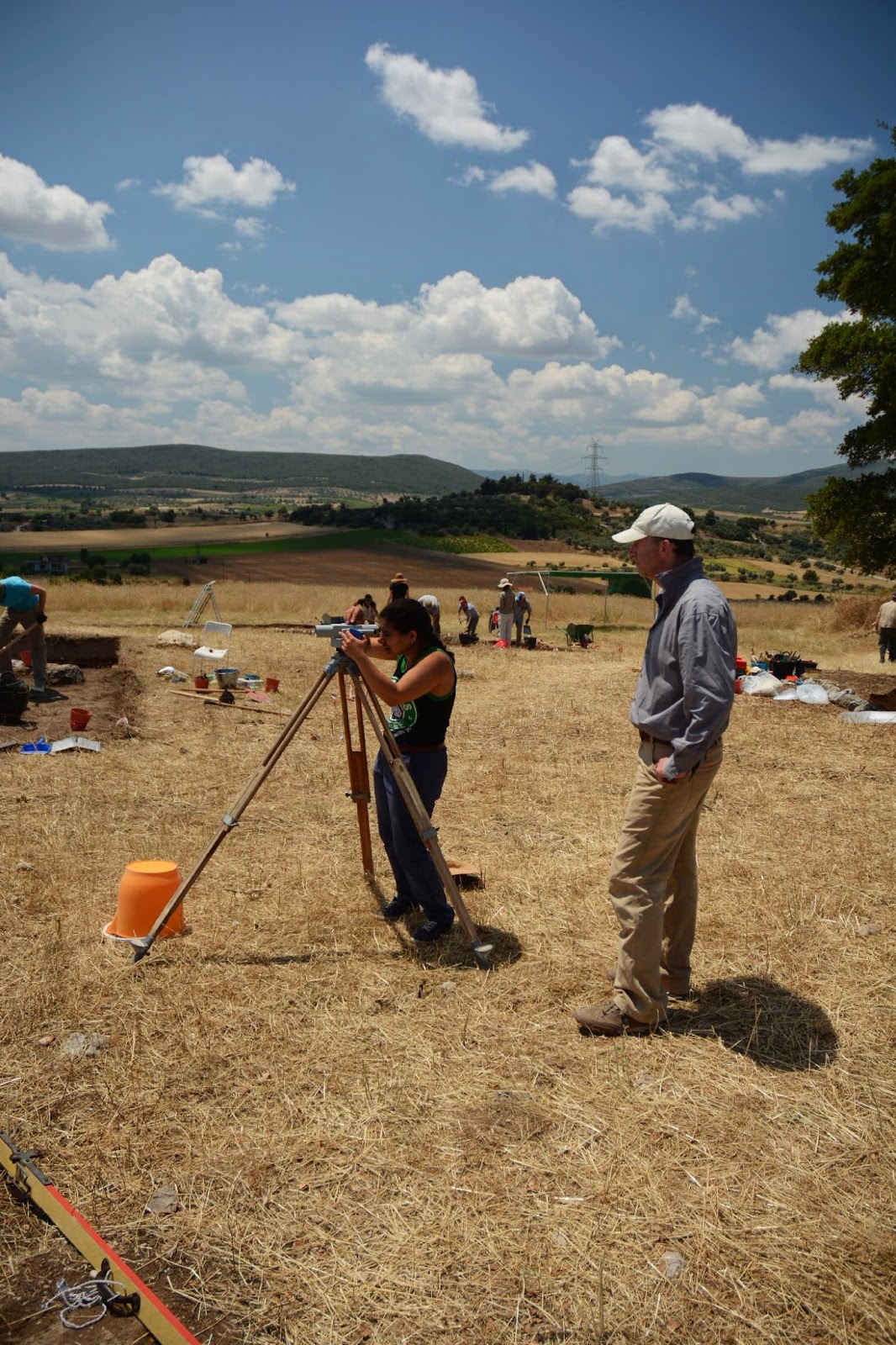
I had seen pictures of the EBAP project from years past so I knew that I would not be running around in underground tunnels, Indiana Jones style, but there were some surprises in store for me as well. While we are working in the 21st Century, methods of dirt removal are very similar to hundreds (or even thousands) of years ago. I have become very close friends with the pick axe and wheel barrow. Typically a trench team will remove a layer of soil by putting two pick axers in front, who loose the soil, and then shovelers will come in behind to remove the loosed soil. If your team is lucky, you also have a designated wheel barrower who will remove the the collected soil to the waste pile. The process repeats until you’ve completed a pass of the entire trench and the team will “clean” the newly exposed surface with trowels, brushes, and dust pans. The trowel, a very simple tool, is actually an archaeologists best friend and is incredibly handy for levelling surfaces, cleaning crevices, and making straight lines.
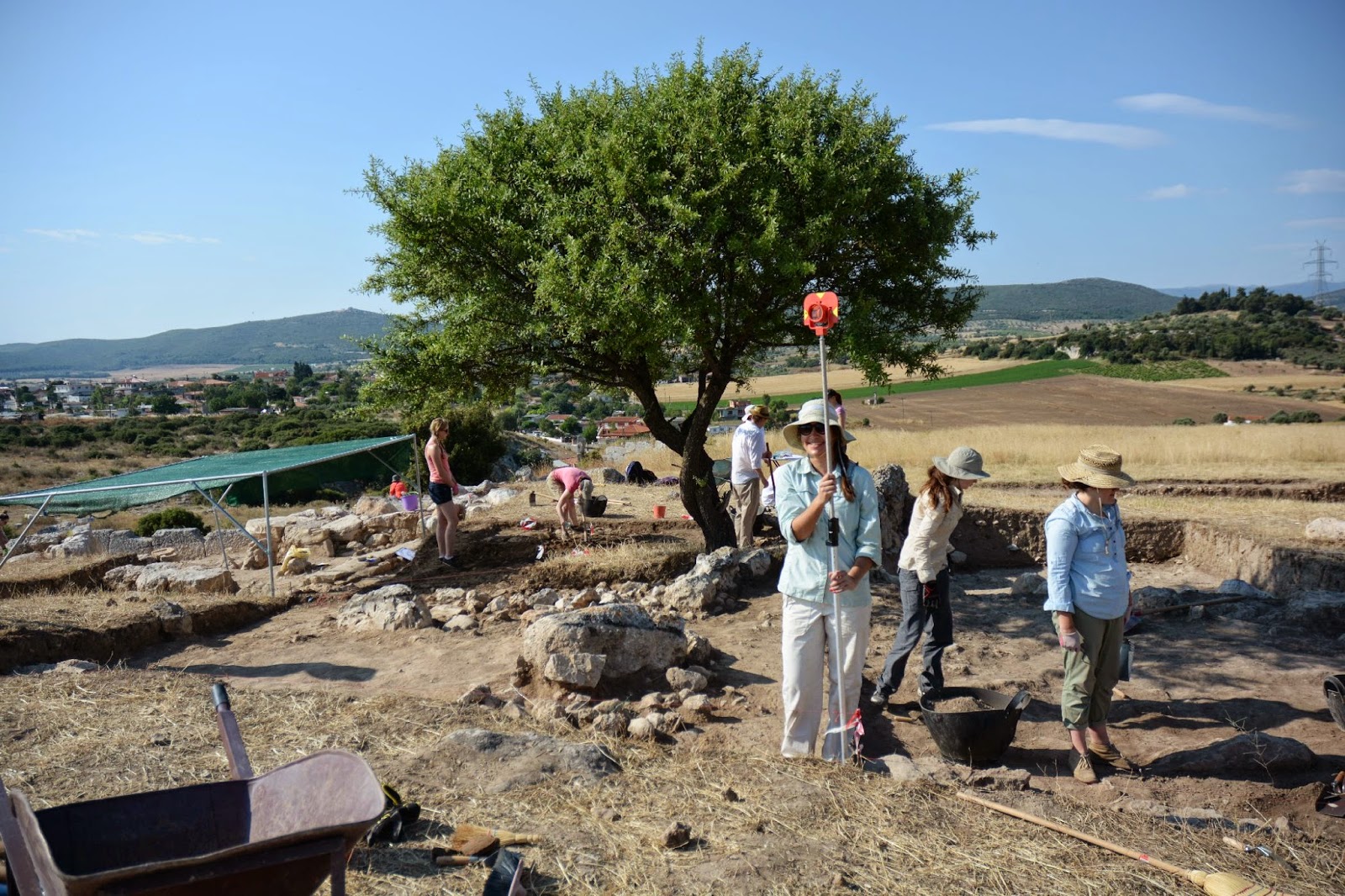
As you can see, the bulk of the labour intensive work is done without the aid of technology. We do have several important pieces of high-tech equipment, such as the total station, which we use to record the changing levels of the trenches as we dig lower and lower. Cameras are of course also used to document progress in each trench. There is always talk of inventing some new technology that would help us greatly in the process of soil removal, such as a “dirt vacuum” that would separate dirt from pottery pieces while also getting rid of unwanted loosed dirt. Any entrepreneurs reading this should take note; it’s a million dollar idea.
There are many other aspects of an archaeology dig that differ from what one would expect but to list them all would ruin the surprise for any potential diggers. It’s only been two and a half weeks but I can assure anyone who is considering on going on an archaeology dig that it will be one of the best experiences of their life. I expected coming into this that I would have a great time and I’m happy to say that the dig has completely followed through on that; no misconceptions there.
 

Afternoons in Dilesi

This week we started our new work schedule. Because of the greater morning light and hotter afternoon temperatures, we now leave for the site at 6 am from Dilesi. The drive is about 25 minutes so work is underway by 6:30. No one really complained about this change. We work until first break at 9:30 (eggs, fresh bread, good cheese, and cherries), then work until 11:30, when we have ‘nut break’, and then until 1/1:15.  Lunch follows in Arma – which is always delicious at Stavroula’s. Then home for a break/siesta/swim, like much of Greece, especially in the summer.
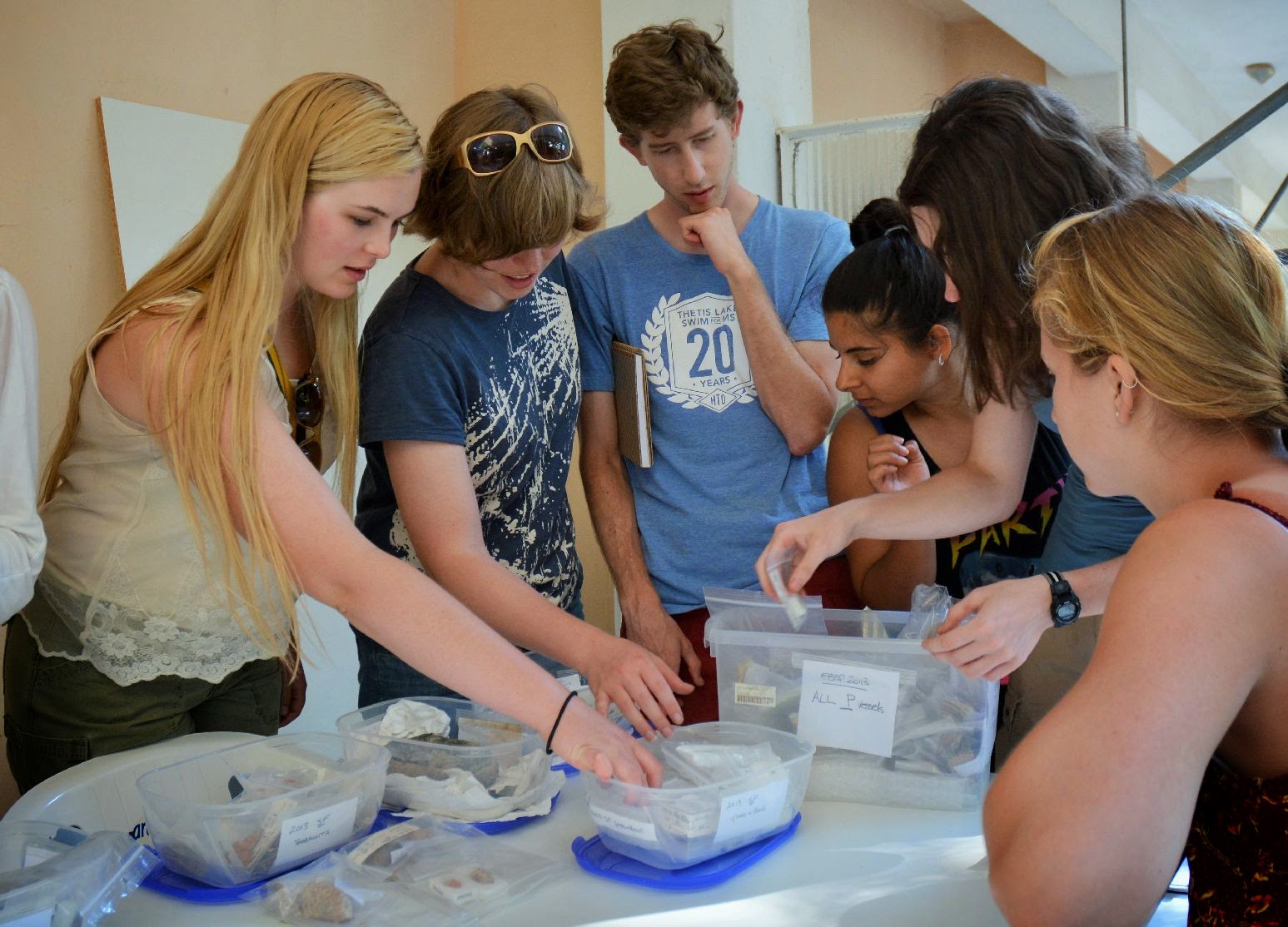
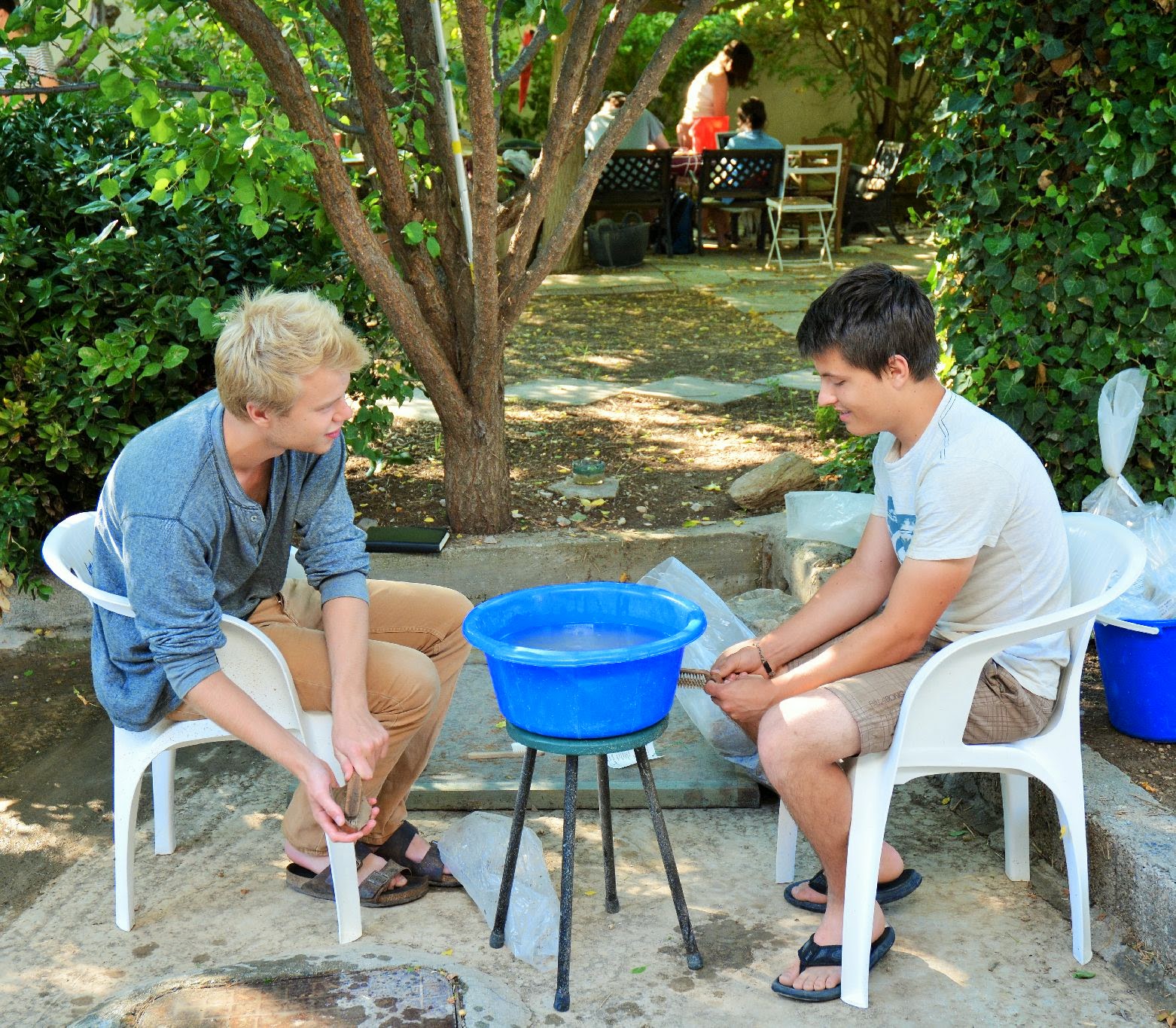
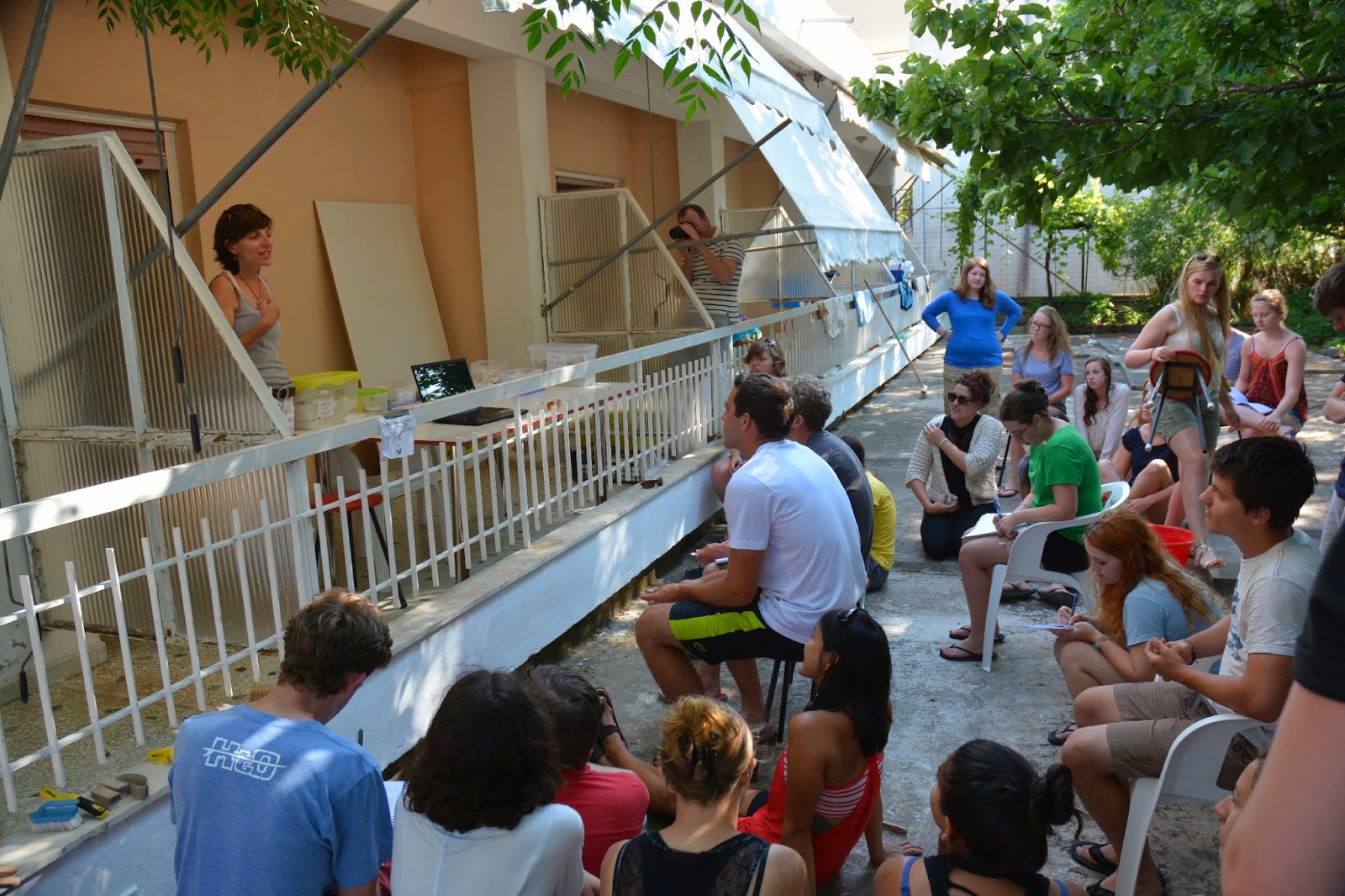
What do we do in the afternoons? Mostly, wash pottery!
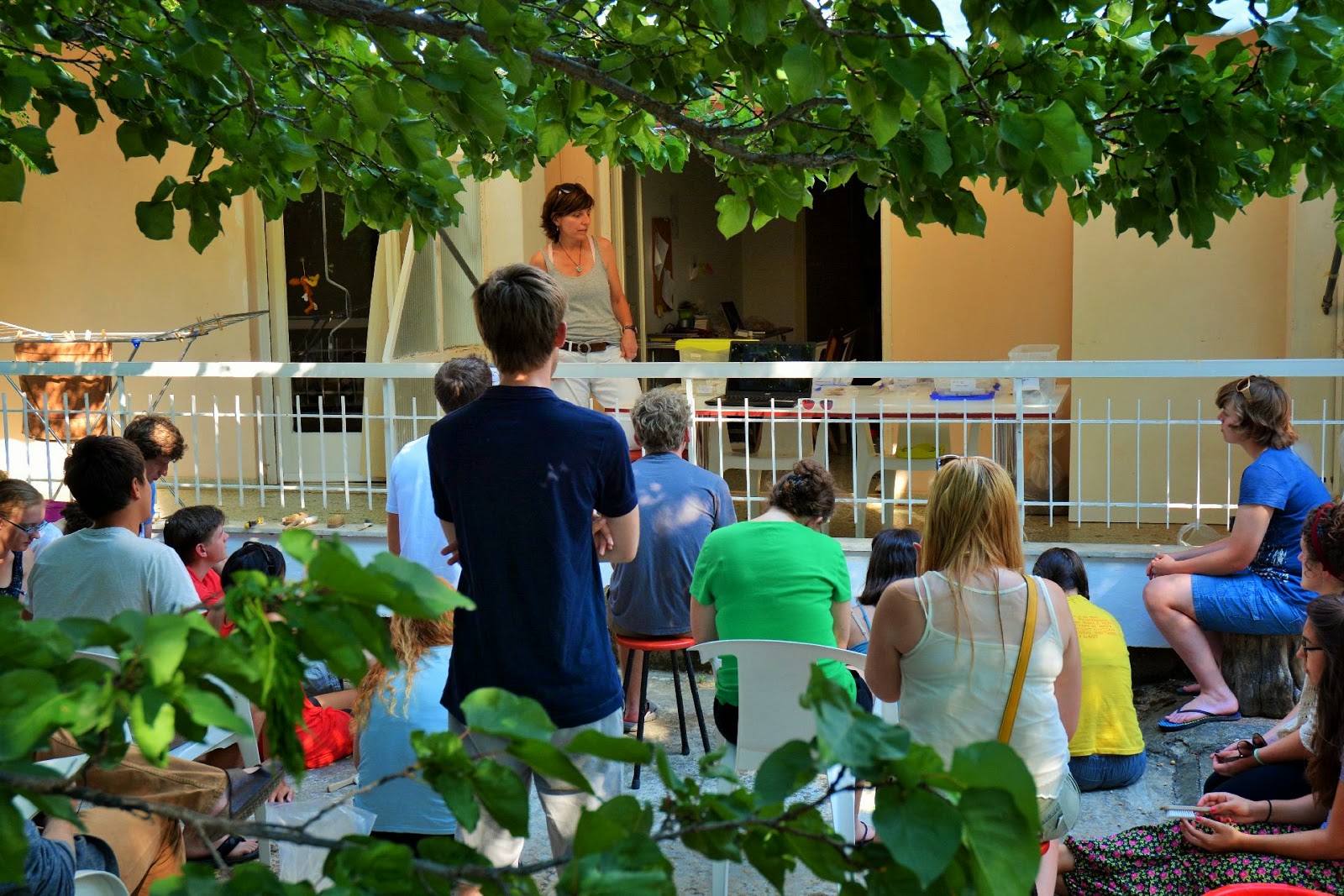
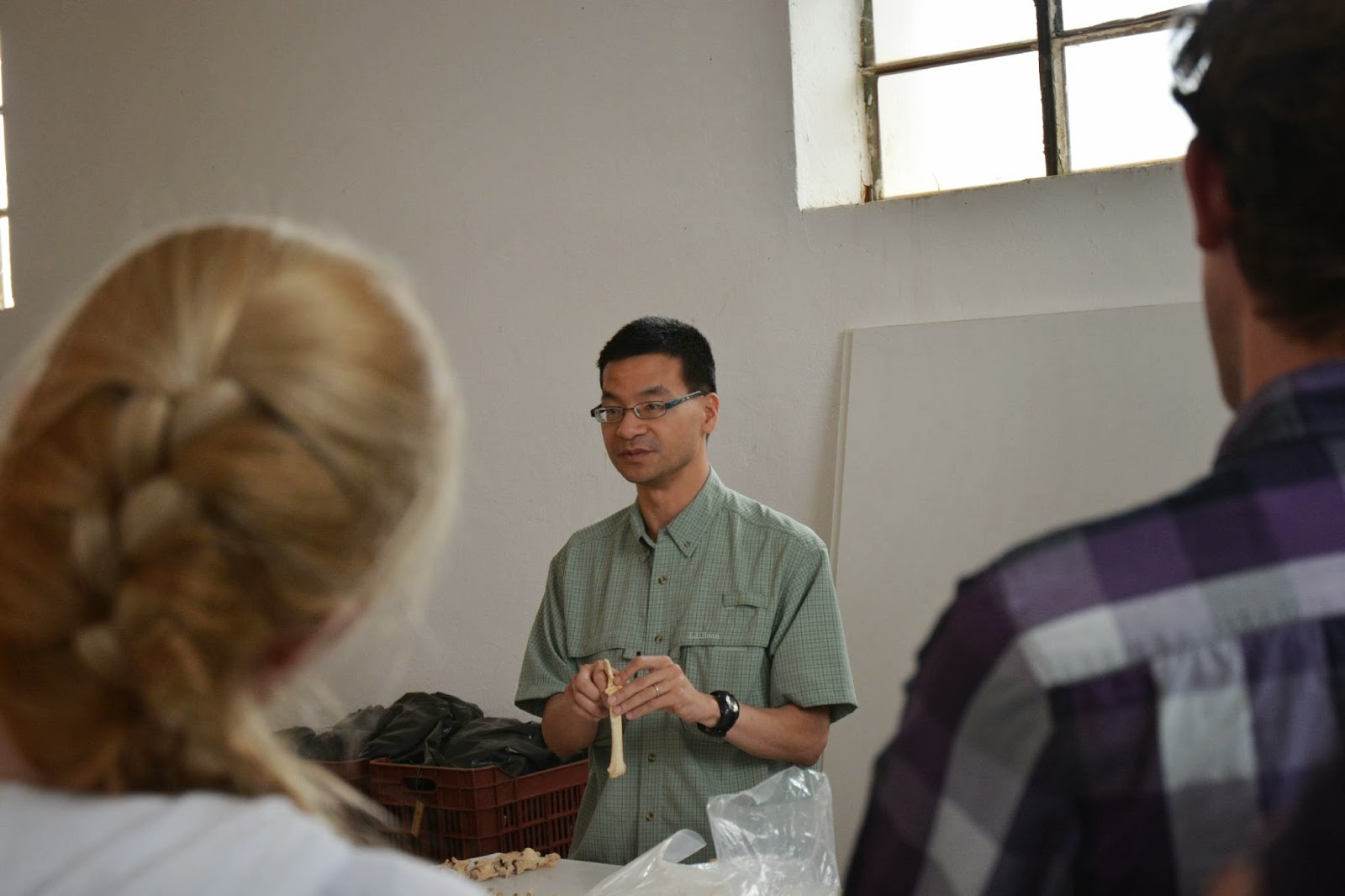
Today, however, before pot washing, Vicky Karas gave a short lecture on conservation which was very informative. Many students are very interested in this aspect of archaeology, where expert conservators try to stop the degradation of our archaeological finds after they are removed from the ground. Vicky has contributed a lot to our project by helping diggers and supervisors work on conservation from the minute an object is excavated, to its study, and then its eventual storage.
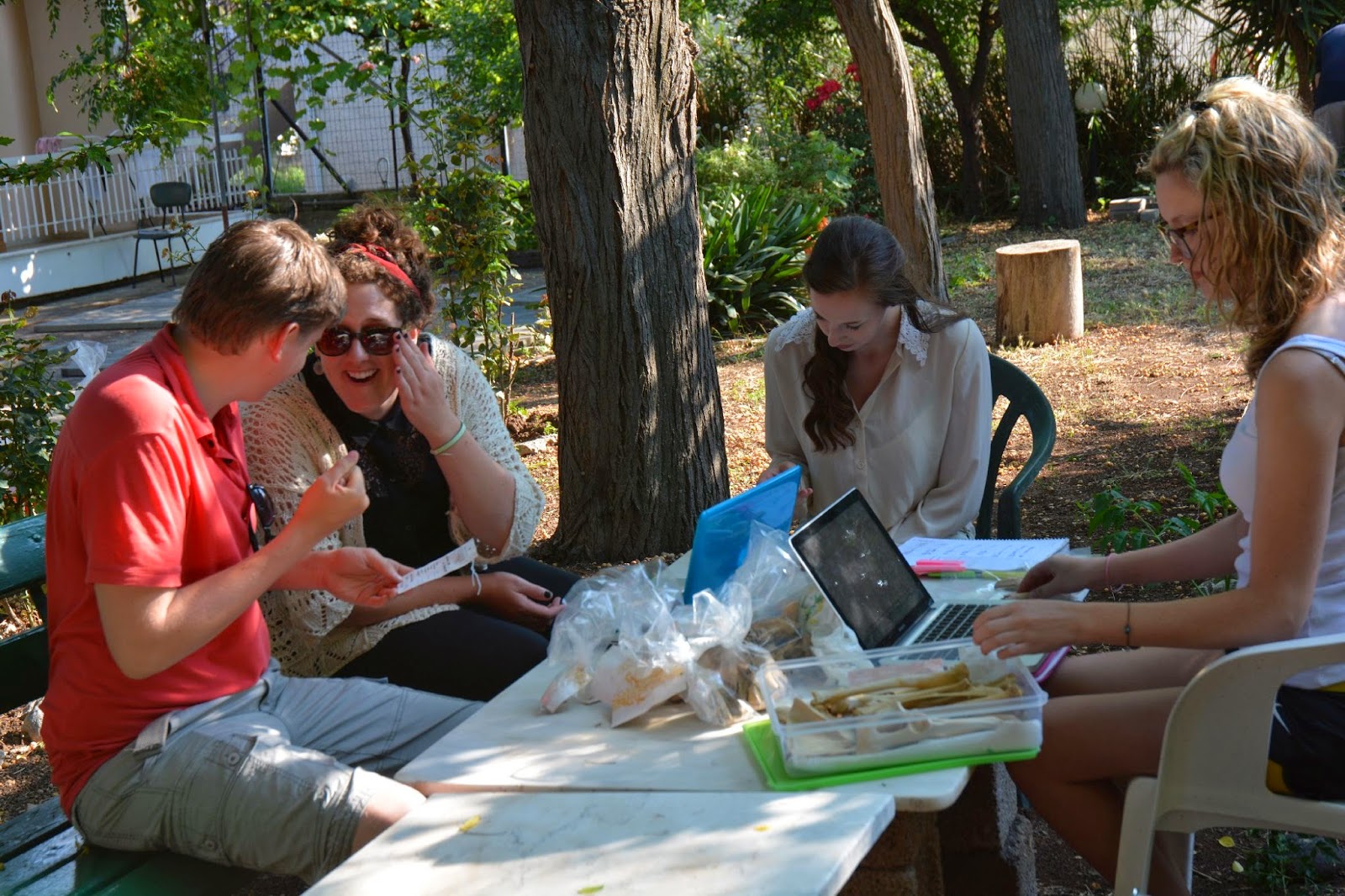
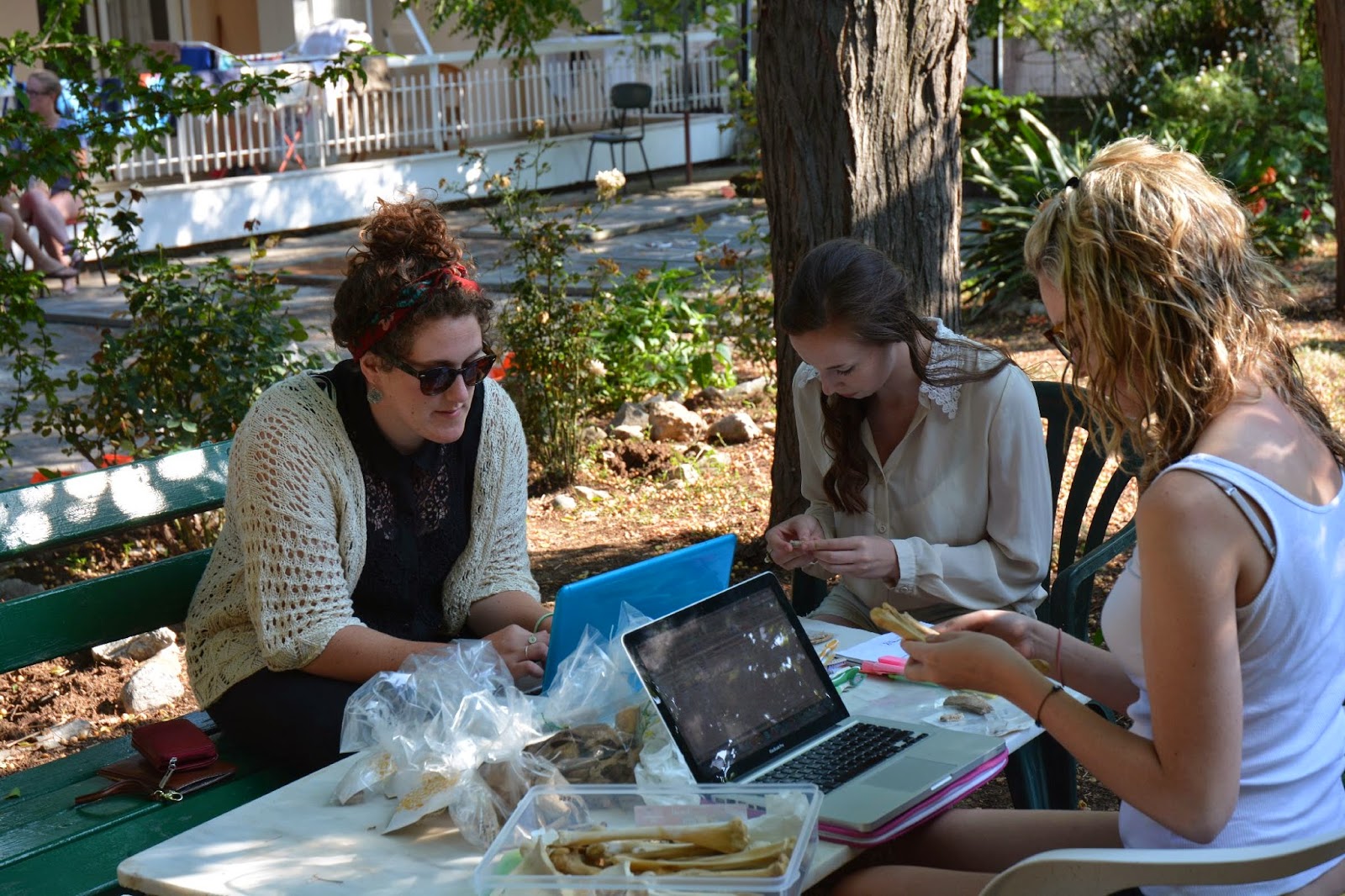
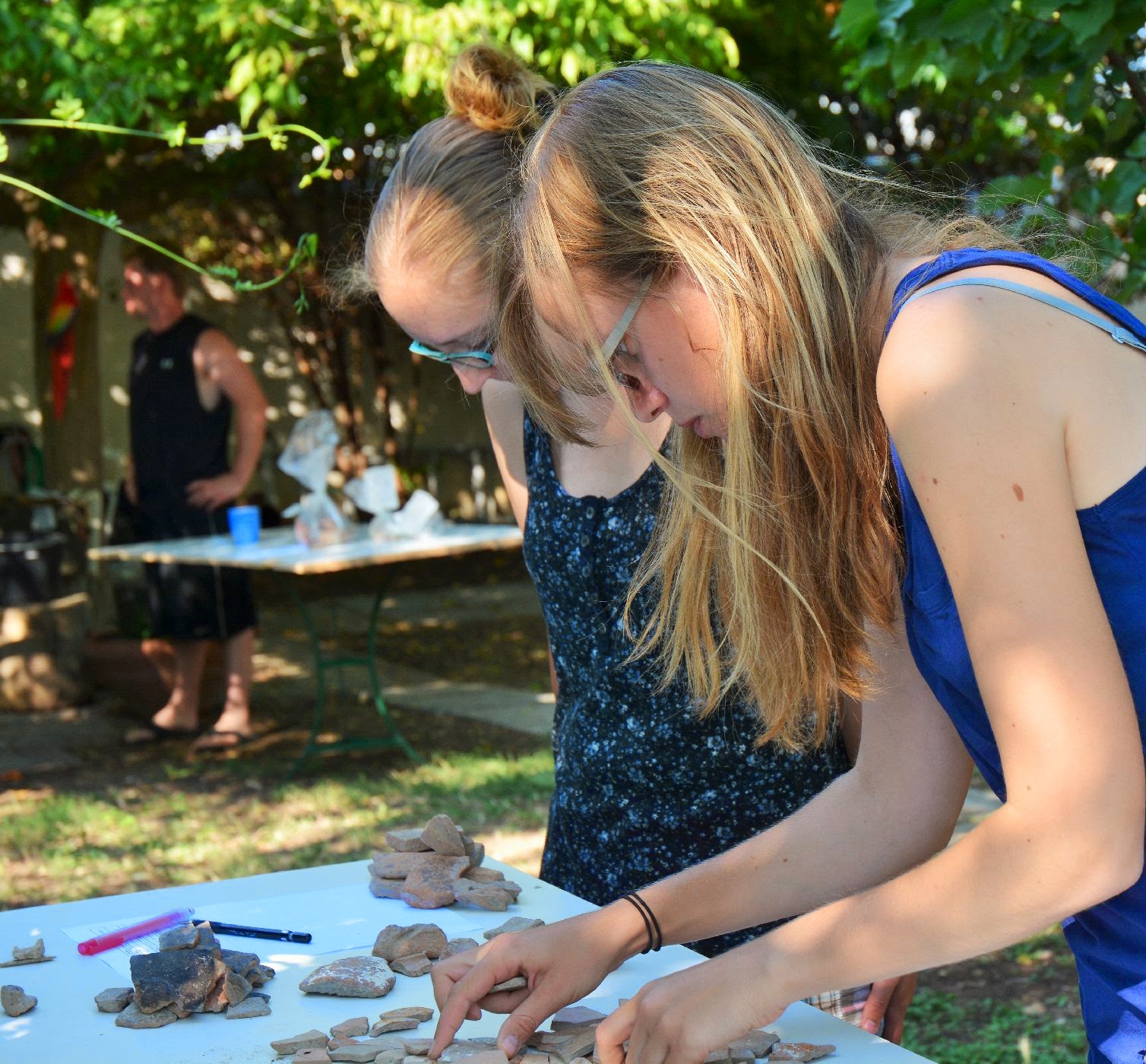
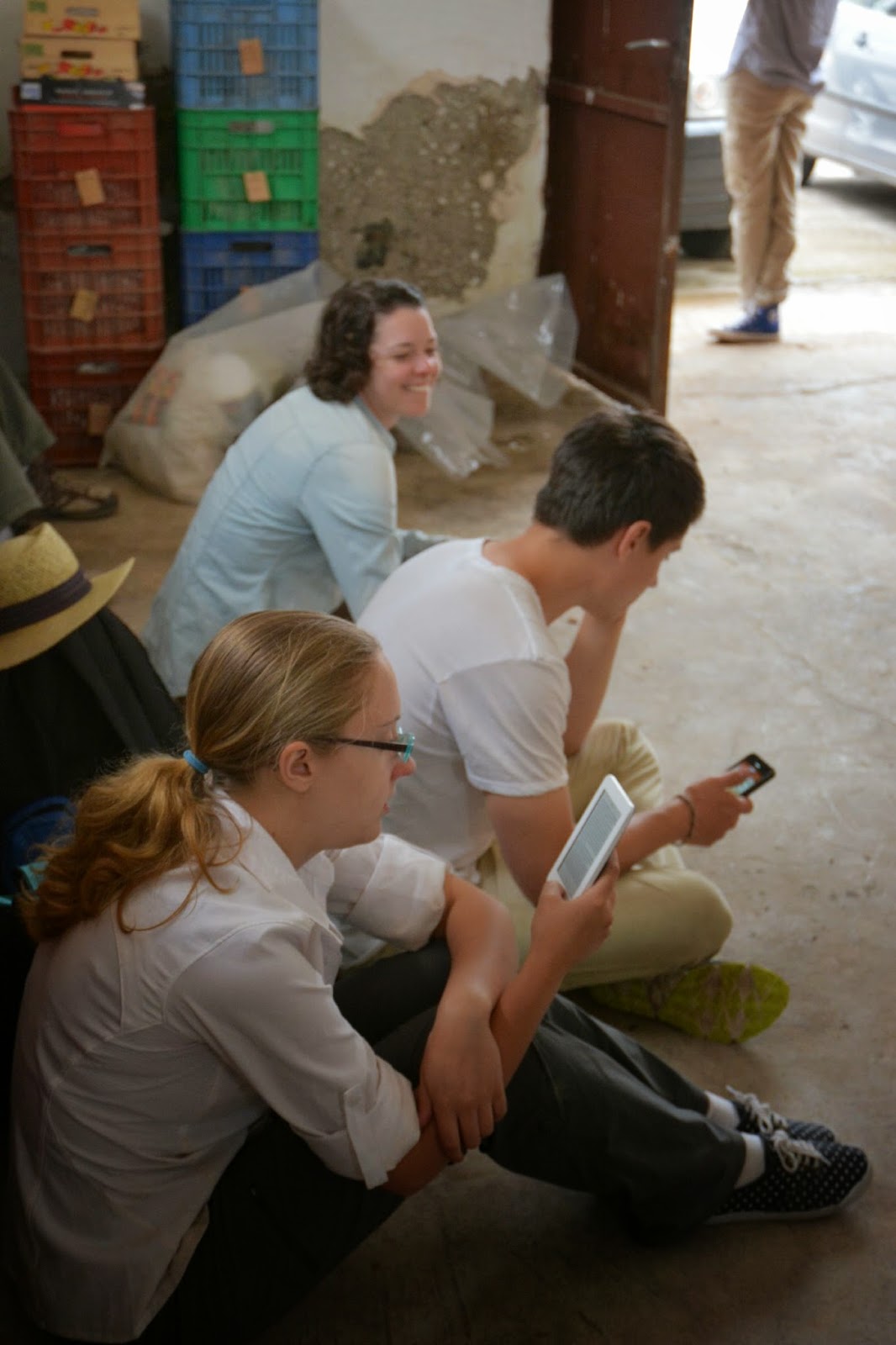
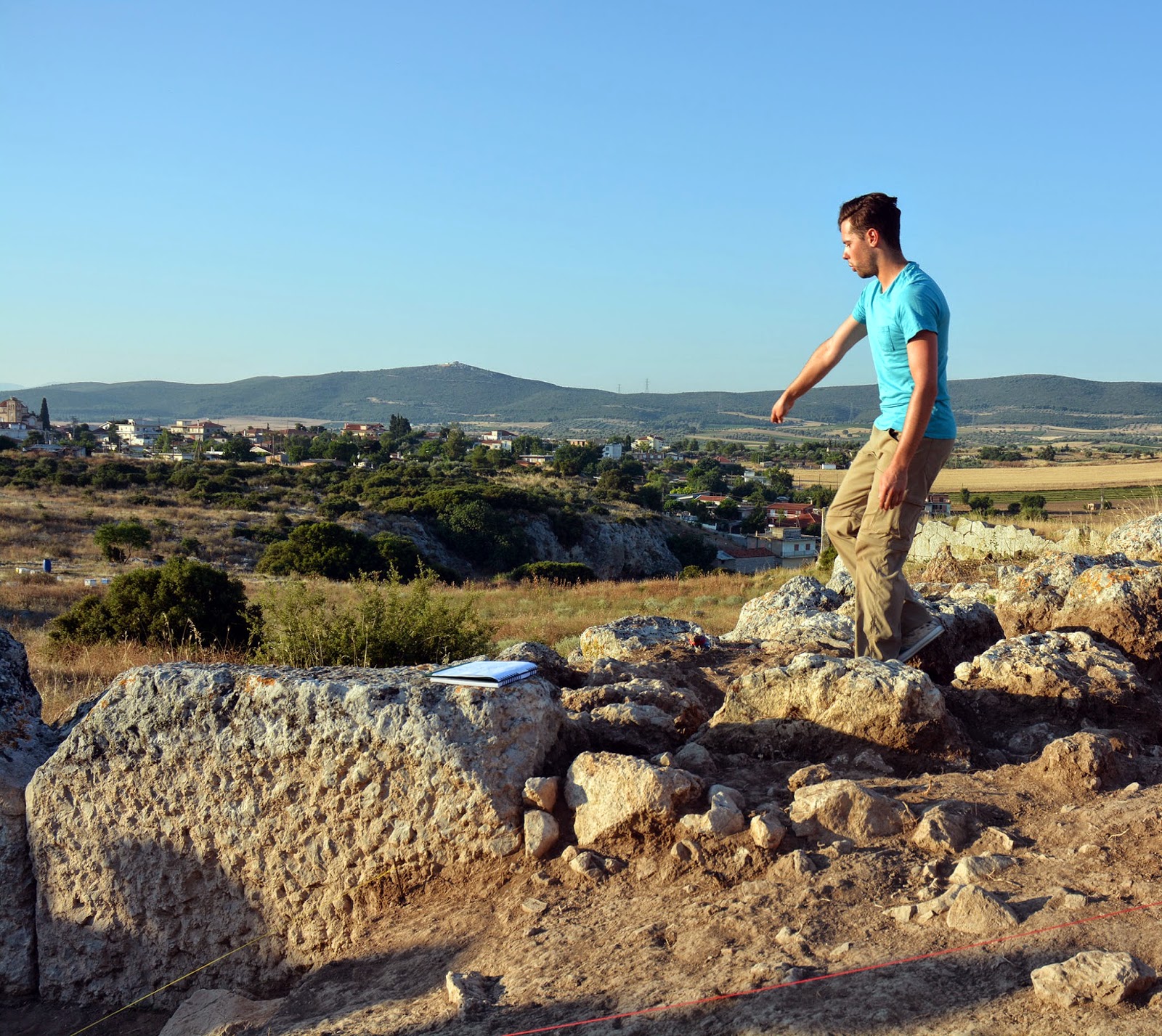
Our students work at a kind of conservation by washing all the pottery and bones that come in each day. With a large team like we have there is the potential for chaos but for the most part things go very well. The supervisors work on their notebooks and process their pottery finds – weighing, counting, sorting. Students help with this too.We work from 5-7 usually, and then have a short break for drinks, showers, email before dinner at 8.  Above are some photos of today’s afternoon work session. 

End of week two

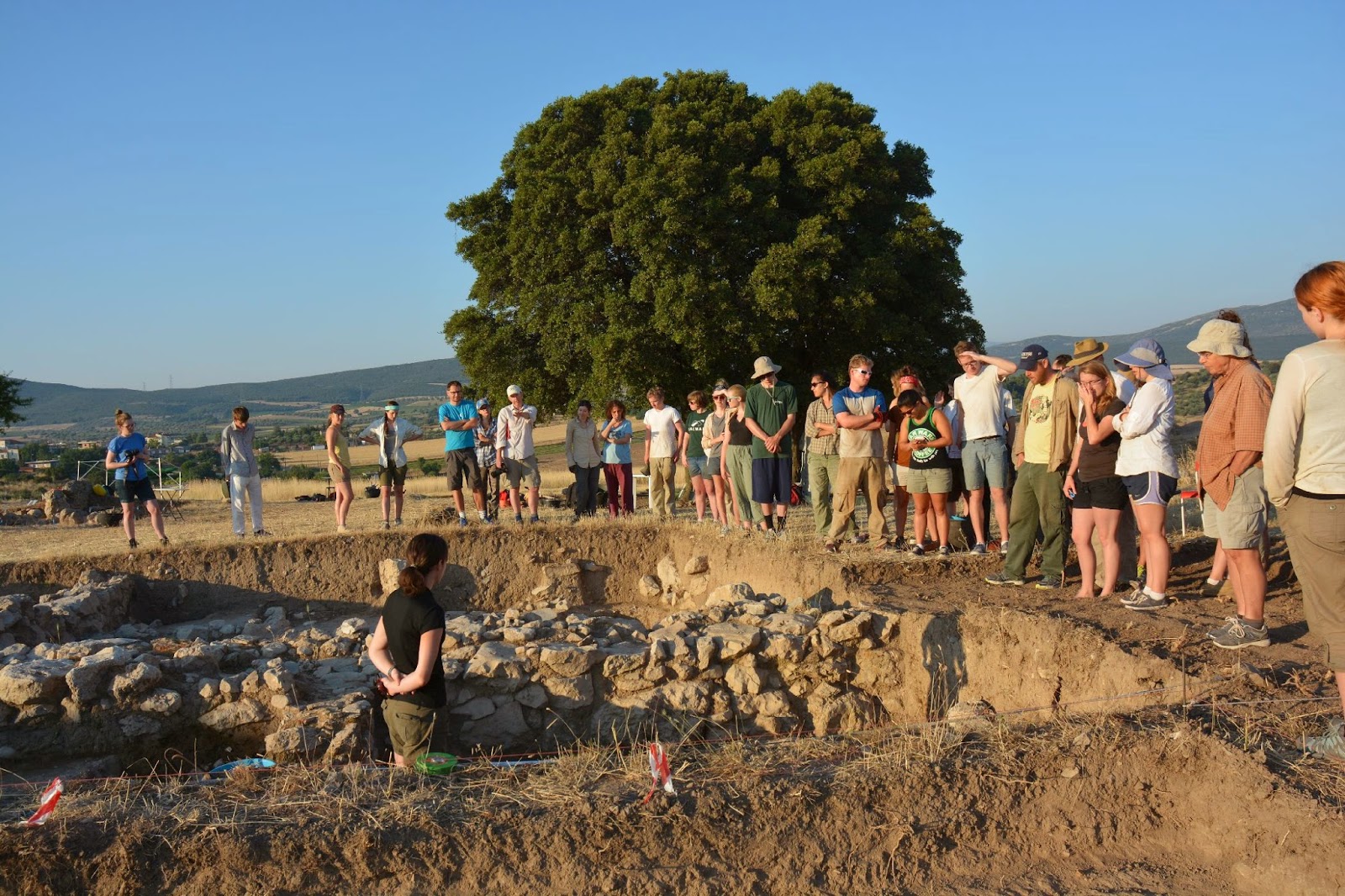
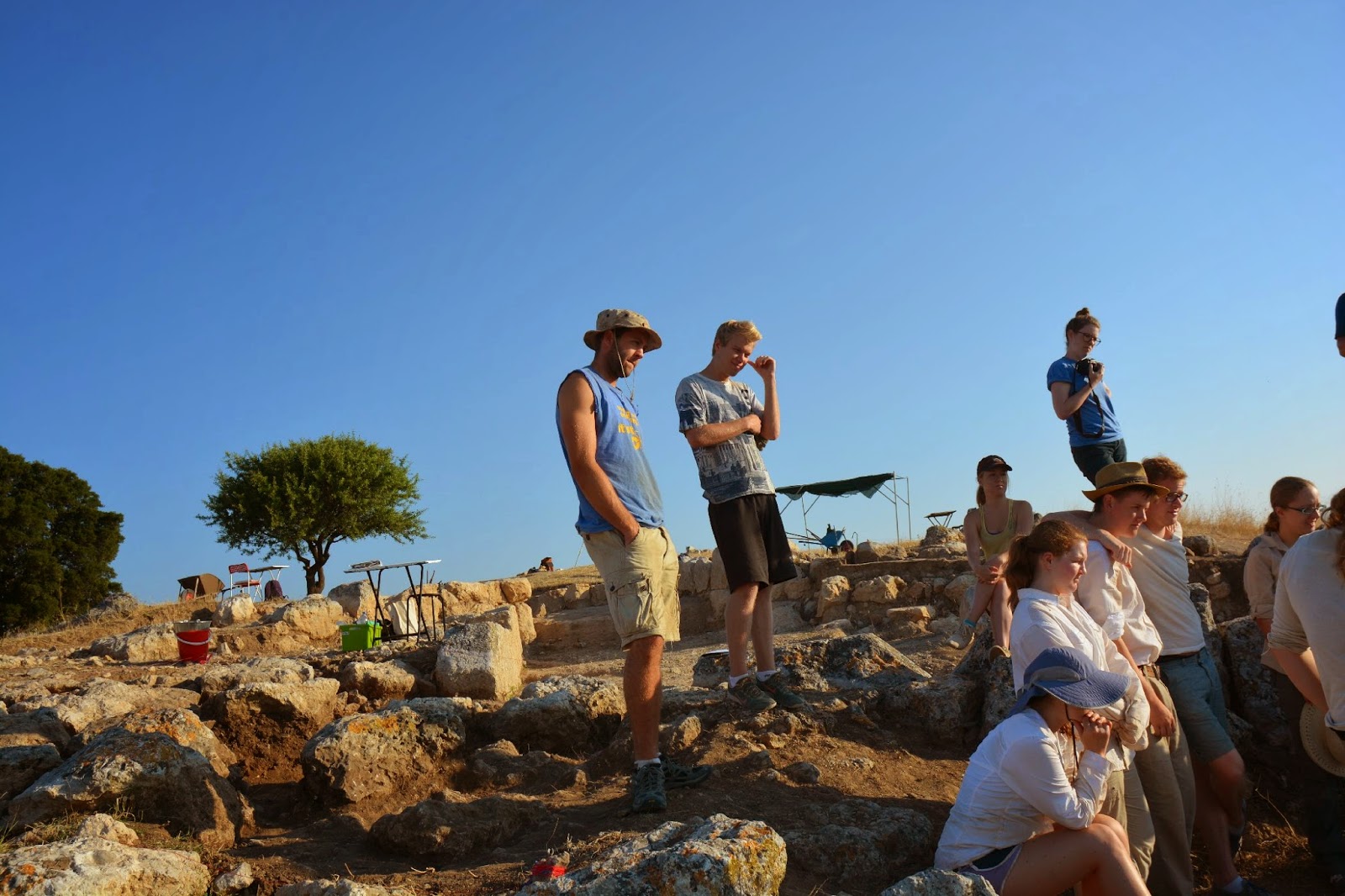
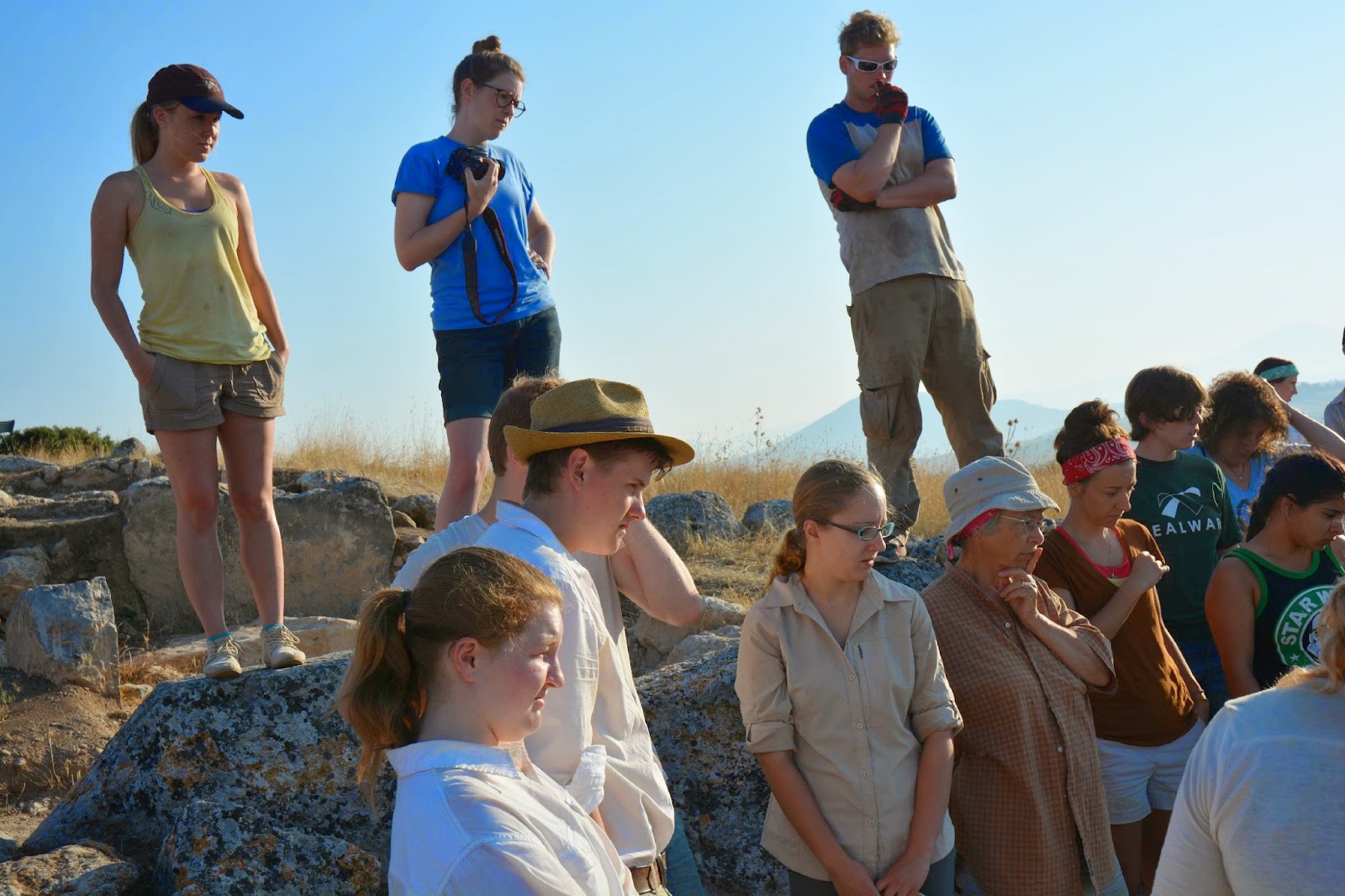
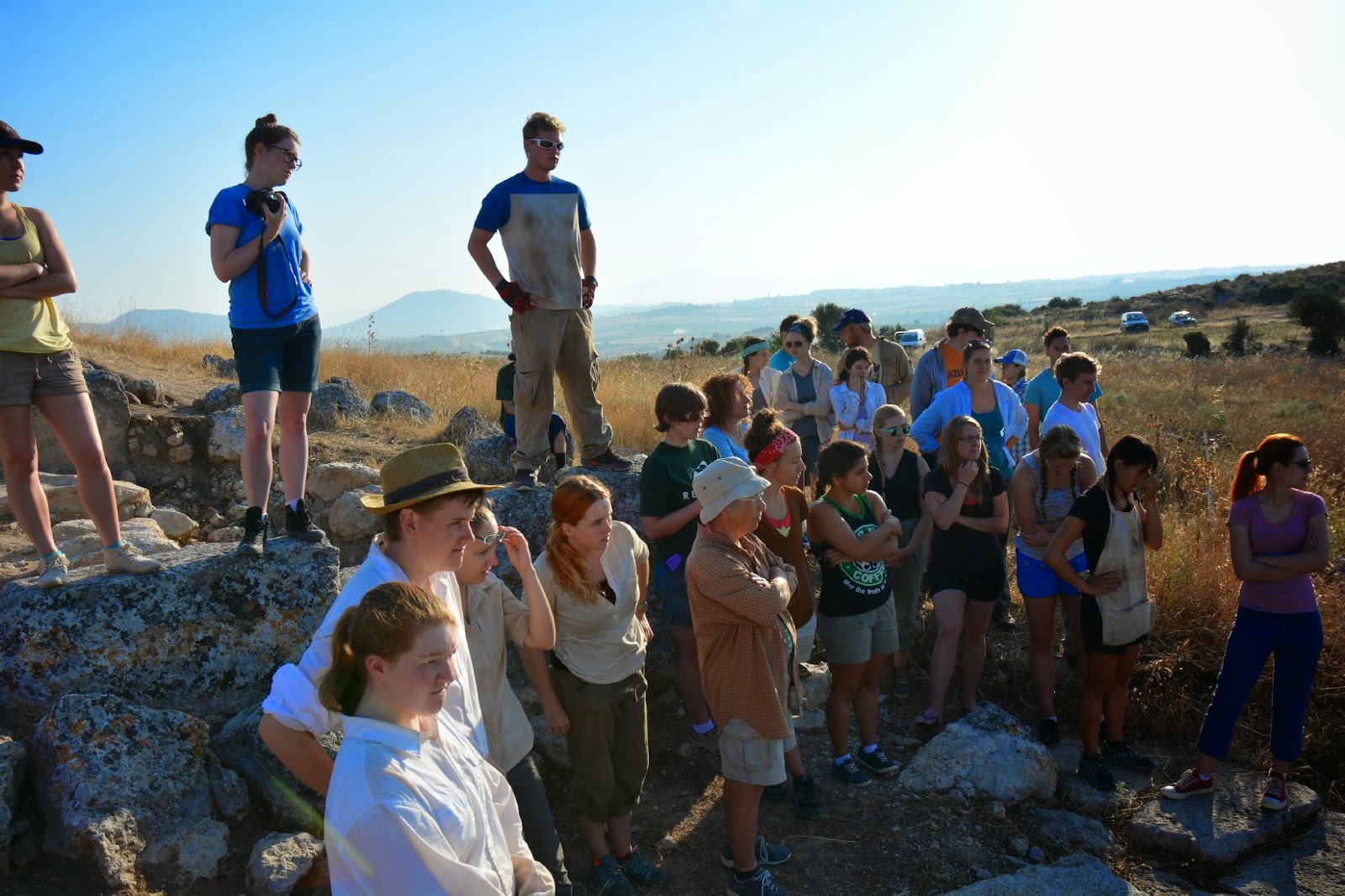
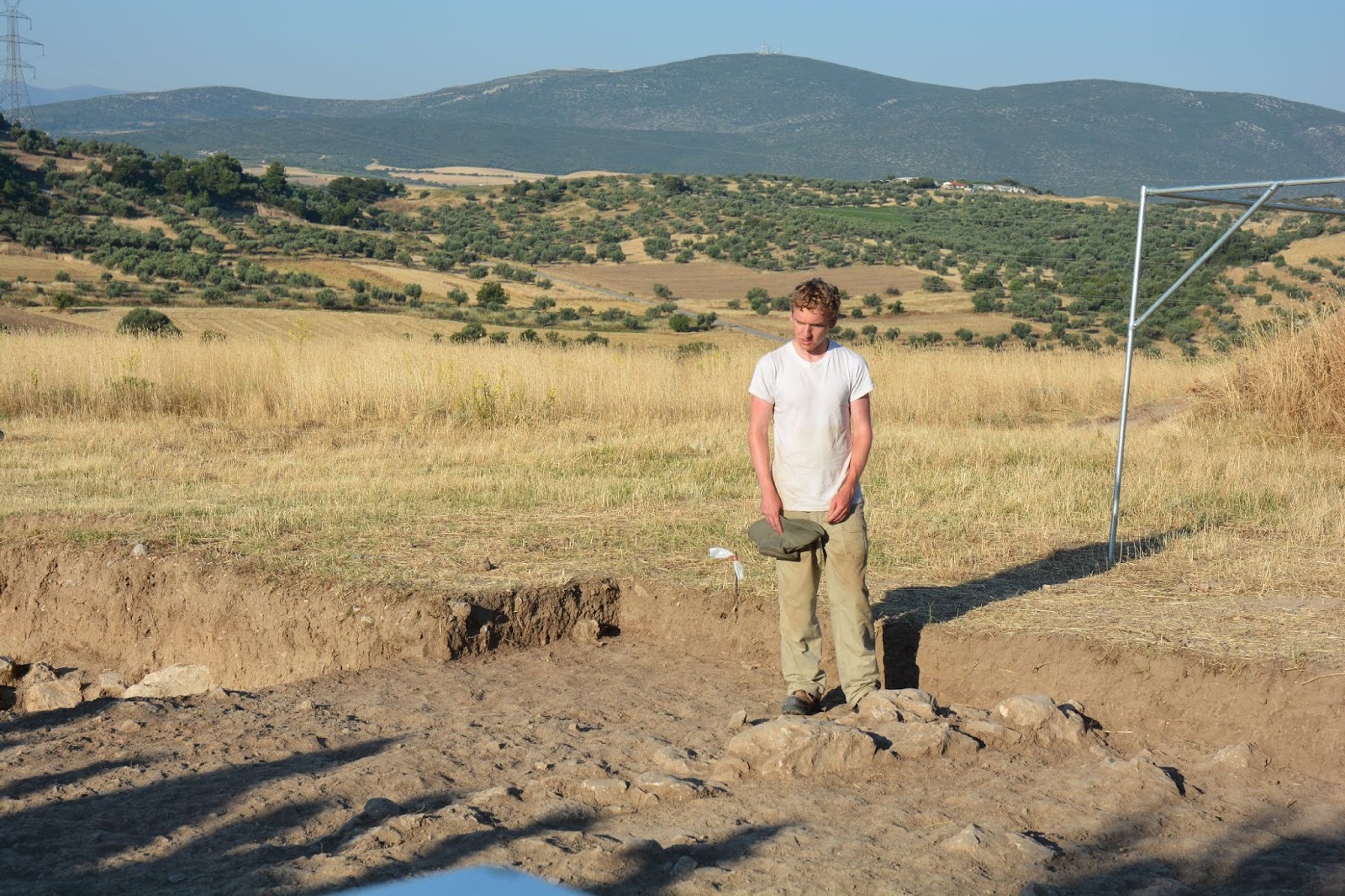
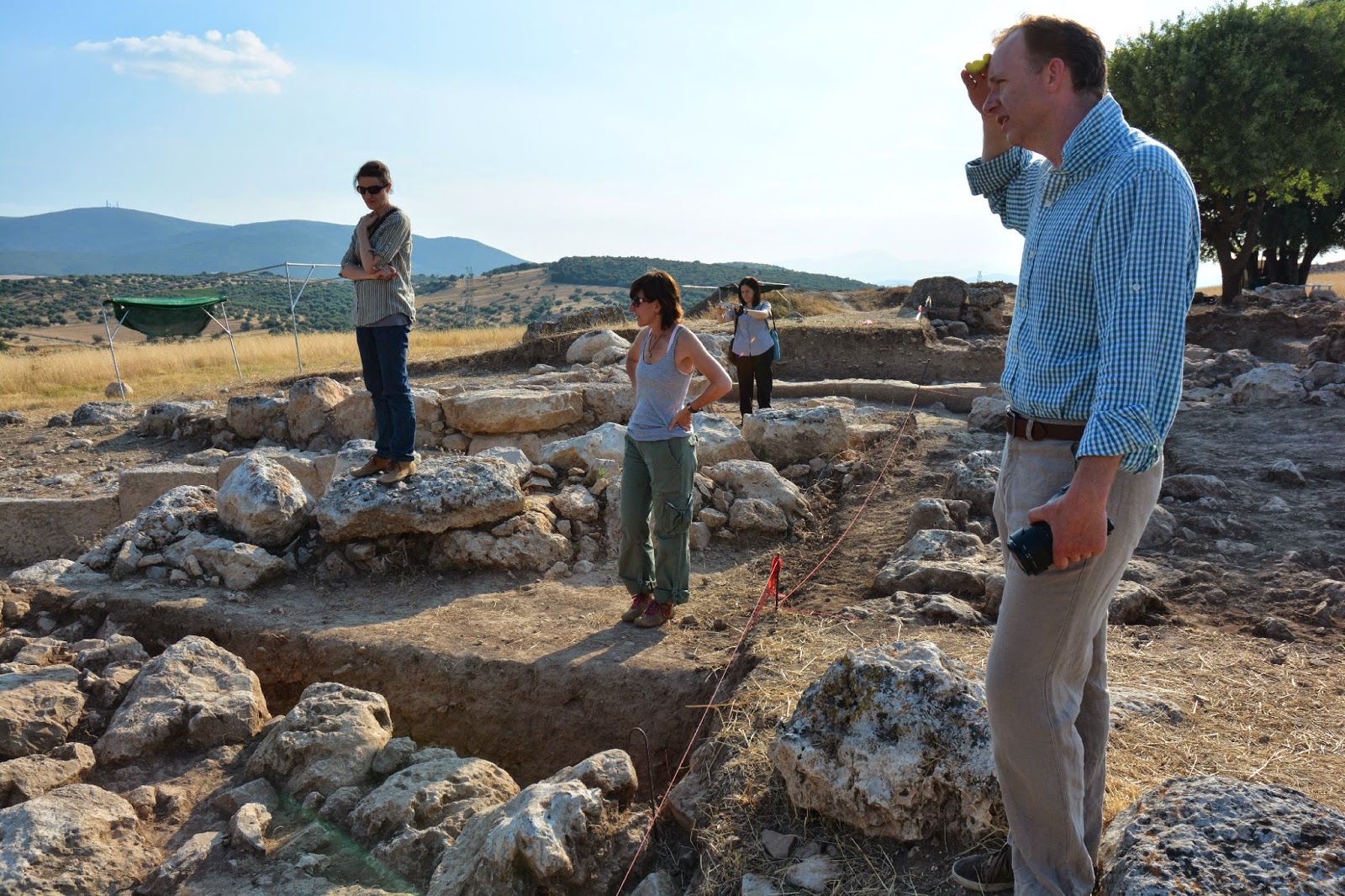
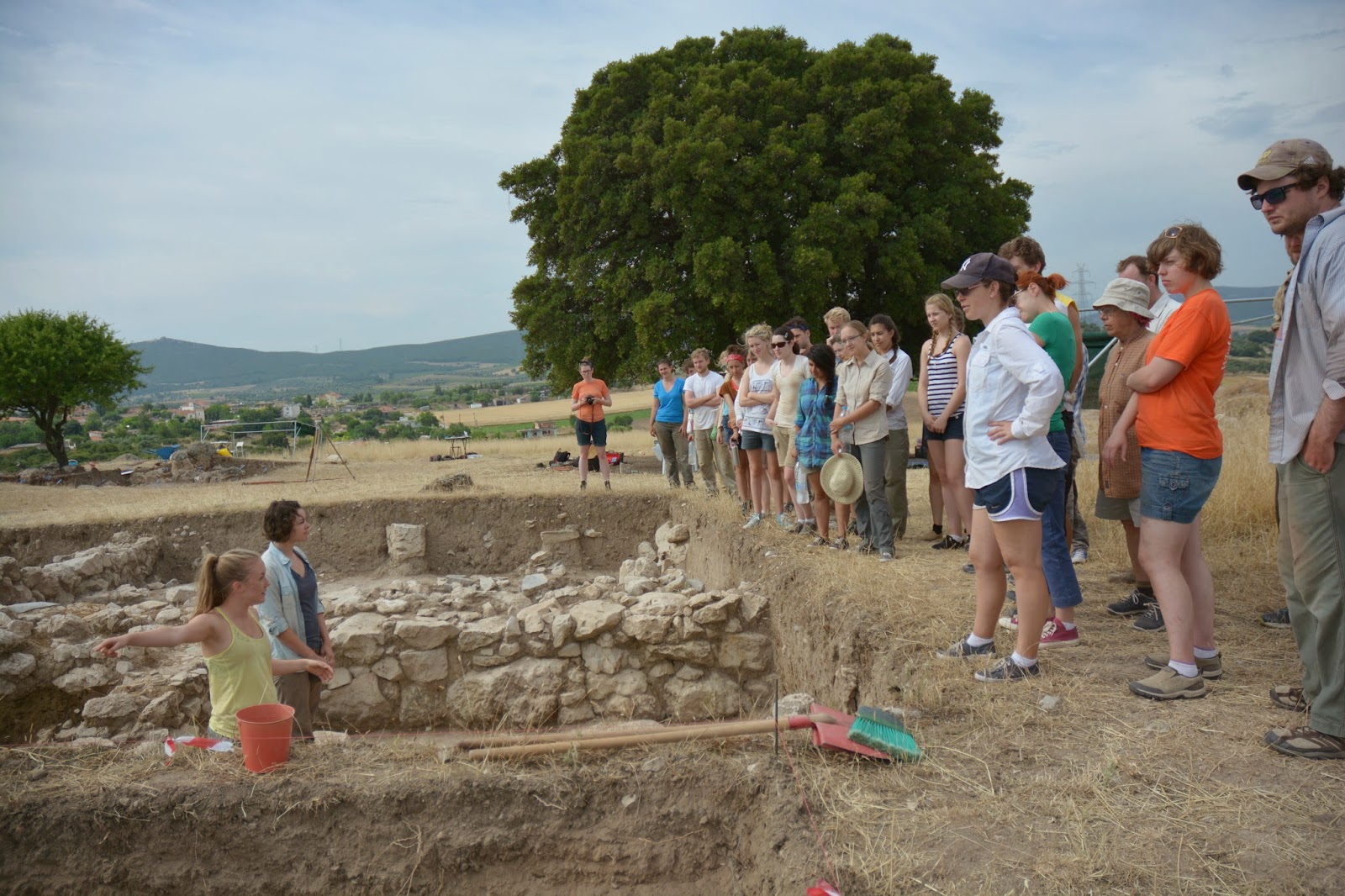
Week two ended with our team reaching nearly its full complement. We concluded the work week with trench tours delivered by many of our students and site supervisors and a great discussion of the large polygonal wall construction. Periodically we ask students, supervisors, and researchers to give short presentations on their work, describing what has been happening in their trenches and the various problems (and solutions)they have been facing. Alyssa Allen, Steven Mooney, Lorna McVey, Kyle Mahoney, Tom Brown, Arianna Nagle, Cody Anderson, and Professor Ben Marsh all gave very informative talks on their work. 
The week concluded with a great party in honor of four students who graduated from UVic this semester. Because of UVic’s schedule and our project’s, the students were not able to attend the formal graduation ceremony in Victoria. Hosted by Haley Bertram, Ally Walsh, and Janelle Sadarananda, the sea-side view apartment party was a great event. People brought snacks, pizza, and drinks.The graduates are Sara (Sara) Daruvala, Sam Bartlett, Robyn Cunningham-Dunlop, and Honor Neve. We are very grateful that they chose to participate in the excavation and hope that they remember this graduation event for a long time. I know it probably wasn’t the kind of experience the students or their parents might have imagined when they started university, but I hope it foretells a life of continuous experiential learning opportunities – the mark of a very good university education.  
Sunday afternoon has been spent resting and recovering. A rather strong rain storm in the afternoon was a bit daunting, but the forecast for the week is for a sunny, and very hot week three. 

Friday the 13th!
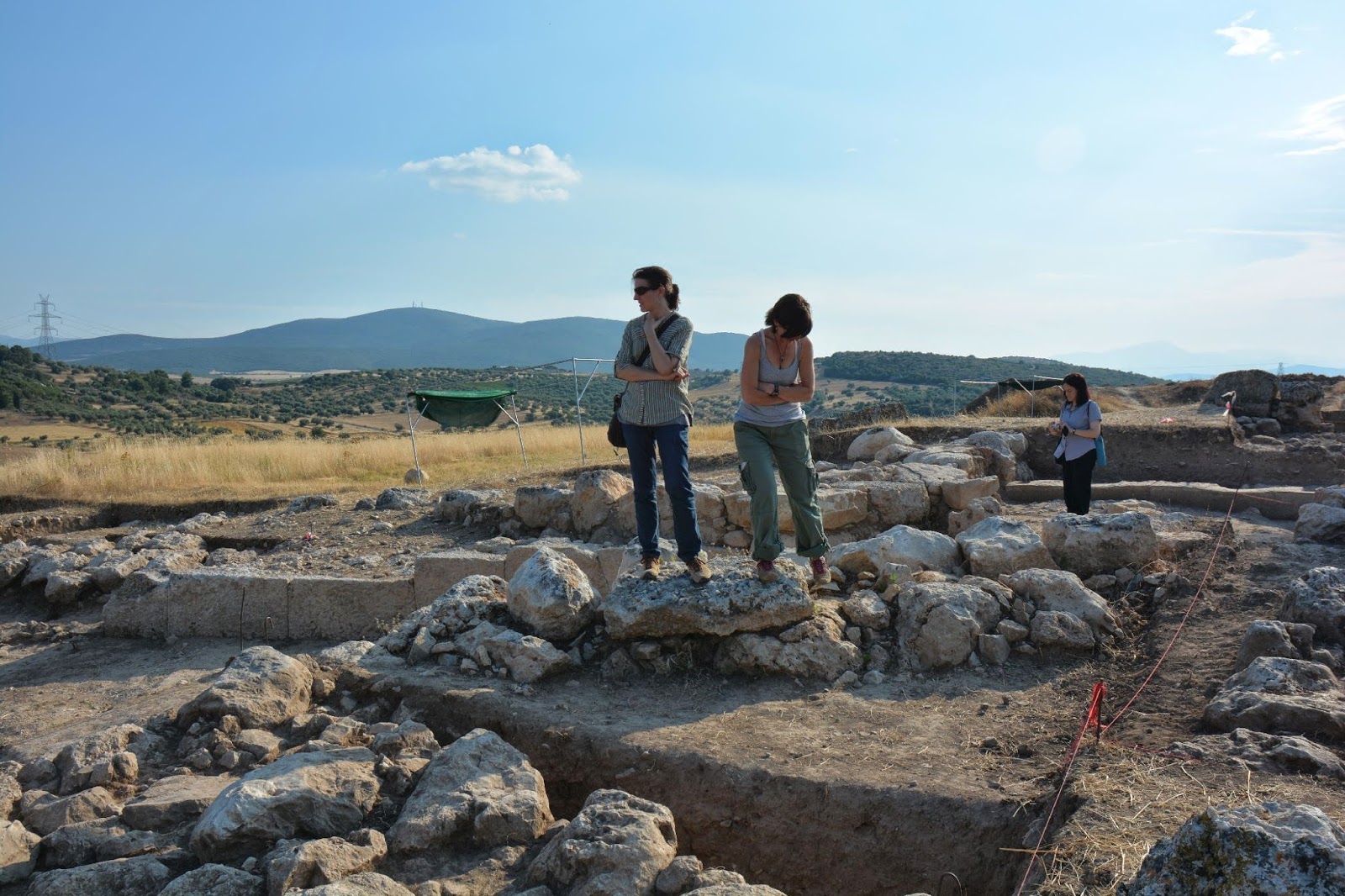
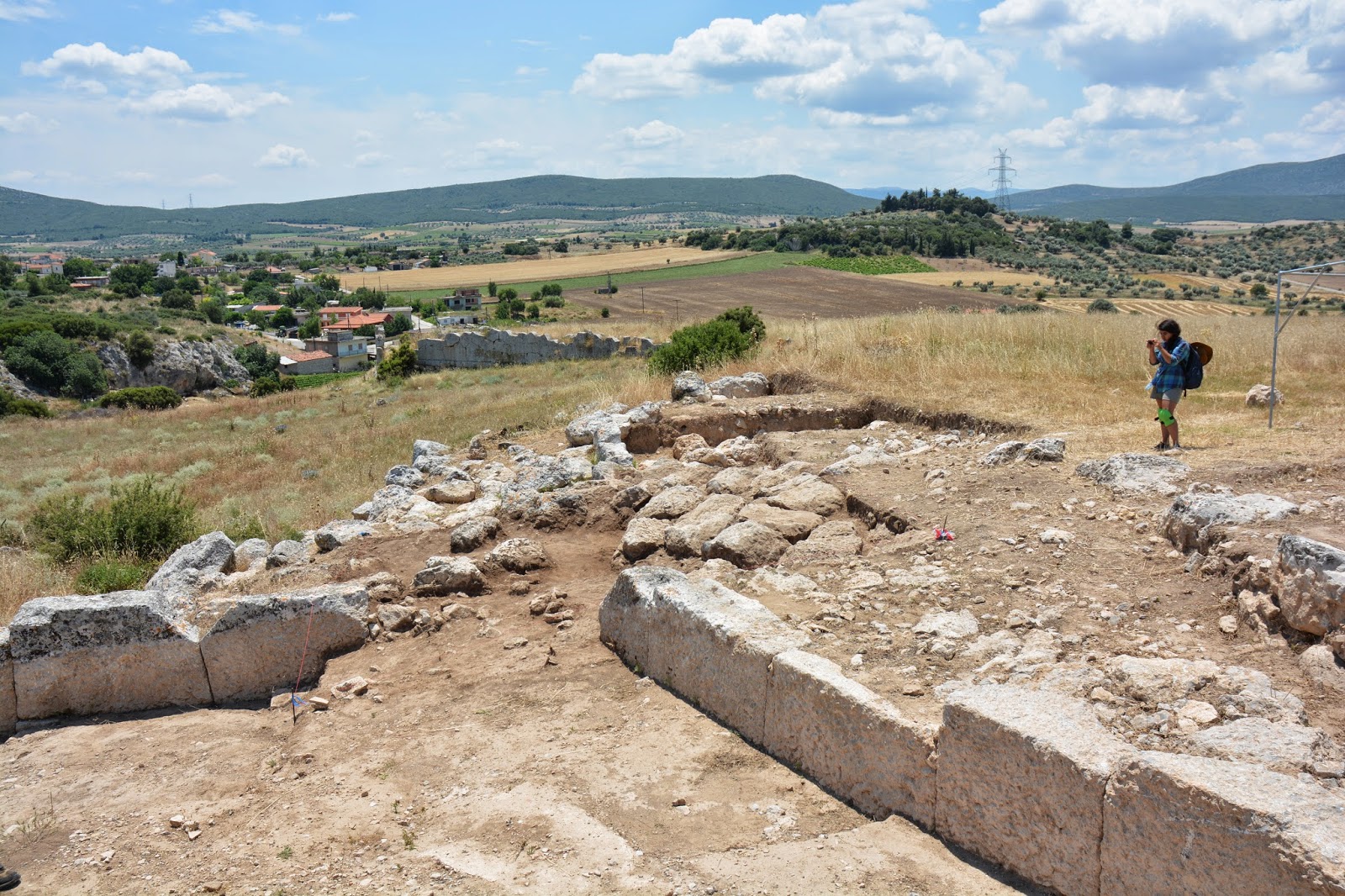
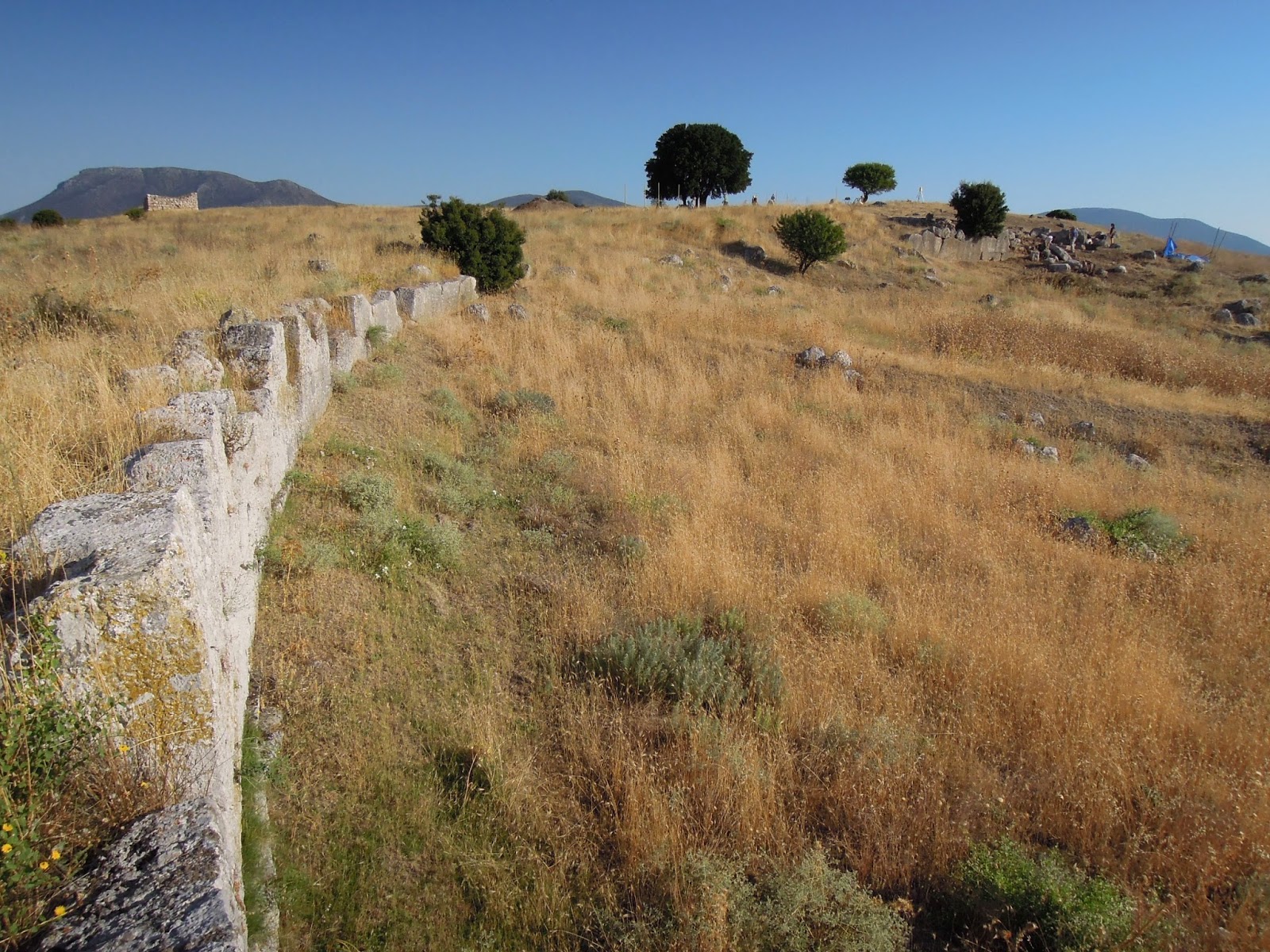
How much does luck have to do with archaeology? I’m not sure all that much frankly. The reasons why we dig where we do are based on lots of different sources of evidence – geophysical survey, surface collection survey, architectural survey and previous excavations nearby. We also have a general idea of how sites form and how sites from the periods we are excavating look at other sites.Our site does have some very unusual, puzzling features – the large polygonal wall running a curved, concave path for one, plus the parts of the earlier Mycenaean constructions on the site – so, figuring all this out, makes every day interesting and our work meaningful.  Wish us luck!
Yesterday we had our first student-led trench tours. Very good job, Nicole and Honor!

People matter

We are inching toward the end of the second week. Things are falling into routine. One common feature of this excavation, like many, is people arriving and departing. Within the past week, we have seen the arrival of Tina Ross, our illustrator, Bartek Lis, one of our ceramicists, Camilla MacKay, our database and Medieval ceramicist, Nepheli Theotokou and Vicky Karas, our conservators, and tomorrow, Trevor Van Damme, our other ceramicist.  And today we say good-bye to Janet Jones, from Bucknell. Nick Blackwell and Kyle Jazwa returned to Athens after short visits.Yin Lam departed last week too. It’s a lot to keep track of but everyone seems to fully understand that this undertaking is a massive team effort and everyone’s contribution matters greatly. On site, digging everyday, we are fairly consistent with our supervisors and students/volunteers – these don’t change too much. We are a very big work crew – the biggest we’ve ever fielded at EBAP and the amount of earth we are moving demonstrates this. The weather has also finally turned full-on SUMMER. Yesterday probably hit 35 degrees in some parts of the site. And unfortunately, the lower we dig, the hotter it is out of the breeze. We (Joe last year, with Spencer this year) have built sun shades made of aluminum pipes and green netting used for olive collection. These are coming in very handy. Teams will lift the four corners and rotate them during the course of the day as the sun moves, giving vital shade to the diggers and shovelers below. The wheelbarrowers, unfortunately, don’t get much shade.

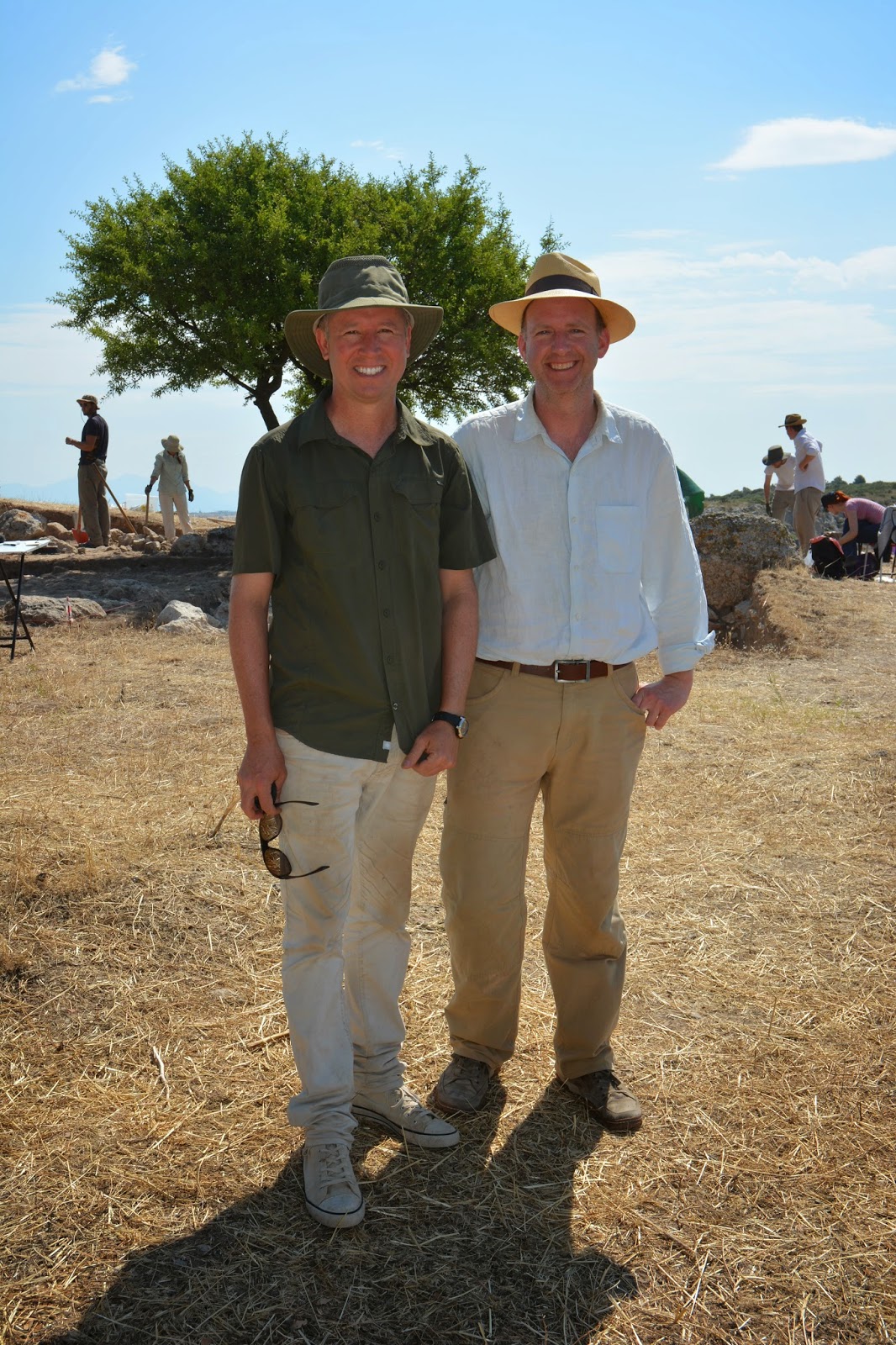
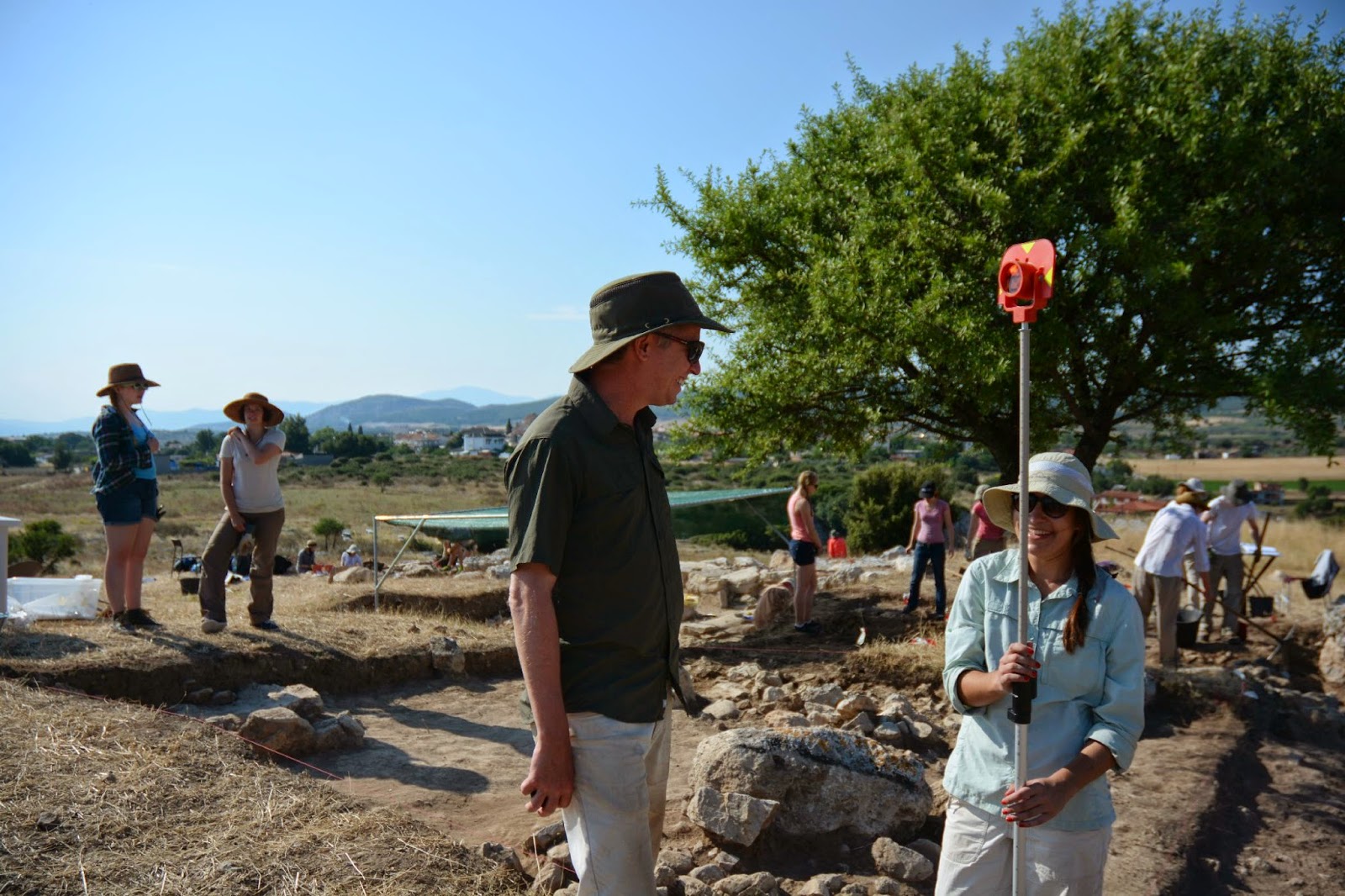
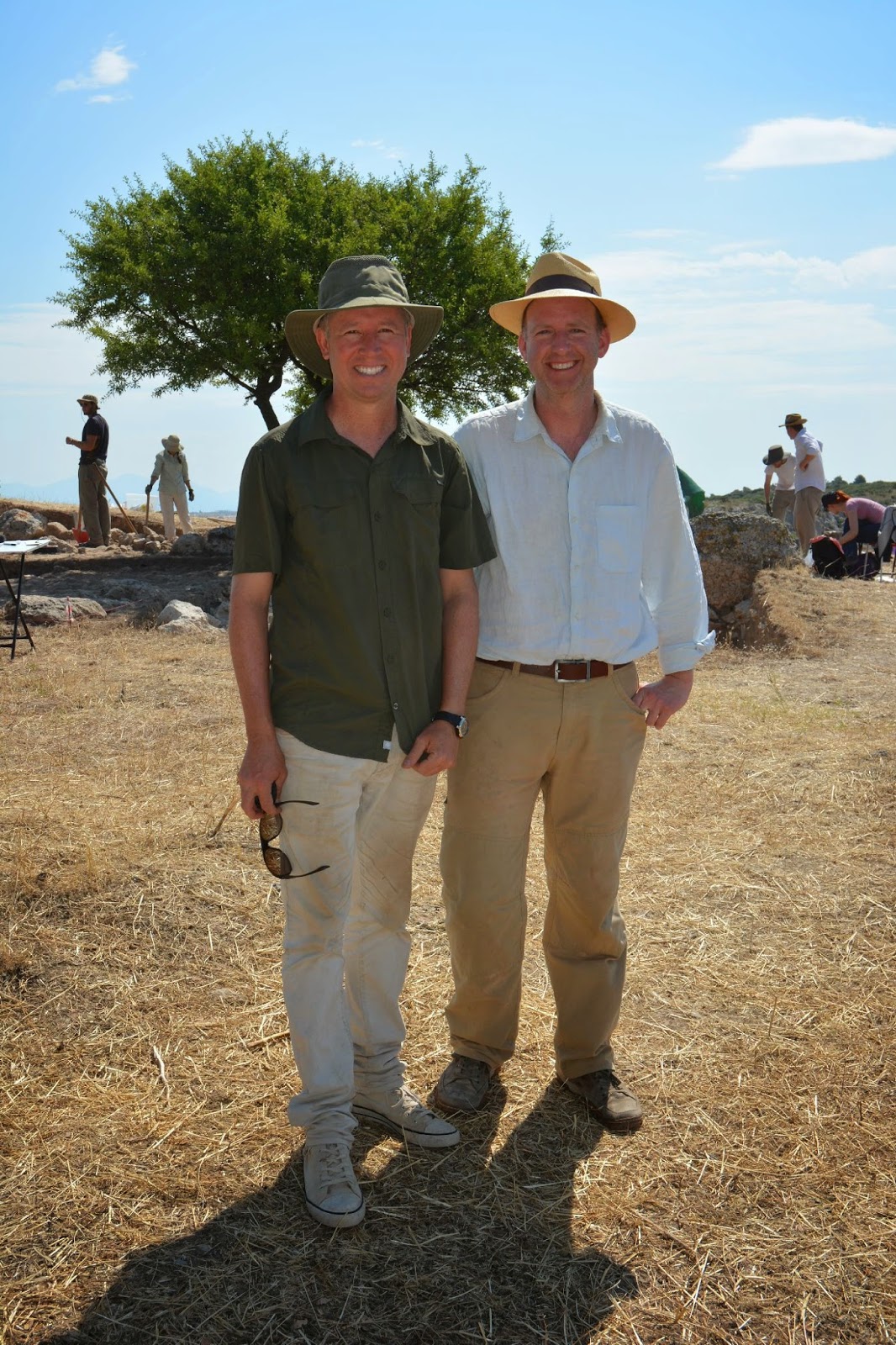
This project is co-directed by me and my very good friend and colleague Bryan Burns, Wellesley College. I think most would agree we work and co-direct very well together – on nearly everything we come to an easy agreement and have similar views on how we’d like things to happen. Perhaps it’s telling that most people confuse our names and when we correct them, they sometimes just say, ‘it doesn’t really matter’. I kind of agree.
It’s always been a key part of EBAP’s success to have a very coherent and communicative team of people fully involved and engaged.  Soon the students will be posting blog posts here – and I’ll be including more photos of them. For now, here’s just one more and me and the other ‘BB’:

Building on the Past

Every day brings additional team members to our project: On Tuesday we welcomed back our very long-time EBAP team member, Dr. Genevieve Hill. Gen has been working with us every year since we started the survey project in 2007, one of only two team members this year with that record! She’ll be leading a team of diggers who previously worked with Nick Blackwell, but they will be located on the monumental wall at our site. We are hoping to get a better understanding of the relationship between the Classical builders and their Mycenaean predecessors. This is one of the most interesting things about the architecture at our site: around 1200 BC there were major building projects, wall constructions, and then, six or seven hundred years later, people returned and began building on the ancient remains that they saw, reusing and rebuilding their past. 
Our other new arrival was only with us for the day, Kyle Jazwa. Kyle has worked and studied the architectural material from the site of Mitrou, among other sites, for many years. He is very familiar with roof tiles, bricks and other materials. In very little time Kyle was able to assemble the complete profile of one very large Mycenaean roof tile and part of another, something we only knew from disparate pieces previously. This is an exciting result because it seems likely that only very large buildings would have large, fired roof tiles. 

Week Two begins

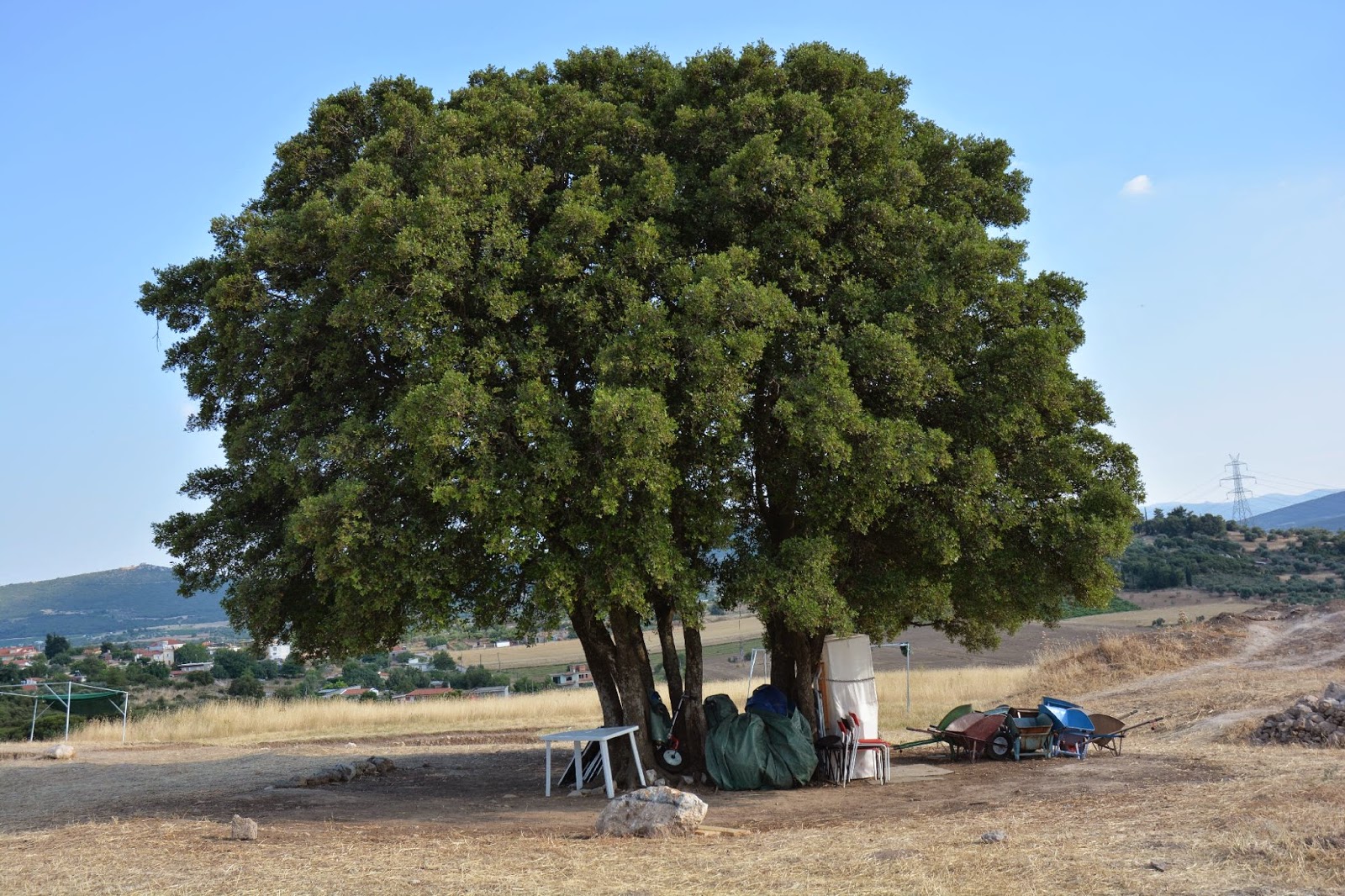
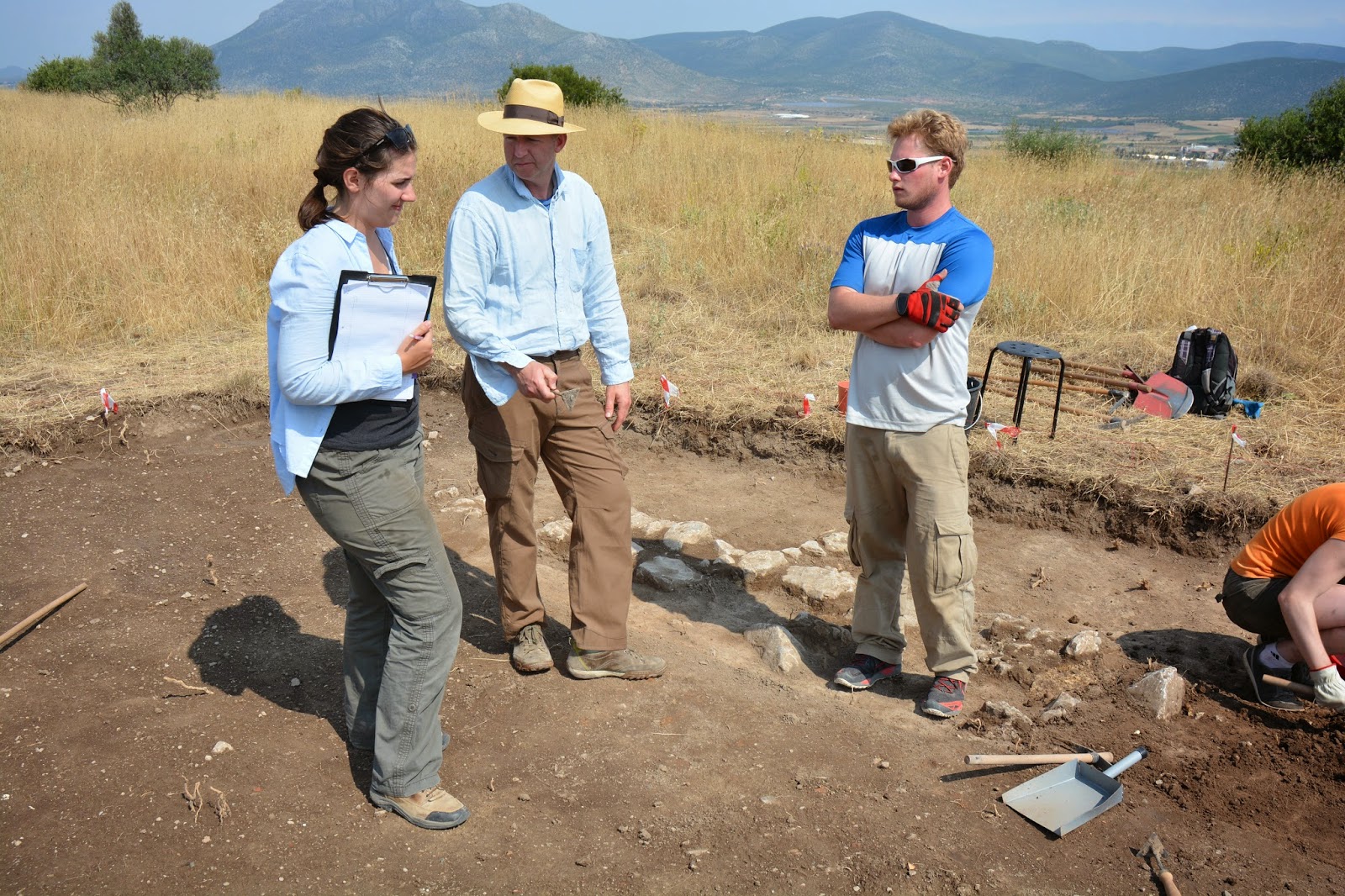
This week begins without an internet connection in our main house. It’s hoped that the problem will be fixed by Wednesday. On site, Monday was a great day full of progress. We arrived to a surprisingly muddy and wet site – rains overnight were heavy in Arma. Everyone was well prepared though. We began with brief trench tours from the site supervisors to see what was happening and where things were going. Students were divided randomly (mostly) into new dig teams so that everyone has varied experience. The Northwest area is coming into very good order with the appearance of sizable walls. The Southwest is expanding eastward, extending our very first trench on site (SWB3b, always very dear to me) to the north.  This will be adjacent to the area around the smaller site tree (which we are NOT going to remove). Work around the tree is a little tricky but our supervisors are doing a great job removing lots of rubble and revealing interesting surfaces. The finds are becoming more consistent with a more intact stratigraphy. In the Southeast, this slightly remote trench is working hard to expose a variety of large blocks that we presume makes some kind of platform or bastion. To me, this is really interesting work. 

Week One in quick Review

We’ve made amazing progress on-site. Anyone who came by last week wouldn’t recognize our excavation area. With lots of work from lots of people, the prickles and thorns and weeds have nearly all been removed, the back-fill dirt has been cleared and the protective tarps have been lifted. The project is humming along in record time. After a rain delay Tuesday afternoon and all day Wednesday we are now back in the thick of it all.
We now have 7 excavation areas with our guest-supervisor, Nick Blackwell here for a few days. He’s taking time off from his ASCSA job to work with us. It’s always great when people take time off of their paying jobs to come ‘work’ for us during their vacations. Debra Nadal is also doing this with us.
Today, Saturday, was a shorter day – we work until 12, rather than the normal 1:30. We call it a half-day, but obviously our math skills aren’t quite right. Everyone will have the afternoon off and all day tomorrow for the beach, exploring, or just resting. We’ll start again early Monday morning.

Spectacular Thursday

The rain cleared and the site dried out nicely The air was cool and clean as we worked all morning (6:30 am departure – no one was late!). We worked until 1:30, and then had an incredible lunch at Stavroula’s (as usual) – she makes it seem so easy, feeding 40 people on her porch! The work went very well. All five/six new trenches have been laid out and our eager team members worked hard to clear top soil. No significant finds to report but lots of good progress. Tomorrow should be just as bright!

Rain brings lemons. We make lemonade. 

Soggy rain cut our second full day of digging short yesterday, and really put a damper on our today. Yesterday afternoon we divided up. Some worked on the cleaning/preparing the apothiki work/storage area, Others went to Schimatari for the museum and other errands. Supervisors headed to a cafe to ‘work’ on their notebooks – after one day digging? : ) Lunch was as normal as could be in Arma, with delicious!! briam – some say it’s the best briam they’ve ever had (roasted, stewed vegetables in olive oil).

Overnight the sky poured rain. We met at 8 and had an intensive session on pottery processing which I think will be very helpful in the long run. At 12:30 we had another great lunch, this time delivered to Dilesi by Stavroula. We had revithia – stewed chick peas. Amazing. Then we went on a quick road trip to Eretria – to the museum and to the important site of Lefkandi and Xeropolis. It was a great outing all in all.

We hope tomorrow we will be back to normal. We’re happy to have some new arrivals too – our geographer and family of very valuable participants and our architect!